There is something that words cannot fully explain about Nyepi Bali — the moment when an island full of life chooses to stop. Not out of obligation, but out of belief that silence, too, is a way of celebrating. Once a year, the streets that never sleep go completely still. The motorbikes disappear. The music fades. Even the lights agree to rest.
This is Nyepi. And this is our story.
A Small Flyer, A Quiet Message
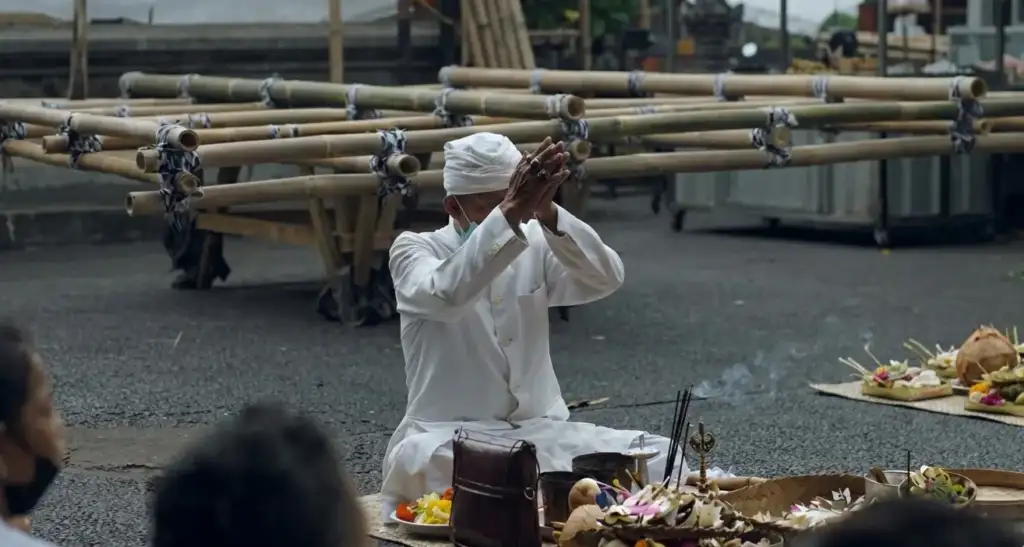
That day, before the sun had drifted too far toward the west, a village official made his rounds through the Seminyak area — walking streets he had long known by heart. In his hands, a simple flyer. The kind that comes every year, like clockwork, like the tide.
Close early. One o’clock in the afternoon.
For some, this might sound like an interruption. But for those who have grown up knowing the rhythm of Bali, that flyer feels less like an order and more like an invitation — to go home, to prepare, to let go. Across the neighborhood, pemangku priests were already seated in quiet ceremony, offerings laid out with care, incense rising slowly in the afternoon air. The island was already shifting into a different kind of frequency.
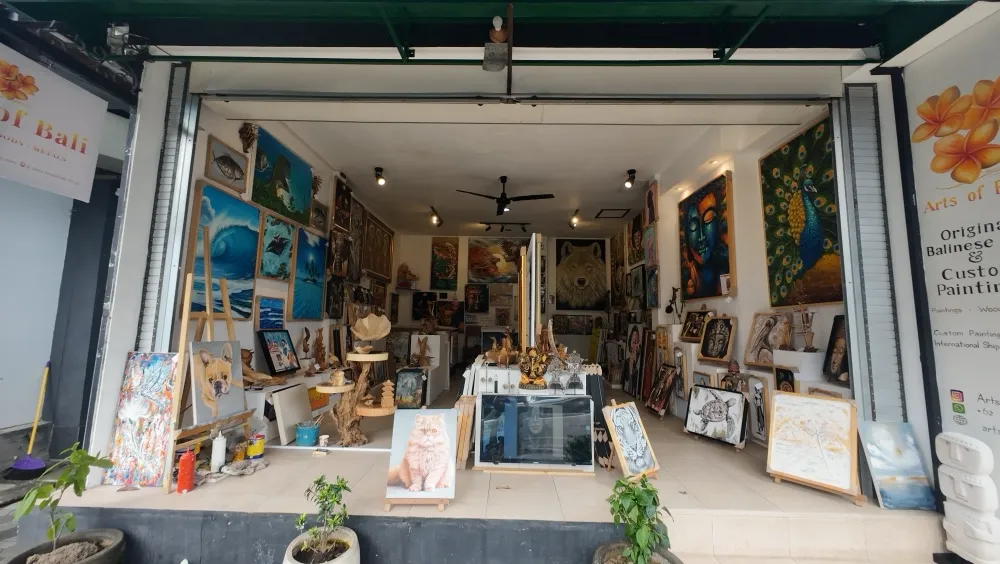
Putu and Alzen, two names woven into the everyday life of Arts of Bali, folded away the day’s remaining hopes with the same steadiness they fold fabric. At exactly one o’clock, the shop door closed. Not reluctantly — but with the particular relief that only those who understand there are things larger than commerce can truly feel.
“At exactly one o’clock, the shop door closed. Not reluctantly — but with the particular relief that only those who understand there are things larger than commerce can truly feel.”
Every Road Leads Home

While Seminyak quietly wound down, the team scattered in different directions — each one answering a call that needed no words.
Upeksa left earlier than the rest. He knew there was more than a gathering waiting for him — there was a spiritual journey back to Nusa Penida, his hometown held between cliffs and open sea. The crossing alone carries its own kind of meaning: water between you and the life you have built, and on the other side, the life that first shaped you. There, far from the noise of the shop floor and busy streets, he would find the most honest version of himself again — someone rooted, someone who remembers where they come from.
Farfan and Ifanuri crossed the island together. A distance long enough to tire the body, but never long enough to outlast longing. They knew that at the end of that road waited a dining table, hands that had not been held in too long, and conversations that did not need to begin from scratch — because some bonds never truly pause. There is something quietly powerful about sitting with people who knew you before you became whoever you are today.
Gandara made his way to Gianyar with his family, where silence feels deeper because it is held inside rice fields and temple walls. And Alzen returned to Denpasar — to his family, to the particular stillness of a city choosing, all at once, to breathe.
“Some bonds never truly pause.”
The Night That Roared Before the Silence

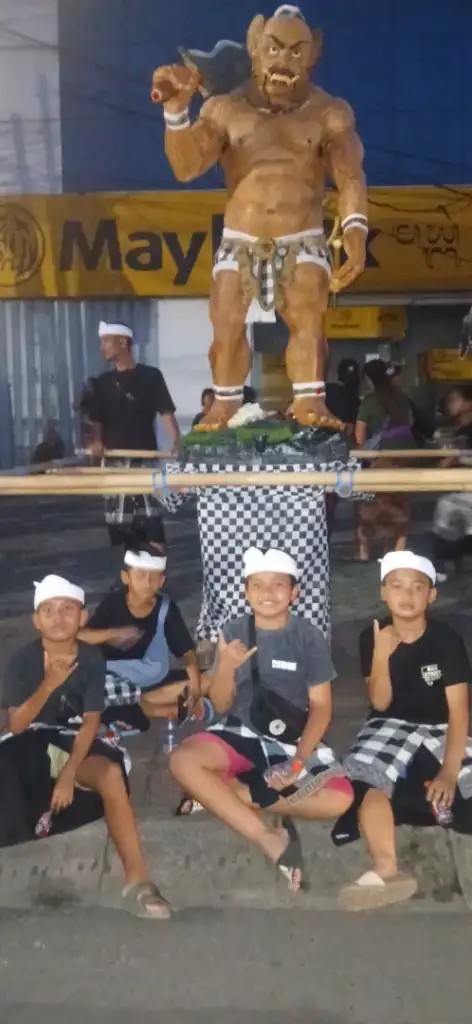
The night before Nyepi Bali is a beautiful contradiction.
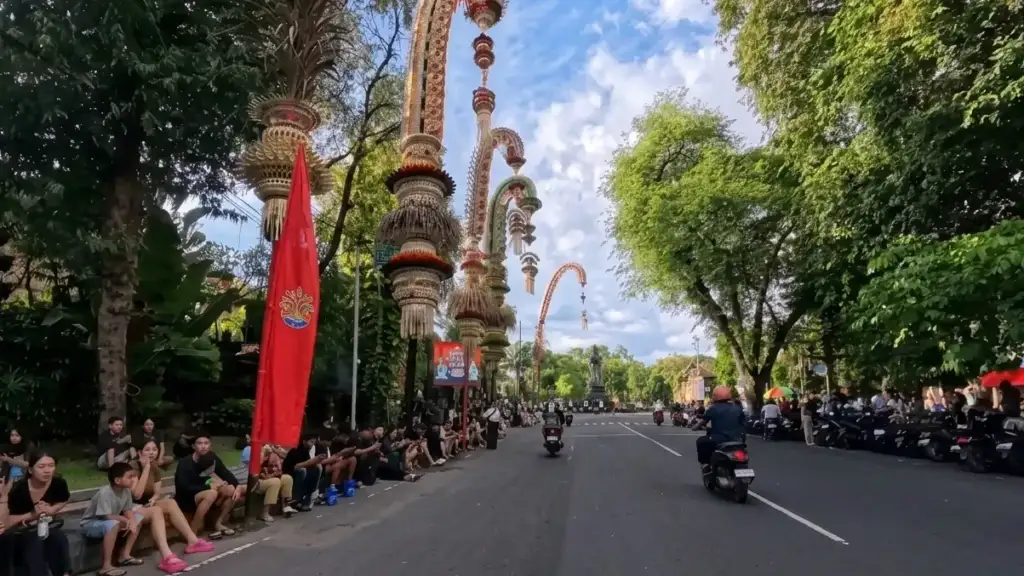
Streets that would soon fall completely silent were, that evening, surging with thousands of people, torchlight, and laughter woven together with the scent of incense. Hoisted on the shoulders of young men, ogoh-ogoh — enormous figures crafted from bamboo, cloth, and layered craftsmanship — were carried high through the streets with unmistakable pride.
Putu was there, not as a spectator, but as a father. Walking alongside the procession with his child, he watched the next generation learn to carry something far greater than a sculpture. They were learning to carry the weight of tradition — and doing so with joy.
The photographs from that night speak for themselves: young faces with white cloth tied around their heads, sitting proudly beneath figures they built with their own hands. Their expressions glowing — not from streetlights, but from something growing quietly within them. This is how culture survives — not in museums, but in the hands and hearts of the young.
Ogoh-Ogoh and the Philosophy of Letting Go
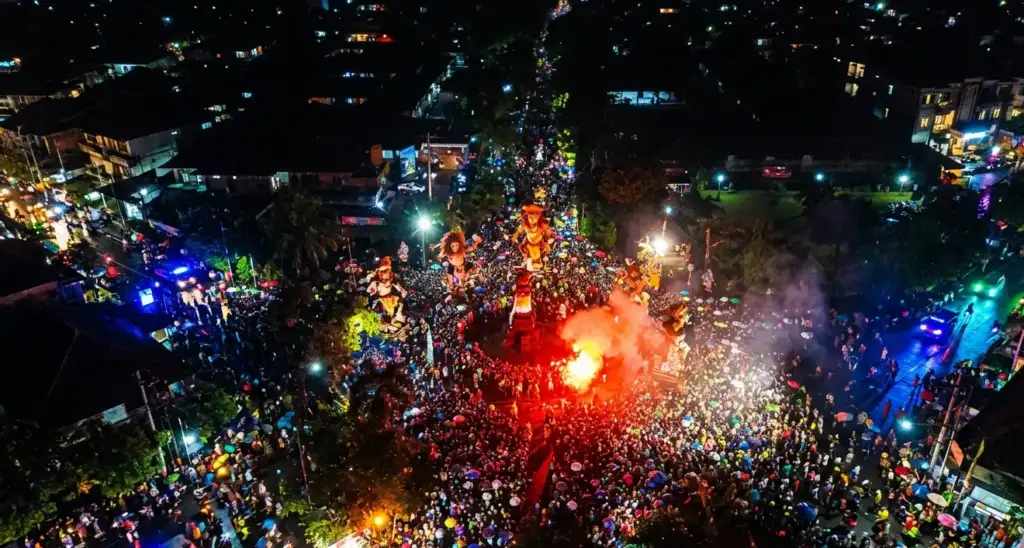
Ogoh-ogoh is central to the Balinese Hindu New Year — a tradition rooted in the belief that darkness must be confronted before light can truly arrive.
Ogoh-ogoh is not merely a spectacle. It is a metaphor carried on human shoulders — a representation of all the darkness within us, the ego, the unresolved things we no longer wish to bring forward into a new year. Paraded through the streets, met with noise and fire, and ultimately released. Not in anger, but with intention.
This is sacrifice. This is release. This is the hope for something new.
There is a deeply human philosophy living inside this tradition: that we cannot enter a new chapter without the courage to acknowledge and let go of the weight from the one before. The ogoh-ogoh is not burned because it is hated — it is released because we are ready to move forward without it. Renewal does not simply arrive. It must be carried through the streets, faced honestly, and released with full awareness.
“Renewal does not simply arrive — it must be carried through the streets, faced honestly, and released with full awareness.”
When Nyepi Bali Finally Arrives — The Island Exhales

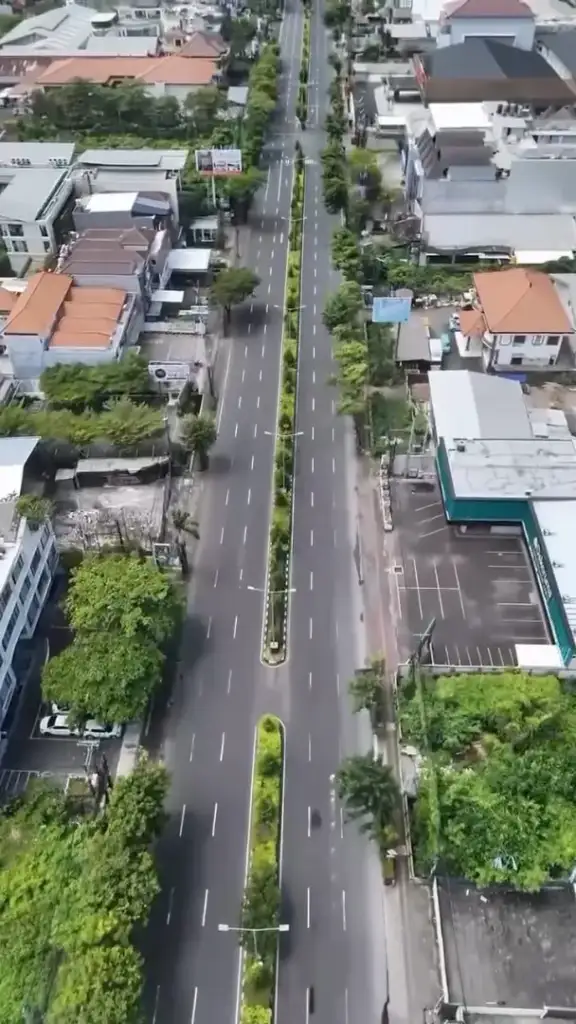
And then, dawn arrived.
Look at those streets from above — wide, smooth, and empty as an untouched canvas. Intersections that are usually tangled with motorbikes and horns now stand still like paintings. No dust, no hurry. Only long stretches of asphalt reaching into the distance without a single figure crossing them.
This is not loneliness. This is sovereignty.
Bali is not incapable of moving — it simply chooses not to. And within that choice lives a kind of greatness that few celebrations anywhere in the world can match. For twenty-four hours, an entire island operates on a different set of rules: no lights, no travel, no noise. Just presence. Just stillness. Just the quiet work of turning inward.
“Bali is not incapable of moving — it simply chooses not to. And within that choice lives a kind of greatness that few celebrations in the world can match.”
The Sky That Only Appears When We Stop
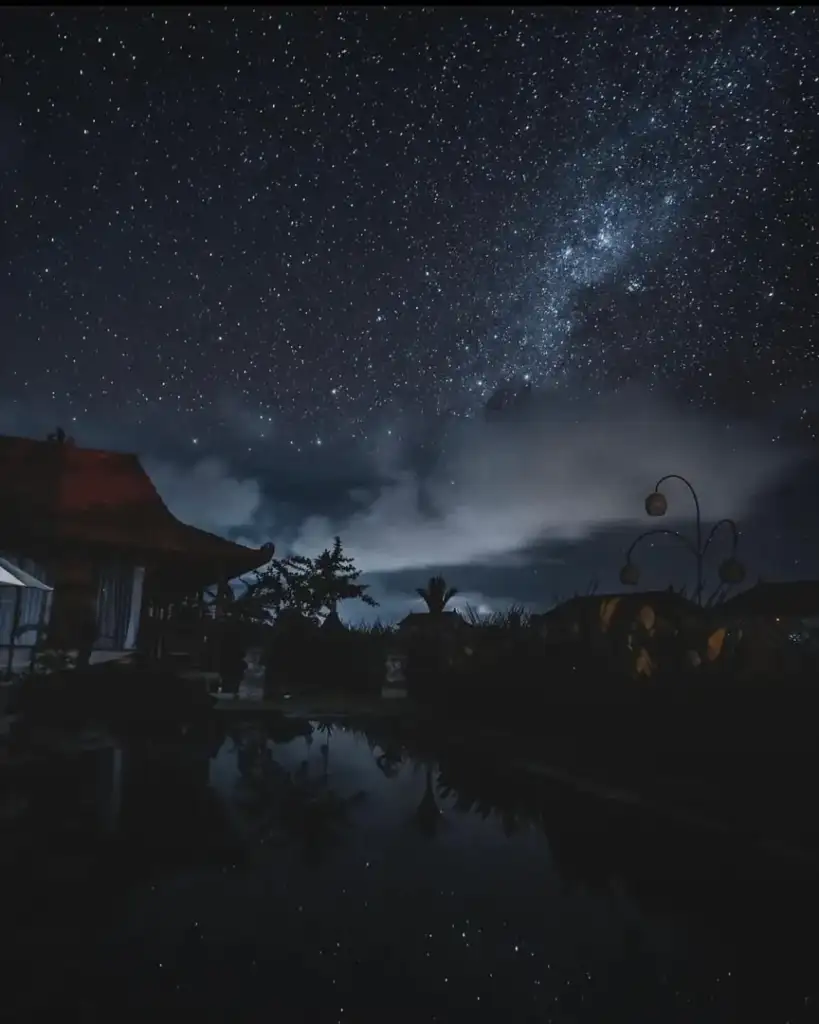
There is one thing almost never visible on ordinary nights.
Above darkened homes, above pools reflecting the shapes of sleeping trees, the Balinese sky that night revealed itself in full honesty. The Milky Way stretched overhead like something painted by hand. Stars that had been drowned out by city light for months quietly returned, as though they too had come to celebrate Nyepi in their own way.
The universe, it turns out, also waits for us to go still — so that it may finally speak.
“The universe also waits for us to go still — so that it may finally speak.”
A Closing Note from Arts of Bali
For us at Arts of Bali, Nyepi is not simply a day off.
Nyepi Bali is recognized across Bali’s official cultural calendar as one of the most unique and spiritually significant observances in the world.
It is a reminder that beneath all the busyness of making, selling, and telling the stories of Bali’s beauty — there are roots that must always be tended. There is family waiting. There is a hometown calling. There is a night sky that can only be seen when we are brave enough to turn the lights off.
The Saka New Year has arrived. And as with every year before it, we step into these new days with hearts cleaned by silence — ready to move again, to create again, and to love this island with a fullness greater than before.
Nyepi Bali is not simply a day marked on a calendar — it is a living tradition that reminds all of us, locals and visitors alike, why this island continues to hold such a sacred place in the world.
Om Shanti, Shanti, Shanti Om.