“I feel I was reincarnated on this earth to create what the gods direct.” — I Gusti Nyoman Lempad, Bali’s greatest artist, speaking one year before his death at the age of 116.
The famous Balinese artists who shaped this island’s extraordinary visual culture were not simply painters — they were architects, sculptors, priests, and community leaders who happened to produce work of breathtaking beauty.
For centuries, from the royal courts of Klungkung to the hillsides of Ubud, Bali developed one of the world’s most distinctive art traditions: rooted in Hindu mythology, transformed by European encounter, and now alive in the studios of contemporary palette knife masters working from Seminyak to Gianyar.
This guide traces that tradition from the ancient Kamasan masters through the revolutionary Pita Maha movement of the 1930s, through Arie Smit’s Young Artists School of the 1960s, and into the hands of the painters who carry it forward today.
The most famous Balinese artists include: I Gusti Nyoman Lempad (1862–1978), polymath and Bali’s greatest artist; Walter Spies (1895–1942), the German painter who modernised Balinese art from Ubud; Rudolf Bonnet (1895–1978), Dutch co-founder of Pita Maha and the Museum Puri Lukisan; Arie Smit, Dutch founder of the Young Artists School; and I Nyoman Masriadi (b. 1973), whose contemporary paintings command the highest prices in Southeast Asia’s art market.
Kamasan and the Classical Origins of Famous Balinese Art
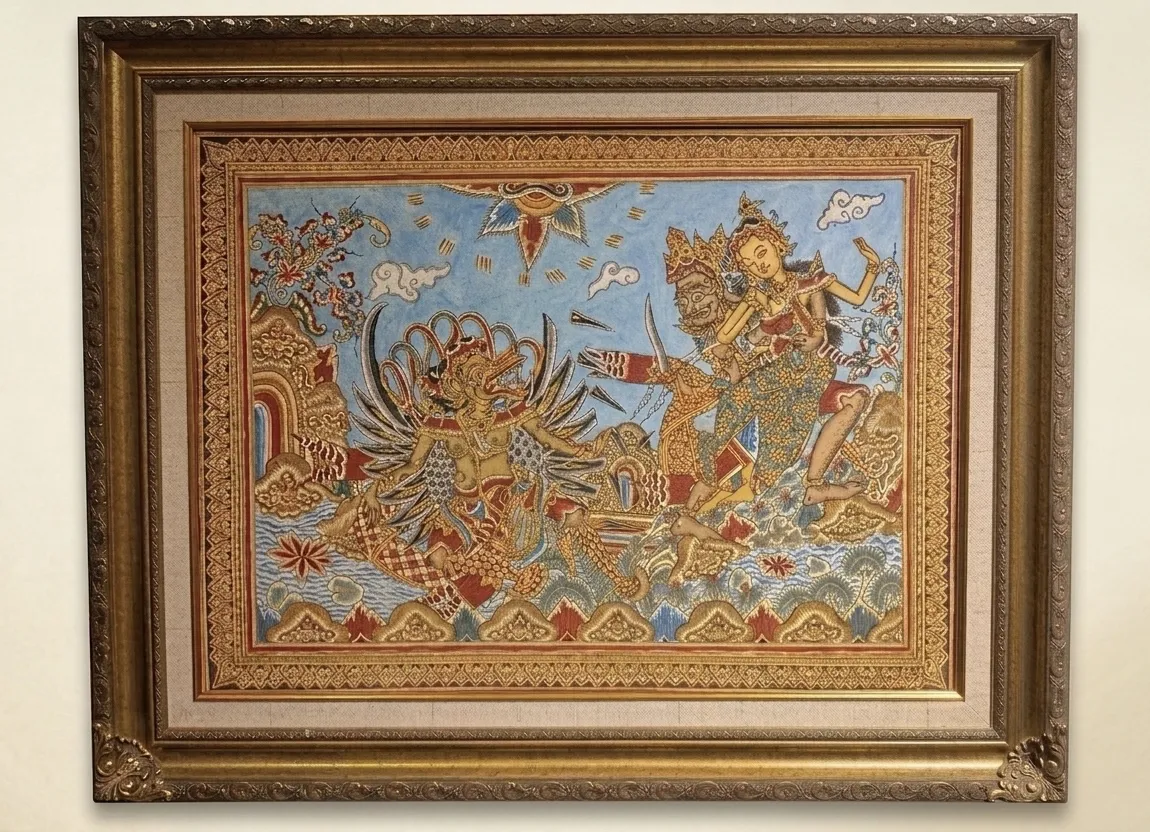
Long before Western artists arrived on the island, Bali had already produced a sophisticated painting tradition centred in the village of Kamasan, in the kingdom of Klungkung in East Bali. From the sixteenth century onwards, Kamasan was the undisputed centre of classical Balinese art — a tradition that served kings, temples, and the Hindu-Buddhist spiritual cosmos rather than collectors or markets.
Kamasan paintings are immediately recognisable: flat figures drawn in profile, reminiscent of wayang kulit shadow puppets; earth pigments of red ochre, black soot, and white lime; borders of intricate geometric ornament; and narratives drawn exclusively from the Hindu epics — the Ramayana, the Mahabharata, and the Sutasoma. These were sacred visual texts, commissioned for temples and royal courts, painted by craftsmen who were also priests. The Kamasan tradition continues today, practised by descendants of the original painter-priests in the same village, using techniques and iconographic rules passed down through generations.
I Gusti Nyoman Lempad — Bali’s Greatest Artist
Lempad was a polymath of extraordinary range: a traditional Balinese architect (undagi), a sculptor of temple statues, a maker of sacred masks and cremation towers — and, from the late 1920s onwards, a painter of mythological ink drawings that defined modern Balinese art.
Born in Bedulu, Gianyar, he spent his life under the patronage of the Ubud royal family, designing temples (including the Saraswati Water Temple in Ubud, still visited by thousands each day) and producing thousands of distinctive ink drawings on paper. His figures — elongated, distorted, drawn with unadorned line and strategic white space — were a decisive break from the crowded compositions of the Kamasan tradition.
He co-founded the Pita Maha artists’ collective in 1936 and lived to approximately 116 years old. His works are held in the Museum Puri Lukisan, the Neka Art Museum, and the Agung Rai Museum of Art in Ubud — three institutions that collectively represent the finest archive of Balinese art on the island.
Walter Spies, Rudolf Bonnet, and the Pita Maha Revolution
The arrival of European artists in Bali during the 1920s and 1930s triggered the most significant transformation in the island’s art history — not by replacing what existed, but by opening a conversation between traditions that produced something entirely new and gave Balinese painting its first international audience.
Walter Spies — The German Who Transformed Ubud
Walter Spies, a German painter and musician, arrived in Ubud in 1927 at the invitation of the Prince of Ubud, Tjokorda Raka Sukawati. He established a home that quickly became the gathering point for Western artists, writers, and intellectuals — among them Charlie Chaplin, Margaret Mead, and Noël Coward.
But his most enduring contribution was his patient engagement with Balinese painters: providing materials, introducing concepts of perspective and anatomy, and encouraging experimentation beyond the iconographic rules of the temple tradition.
Together with Rudolf Bonnet and the Ubud royal family, Spies co-founded Pita Maha on 29 January 1936. He was arrested in 1940 and died in 1942 when a Japanese submarine sank the ship transporting him — one of Balinese art history’s greatest losses.
Rudolf Bonnet — Builder of Balinese Art Institutions
Where Spies was the catalyst, Bonnet was the builder. The Dutch painter arrived in Bali in 1929 and devoted his life not just to his own art — focused on the human figure, anatomy, and Balinese daily life — but to the systematic development of Balinese painting as an international discipline.
As co-founder of Pita Maha, Bonnet oversaw quality standards for the collective’s approximately 150 members and organised landmark exhibitions in the Netherlands and London between 1936 and 1939.
After the Second World War, he designed and established the Museum Puri Lukisan — Bali’s oldest art museum, opened in Ubud in 1956. He donated his own collection of Balinese works to form its founding holdings. The Puri Lukisan remains essential for understanding the full arc of Balinese painting.
“In Bali, art was never separate from life, from ceremony, or from the divine — and the greatest artists understood this not as a constraint, but as the source of everything.”
The Schools of Famous Balinese Artists — Each Village, Its Own Voice
One of the most remarkable aspects of Balinese art history is that different villages — sometimes only a few kilometres apart — developed entirely distinct painting traditions. Each school has its own palette, its own compositional logic, its own relationship to subject matter. Understanding these schools is the key to reading any Balinese painting.
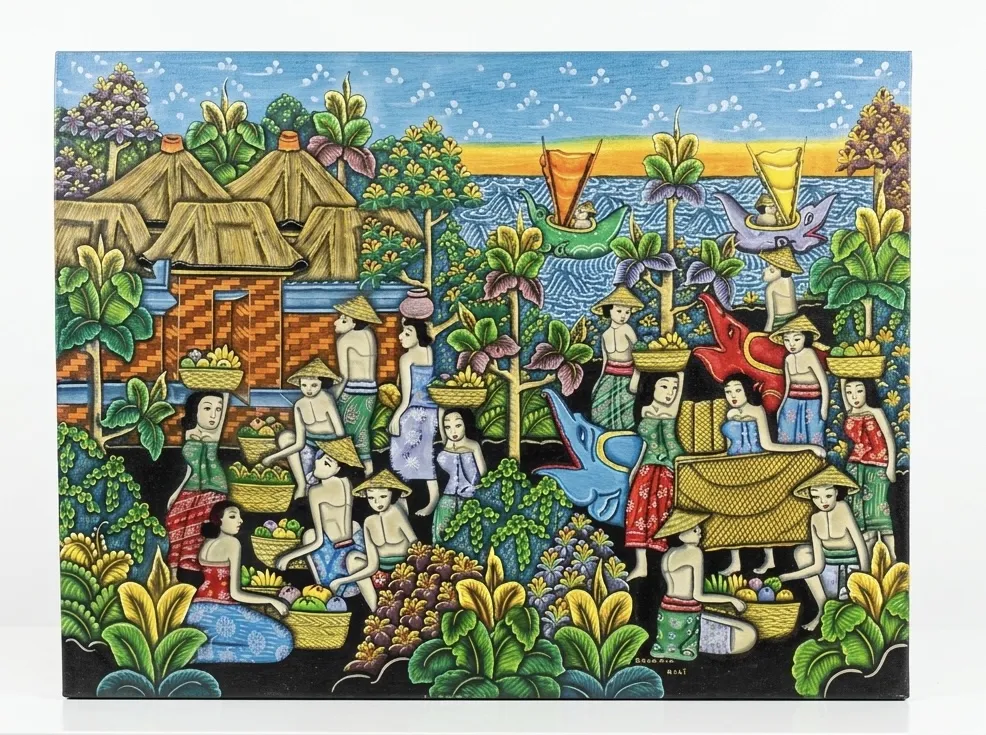
Kamasan School — Klungkung
Bali’s oldest tradition. Flat wayang-style figures, earth pigments, Hindu epic narratives. Practised by painter-priests in Klungkung and held in royal and temple collections. The root of all subsequent Balinese art — see also our Kamasan guide.
Ubud School — Ubud Region
Modernised through Pita Maha. Landscape and daily life subjects, atmospheric perspective, richer colour, individual expression. The most widely recognised Balinese style internationally — connected to our Ubud style painting guide.
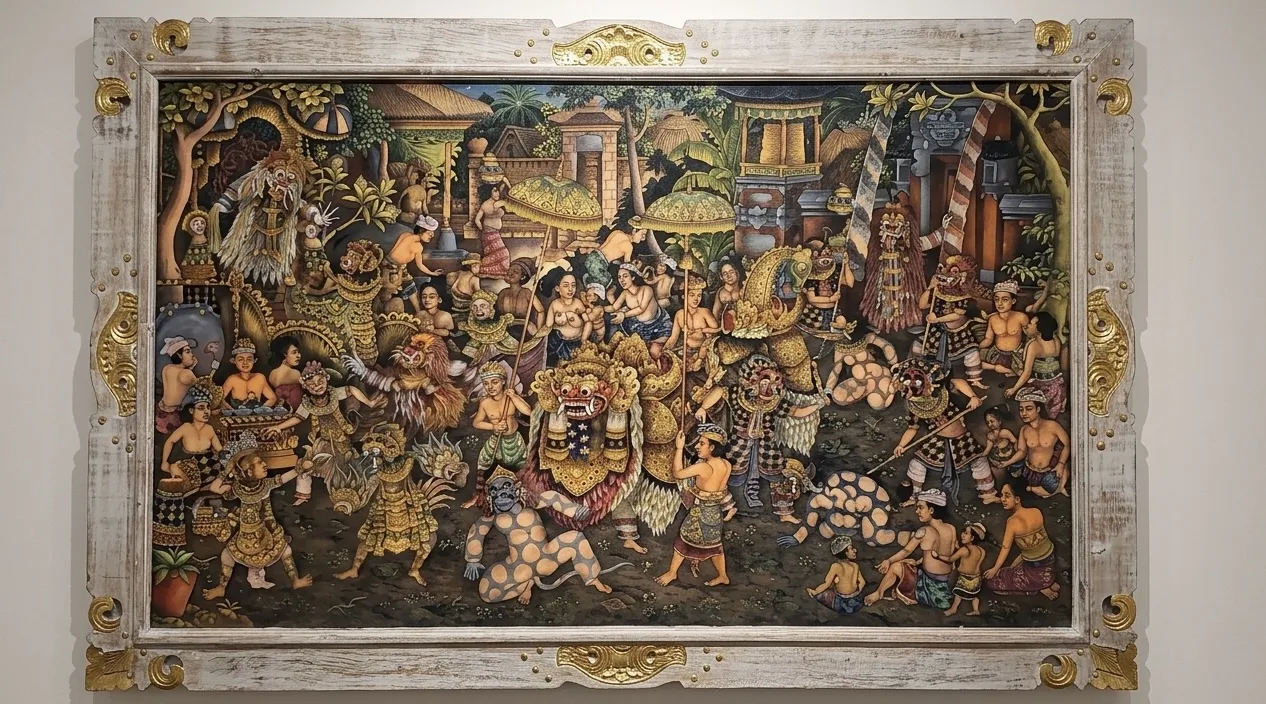
Batuan School — Batuan Village
Dense, dark compositions crowded with figures — ceremonies, mythology, the collision of Balinese and modern life. Ink drawing washed with thin layers of colour on a dark ground. Explored in depth in our Batuan painting guide.
Arie Smit — Founder of the Young Artists School
Arie Smit was a Dutch soldier who served in Indonesia during the Second World War and chose to stay when it ended, eventually settling in Bali. In the early 1960s, living in Penestanan near Ubud, he encountered children drawing in the sand.
He invited them into his studio, provided them with oil paints and canvas, and gave them no instruction in technique — only encouragement to paint what they saw and felt. The result was the Young Artists School: paintings of brilliant, unmodulated primary colour, flat perspective, and joyful scenes of village life that owed nothing to either the Kamasan tradition or the Pita Maha refinements.
By the 1970s, the movement had drawn more than 300 young painters from the area. The Young Artists style remains one of the most beloved and internationally collected traditions in Balinese art.
Contemporary Famous Balinese Artists — Where the Tradition Stands Today
The lineage that began in Kamasan’s sacred workshops did not end with the twentieth century. It continues with equal vitality in the studios and galleries of Bali today — in new materials, new techniques, and new visual languages that are unmistakably Balinese in their sensibility even when entirely contemporary in their form.
I Nyoman Masriadi (b. 1973, Bali) stands as the most commercially successful Balinese artist of the contemporary era.
His large-scale figurative paintings — heroic, often ironic depictions of the human body — command the highest prices of any artist in the Southeast Asian art market, demonstrating that Balinese art is not a craft tradition but a sophisticated contemporary practice capable of standing alongside the finest work produced anywhere in the world.
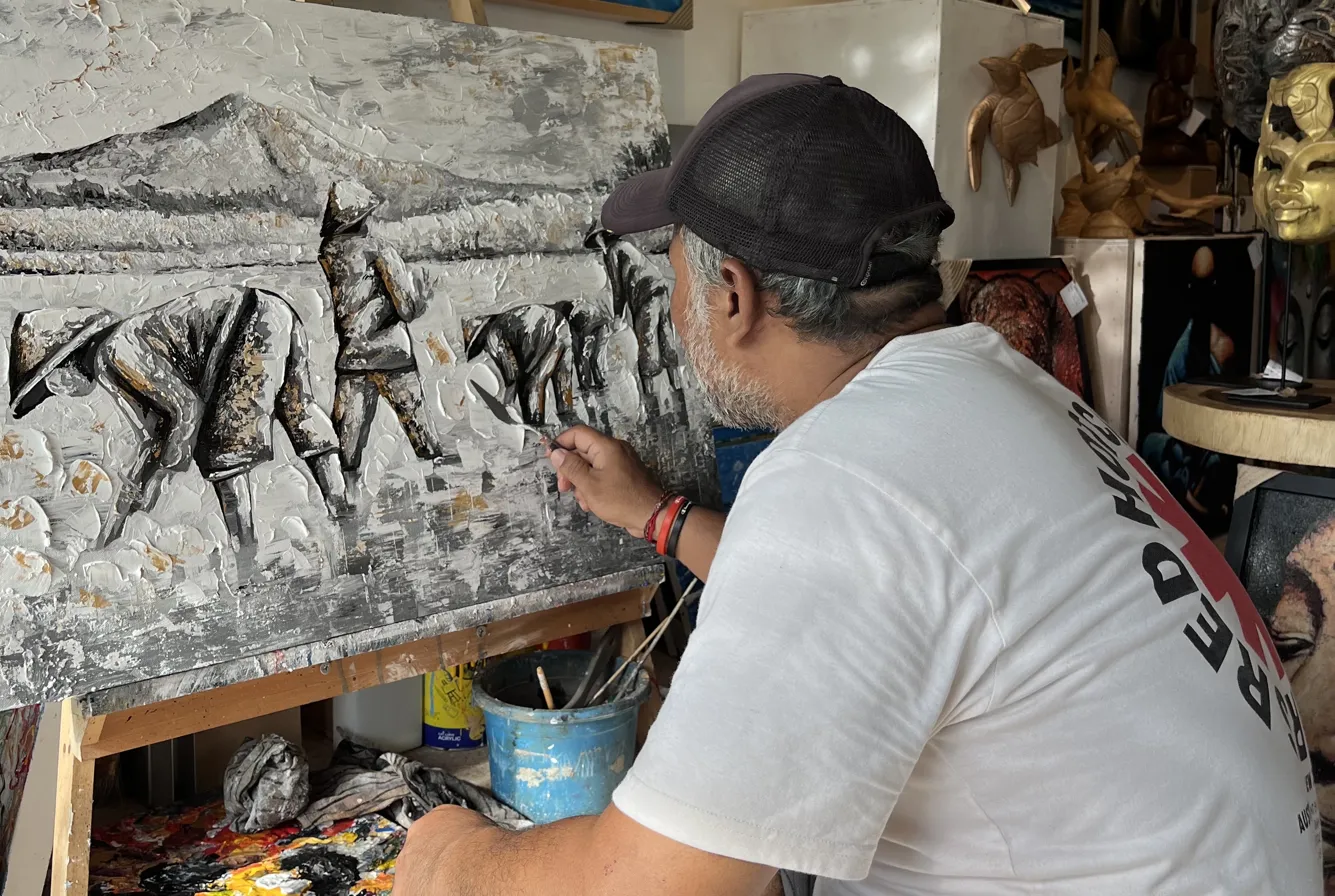
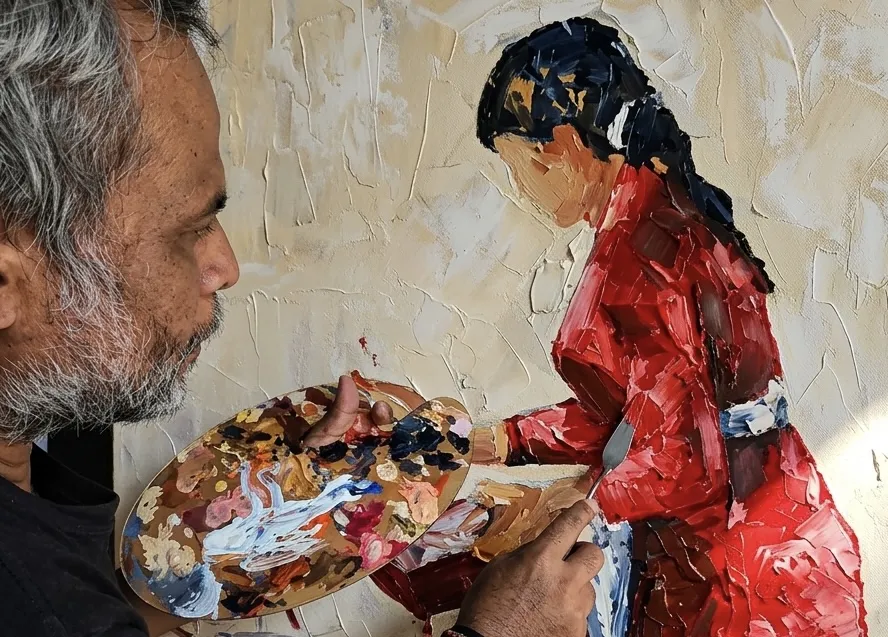
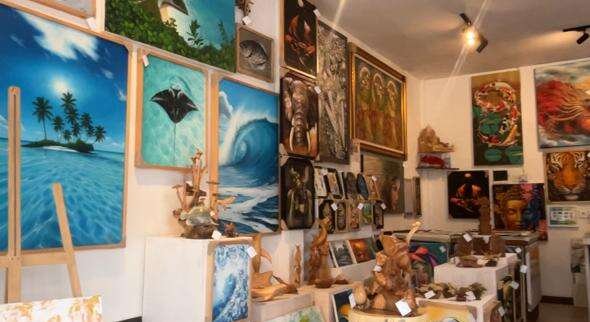
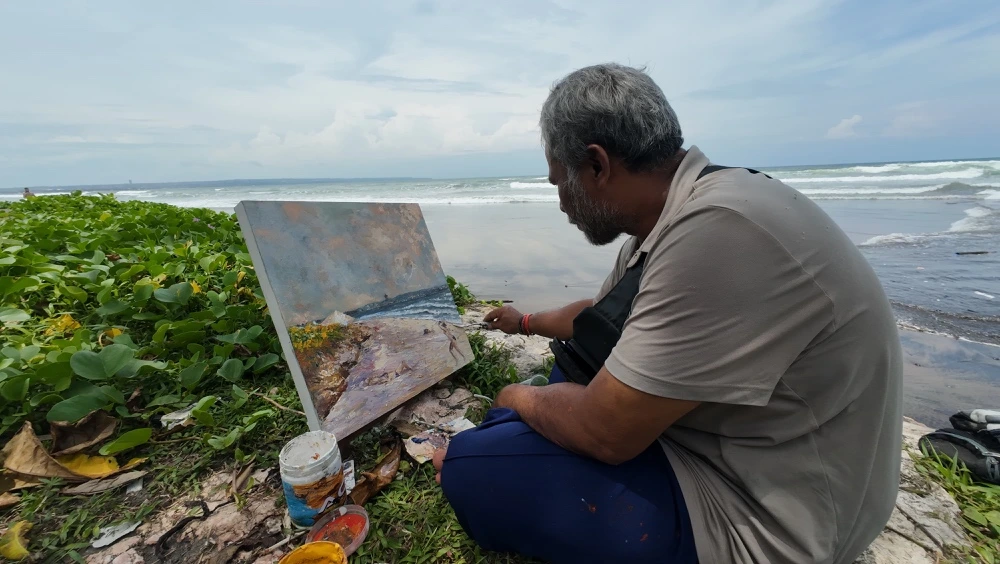
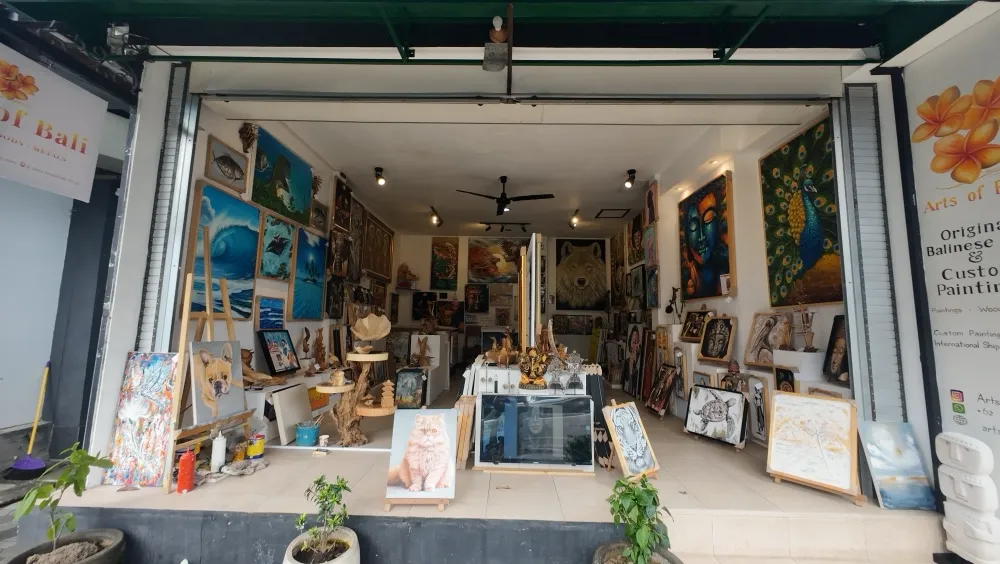
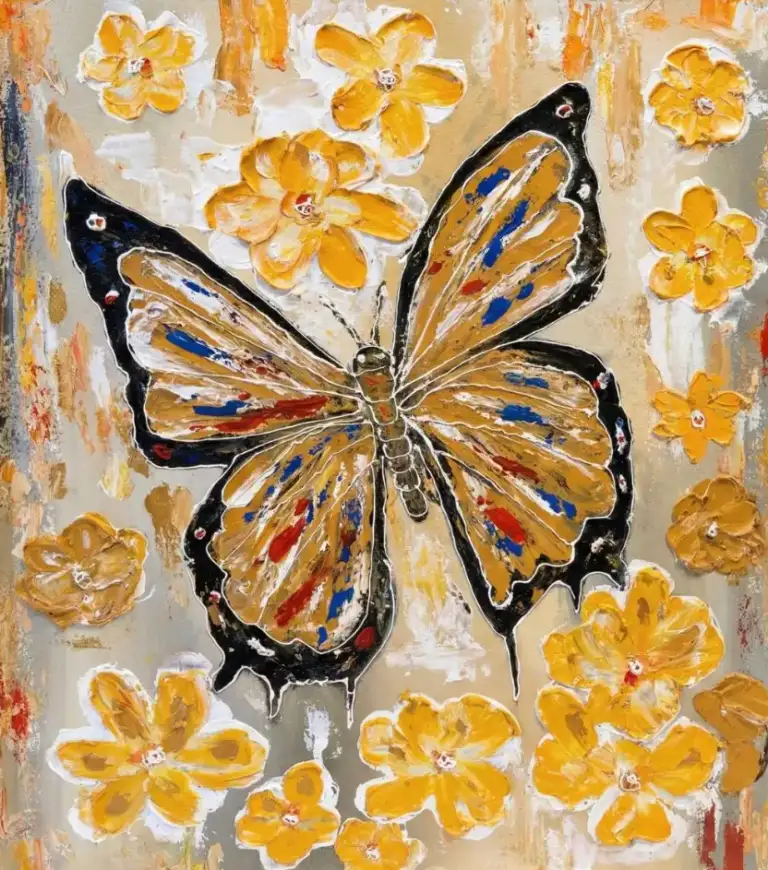
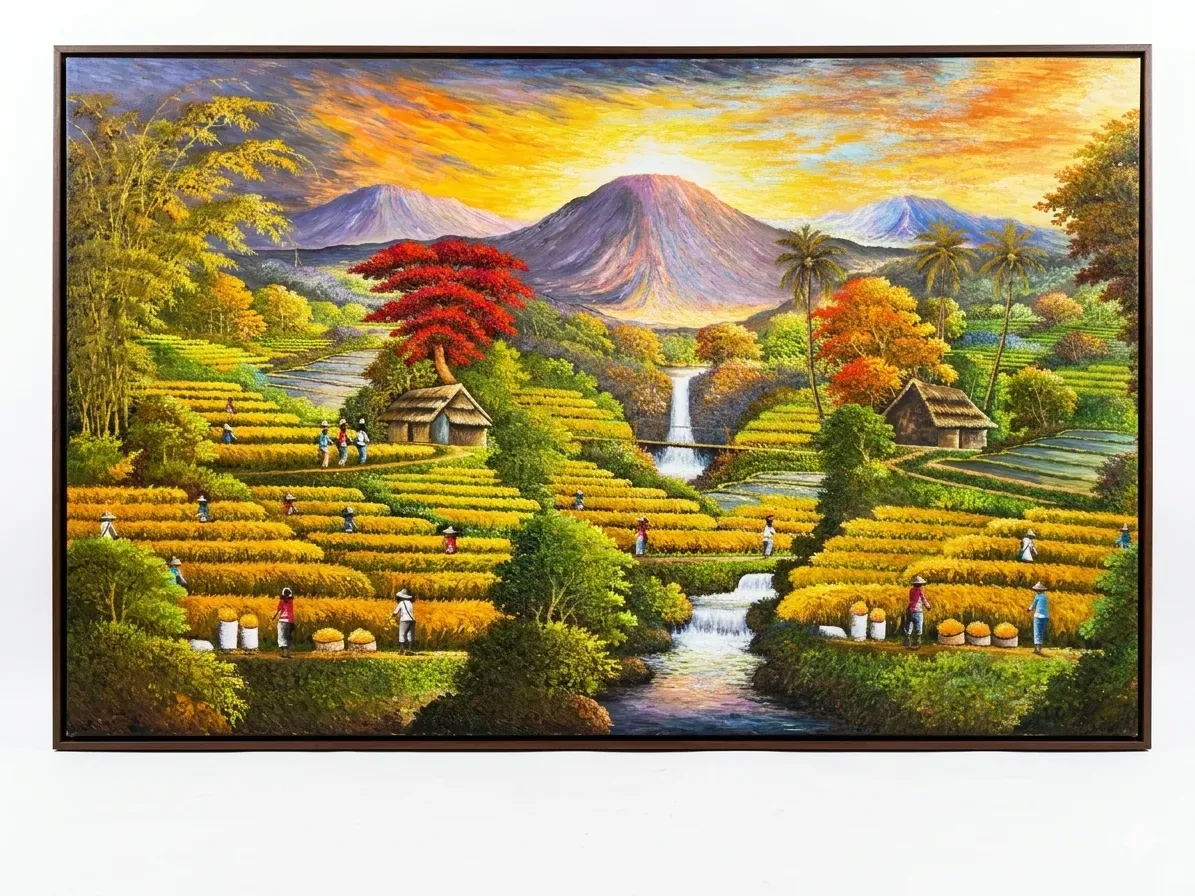
At Arts of Bali gallery on Jl. Raya Seminyak No. 42, Kuta, Bali 80361, resident artists including our lead artist Alzen and Upeksa work in the palette knife tradition — a technique that represents one of the most physically demanding approaches in contemporary Balinese painting.
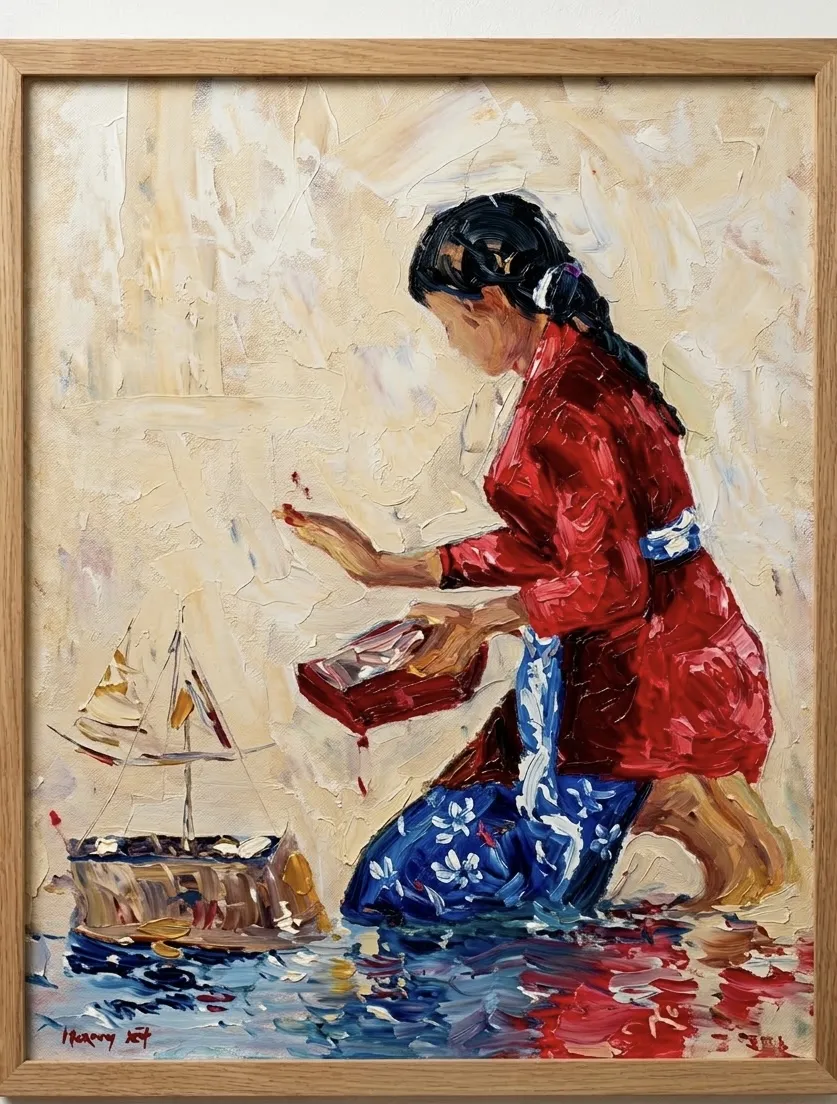
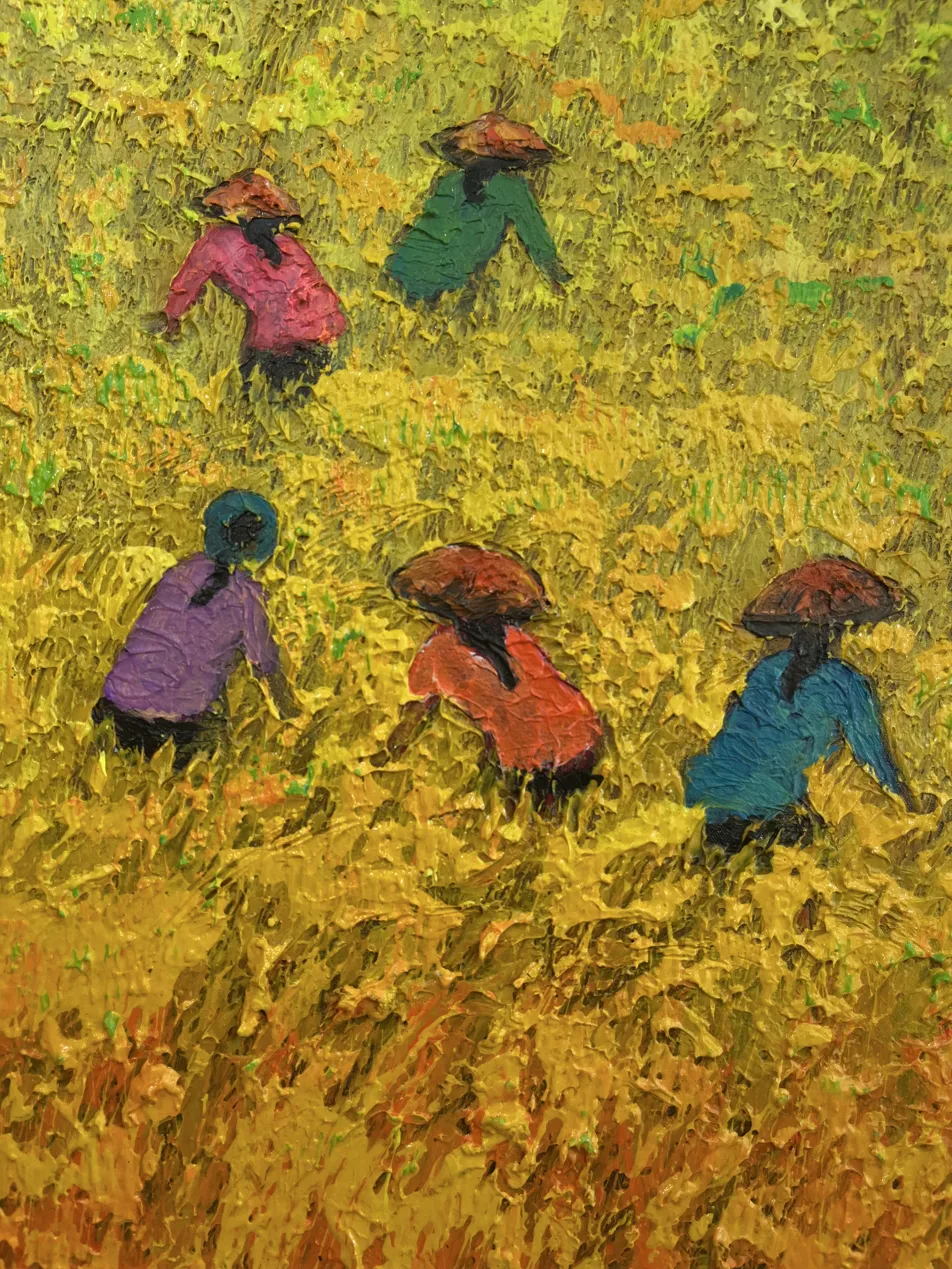
Their figurative works cover cultural subjects deeply rooted in Balinese life: women at offering, farmers in the paddy field, the island’s landscape rendered in luminous impasto.
The process is visible in the finished work — each ridge of paint a record of the artist’s decision and movement — and no print or reproduction can convey the tactile presence of an original.
Three Museums Where Famous Balinese Art Lives
Museum Puri Lukisan
Bali’s oldest art museum, co-founded by Rudolf Bonnet and the Ubud royal family. Holds pre-war Kamasan works, Pita Maha masterpieces, and the full arc of Ubud and Batuan schools. The building itself was designed by Bonnet in traditional Balinese pavilion style.
Neka Art Museum
Founded by Suteja Neka, the Neka holds one of Bali’s most significant collections of I Gusti Nyoman Lempad drawings. Its galleries span traditional Balinese, Pita Maha, academic Indonesian, and contemporary works — a survey of the island’s artistic breadth across seven centuries.
Agung Rai Museum of Art
ARMA holds classical Kamasan works on bark cloth, Batuan masterpieces from the 1930s and 40s, and contemporary Balinese and Indonesian painting. Set within rice fields and traditional garden pavilions — one of Bali’s most beautiful museum experiences.
See Contemporary Balinese Art at Arts of Bali, Seminyak
The lineage from Lempad to the palette knife painters of today is unbroken — a five-century conversation between artists, places, and the Balinese understanding of what it means to make something beautiful and true.
At Arts of Bali on Jl. Raya Seminyak No. 42, Kuta, Bali 80361, that conversation is ongoing. Our gallery presents original works by resident Balinese artists working in palette knife, figurative, landscape, and cultural traditions. Every piece is original, signed, and documented.
Common Questions About Famous Balinese Artists
Who is the most famous Balinese artist of all time?
I Gusti Nyoman Lempad (1862–1978) is widely considered the most famous Balinese artist in history. A sculptor, architect, and painter from Ubud, he was a co-founder of the Pita Maha collective in 1936 and produced thousands of distinctive ink drawings depicting Balinese mythology and daily life. He lived to approximately 116 years. His works are in the Museum Puri Lukisan, Neka Art Museum, and Agung Rai Museum of Art in Ubud.
Who are the most famous Balinese painters?
The most famous Balinese painters include I Gusti Nyoman Lempad (1862–1978), considered Bali’s greatest artist; Walter Spies (1895–1942), the German who modernised Balinese art; Rudolf Bonnet (1895–1978), Dutch co-founder of Pita Maha and the Museum Puri Lukisan; Arie Smit, founder of the Young Artists School; and I Nyoman Masriadi (b. 1973), whose works command the highest prices in the Southeast Asian art market.
What did Walter Spies contribute to Balinese art?
Walter Spies arrived in Ubud in 1927 and introduced Western concepts of perspective, anatomy, and secular subject matter to Balinese painting. He co-founded Pita Maha in 1936 with Rudolf Bonnet and I Gusti Nyoman Lempad, encouraged Balinese painters to experiment freely, and connected Balinese art to international markets for the first time. Without Spies, the transformation of Balinese art from a temple craft into a globally recognised tradition would have unfolded very differently.
What is the Pita Maha movement in Balinese art?
Pita Maha was a Balinese artists’ collective founded on 29 January 1936 in Ubud. Its founders were the Ubud princes Tjokorda Gde Raka Soekawati and Tjokorda Agung Soekawati, German painter Walter Spies, Dutch painter Rudolf Bonnet, and Balinese master I Gusti Nyoman Lempad. The name means “the great ancestor” in Kawi. With approximately 150 members, Pita Maha set quality standards, organised international exhibitions, and positioned Ubud as the cultural heart of Bali. It was dissolved in 1942 when Japan invaded during World War II.
What are the main schools of Balinese painting?
The five major schools are: (1) Kamasan — ancient classical from Klungkung, depicting Hindu epics in flat perspective; (2) Ubud School — modernised through Pita Maha in the 1930s, depicting landscape and daily life; (3) Batuan School — dense dark compositions of ceremony and mythology; (4) Young Artists School — founded by Arie Smit in the 1960s in Penestanan, bright colour and naive style; (5) Contemporary Fine Art — today’s palette knife, hyper-realism, and abstract approaches evolving the tradition for global collectors.
Where can I see famous Balinese art in Bali?
The three most important museums are Museum Puri Lukisan (Bali’s oldest, Ubud, co-founded by Rudolf Bonnet), the Neka Art Museum (opened 1982, significant Lempad collections), and the Agung Rai Museum of Art — ARMA (established 1996, Ubud). For original works by living Balinese artists, Arts of Bali at Jl. Raya Seminyak No. 42, Kuta, Bali 80361 presents palette knife, figurative, and landscape originals by resident artists.
Who was I Gusti Nyoman Lempad?
I Gusti Nyoman Lempad (1862–1978) was a Balinese polymath — architect, sculptor, and painter — considered the most important figure in Balinese art history. Born in Bedulu, Gianyar, he spent his life under the patronage of the Ubud royal family, designing temples including the Saraswati Water Temple in Ubud, and producing thousands of distinctive ink drawings inspired by Balinese mythology and the Hindu epics. He attributed his extraordinary longevity of approximately 116 years to simplicity and service to community.
Are there famous contemporary Balinese artists painting today?
Yes. I Nyoman Masriadi (b. 1973) commands the highest prices of any artist in the Southeast Asian contemporary art market. The palette knife tradition is practised by resident artists at Arts of Bali gallery in Seminyak, including lead artist Alzen and Upeksa, whose figurative works on cultural Balinese subjects carry the island’s centuries-long tradition into a contemporary material language. Today’s Balinese artists work across palette knife, hyper-realism, textured mixed media, and all five classical schools.
Experience Contemporary Balinese Art at Arts of Bali
At Arts of Bali on Jl. Raya Seminyak No. 42, Kuta, Bali 80361, you can see original paintings by Balinese artists who carry this extraordinary tradition forward — in palette knife, figurative, landscape, and cultural styles.
Every work is original, signed, and documented. Our team is always happy to tell you the full story behind any painting in the gallery, and to help you find the work that connects with you.
Chat With Us on WhatsApp