“В Убуде художники перестали записывать священные истории по памяти и начали запечатлевать мир, который они могли видеть с порога своего дома. Этот сдвиг изменил все”.”
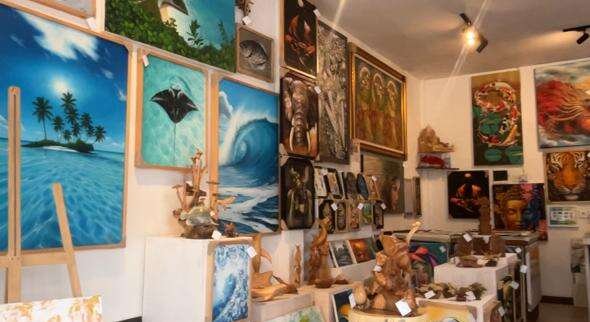
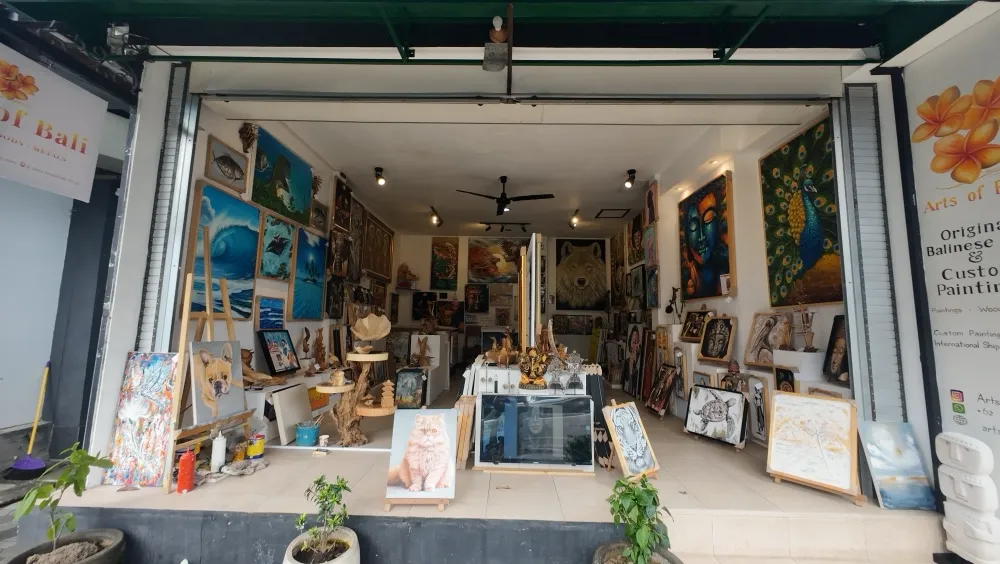
Пройдитесь по залам галереи Arts of Bali, и одна категория работ остановит посетителей на месте. Холсты широкие. Фигуры бесчисленны. Каждая картина несет в себе шум и тепло живой балийской общины, переданные с натуралистичными деталями, настолько точными, что вы почти слышите игру гамелана изнутри рамы. Это Роспись в стиле Убуда, Традиция, которая преобразила балийское искусство в XX веке и остается самой эмоционально насыщенной традицией живописи, когда-либо созданной на острове.
На сайте Искусство Бали, Мы предлагаем широкий выбор подлинных Картины в стиле Убуда получены непосредственно от мастеров-художников, работающих в живых традициях Убуда. Каждый предмет в этом путеводителе - это реальное произведение в нашей коллекции, со своей собственной историей, которую стоит рассказать.
Что отличает живопись в стиле Убуда от всех других балийских традиций
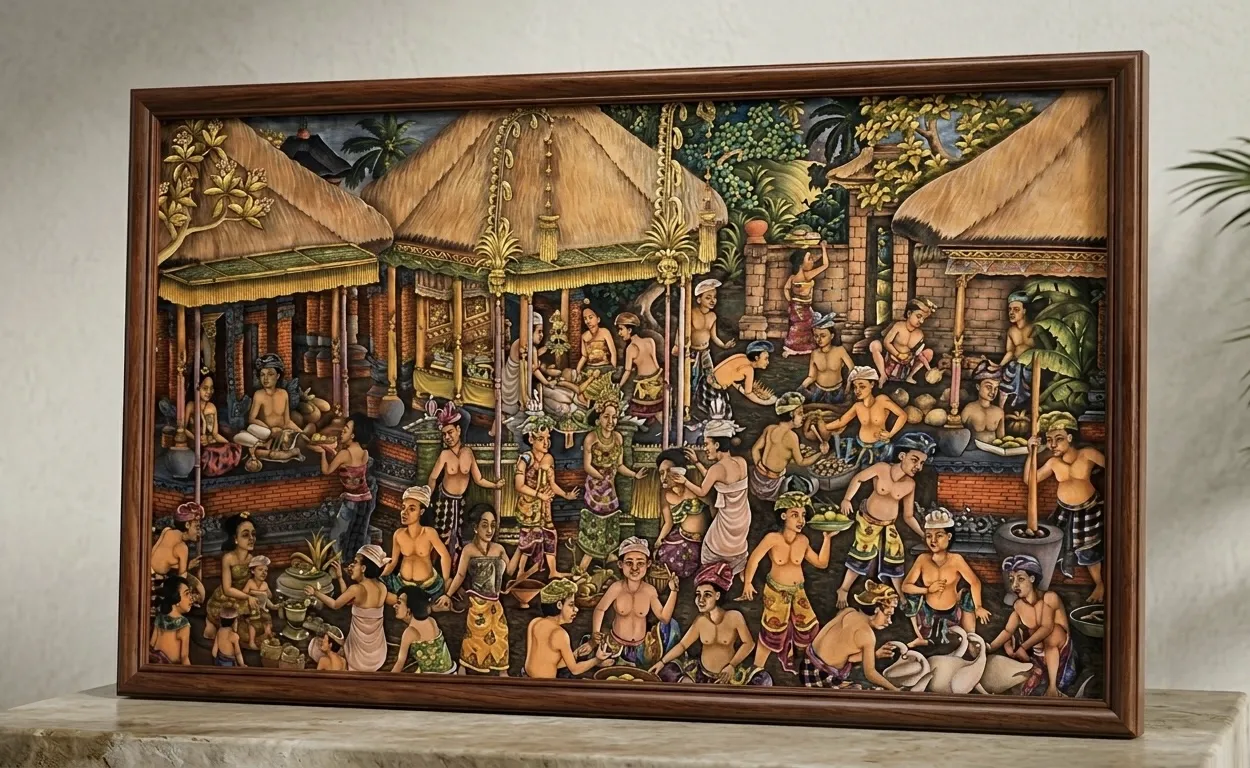
До 1930-х годов балийская живопись была почти полностью набожной. Художники работали в рамках строгой визуальной грамматики Традиции Камасана, Изображая священные эпосы в виде плоских профильных фигур на подготовленной ткани. Работы были необычны, но они описывали мир богов и королей, а не деревенскую жизнь, разворачивающуюся прямо за дверью художника.
Роспись в стиле Убуда полностью изменили эту ситуацию. Там, где камасанские фигуры существуют в священном, вневременном пространстве, картины Убуда помещают свои объекты в узнаваемый Бали: храмовые дворики с настоящим мхом на камне, полуденный свет, проникающий сквозь банановые пальмы, специфическая поза женщины, балансирующей на голове с подношением фруктов.
Композиции плотные по замыслу. Один Живопись Убуда может содержать сорок или пятьдесят отдельных фигур, каждая из которых отличается позой, выражением лица и костюмом. Здесь нет пустого пространства, потому что балийская общинная жизнь не оставляет пустого места. Каждая церемония, каждая процессия, каждое рыночное утро - это событие для толпы. Эти картины запечатлели это с документальной честностью и необыкновенным мастерством.
В этом стиле используются натуралистичная глубина, атмосферные фоны и отбрасываемая тень, чего нет в классических работах Камасана. Художник из Убуда изображает соломенную беседку так, что можно прочитать возраст соломы. Они рисуют кокосовые пальмы, которые сгибаются под предполагаемым ветром. Мир на этих полотнах имеет погоду и гравитацию.
“Художники Убуда обнаружили, что самое святое, что они могут нарисовать, - это жизнь, которая уже происходит вокруг них”. - Рудольф Бонне, один из основателей кооператива художников ’Пита Маха", Убуд, 1936 год
Как два европейца и один принц навсегда изменили балийскую живопись
В 1927 году немецкий музыкант и художник по имени Уолтер Спис прибыл в Убуд и больше не уезжал. Он построил дом в королевском комплексе, подружился с убудским двором и начал проводить реальное время с местными художниками. Он обнаружил исключительное техническое мастерство, служащее традиции, которую никогда не просили взглянуть на окружающий живой мир.
Два года спустя приехал голландский художник Рудольф Боннет. Вместе Спис и Боннет представили холст и бумагу, поощряли художников работать на основе непосредственных наблюдений и создали рынок среди приезжих коллекционеров для работ, изображающих повседневную балийскую жизнь. Они не навязывали европейскую эстетику. Они спрашивали балийских художников, что они хотят нарисовать, когда сакральная тема не была предписана.
В 1936 году Спис, Бонне и принц Убуда Кокорда Геде Агунг Сукавати основали Пита Маха кооператив художников. На пике своего развития его членами были более 150 художников. Pita Maha устанавливала стандарты качества, организовывала международные выставки и создавала инфраструктуру, которая позволяла Традиционная балийская живопись в манере Убуда, чтобы впервые попасть к коллекционерам в Европе и Америке.
Художники, пришедшие через Пита Маха, включая I Gusti Nyoman Lempad и Anak Agung Gde Sobrat, определили то, что мы сейчас называем стилем Убуда. Их влияние перешло через несколько поколений и по-прежнему активно проявляется в работах, создаваемых сегодня. ЮНЕСКО официально признала живой культурный ландшафт Бали как объект выдающейся универсальной ценности, подтверждая глубину и глобальное значение традиций, которые несут в себе эти картины.
Четыре истории, написанные на четырех холстах
Сайт Картины в стиле Убуда В настоящее время в нашей коллекции каждый из них рассказывает свою историю из балийской жизни и мифологии. Здесь они представлены во всех подробностях, одна за другой.
Баронг противостоит Рангде
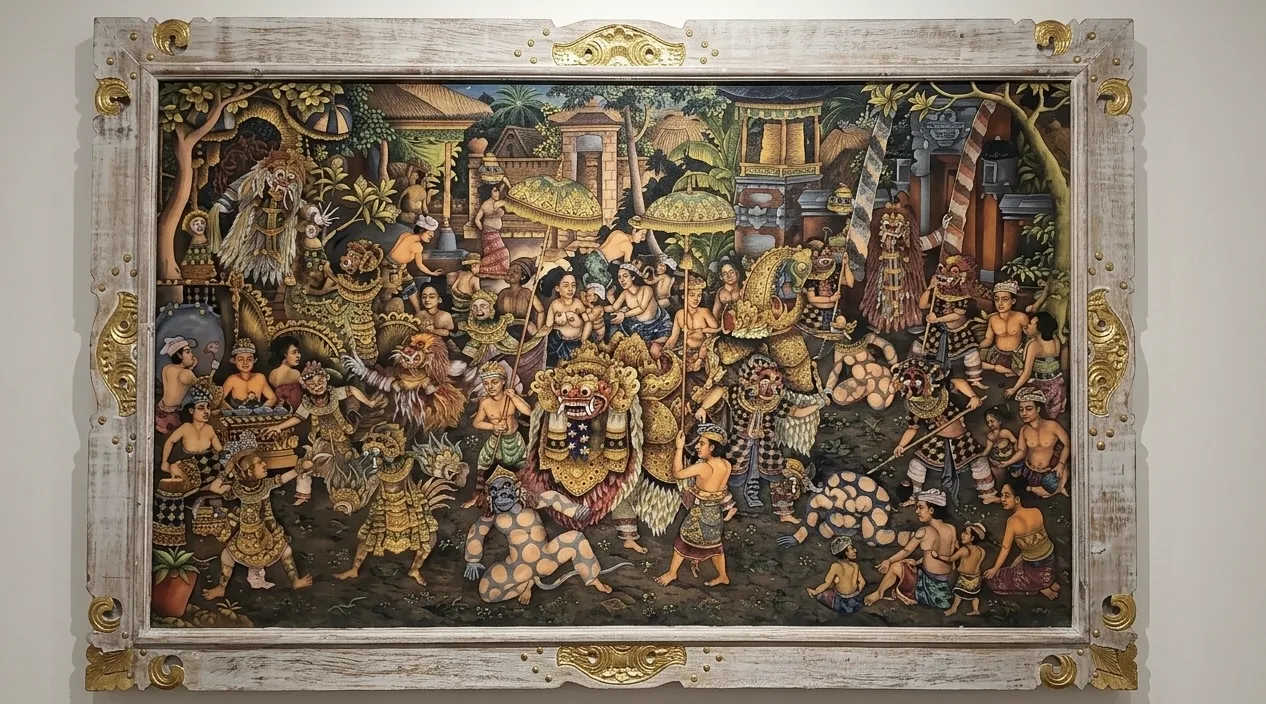
Золотая маска Баронга занимает всю центральную часть кадра. Его тело, покрытое белым мехом, изгибается вперед на фоне толпы воинов, одетых в черно-белую ткань поленг, каждый из которых несет керис. Справа возвышается Рангда с ее клыкастой маской, дикими седыми волосами и когтистыми руками. Между ними без паузы продолжается деревенский мир: торговец у края холста, женщина с корзиной для подношений, полувидимые за листвой ворота храма.
Это ритуальная драма Баронг-Рангда, битва между защитными и разрушительными силами, которую Бали воспроизводит в церемониях из сезона в сезон. Художник не относится к ней как к мифу. Фигуры имеют конкретный вес и позу реальных людей в движении. Золотая краска на маске Баронга была нанесена в несколько проходов и по-разному ловит свет галереи под каждым углом.
Резная бело-золотая рама была изготовлена отдельно балийским резчиком по дереву. Рама и холст вместе образуют один законченный объект, единый в своем церемониальном весе.
Цирк Кечак на пике своей популярности
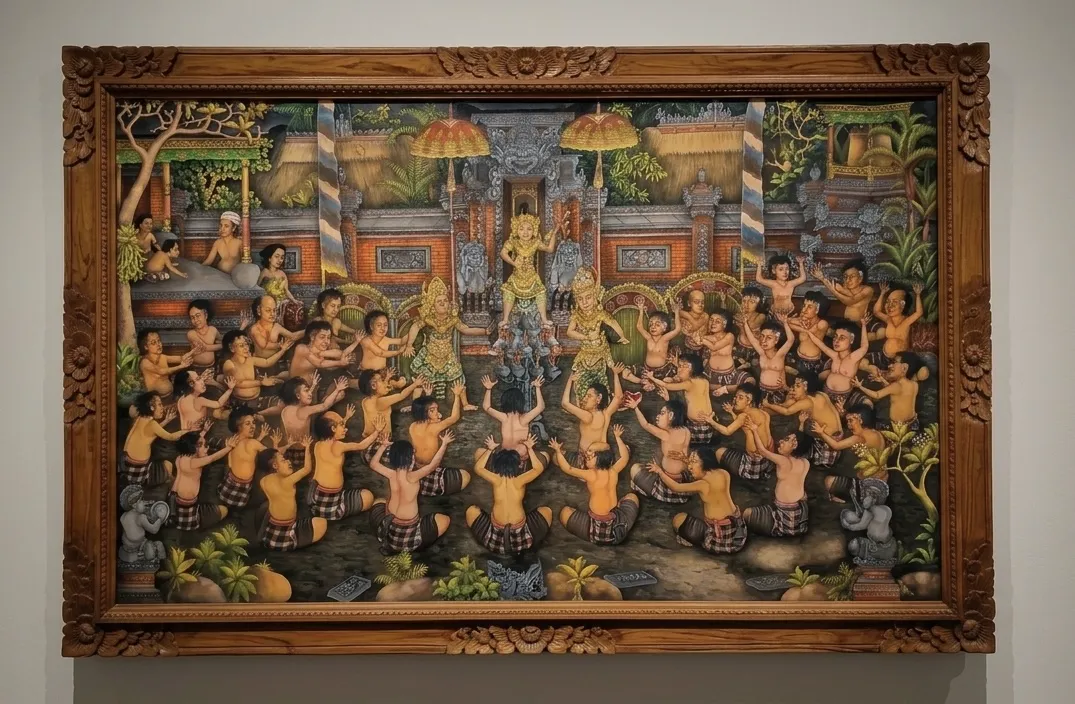
Шестьдесят мужчин в черно-белых поленницах образуют концентрические кольца с поднятыми вверх руками. В центре на резной платформе возвышается фигура в полных золотых королевских регалиях, корона ловит теплый свет, глаза устремлены вперед. Ворота храма за ее спиной написаны с достаточной архитектурной точностью, чтобы определить место действия: Центральный Бали, королевский комплекс, церемония, имеющая несомненное значение.
Кечак зародился как ритуал транса и стал одной из самых признанных исполнительских традиций в мире. Художник запечатлел момент максимальной энергии, каждую фигуру в полном напряжении, круг завершен, звук подразумевается через плотность открытых ртов и раскинутых рук.
Что отличает мастерство Роспись в стиле Убуда от технически грамотного именно в этом качестве: может ли художник заставить зрителя почувствовать звук и коллективный жар сцены, которую картина не может вместить в буквальном смысле. В данной работе это удается.
Королевская процессия движется по деревне
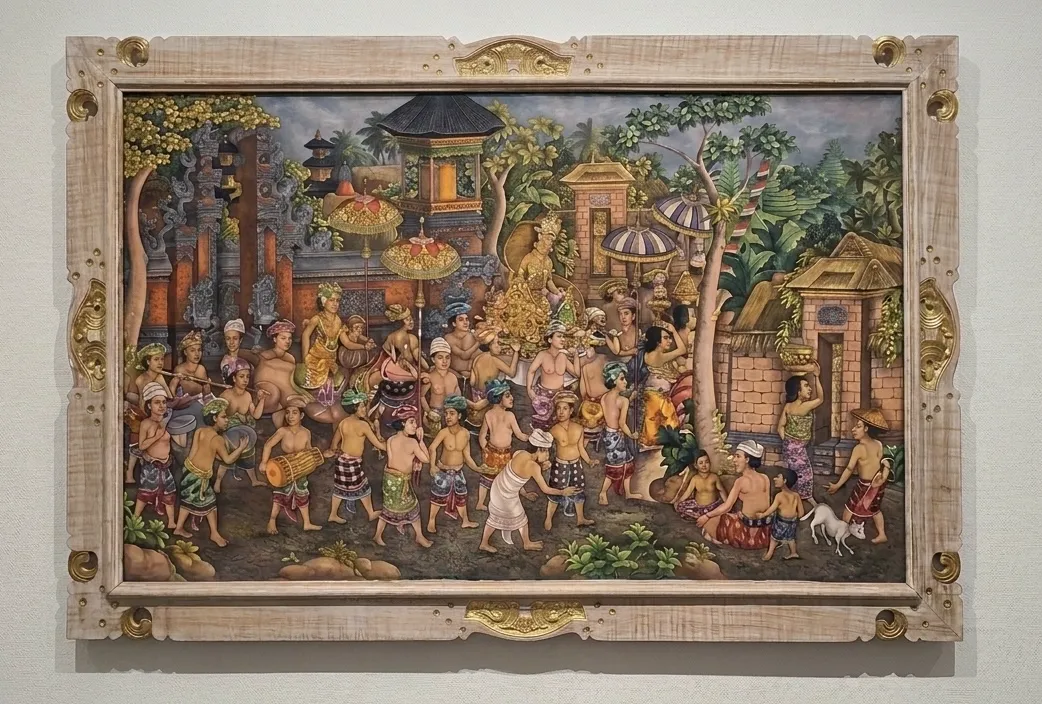
Полный вид королевской процессии на картине в стиле Убуд. Золотую принцессу несут на позолоченном паланкине во время деревенской церемонии. Музыканты, сопровождающие и балийская храмовая архитектура заполняют композицию от края до края.
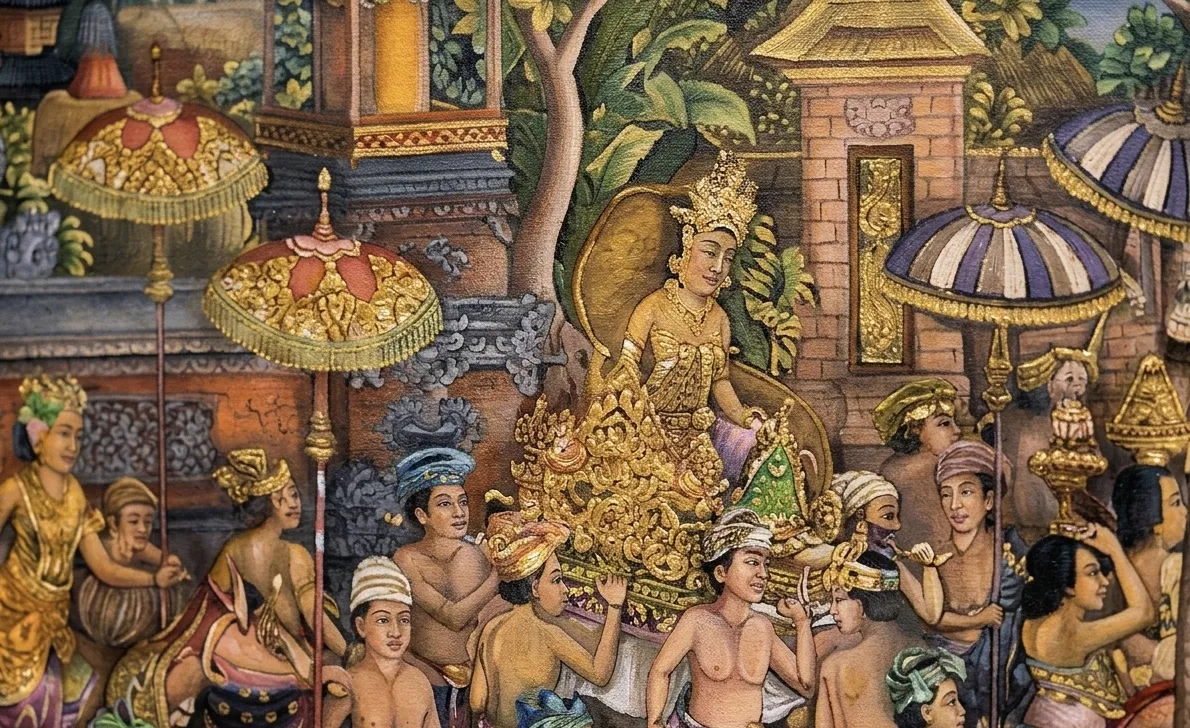
Деталь крупным планом той же картины. При таком масштабе полностью раскрывается индивидуальная работа кисти на позолоченном паланкине, многослойных церемониальных зонтиках и выражениях лиц каждого сопровождающего.
Принцесса в золотом сидит на позолоченном паланкине, который несут на плечах восемь мужчин. С обеих сторон над ней возвышаются церемониальные зонтики в полоску пурпурного и белого цветов. Впереди процессия гамеланов движется к воротам храма. Позади бегут дети, стараясь не отставать. На правом краю полотна белая собака наблюдает за процессией из-за стены храма.
Собака не является символом. Она просто присутствует, как присутствует собака на любой деревенской церемонии на Бали. Этот инстинкт является определяющим признаком подлинного Живопись УбудаСвященное и совершенно обыденное занимают одно полотно с одинаковым вниманием.
Детальная фотография этой работы крупным планом показывает, как много информации спрессовано в одной композиции. Золотая структура паланкина выстроена из множества пигментных слоев. На короне принцессы изображен индивидуальный цветочный орнамент. Каждый сопровождающий несет свой предмет и держит его по-разному. Такой уровень мастерства вознаграждает зрителя, который проводит с работой реальное время, а не проходит мимо нее с первого взгляда.
Три вещи, которые должен заметить каждый первый зритель
Сообщество как субъект
В отличие от европейской живописи, где одна фигура доминирует в композиции, в картинах Убуда главным героем является сообщество. Ни один человек не изолирован от группы. Каждая фигура участвует в общем событии, и художник уделяет каждому индивидуальное внимание в позе, выражении лица и костюме.
Архитектура как местоположение
Храмовые ворота, резные каменные стены, соломенные беседки и тропическая растительность - это не декорации. Они точно определяют место действия. Художники Убуда передают архитектурные детали достаточно точно, чтобы балийский зритель мог определить, в каком регентстве проходит церемония, к какому социальному классу относится комплекс.
Золото как духовный ранг
Золотой пигмент в живописи Убуда обозначает божественный или королевский статус: Маска Баронга, корона принцессы, церемониальный паланкин. Художники часто используют настоящее сусальное золото или пигмент с золотой смесью, придавая этим элементам на картине тот же визуальный вес, который они имеют в реальной церемонии.
Почему серьезные коллекционеры выбирают живопись в стиле Убуд
Подлинный Роспись в стиле Убуда Это один из самых эффективных способов привнести живую культуру Бали в дом или коллекцию. Тематика работ - это не мифологическая абстракция, рассматриваемая издалека. Это конкретная церемония, конкретный момент, написанный художником, выросшим в рамках изображаемой традиции.
Масштаб этих работ также имеет значение. Большой Убудская роспись Бали на стене не ведет себя как украшение. Это скорее окно, пространство, которое приглашает внимательно посмотреть и со временем вознаграждает за это. Коллекционеры, приобретающие эти работы, постоянно сообщают, что обнаруживают новые детали спустя месяцы и годы после того, как впервые повесили их.
По мере того как традиционные художники Бали стареют, а молодые живописцы все реже переходят на классический стиль Убуда, работы такого качества становятся поистине дефицитными. Приобрести такую картину сейчас, пока традиция еще сохраняется на таком уровне, значит приобрести то, что будет значительно сложнее найти в течение следующего десятилетия.
Аутентичная живопись в стиле Убуда в нашей галерее в Семиньяке
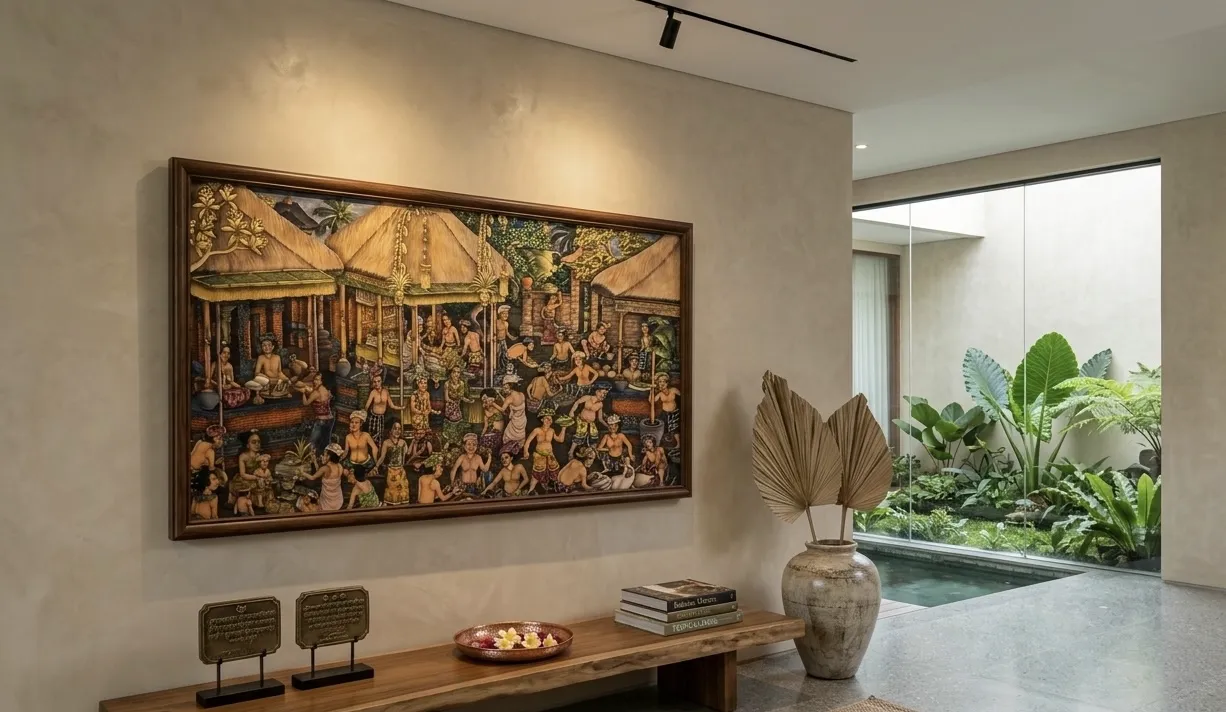
Каждый Роспись в стиле Убуда в коллекции Arts of Bali была отобрана лично. Мы оцениваем качество прорисовки отдельных фигур, однородность кисти в композиции, которая может содержать пятьдесят и более персонажей, и стойкость нанесения пигмента. Картина, которая выглядит впечатляюще с другого конца галереи, должна выдержать и пристальный взгляд с расстояния тридцати сантиметров.
Мы работаем с художниками, которые обучались в традициях Убуда на протяжении нескольких поколений, где техника и культурные знания передаются от учителя к ученику, а не через формальное учебное заведение. Для коллекционеров с конкретным сюжетом или сценой в голове мы также организуем индивидуальные заказы где художник работает по подробному заданию, сохраняя за собой полную творческую власть над исполнением.
Международные перевозки осуществляются нашей собственной командой, с использованием соответствующих подрамников и защитной упаковки для больших полотен. Каждая работа отправляется с документальным подтверждением имени художника, деревни происхождения и использованных материалов. Посетите нашу галерею по адресу Jl Raya Seminyak No.42, просмотрите доступные работы в нашем разделе онлайн-галерея, Или свяжитесь с нами напрямую через WhatsApp, чтобы обсудить конкретную работу.
Забота о вашей картине Убуд Бали
Масло на холсте долговечно, но реагирует на окружающую среду. Держите картину вдали от прямых солнечных лучей и влажности выше 65 процентов. Осторожно протирайте поверхность мягкой сухой кистью. Для больших полотен убедитесь, что настенное крепление выдержит общий вес холста и рамы. В раме под стеклом с защитой от ультрафиолетового излучения или с нанесенным УФ-лаком хорошо сохраняется Роспись в стиле Убуда сохранится в поколениях.
Каждый Роспись в стиле Убуда в нашей галерее - это оригинальная работа балийского мастера, написанная в натуралистической традиции, которая определяет искусство Убуда с 1936 года. Ознакомьтесь с текущей коллекцией или свяжитесь с нами, чтобы обсудить заказ.
Ознакомьтесь с нашей коллекцией УбудаИнтересуетесь классическими традициями, которые предшествовали появлению Убуда? Прочитайте наш путеводитель по Камасан живопись Бали, из которого в 16 веке выросли все стили балийской живописи. Или посетите Галерея "Искусство Бали чтобы увидеть картины, резьбу по дереву и изделия из металла, представленные вместе.