In the heart of Bali, art is not decoration. It is devotion. Discover how traditional Balinese painting carries an entire civilization within every stroke, and why preserving it matters more than ever.
There is a moment, if you stand long enough in front of a Balinese painting, when the canvas stops feeling like canvas. The golden shimmer of a dancer’s headdress seems to breathe. The terraced rice fields ripple as if moved by an unseen breeze. The women carrying ceremonial offerings look not like figures frozen in pigment, but like memory itself — ancient, alive, and quietly insisting that you bear witness. This is not coincidence. This is craftsmanship rooted in something far older than technique.
Искусство Бали was born from exactly this kind of reverence. Not simply a gallery, not merely a studio, but a deliberate act of cultural guardianship. Each painting carries with it the weight of Balinese Hindu philosophy, the rhythm of ceremony, and the unspoken code of Tri Hita Karana: the sacred harmony between humanity, nature, and the divine. Understanding Искусство Бали means understanding Bali itself. And that story is worth telling from the very beginning.
The Unbreakable Bond Between Balinese Art and Balinese Life
To speak of traditional Balinese art without speaking of tradition is like describing a temple without mentioning God. On this island, the two have never been separate. Long before Western art historians arrived to categorize and classify, Balinese painters were already making work for a single sacred audience: the divine. Paintings adorned shrine cloths. Canvases covered ceremony halls. The Kamasan style — Bali’s oldest living painting tradition — depicted scenes from the Mahabharata and the Ramayana not as entertainment, but as visual prayers.
Art as Spiritual Language
This is the inheritance that Искусство Бали honors. Every brushstroke begins with an understanding that Balinese painting is not purely visual. It is spiritual language. When a painter renders a woman carrying canang sari (flower offerings) through a temple courtyard, they are not simply documenting. They are transmitting: passing forward a ritual that has been performed every dawn for a thousand years, ensuring it will be recognized and remembered by anyone who one day hangs that work in their home, anywhere in the world.
In Balinese philosophy, the artist is not a creator. They are a vessel. Beauty flows through them from the same source as rain and rice and ritual fire. The painting is not made. It is received.
On the Philosophy of Balinese Artistic TraditionThe Role of Arts of Bali in Keeping the Tradition Alive
The world does not stay still, and neither does Bali. Rapid tourism development, digital distraction, and the relentless pressure of modernity have pushed many island traditions toward the margins. Young Balinese artists face the constant pull of contemporary global aesthetics, while the deep vocabulary of Wayang figures, Legong dancers, and sacred mountain landscapes risks becoming scenery rather than scripture. This is the quiet crisis that Искусство Бали was established to address.
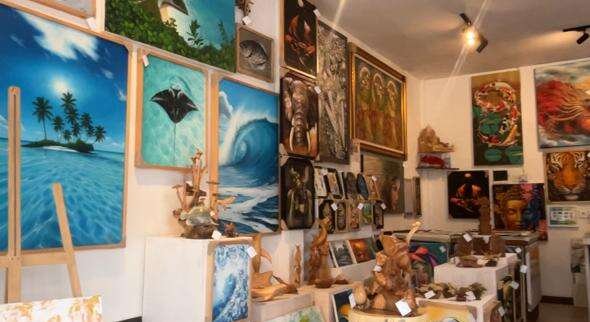
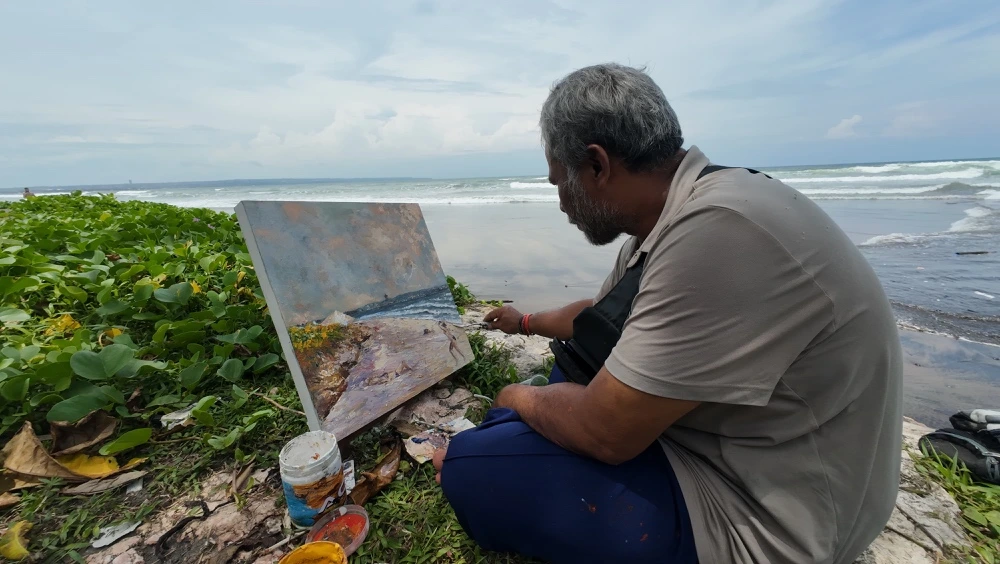
By working directly with Balinese painters who have inherited and absorbed the kearifan lokal (local wisdom) of their ancestors, Искусство Бали functions as both studio and sanctuary. Here, the Balinese painting traditions of Ubud, Batuan, and Kamasan are not treated as museum pieces. They are treated as living languages: adaptable enough to speak to a contemporary audience, yet faithful enough to carry their original meaning intact.
Local Wisdom Woven Into Every Canvas
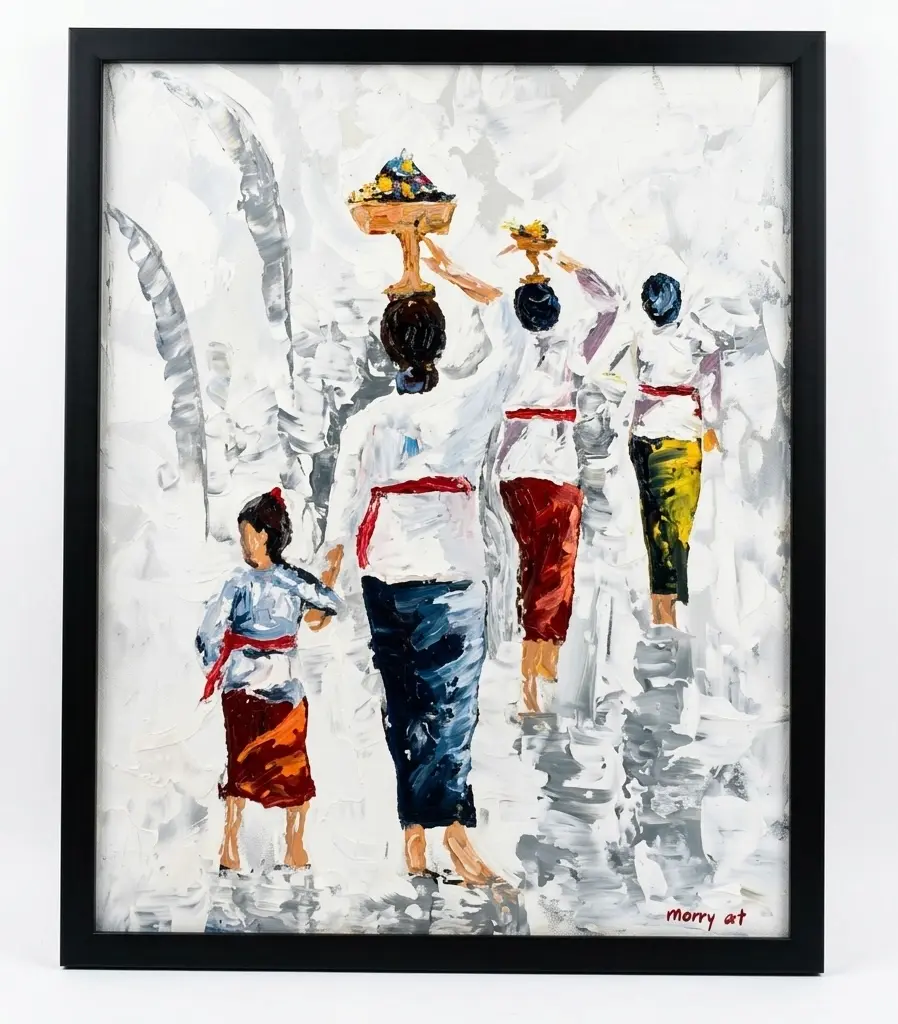
Pick up any painting from Искусство Бали and hold it at arm’s length. What you are holding is not simply pigment on canvas. It is an encoded archive of Balinese local wisdom. The color choices are not arbitrary: the warm ochres and terracottas echo the sacred penjor decorations lining village roads during Galungan. The white fabric of a ceremonial blouse carries the meaning of purification and spiritual readiness. The child’s hand tucked into a mother’s palm is a symbol of cultural continuity so deeply embedded in Balinese consciousness that it needs no caption.
Ceremony as Continuity
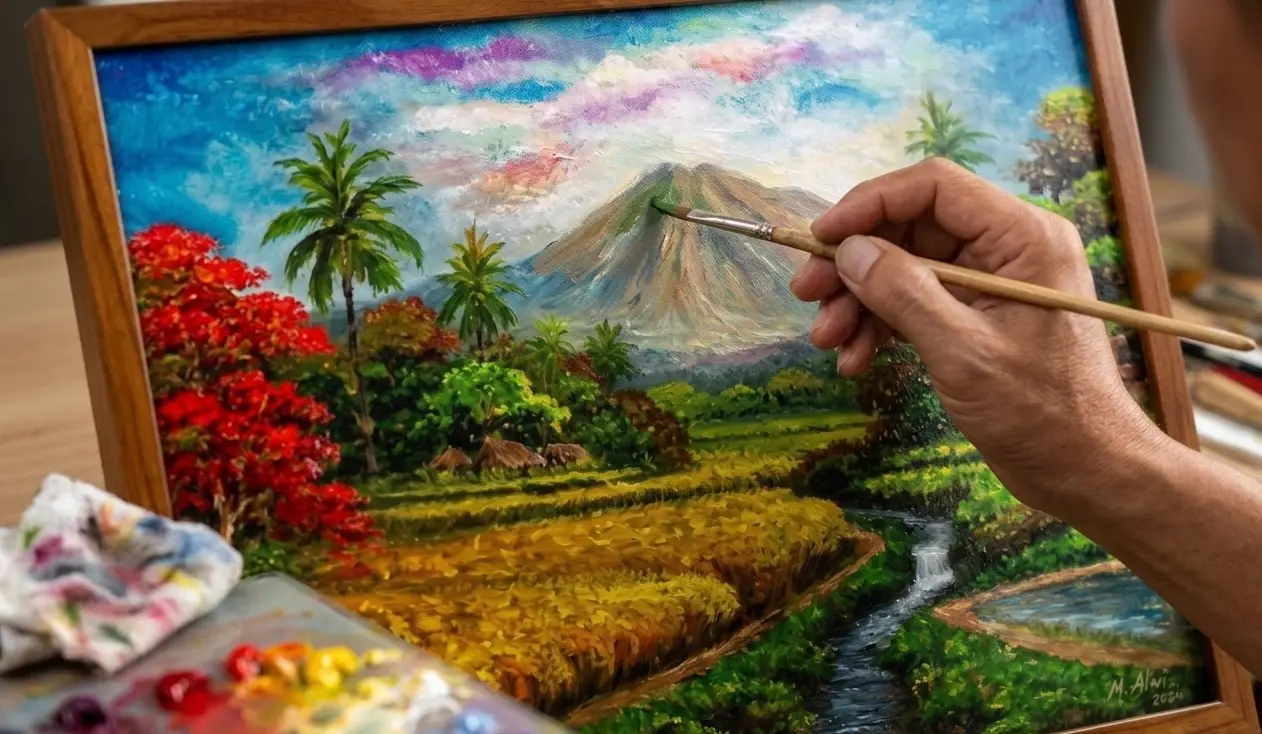
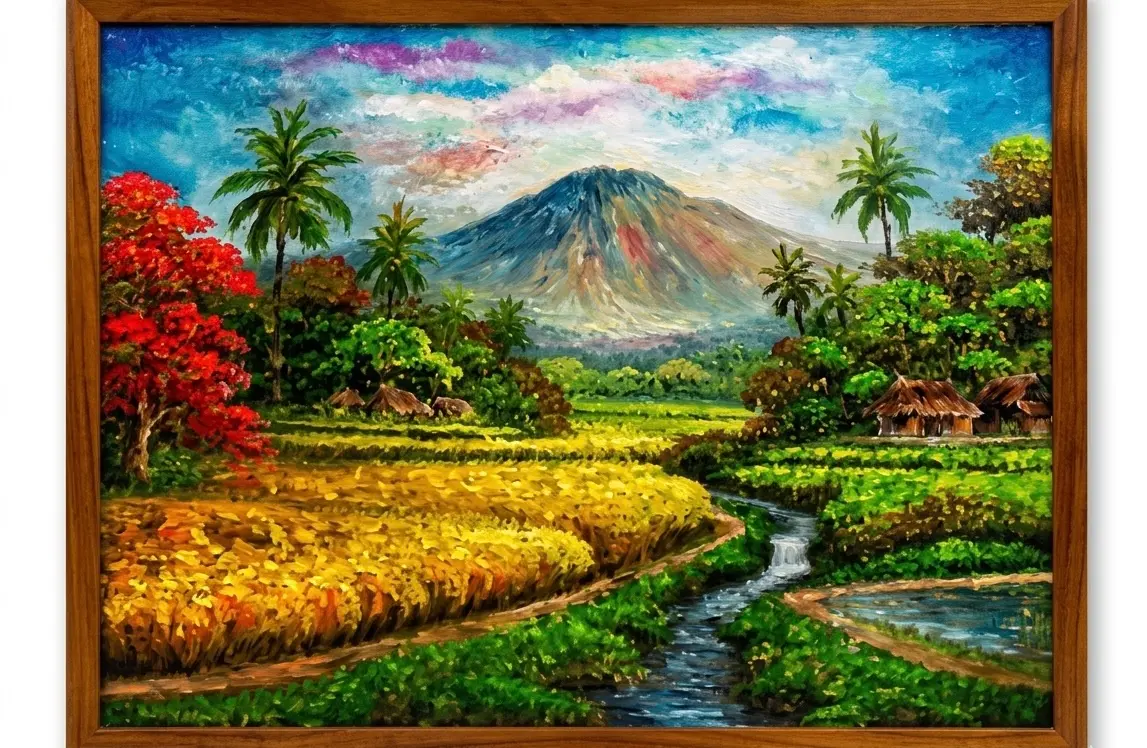
This is what separates authentic Bali artwork from mere decoration. When a painter depicts Gunung Agung presiding over golden rice paddies, they are painting a cosmology. The mountain is not landscape; it is the axis of the Balinese universe. The rice fields are not agricultural observation; they are subak — the ancient cooperative water management system now recognized by UNESCO as part of the world’s intangible cultural heritage. Every great Balinese painting is, in this sense, a geography of the sacred.
Tri Hita Karana
The Balinese philosophy of threefold harmony — with God, with people, and with nature — that underlies every compositional choice in authentic Balinese art.
Canang Sari
Daily flower offerings woven from palm leaf, placed at shrines and crossroads. One of the most recurring motifs in Balinese painting, representing devotion and gratitude.
Subak
Bali’s UNESCO-recognized ancient irrigation system, made visible in countless landscape paintings showing the terraced rice paddies that define the island’s sacred geography.
Sacred Figures, Living Guardians: The Barong in Balinese Painting
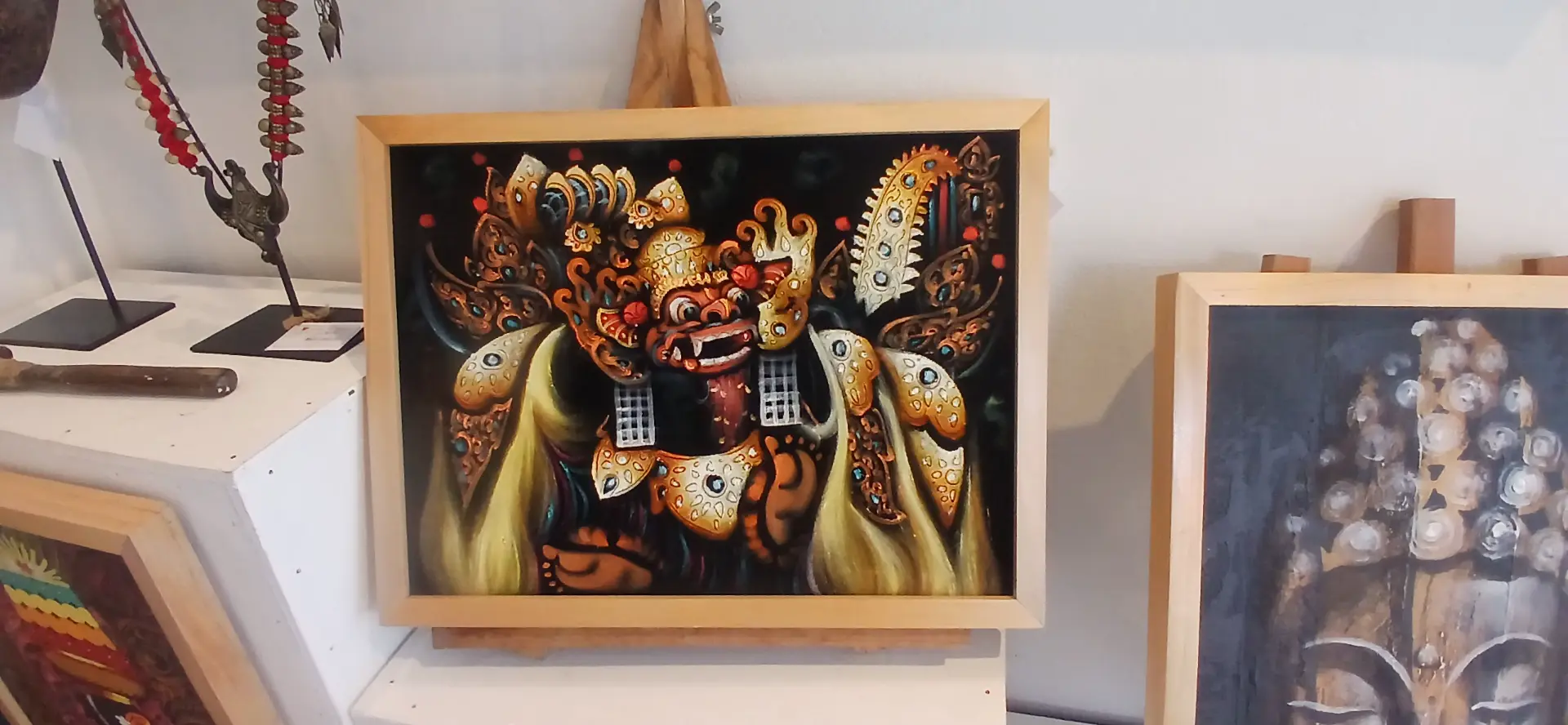
Not all traditional Balinese art is about quiet devotion. Some of it roars. The Barong — Bali’s great lion-spirit guardian, protector of the village, embodiment of the forces of good — has been a central subject of Balinese painting for centuries. To hang a Barong painting is not simply an aesthetic choice. In the Balinese understanding of sacred objects and sacred images, it is an act of protection: an invitation to the guardian spirit to watch over the space it inhabits.
The painters of Искусство Бали approach Barong paintings with particular care. Every detail of the gilded ornament, every ruby and turquoise jewel embedded in the headdress, every curl of golden fur has its correct form — a form that has been refined across generations of Balinese ceremonial art. To take liberties with these forms is not artistic freedom; it is a kind of disrespect. The masters at Arts of Bali understand this deeply.
Balinese Painting as the Mirror of a People
A civilization is only as resilient as its capacity to see itself clearly. Art, in this sense, is not a luxury. It is a necessity. The traditional Balinese art produced by Искусство Бали functions as exactly this kind of mirror: a surface in which the Balinese people can recognize their values, their ceremonies, their sacred geographies, and their relationships with one another and the divine. When a Balinese family hangs a painting of women walking to the temple on the wall of their home, they are not decorating a room. They are making a statement of identity.
The Dancer as Cultural Symbol
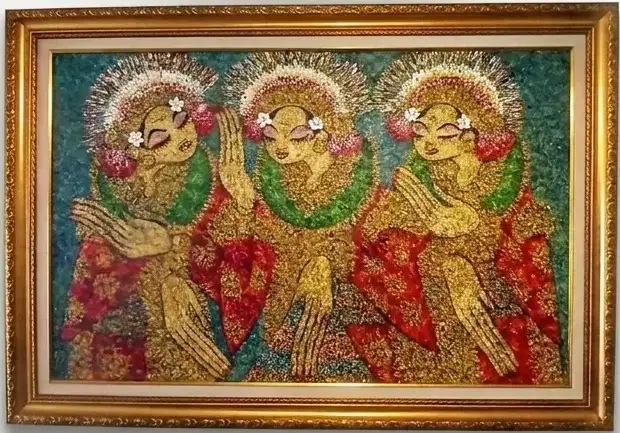
For visitors, collectors, and art lovers worldwide, the paintings of Искусство Бали offer something increasingly rare in a globalized world: genuine cultural specificity. The golden headdresses of three Balinese dancers captured in shimmering mixed-media texture, their faces serene in mid-prayer — this is not “tropical art.” This is Bali, unmistakably and completely. And that specificity is the very thing that makes it universal, because it speaks to something every human culture shares: the impulse to sanctify beauty and make the invisible visible through art.
A Gallery That Teaches: Bringing Balinese Culture Into Every Room
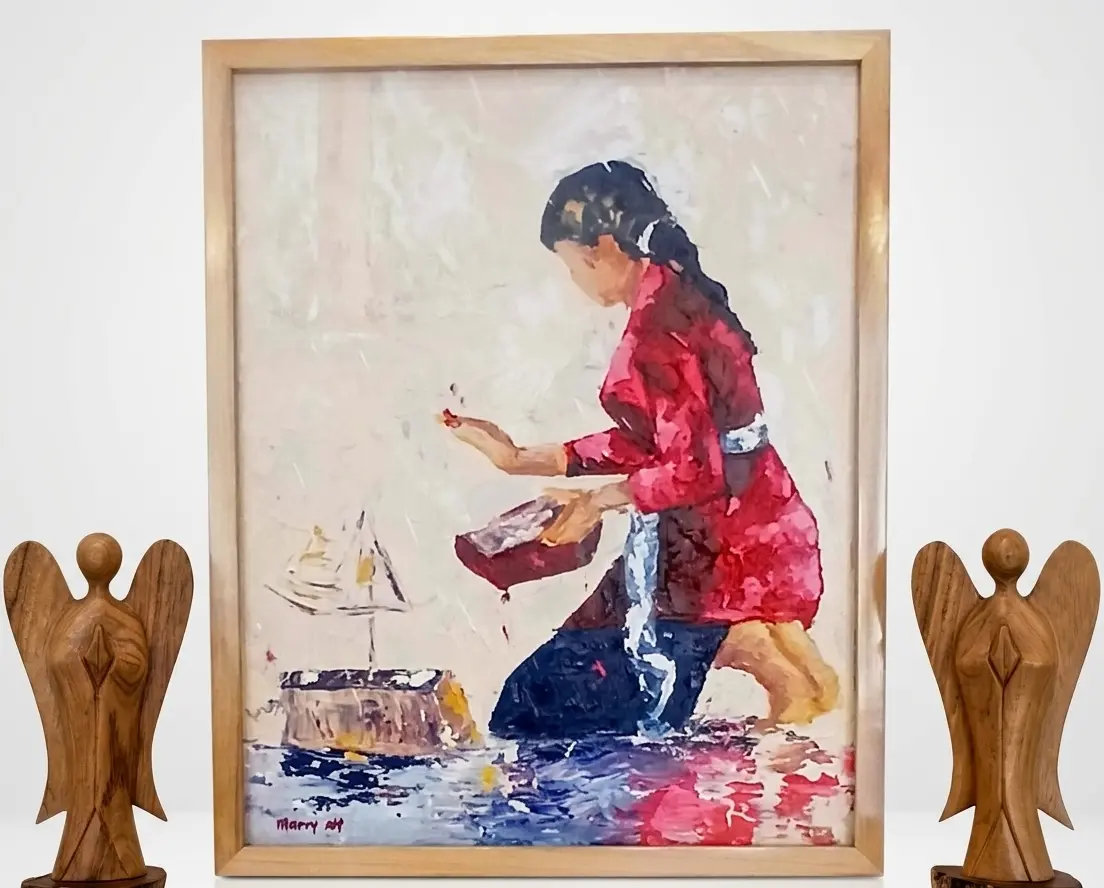
Perhaps the most quietly revolutionary thing about Искусство Бали is what happens after the painting leaves the studio. Hung in a home in Amsterdam, Jakarta, Sydney, or New York, a Balinese painting becomes an ambassador — a living introduction to a culture that most of the world has only glimpsed through the narrow lens of tourism. The woman releasing a floating offering into still water is not an anonymous figure. She is a Balinese woman performing nganyut: an act of letting go, of gratitude, of surrender to the currents of fate. When someone asks about the painting on the wall, a conversation begins.
According to documentation from the UNESCO World Heritage Cultural Landscape of Bali, the visual arts have historically served as the primary vehicle through which Balinese cosmology and social values are transmitted across generations. Искусство Бали participates in this transmission consciously, ensuring that every роспись на заказ Бали project carries enough cultural context and genuine artistic quality to serve as a real point of connection between Balinese culture and whoever is fortunate enough to live with it.
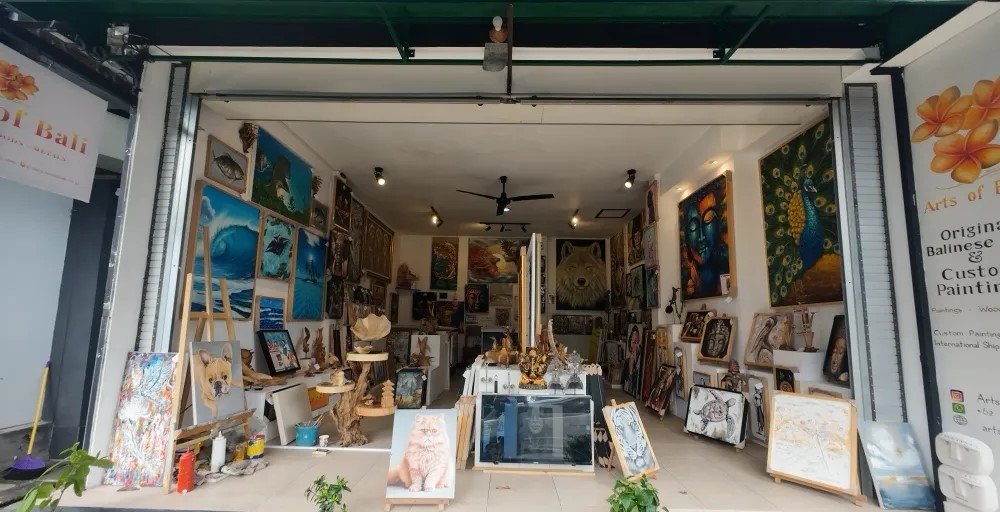
Pouring Balinese Artistic Philosophy Into Every Stroke
What Is Taksu?
In Balinese artistic tradition, the process of making is inseparable from the meaning of the work. Painters in the Ubud tradition do not simply choose their subjects. They are guided by an understanding that certain images carry certain energies. A painting of Barong is protective. A depiction of the sacred mountain is an act of reverence. A scene of women at ceremony is an affirmation of communal life and spiritual continuity. This philosophy is not superstition; it is an extraordinarily sophisticated understanding of how visual symbols function in human psychology and community life.
Collectors and interior designers who work with authentic Balinese painting consistently report a similar experience: the work does not disappear into the room. It claims space. It creates what the Balinese themselves call taksu — a word with no direct translation, but roughly meaning the divine charisma or spiritual magnetism that great art carries. When a room has taksu, people feel it before they can name it. They gravitate toward the painting. They find themselves returning to it. This is what Искусство Бали strives to preserve and to share with the world.
Taksu cannot be manufactured or imitated. It can only be earned through mastery, through sincerity, through genuine rootedness in the tradition from which it springs.
On the Concept of Taksu in Balinese Artistic TraditionLet the Culture of Bali Live on Your Wall
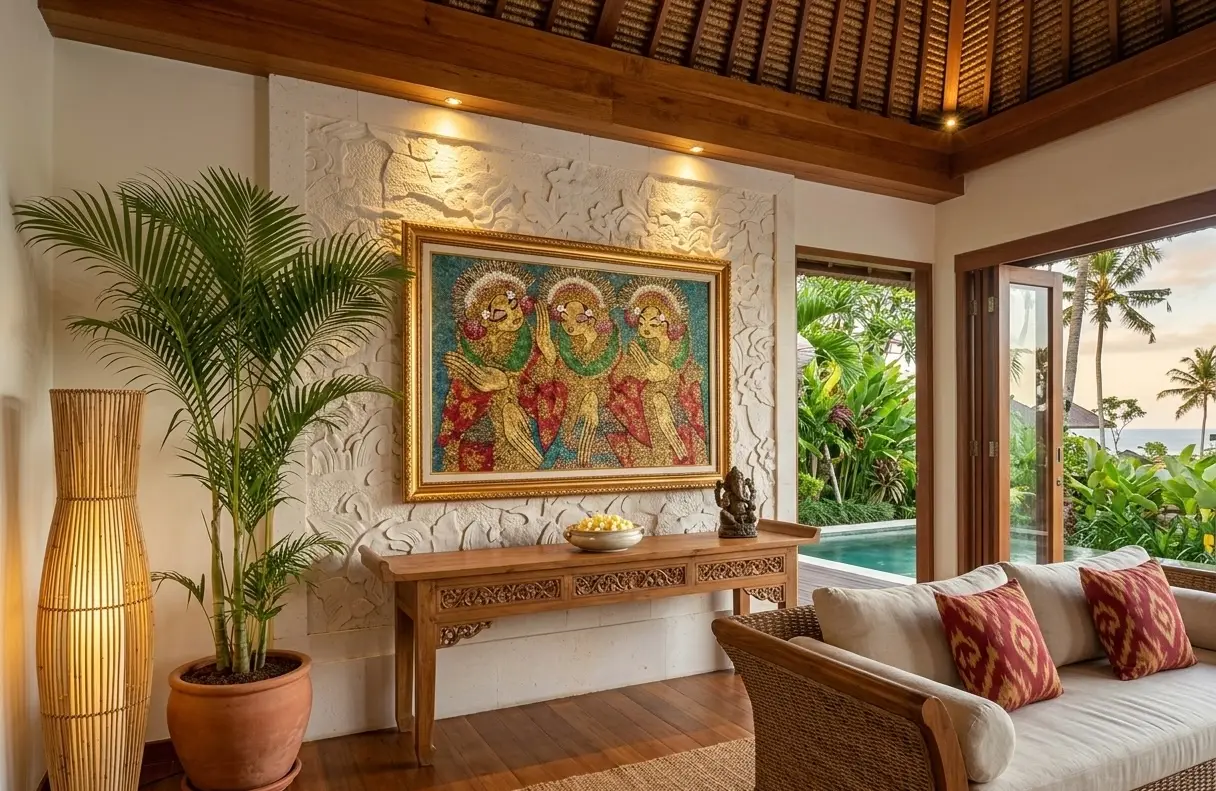
To bring a painting from Искусство Бали into your home is to bring Bali itself. Not the tourist-brochure version, but the real one: complex, devotional, luminous, and alive. It is to participate, however humbly, in the act of preservation that the painters of Bali have always performed. Every Balinese painting ever made has been, at its heart, an act of love: love for the island, love for the tradition, love for the beauty that this particular corner of the world has been generating with extraordinary consistency for a thousand years.
In a world where authenticity is increasingly scarce, there is something deeply valuable about an object that knows exactly where it comes from — an object that carries its origins not as a label, but as a living quality woven into every layer of paint. The traditional Balinese art of Искусство Бали is precisely this kind of object. It does not need to explain itself. It simply needs to be seen.
For those interested in exploring the wider world of Balinese painting history and tradition, rich scholarship awaits on how these traditions evolved from ancient Kamasan cloth paintings to the expressive contemporary styles practiced today. And for those seeking to commission a work that truly represents this culture, explore our custom painting services — where your vision meets centuries of Balinese artistic mastery.
The island of the gods is speaking. Искусство Бали is listening — and translating, one extraordinary painting at a time.
Own a Piece of Balinese Heritage
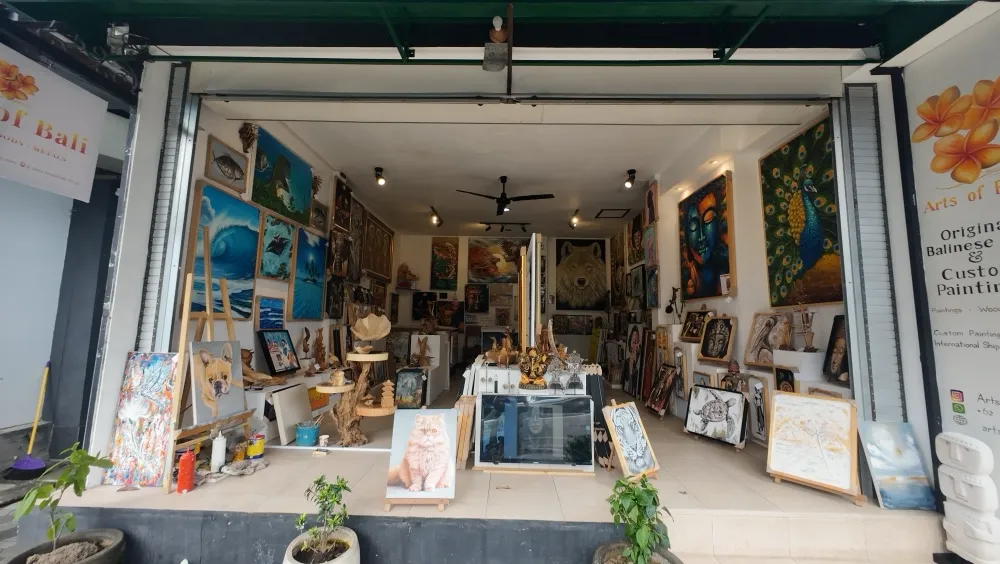
Browse original paintings and custom commission work by the artists of Arts of Bali. Each piece is a living expression of a culture that has made beauty sacred for a thousand years.
View the Gallery