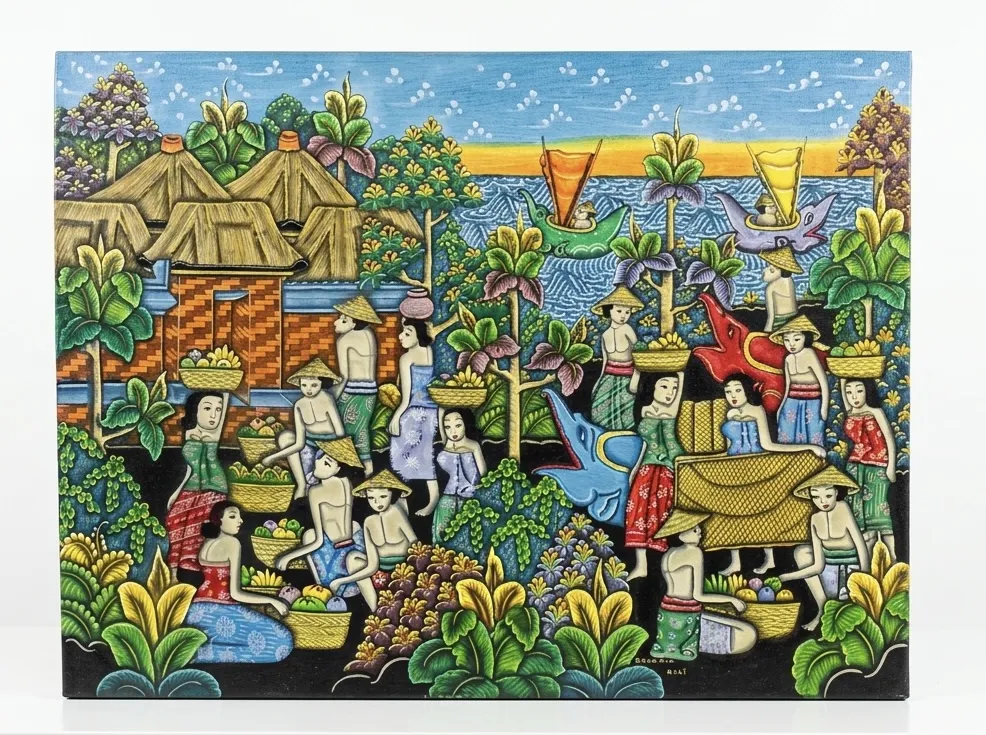
In every Batuan painting, Bali does not pose — it simply lives. Every basket of fruit, every fishing boat, every figure moving through the canvas carries the unguarded rhythm of a culture that has never stopped painting its own story.
Batuan painting Bali is one of the island’s oldest and most culturally layered art forms — a style born in a single village south of Ubud, yet rich enough to hold the entire world of Balinese daily life within its dense, vibrant compositions. These are not quiet decorative pieces. They are living documents: markets in full swing, fishermen navigating stylised seas, farmers moving in patient harmony with their buffaloes and rice fields. At Arts of Bali gallery on Jl. Raya Seminyak No.42, an authentic collection of Batuan-influenced paintings invites visitors to discover this enduring tradition — and to bring a piece of Bali’s living soul home.

What Is Batuan Painting Bali? A Village Tradition Born from Ink and Daily Life
The story of Batuan painting begins in the 1930s in the village of Batuan, in Bali’s Gianyar regency — a community south of Ubud long known for its authentic Balinese dancers, musicians, and skilled craftspeople. When American anthropologists Margaret Mead and Gregory Bateson arrived in Bali during that decade, they commissioned local Batuan artists to paint the texture of their cultural life: ceremonies, folklore, daily routines, and the landscapes that shaped them. More than 1,200 works were commissioned from over 80 artists. The effect on the village’s creative life was profound and lasting.
What emerged was a style unlike anything else in Balinese art. Where the Ubud school used open spaces and single focal points, Batuan painting filled every centimetre of canvas with figures. Where the Young Artist style celebrated bold, child-like colour, Batuan remained rooted in storytelling — in the dense, ink-layered tradition of wayang kulit shadow puppetry that had shaped Balinese visual culture for centuries. Subjects were drawn from lived experience: the market, the rice field, the sea, the village compound, the ceremony. The result is an art form of extraordinary narrative density. You do not glance at a Batuan painting. You read it.
Over the following decades, the style evolved naturally. While the earliest Batuan works used predominantly dark ink gradations — building form through layered shadow — contemporary Batuan-influenced painters introduced vivid, earthy tones while preserving the essential quality of the tradition: a canvas so alive with human activity that the eye never stops moving, never finds an empty corner, never reaches a resting point without discovering another story waiting.

The Stories Hidden Inside Every Batuan Painting Canvas
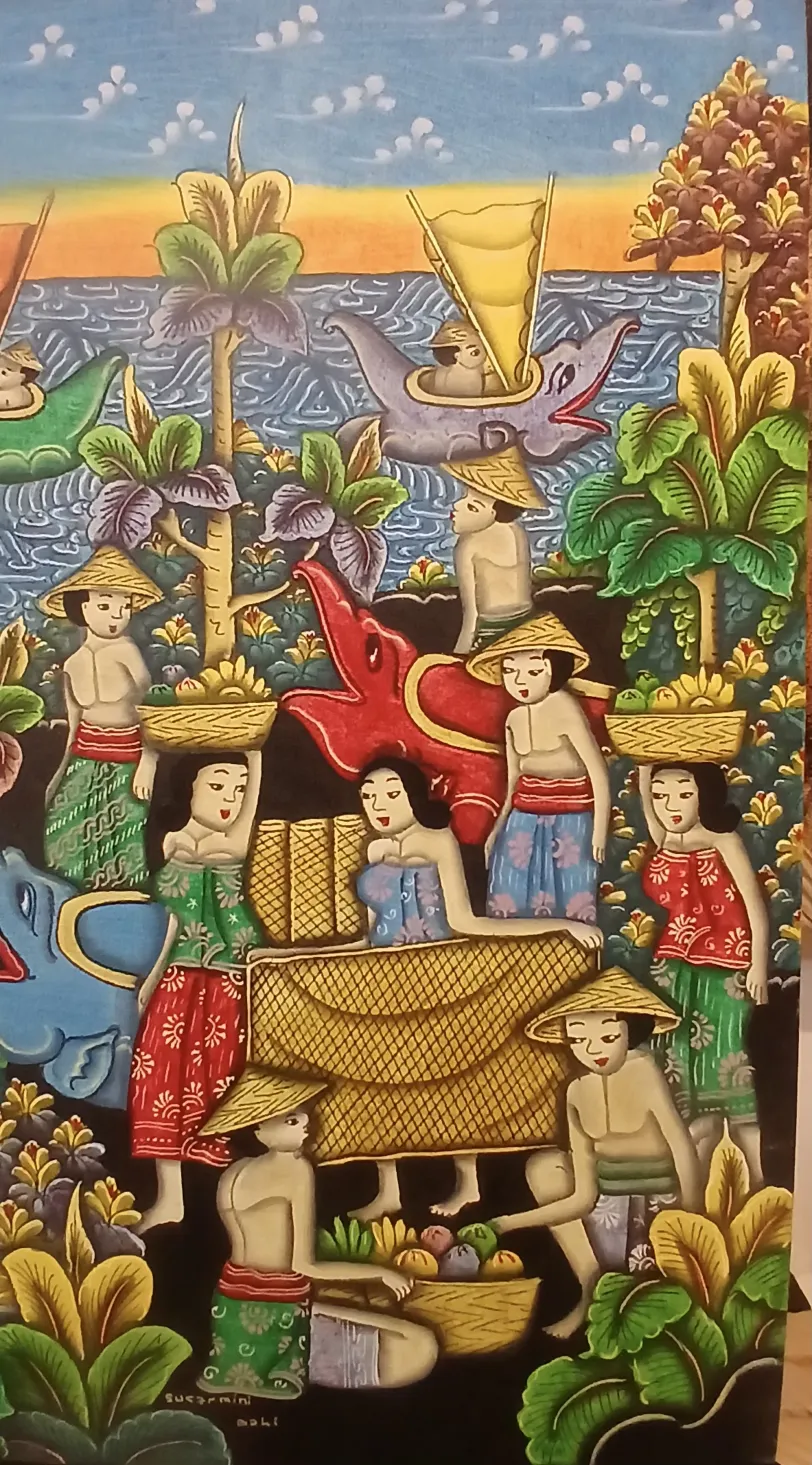
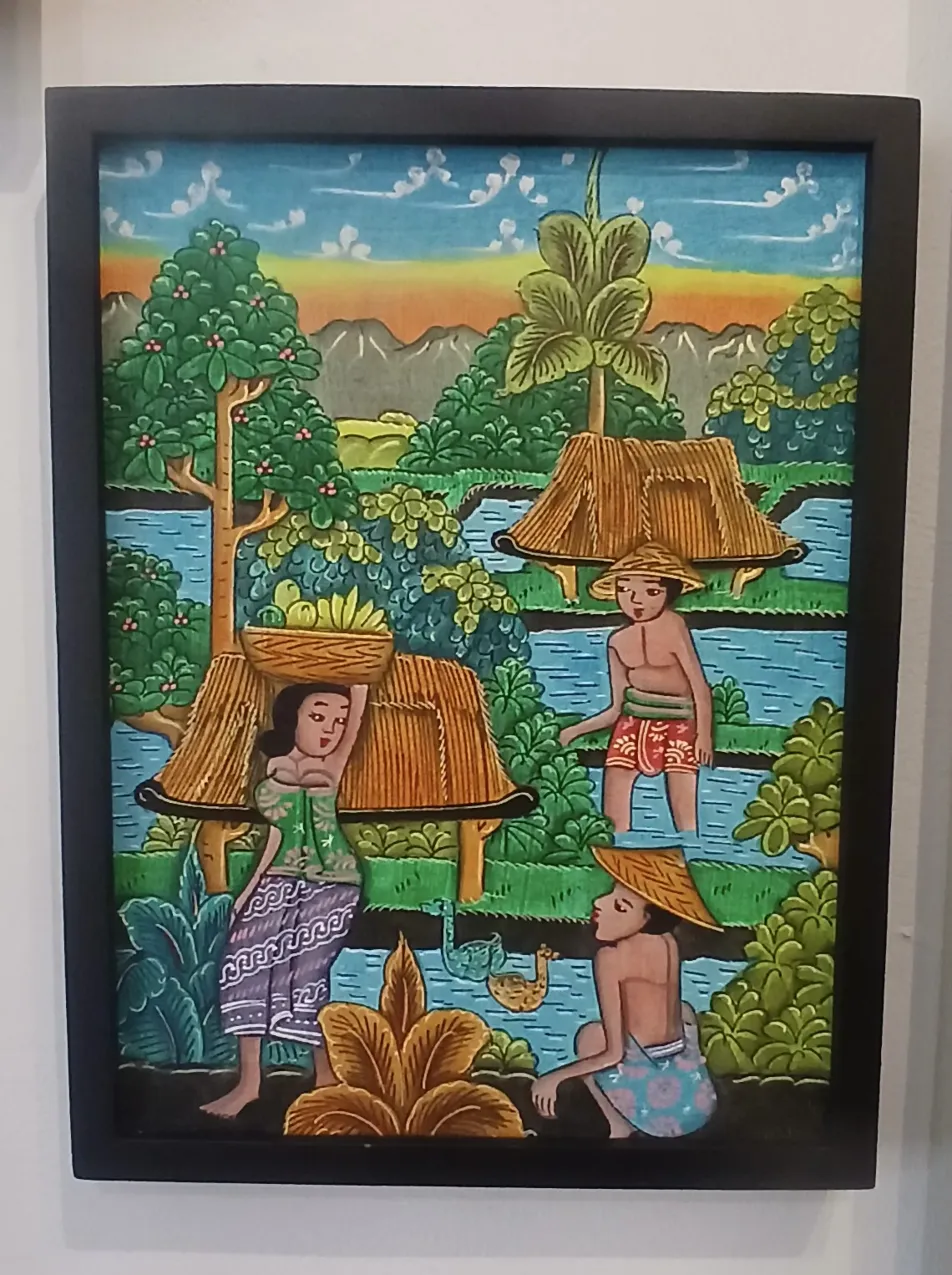
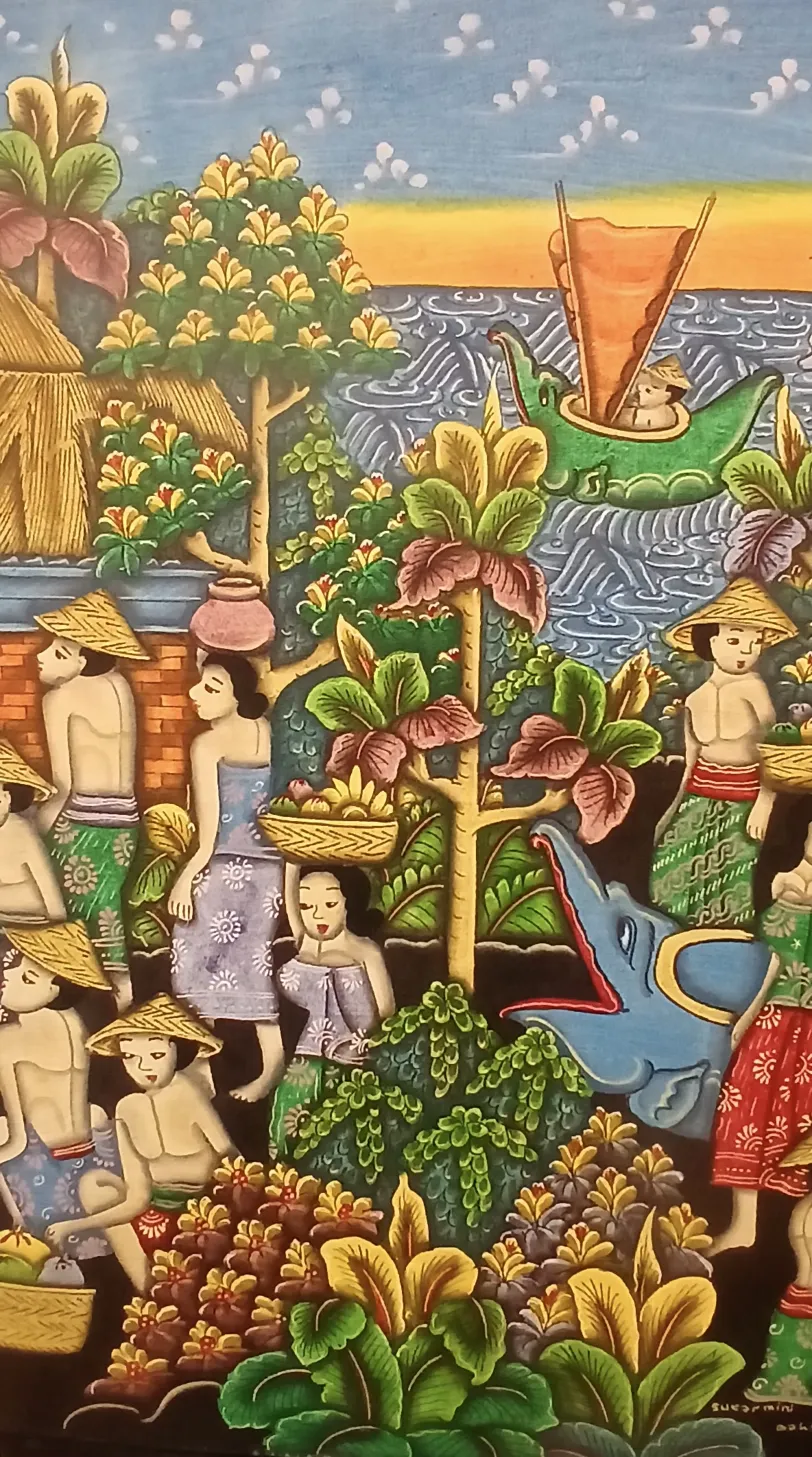
What does a Batuan painting choose to show? Everything. That is perhaps the most striking quality of the tradition: its generous, democratic attention to Balinese life. No moment is too small, no scene too ordinary to be worthy of patient rendering. A woman balancing a woven basket of fruit on her head receives the same careful observation as a fishing boat catching the painted wind. A rooster at the edge of a courtyard carries as much visual weight as the mythical creature coiling through the waves beyond.
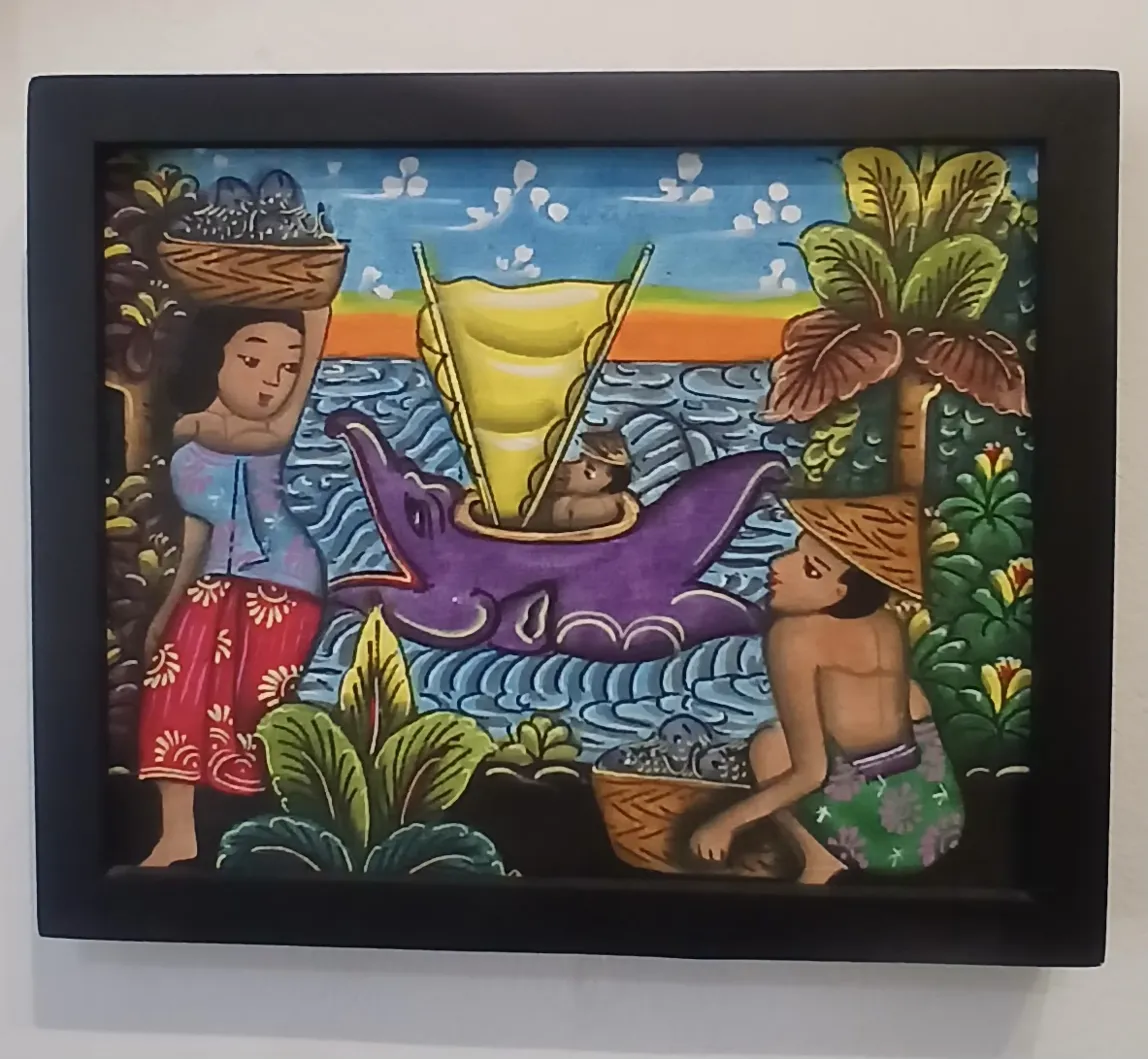
The coastal scenes are among the most beloved in the Batuan tradition. The slender, painted jukung — the traditional outrigger fishing boat that still plies Bali’s waters today — appears repeatedly, its sail catching a stylised breeze, its hull coloured in shades that feel drawn from myth as much as reality. Purple manta rays drift through waves rendered in careful calligraphic lines. Fishermen and merchants work side by side. The sea is never merely a backdrop in these paintings. It is a character, animated by the same storytelling instinct that gives every figure on the shore its particular posture, expression, and purpose.
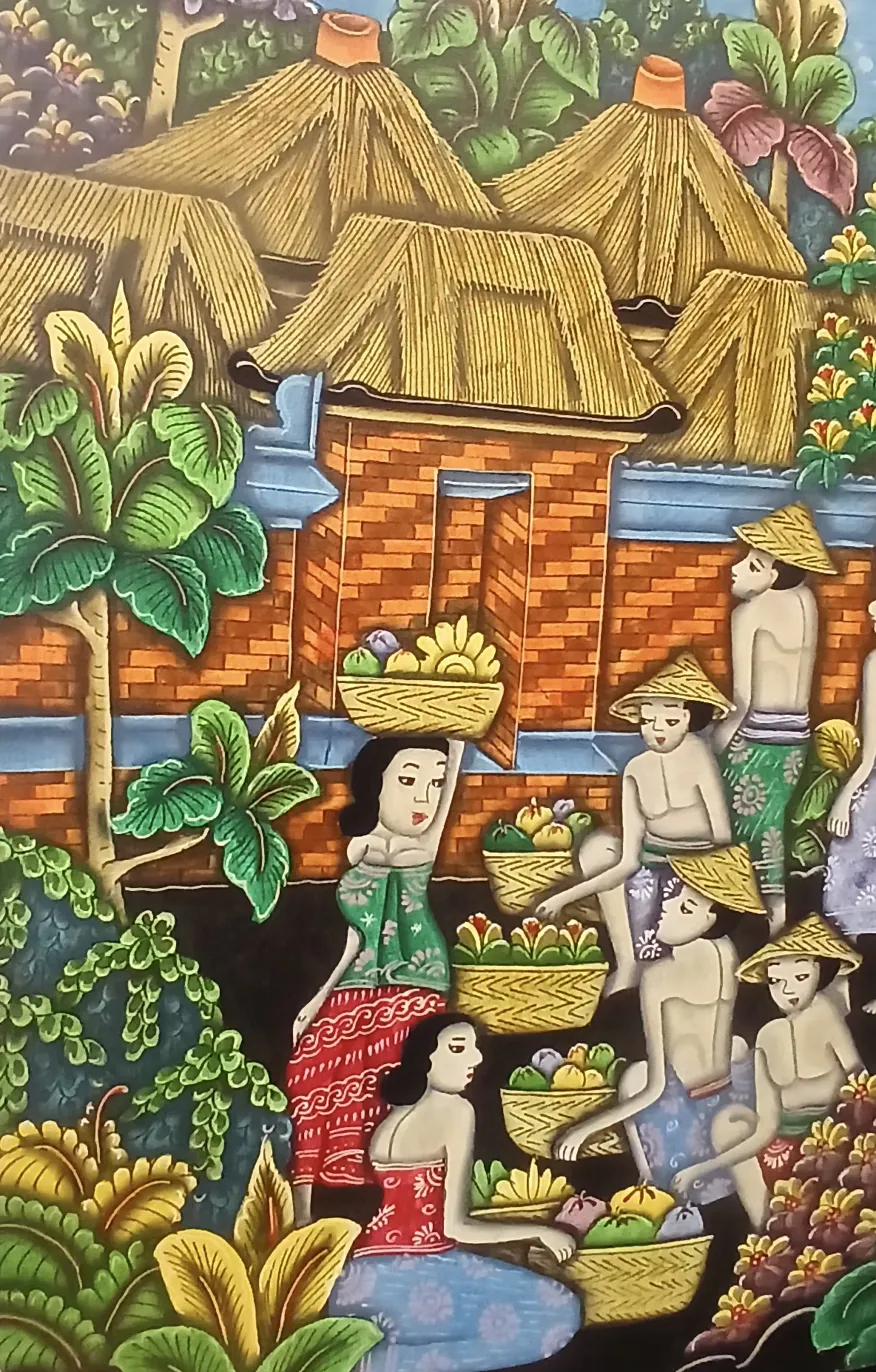
Village markets appear with equal vitality. Baskets overflow with tropical fruit — bananas, mangoes, rambutan — rendered with botanical patience. Conversations are implied in the tilt of a head or the angle of a hand. And always, forming the deep background of these scenes, the architecture of Balinese village life: thatched roofs, brick compound walls, flowering trees, the quiet geometry of a courtyard that has sheltered generations.
A Batuan painting does not depict Bali from the outside. It depicts Bali from within — painted by artists who have lived every scene they render, in the very village those scenes take place.


Rice Fields, Water Buffaloes, and the Quiet Dignity of Balinese Farming Life
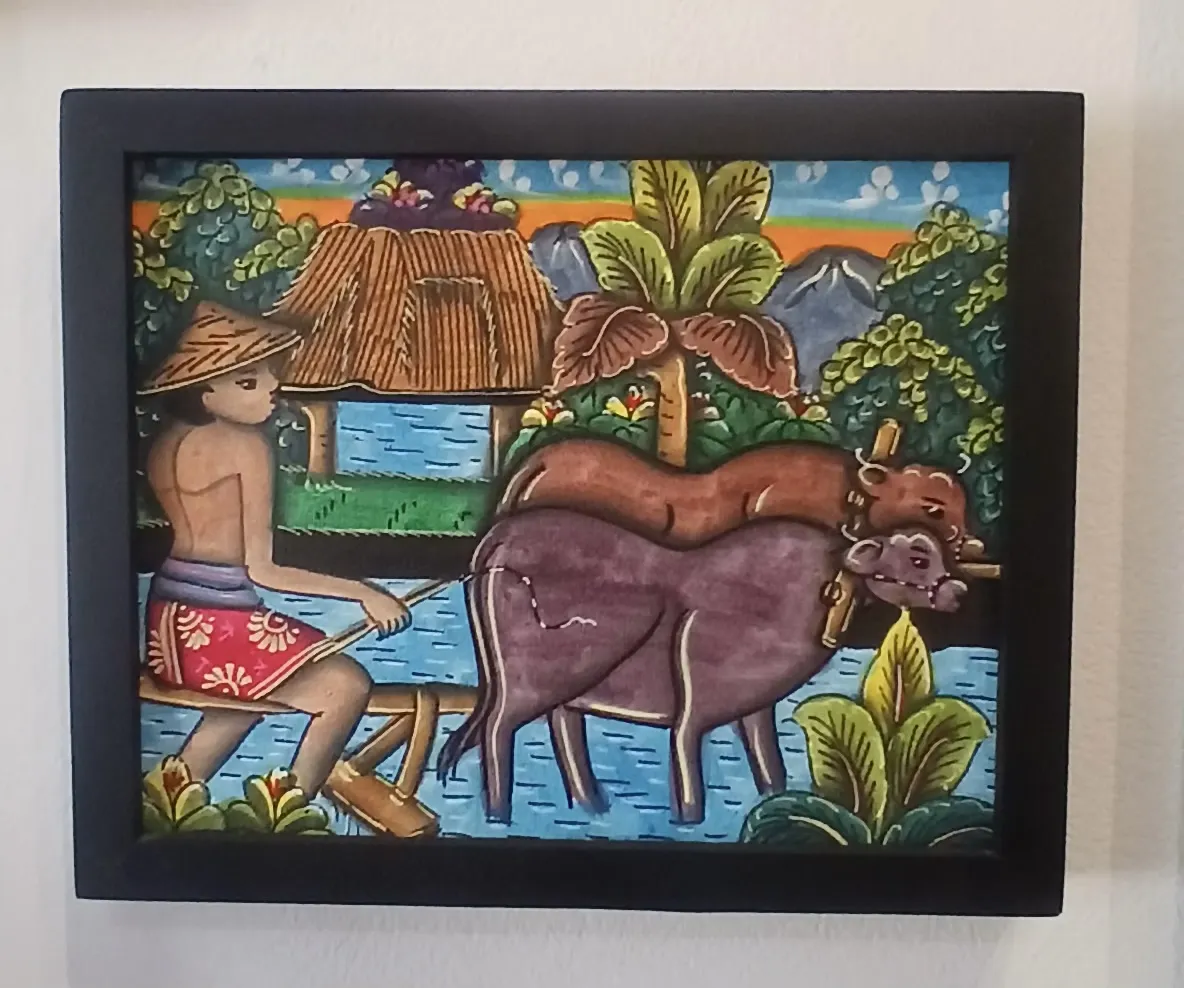
Alongside the coastal and market scenes, Batuan painting returns with deep affection to the rice field — to the terraced green of the sawah, to the patient labour of men and women who have farmed Bali’s hillsides for generations. These paintings capture something that no photograph quite manages: the feeling of belonging to the land, of being one figure among many in a seasonal cycle that is larger than any individual harvest, any single pair of hands.
The water buffalo — kerbau in Indonesian — appears with particular care in this tradition. Strong, slow, and indispensable to the rhythm of rice cultivation before modern machinery arrived, the buffalo became one of the defining visual symbols of Balinese agricultural life. Batuan painters rendered them with great patience: the heaviness of their bodies, the quiet authority of their horns, the cooperative relationship between animal and farmer. To own such a painting is to hold something that speaks to a way of life that is rapidly becoming rare — a working partnership between human and animal that has shaped Bali’s landscape for centuries.
These rural scenes also carry within them an implicit reference to the island’s famous subak irrigation system — a UNESCO-recognised cooperative water management tradition that has shaped Bali’s terraced fields for over a thousand years. When you look at a Batuan rice field painting, you are looking at the visual expression of that ancient, collectively maintained system: water flowing through green channels, figures working in quiet coordination, a landscape that is at once natural and deeply, devotedly human.


How to Recognise and Choose a Quality Batuan Painting in Bali
For visitors encountering Batuan painting for the first time, an immediate question often follows: how do I know what I am looking at? The tradition has evolved across nearly a century and exists today on a wide spectrum — from traditional ink-wash works on paper to vivid acrylic-on-canvas pieces that carry the Batuan spirit into contemporary colour. Several qualities point toward a piece of genuine craft and artistic honesty.
Density of Composition
A true Batuan-influenced painting fills its canvas with intention. There is no empty space as a decorative choice — every area serves the visual narrative. Figures, plants, water, architecture, and animals share the frame in layered, overlapping relationship. If the painting breathes too easily, it may be inspired by the tradition rather than rooted in it.
Everyday Balinese Life as Subject
The great Batuan masters chose to paint what was real: the market, the harvest, the fishing village, the ceremony. This commitment to lived experience — rather than idealised, generic tropical imagery — remains the tradition’s defining quality. A Batuan painting names specific places, specific activities, specific moments of Balinese culture. That specificity is its value.
Craftsmanship in Detail
Examine the textile patterns woven into a figure’s sarong. Look at the way waves are rendered — the calligraphic precision of each white-capped line. Study the texture of a thatched roof, the joints of a woven basket. Batuan painters are known for the patience of their linework, and that patience is visible. It is what separates a piece of genuine craft from a mass-produced imitation, and it is the quality that gives a good painting its longevity — its capacity to reward the eye differently every time you look at it.
Origins
Batuan painting emerged in the 1930s when anthropologists Margaret Mead and Gregory Bateson commissioned Balinese village artists to document their cultural life. Rooted in the wayang kulit shadow puppet tradition, the style became one of Bali’s most distinctive and enduring art forms.
Style Markers
Dense multi-figure compositions, dark-toned backgrounds, and meticulous linework define the tradition. Subjects draw from everyday Balinese life — village markets, coastal fishing, rice field harvests, and ceremonial activity — rendered with the patience of a culture that takes storytelling seriously.
Collecting
Look for compositional density, quality of detail in textile and natural elements, clear subject specificity, and an artist signature. A well-chosen Batuan-style painting grows richer with every viewing — it is a work that gives more the longer it is lived with.
Batuan Painting at Arts of Bali — Seminyak
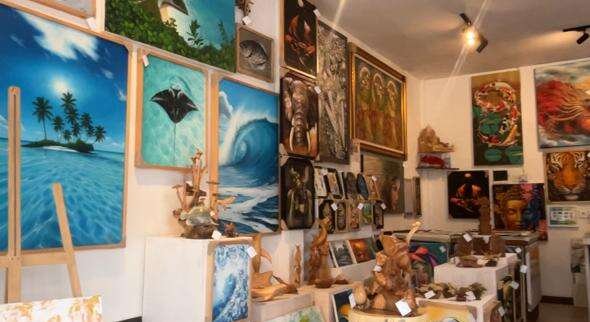
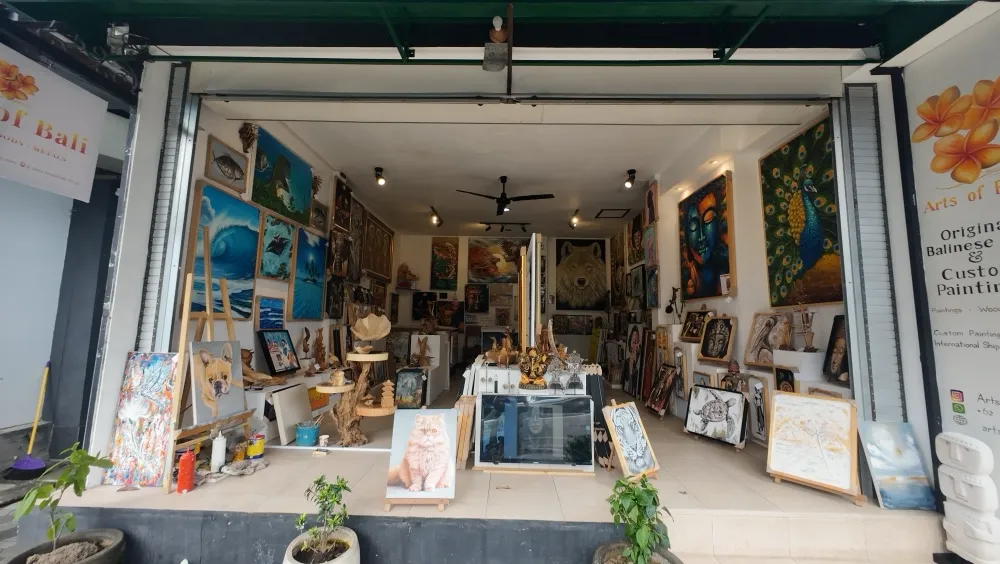
The Arts of Bali collection on Jl. Raya Seminyak No.42 includes an authentically curated selection of Batuan-influenced paintings — from intimate framed works to large-format canvases that command an entire wall. Each piece has been chosen for the quality of its execution, the honesty of its subject matter, and its capacity to carry the spirit of Balinese village life into whatever home it enters. Whether you are making your first art purchase or adding to an established collection, our team is ready to help you find the right work.
Find Your Batuan Painting at Arts of Bali
Visit us at Jl. Raya Seminyak No.42, Seminyak, Bali — or reach out directly to ask about available works, sizes, framing, and international shipping options.
Explore the Gallery WhatsApp Us