Color without boundaries.
Paint that moves before you do.
“Abstract art doesn’t ask you to recognize Bali. It asks you to feel it.”
— 普图·苏西普塔,“巴厘岛艺术”店主
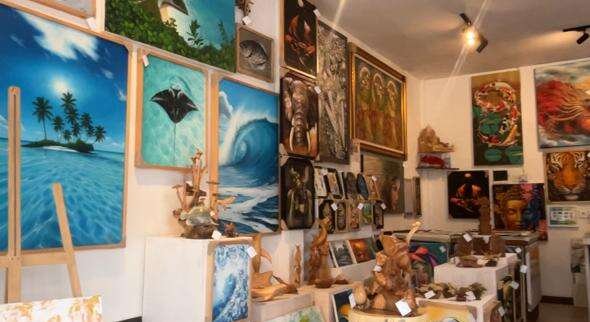
Abstract painting Bali visitors encounter at Arts of Bali gallery is nothing like what most tourists expect. No rice terraces. No temple gates. No postcard Bali. What hangs on these walls in Seminyak is raw energy — color pushed past its boundaries, texture you can almost feel from across the room, and mark-making that carries the island’s inner life rather than its surface appearance. These are original works built for collectors who understand that great art doesn’t explain itself.
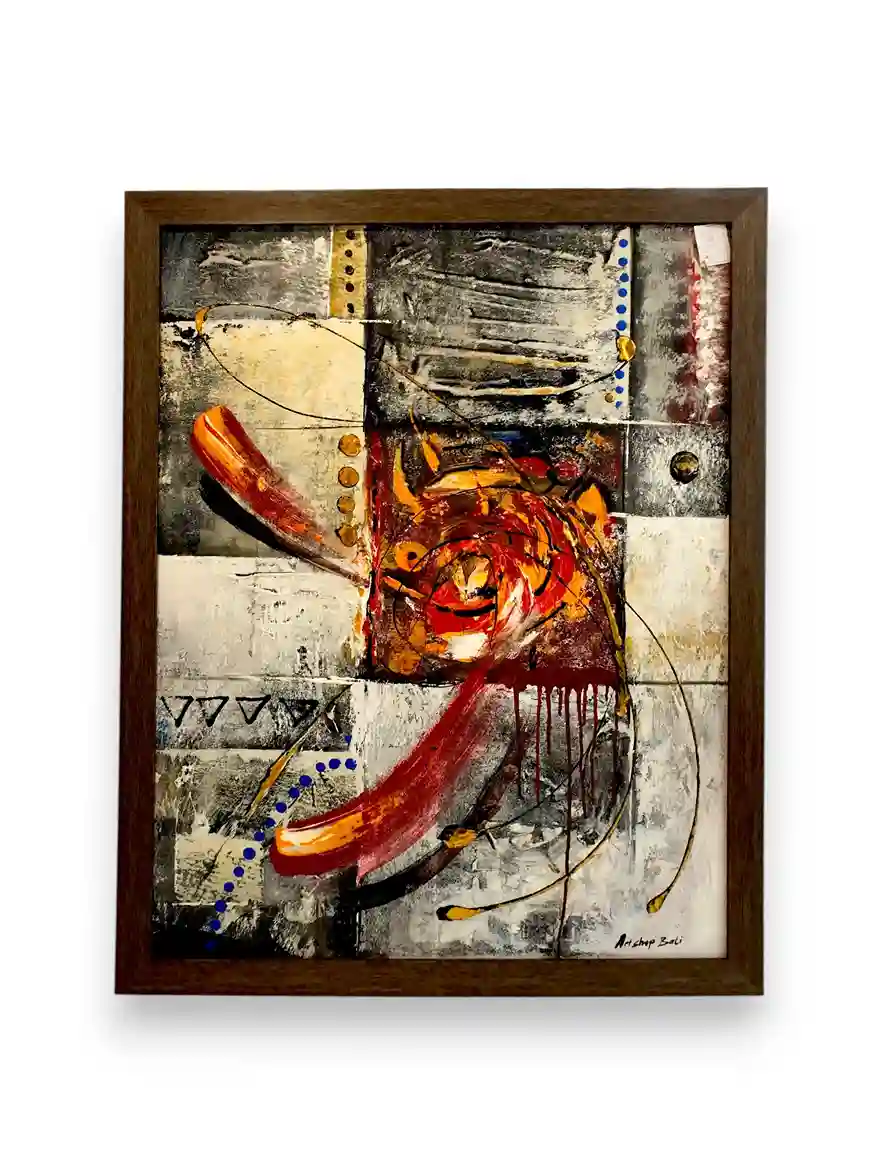
Abstract Painting in Bali: What Collectors Actually Find Here
Abstract painting in Bali isn’t a Western concept sitting awkwardly in a tropical setting. It grew here, shaped by the same forces that built the island’s temple reliefs and ceremonial offerings: color as devotion, mark-making as ritual, composition as a kind of spiritual geography.
The artists whose works hang at Arts of Bali don’t paint what Bali looks like. They paint what it feels like to live inside it. The humidity before a monsoon. The weight of ceremony. The way afternoon light fractures through palm canopies and lands differently every day.
Abstract expressionism emerged in New York in the 1940s when painters broke from representational form — the same impulse that drives the MoMA’s collection of abstract expressionist works. What’s happening in Bali today carries that same restlessness, filtered through Hindu cosmology and decades of craft tradition. You’ll find impasto palette knife work that catches actual shadows. Textured grounds that feel more like woven fabric than flat canvas. Color decisions that aren’t arbitrary. They mean something.
画廊位于 巴厘岛艺术 carries original abstract works in oil and mixed media. Nothing is reproduced. Nothing is mass-produced. Every canvas was made here, by a specific hand, at a specific moment.
Why Seminyak, Specifically
The gallery sits at Jl. Raya Seminyak No. 42. That’s a deliberate location for a deliberate audience. Seminyak attracts a different kind of visitor than Kuta or Ubud: interior designers, collectors, people who’ve been to Bali before and stopped taking souvenir photos. They walk in looking for something with a pulse. That’s what the abstract collection delivers.
“These aren’t hotel lobby paintings. Every piece here has a specific artist behind it, a specific moment of creation, and a specific reason it ended up on this wall.”
— Putu Sucipta
The Techniques Behind Every Abstract Canvas
Collectors often ask what they’re physically looking at. Fair question. The materials and methods vary by work, but these are the core techniques you’ll encounter in this collection.
Palette Knife and Impasto Application
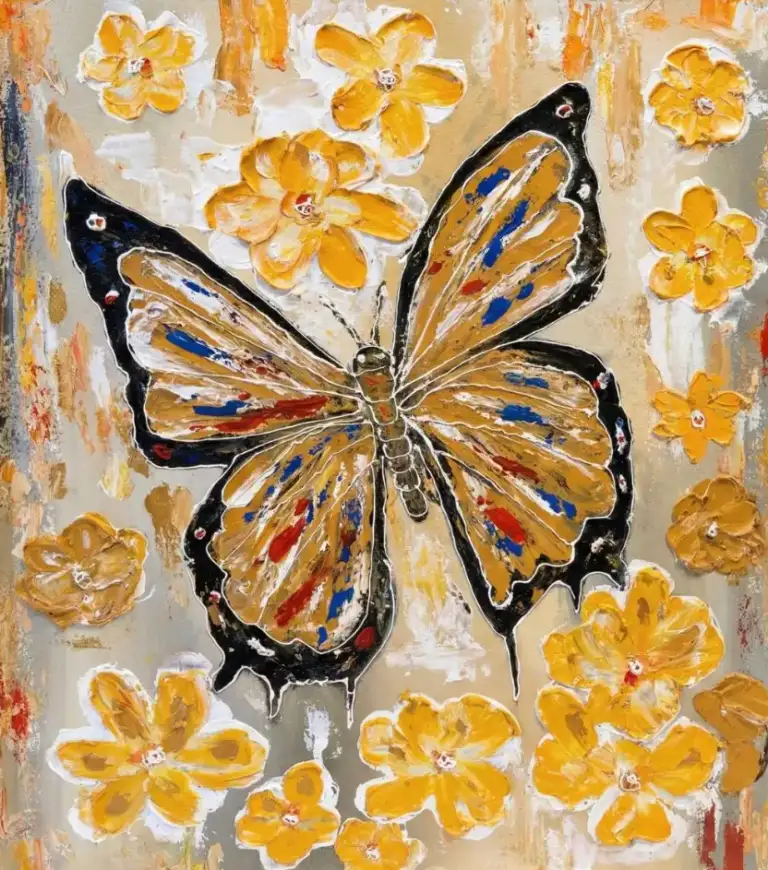
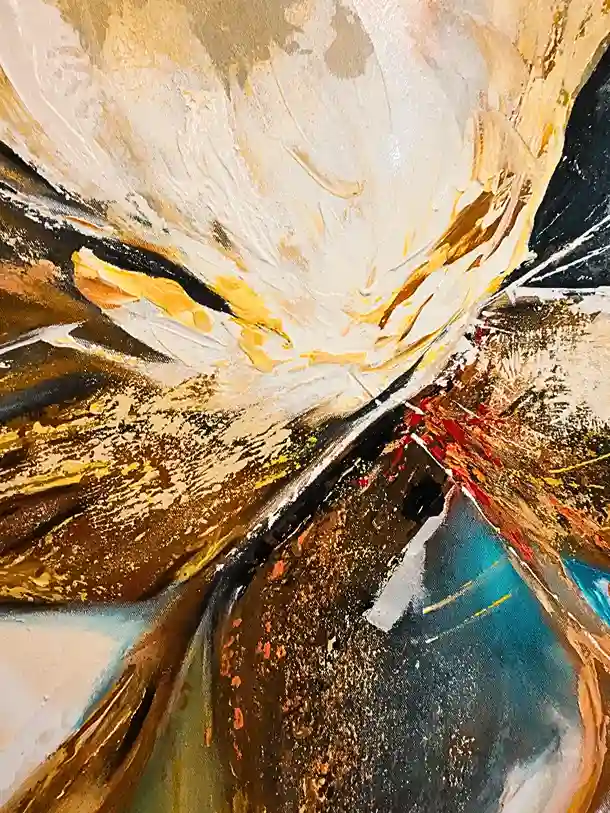
Most of the works here aren’t painted with a brush. A palette knife is drawn across the canvas, dragged, twisted, lifted. The paint piles up. It catches light differently depending on the angle you stand at. Step to the side of a piece and you’ll see it has genuine relief — depth measurable in millimeters. This gives abstract work a physical presence that photographs rarely communicate accurately.
Impasto has a long history in Western painting — Rembrandt used it in his late portraits, Van Gogh in his night skies. What Bali-based artists working today have done is push the technique into pure abstraction, building texture that exists for its own sake rather than to describe any surface in the physical world. The connection to textured painting in Bali is direct: these works sit at the edge of painting and sculpture.
Mixed Media and Textured Grounds
Some works begin before a single color is applied. Sand, modeling paste, or built-up acrylic gesso creates a ground with its own physical character. Others incorporate material from outside the conventional studio. The result is a canvas that feels archaeological: a painting that remembers the place where it was made.
Gestural and Calligraphic Mark-Making
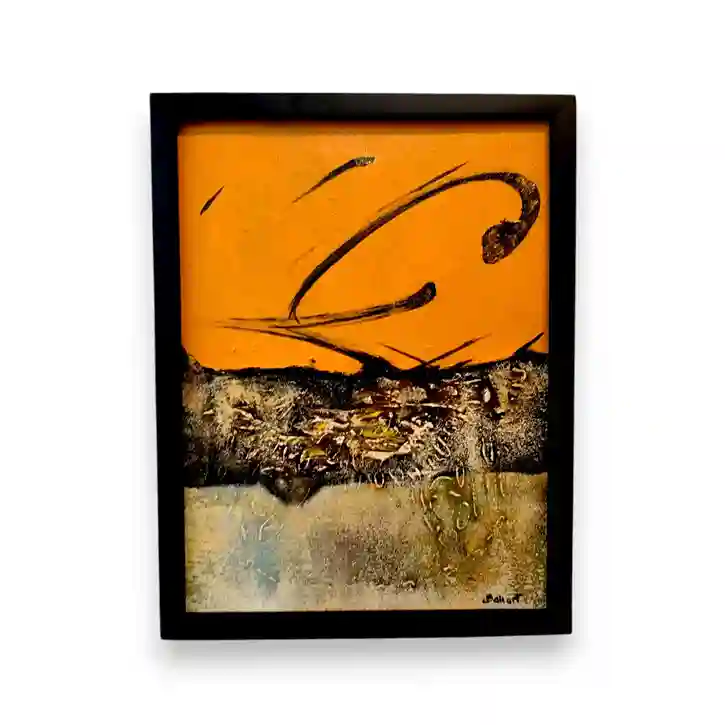
Some works carry marks that read almost like writing. Single decisive strokes across a prepared ground. Spiraling gestures that define the canvas before any color fills in around them. This calligraphic quality isn’t accidental. It reflects a culture where writing has always been sacred, where marks carry meaning beyond their visual form. Balinese script itself is a gestural art — that sensibility transfers to the abstract canvas naturally.
Abstract Painting Bali Collectors Encounter: Three Dominant Styles
Not all abstract art is the same, and the collection at Arts of Bali is intentionally varied. Here are the three styles you’ll find when you visit.
Expressionist / Gestural
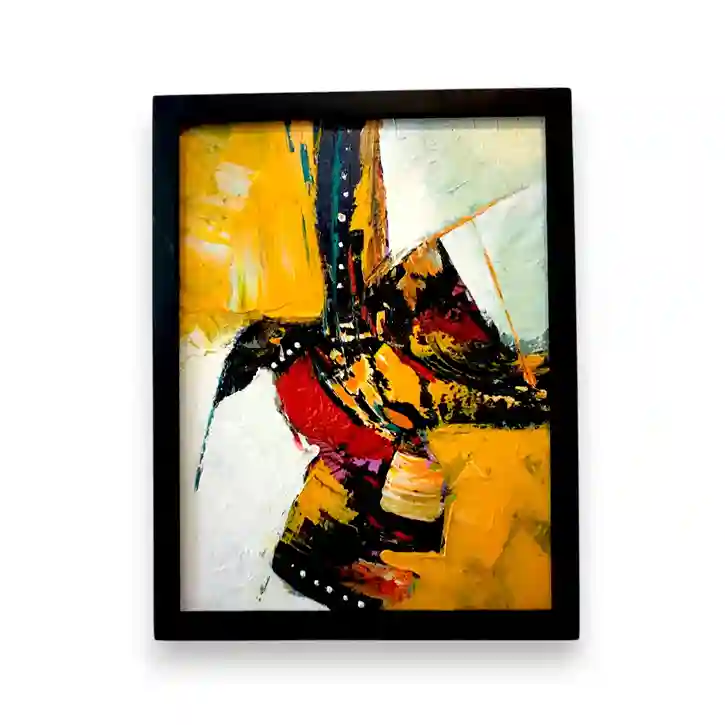
Bold palette knife strokes and raw color define the expressionist works. These are paintings made at speed, made with force — decisions fast and irreversible. Dominant in warm reds, golds, and deep earth tones. Strong focal energy with movement that reads clearly from across the room. Works well in living areas with good ambient light.
Geometric / Structured
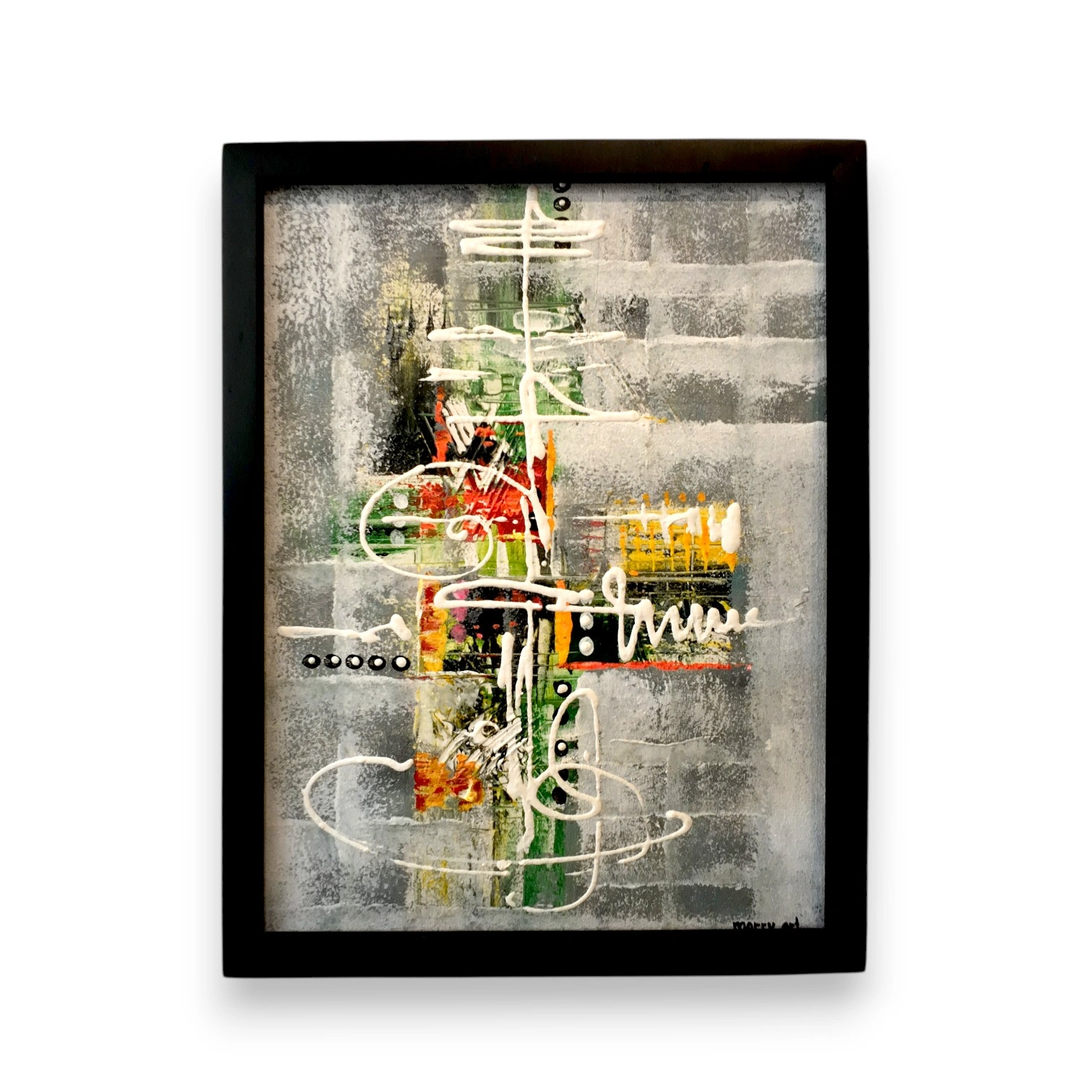
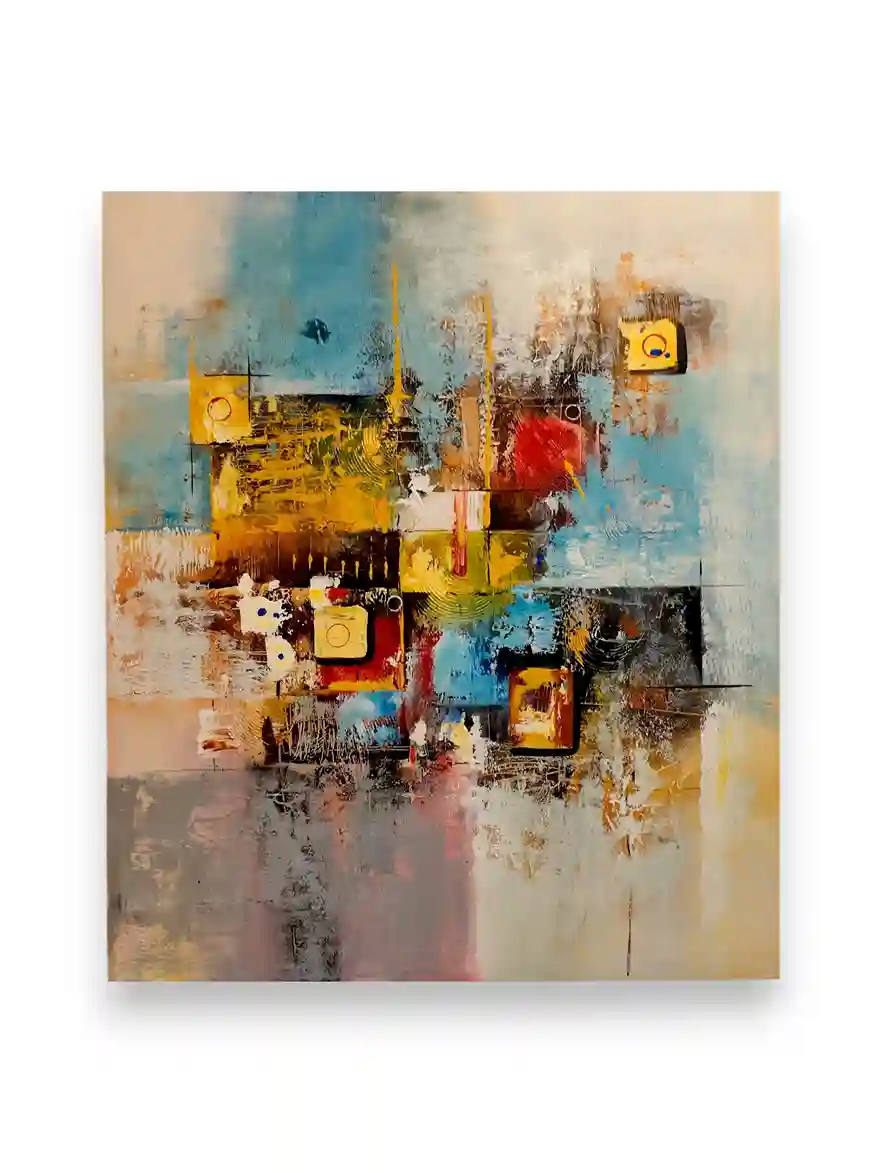
Compositions that use geometric form as scaffolding. Grid-like divisions, blocked color fields, and precise linear marks create a visual architecture. Mixed media elements add physical interest to the surface. These works are contemplative and orderly. They reward extended looking and sit well in modern interiors with clean lines.
Minimal / Textured Ground
Two-field compositions with a single gestural mark or a restricted palette over a deeply textured background. Less is happening on the canvas, but what’s there carries significant weight. Gold, amber, and grey dominate. These works belong in quiet spaces: bedrooms, private studies, high-ceilinged villas where everything else recedes.
How to Choose an Abstract Painting from Bali for Your Space
Buying an abstract painting without a clear subject to hold onto feels different from buying a landscape or a portrait. Here’s how collectors at Arts of Bali approach it.
Start with Color, Not Subject
In representational painting, you start with subject: do you want a rice field or a dancer? In abstract work, you start with the dominant palette. Stand in front of a canvas and ask: does this warm or cool the room? Does it push forward visually or recede? The energetic red-and-gold expressionist works sit well in living areas with strong light. The quiet gold-and-grey minimalists belong in bedrooms, studies, and reading rooms.
For a full guide to sizing, wall matching, and interior style considerations, our 巴厘岛艺术品选购指南 covers the essentials. Worth reading before you visit.
Framed vs. Gallery-Wrapped
Most works in the gallery come framed, but some large canvases are gallery-wrapped: stretched canvas with painted edges, mounted directly on the wall without a frame. Both are valid choices. Framed works are finished and ready to hang. Gallery-wrapped works are more flexible in how they read in a room: equally at home in industrial lofts or beach villas.
Scale the Work to the Wall
Abstract paintings in the collection range from intimate framed works around 30 x 40 cm to large-format canvases over 120 x 180 cm. A 120 cm painting on a 130 cm wall suffocates both the work and the room. As a rule: leave at least 40 cm of clearance on each side. For dining rooms and living areas, bigger almost always reads better. People consistently underestimate scale when they buy.
Pricing across the collection runs from around USD 150 for smaller framed pieces to USD 1,200 and above for large originals. For current pricing and specific availability, contact us on WhatsApp or visit the gallery directly.
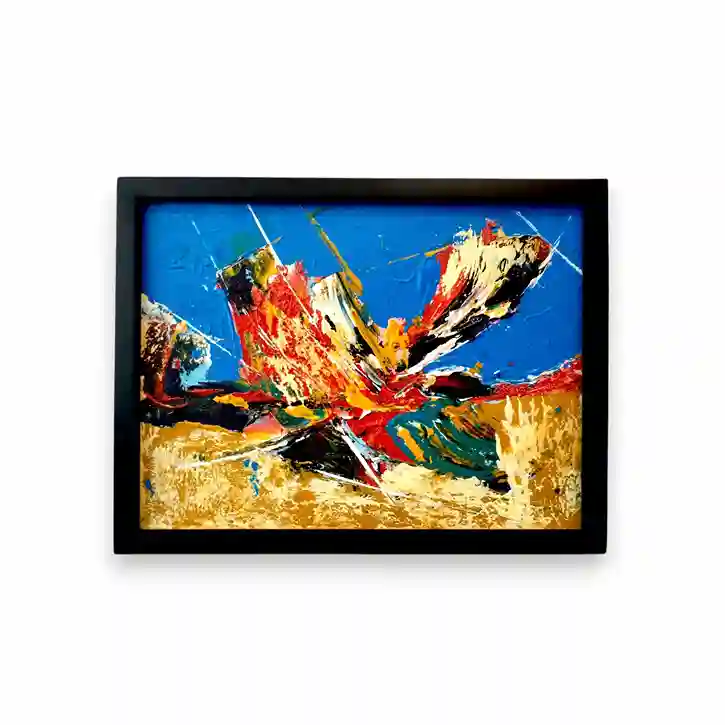
Large abstract landscape in oil on canvas — bold palette knife work. Available at Arts of Bali, Jl. Raya Seminyak No. 42.
Commission an Original Abstract Painting from Bali
Can’t find exactly what you need in the standing collection? That’s what custom commissions are for.
At Arts of Bali, we take commission briefs for original abstract paintings. You specify the dimensions, the dominant color palette, and the mood or atmosphere you’re after. You don’t need to know what style you want. That’s a conversation for the gallery. What matters is where the painting will live and what you want to feel standing in front of it.
Most custom abstract commissions are completed in two to four weeks. We ship internationally, and works over 150 cm ship rolled and require local stretching on arrival, which is standard practice for large-format shipping. We can advise on stretcher bar suppliers and framers in your destination country.
"(《世界人权宣言》) custom painting process starts with a short WhatsApp consultation. Free, no obligation, and specific to what you actually need rather than a generic brief.
See the Abstract Collection in Person
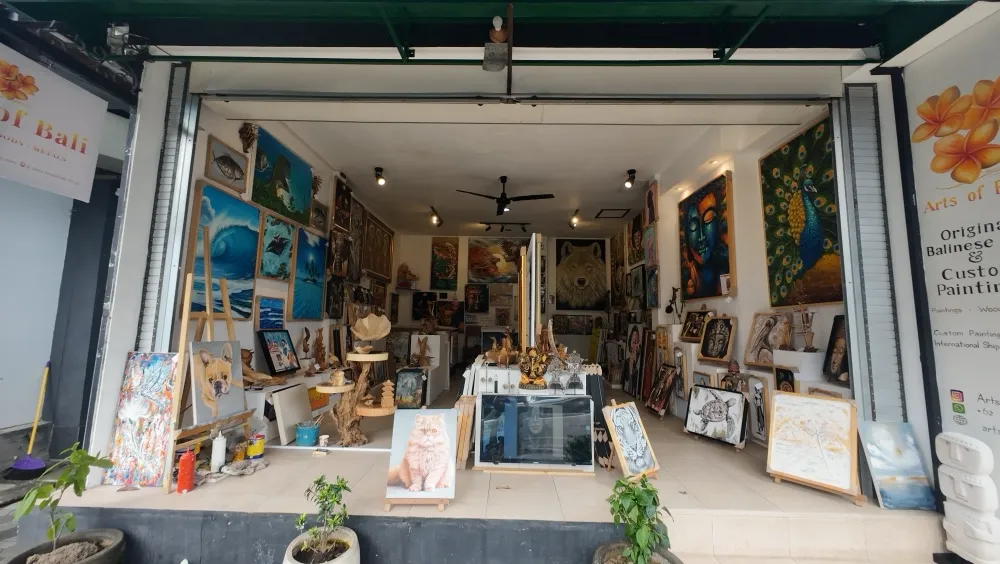
Arts of Bali gallery is at Jl. Raya Seminyak No. 42, Kuta, Badung, Bali 80361. Walk in anytime during gallery hours, or reach us on WhatsApp to ask about a specific piece or discuss a commission before you arrive.
在 WhatsApp 上聊天 浏览图库