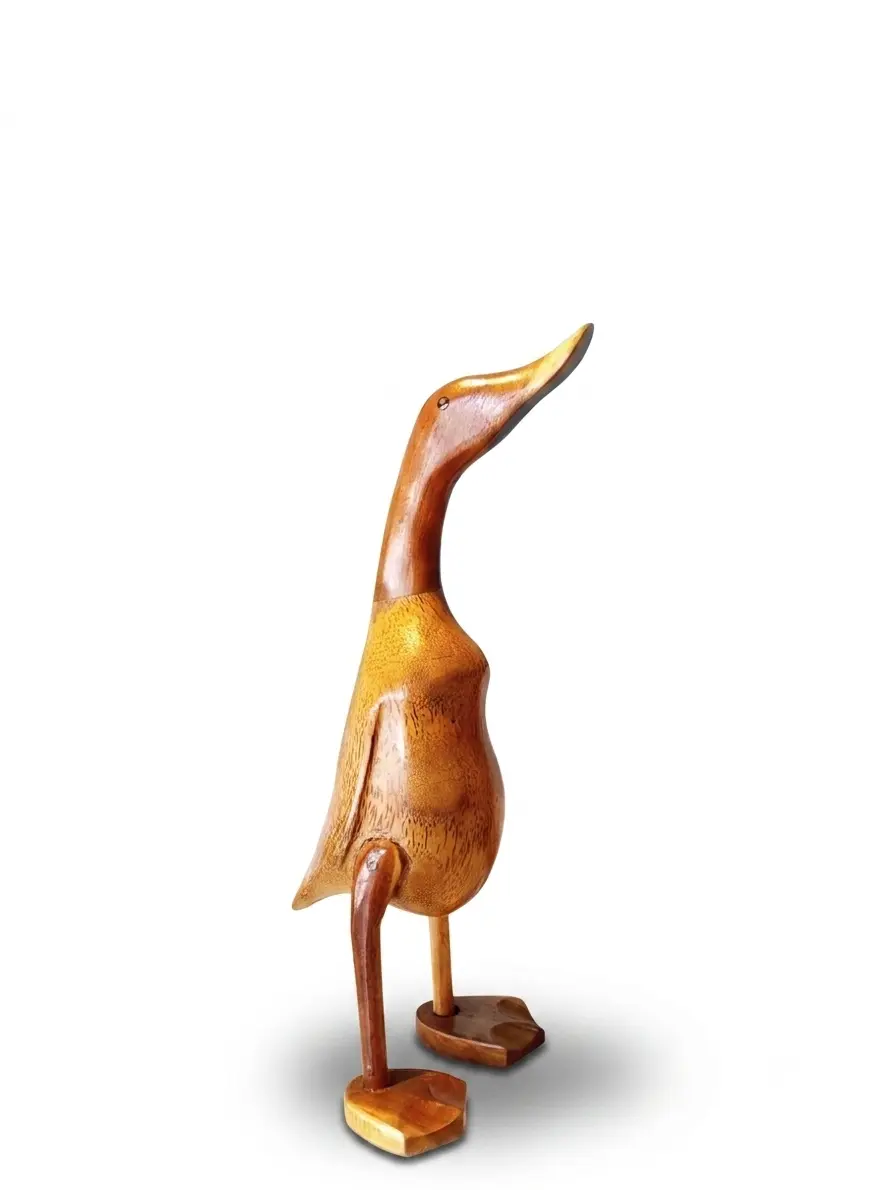
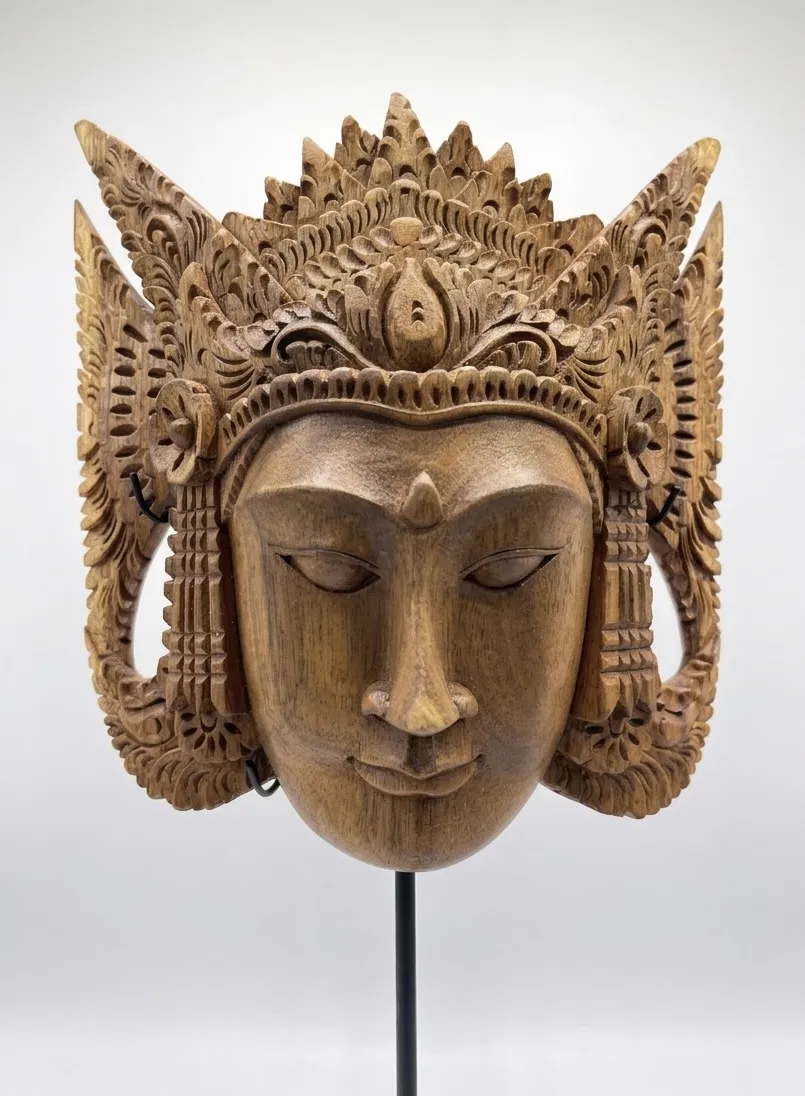
Bali wood carving prices generally run from Rp220,000 (a small hand-carved duck or turtle figurine) to Rp21,000,000 for large mythological relief panels and museum-grade artifacts. Four factors set the price: wood species, size, carving complexity, and the reputation of the carving village or artisan. Ceremonial masks — Barong, deity, king faces — typically land between Rp1,450,000 and Rp3,500,000.
Key Takeaways
- Entry-level figurines (ducks, turtles, small bowls) run Rp220,000–Rp475,000.
- Mid-size sculptures typically run Rp600,000–Rp1,200,000.
- Ceremonial masks (Barong, deity, king) typically cost Rp1,450,000–Rp3,500,000.
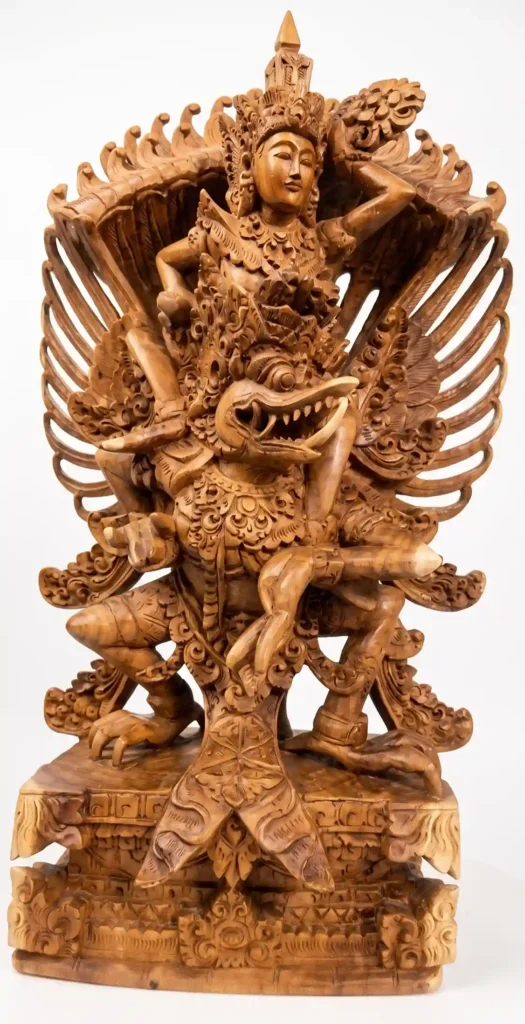
- Large relief panels and mythological artifacts reach Rp10,500,000–Rp21,000,000.
- Mas village near Ubud still sets Bali’s wood carving price benchmark.
Definition: Bali wood carving price refers to the market cost of hand-carved wooden art produced in Bali, set primarily by wood type, size, carving complexity, and artisan provenance.
A duck figurine and a Garuda relief panel can both leave the same workshop in Mas village, six kilometers south of Ubud, and sell for prices roughly 95 times apart. Neither is overpriced. They’re just answering different questions with a chisel.
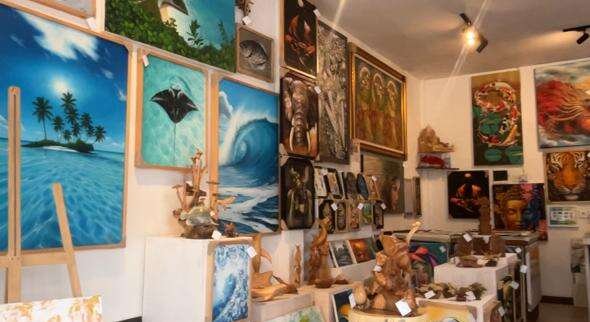
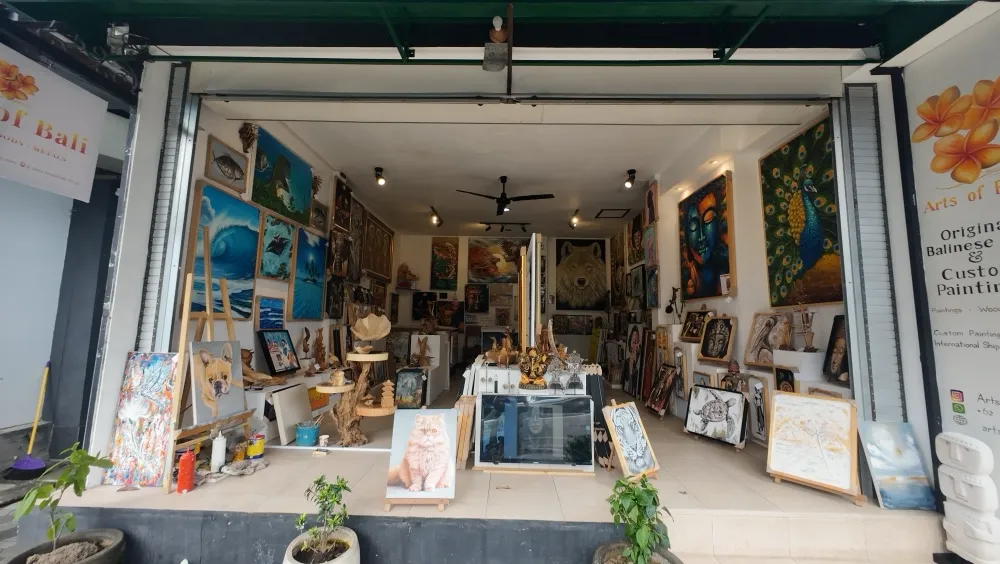
Most price guides for Bali wood carving are anecdotal — a Tripadvisor thread, a market haggling story, a number someone half-remembers from a shop in Ubud. This guide works differently: every figure below is a real, current listing from Arts of Bali’s Woodcrafts collection in Seminyak, so you can see exactly what separates a Rp250,000 piece from a Rp21,000,000 one — not guess at it.
What Determines Bali Wood Carving Price? The Four-Factor Framework
After sourcing and pricing hundreds of pieces from carvers across Bali, we’ve found the price of any hand-carved wood piece comes down to four variables, in order of impact:
1. Wood species. Suar (rain tree) is the workhorse of Balinese carving — light, wide-grained, forgiving to shape, and the reason a mid-size sculpture stays affordable. Denser, slower-growing woods cost more before a single cut is made, which shows up directly in the final price.
2. Size and volume. This one is intuitive but easy to underestimate: a relief panel isn’t “bigger,” it’s often ten to fifteen times the wood mass and carving hours of a tabletop figurine. Price scales closer to volume than to visual size.
3. Carving complexity. A smooth-bodied duck sculpture and a Barong mask with layered fangs, flame details, and gilt accents can start from similar-sized wood blocks and finish at very different prices, because complexity is measured in carving hours, not centimeters.
4. Artisan and village provenance. A piece carved by a workshop with generational lineage — the kind Mas village is known for — carries a premium that reflects training, not marketing. This is the factor buyers most often miss when comparing a roadside stall price to a gallery price.
By The NumbersBali Wood Carving Price by Category
The table below reflects real current pricing from Arts of Bali’s gallery collection, grouped into the four tiers buyers actually shop in.
| Price Tier | Range (IDR) | Example Pieces | 最适合 |
|---|---|---|---|
| Entry figurines & small decor | Rp220,000 – Rp475,000 | Standing Wooden Duck Sculpture, Whimsical Hand-Carved Wooden Duck Figurine, Sea Turtle Wooden Sculpture (20cm) | First-time buyers, shelf/desk decor |
| Mid-size sculptures | Rp600,000 – Rp1,200,000 | Aquatic Wooden Sculpture, Manta Ray Wooden Sculpture, Balinese Man Wooden | Console tables, gift pieces |
| Ceremonial masks & premium sculptures | Rp1,450,000 – Rp3,500,000 | Balinese King Wooden Mask, Authentic Balinese Barong Sai Wooden Mask, Balinese Barong Mask | Wall statement pieces, collectors |
| Museum-grade relief panels | Rp10,500,000 – Rp21,000,000 | The Triumph of Garuda Wisnu Kencana, Rama and Shinta with the Golden Deer Wooden Relief Panel, Garuda Wisnu Kencana in the Sacred Forest Wooden Relief Panel | Serious collectors, statement architecture |
Prices reflect Arts of Bali’s Seminyak gallery catalog as of August 2026. Wood carving pricing is freshness-sensitive — exchange rates and material costs shift, so treat these as a current benchmark rather than a fixed number, and confirm live pricing before budgeting.
Why Mas Village Still Sets the Price Benchmark
Ask any gallery in Bali where serious wood carving pricing gets set, and the conversation eventually lands in Mas — a village about six kilometers south of Ubud, recognized internationally as Bali’s woodcarving center since at least the 1930s. That reputation took shape after German painter Walter Spies and Dutch artist Rudolf Bonnet settled in Bali and encouraged local carvers, and it was cemented by the father-son team Ida Bagus Nyana and Ida Bagus Tilem, whose carvings were collected by Indonesia’s first president, Sukarno, and documented by The New York Times as tourist and collector demand grew through the 1960s. Their family’s Nyana & Tilem Gallery in Mas remains a benchmark destination for collectors today.
That history matters to price in a practical way: pieces carrying real Mas-lineage technique — deep undercutting, anatomically confident faces, controlled proportion in figures — cost more because that skill took decades to build in the carver’s hands, not because of where the piece is sold.
材料Suar Wood vs. Other Woods: How Material Changes the Price
Suar wood dominates Bali’s mid-market carving for good reason: it’s fast-growing, wide enough for large single-block sculptures, and takes both fine detail and a smooth polished finish. It’s why a substantial 40–50cm animal sculpture can still land under Rp1,000,000.
Denser hardwoods and slower-growing species push cost up before carving even starts — the wood itself is scarcer and harder on tools, and workshops price that in. Teak (jati) is the most common step-up from suar: it’s slower-growing, denser, and holds fine detail even better over time, which is why teak pieces of a comparable size typically sit a tier above their suar equivalents. True ebony is rare and expensive in Indonesian carving; most “ebony-look” pieces you’ll see are actually stained or darkened suar or teak, which is a legitimate and common finishing technique — not a defect — but it should be priced and described as what it is. If a listing doesn’t state the wood species, ask. It’s the single fastest way to sanity-check whether a price is fair.
购买指南What’s Actually Included in the Price
A quoted price should cover more than the raw carving. At a minimum, ask whether it includes food-safe or UV-stable finishing oil (relevant if the piece will sit near a window or outdoors), a basic care briefing for your climate, and — for anything above roughly Rp1,000,000 — documentation of the wood species and origin. None of these should be treated as premium add-ons; they’re part of what separates a fairly priced piece from one where the carving itself is the only thing you’re paying for.
How to Avoid Overpaying for Bali Wood Carving
The same Barong mask silhouette can appear at wildly different prices between a tourist-strip stall and a curated gallery, and the gap usually isn’t markup — it’s what’s missing. Machine-routed pre-forms finished by hand in a few hours will always undercut a fully hand-chiseled piece on price, because they took a fraction of the carving hours. Neither is dishonest, but they shouldn’t cost the same.
Three checks before buying: ask whether the piece is hand-carved from a single block or assembled/machine-routed; ask the wood species by name, not just “local wood”; and if buying for investment or serious display, ask about the carver or workshop’s background — provenance is difficult to fake convincingly and easy for a reputable gallery to explain.
Beyond the Sticker PriceShipping & Total Cost Beyond the Carving Itself
A Rp21,000,000 relief panel and a Rp250,000 figurine don’t ship the same way, and freight is where buyers most often get surprised. Large panels require custom crating and volumetric (not just weight-based) freight pricing; small figurines can often ship in consolidated parcels. Budget shipping as a separate line item scaled to size and destination, not as an afterthought — our full breakdown of packing, costs, and customs is covered in our 装运指南.
Not Sure Which Tier Fits Your Space?
Send a photo of the wall or shelf you’re shopping for, and the gallery can point you to pieces in your budget — no pressure, just a straight answer on what fits.
Ask on WhatsAppHow Arts of Bali Prices Its Wood Carvings
Every price on this page is a live catalog figure, not a placeholder — you can click through from the images above to the current listing. We price using the same four-factor framework outlined earlier: wood, size, complexity, and provenance, set transparently rather than adjusted per buyer. If you’re deciding between a specific pair of pieces, our team can walk you through exactly what’s driving the price difference before you commit — that’s a five-minute conversation, not a sales pitch.
常见问题
Is Bali wood carving expensive compared to other Southeast Asian carving traditions? ▼
Why do two similar-looking Barong masks have very different prices? ▼
Does a certificate of authenticity affect wood carving price? ▼
Can I negotiate Bali wood carving prices? ▼
Is it cheaper to buy wood carving directly in Mas village than in Seminyak? ▼
How much extra should I budget for shipping a wood carving internationally? ▼
Do wood carving prices change over time? ▼
Browse the Woodcrafts Collection or Ask About a Specific Piece
Every price in this guide links back to a live listing. Message the gallery directly for current availability, custom sizing questions, or shipping quotes to your country.
在 WhatsApp 上聊天 浏览图库