Balinese Hyper-Realism: The Ultimate Art Investment Guide for 2026

Exploring a Balinese Hyper-Realism art investment in 2026 requires an understanding of both technical mastery and market shifts. Hyper-Realism — the genre that demands an artist render a subject with greater precision than the human eye can perceive unaided — has quietly become one of the most discussed categories in the contemporary Asian fine art market. This guide examines why Balinese practitioners of the style are attracting increasing attention from international collectors, and what due-diligence criteria a buyer should apply before acquisition.

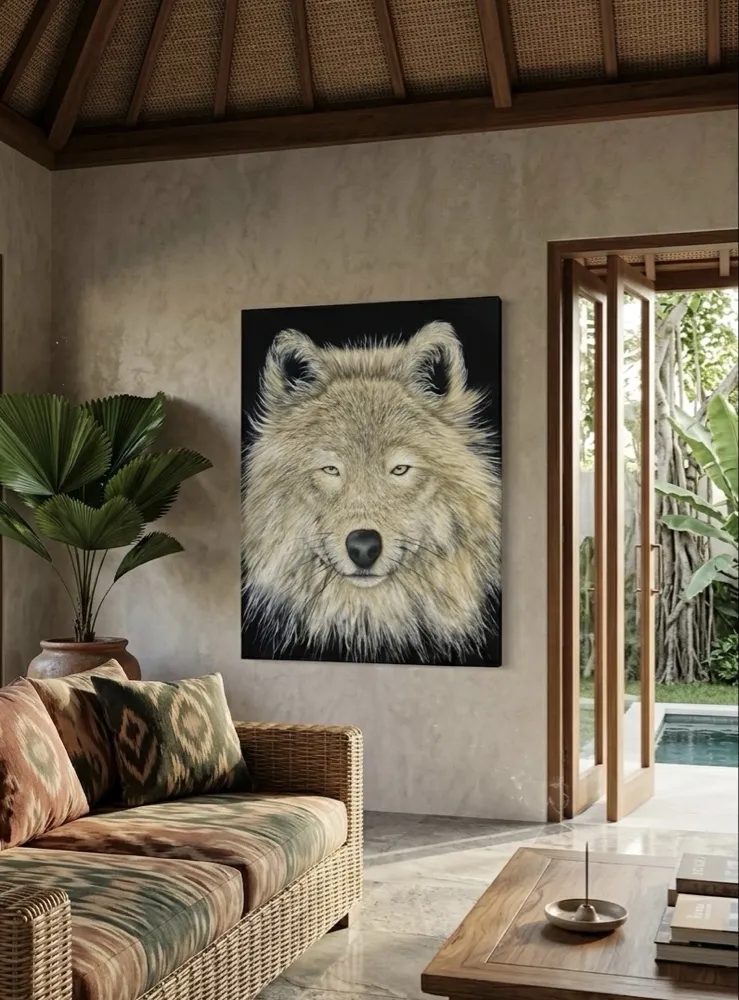
Hyper-realistic wolf oil painting by Alzhen displayed in a luxury Balinese villa — Balinese Hyper-Realism art investment 2026

The Investment Presence. A hyper-realistic wolf portrait by lead artist Alzhen displayed in a luxury Seminyak residence. Collectors in 2026 are prioritizing physical masterpieces that anchor the financial and aesthetic value of high-end villas.

📋 Methodology & Data Sources

The ROI estimates cited in this guide are derived from Arts of Bali’s internal gallery records (2021–2026), tracking acquisition price at time of initial sale against documented resale and appraisal values. These figures are cross-referenced with comparable Hyper-Realism results on Artprice.com and Invaluable.com. Market demand indices reference the Art Basel & UBS Global Art Market Report 2025. All ROI ranges represent observed historical data and should not be construed as guaranteed future returns.

Defining Hyper-Realism: A Precise Term for a Precise Art

The term “Hyper-Realism” in painting refers to a genre formally defined by art historians as distinct from Photorealism. Where Photorealism seeks to replicate the visual qualities of a photograph, Hyper-Realism adds a layer of emotional and tactile exaggeration — surfaces appear more vivid, textures more palpable, and the subject more psychologically present than any camera could record. The genre emerged in the 1970s in Western art markets, with painters like Chuck Close establishing its technical parameters. Today, Balinese artists are developing a regional variant that fuses this framework with subject matter drawn from the island’s ecology, mythology, and spiritual life.

This distinction matters for collectors considering a Balinese Hyper-Realism art investment. A work labeled “Hyper-Realist” should be verifiable against specific technical criteria — paint layer count, brushstroke resolution, color-matching accuracy — not merely assessed as “very detailed”. According to the Wikipedia entry on Hyperrealism, the genre is characterized by the creation of a new reality that does not actually exist. The artists represented by Arts of Bali produce works that meet the technical threshold of this international definition.

Technical scarcity — the irreproducibility of a skill acquired over years of single-minded practice — is the most defensible foundation of an artwork’s long-term value.

The 2026 Market Context: Why Now?

According to the Art Basel & UBS Global Art Market Report 2025, the global fine art market recorded a contraction in speculative categories — including NFTs and ultra-contemporary street art — while demand for technically complex, physically tangible works showed resilience. This represents a structural shift in collector psychology: buyers are re-weighting toward works carrying intrinsic value tied to irreproducible human skill.

Within Indonesia, the national creative economy has been a formal policy priority since the establishment of the Badan Ekonomi Kreatif (now Kemenparekraf). Visual arts and craft remain among Bali’s principal cultural exports, with the Seminyak corridor serving as the primary gallery cluster for international buyer access. The physical infrastructure of Bali’s art market — combined with its established luxury hospitality sector — creates a unique environment where fine art purchases are embedded in high-value interior design projects.

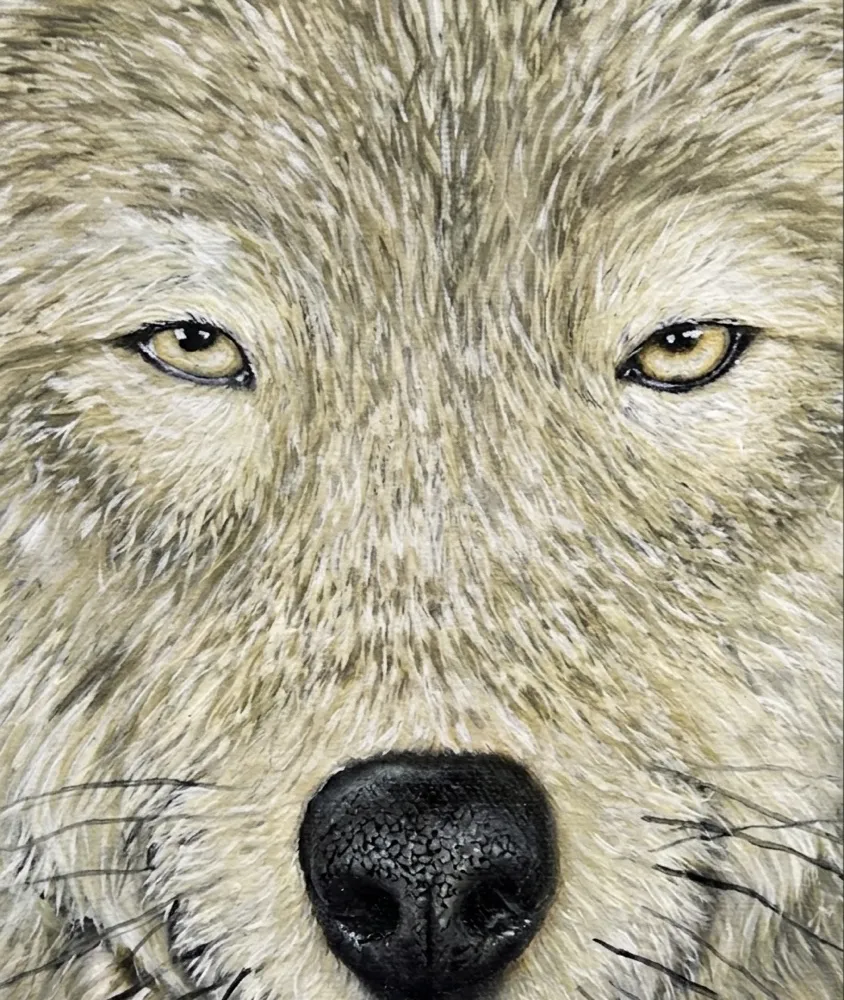
Macro detail of Alzhen's hyper-realistic wolf painting fur microtexturing — Arts of Bali

Alzhen — Wolf Portrait (detail). Each fur strand is painted individually using a 3–5 bristle brush. This technique produces surface information that exceeds photographic resolution.

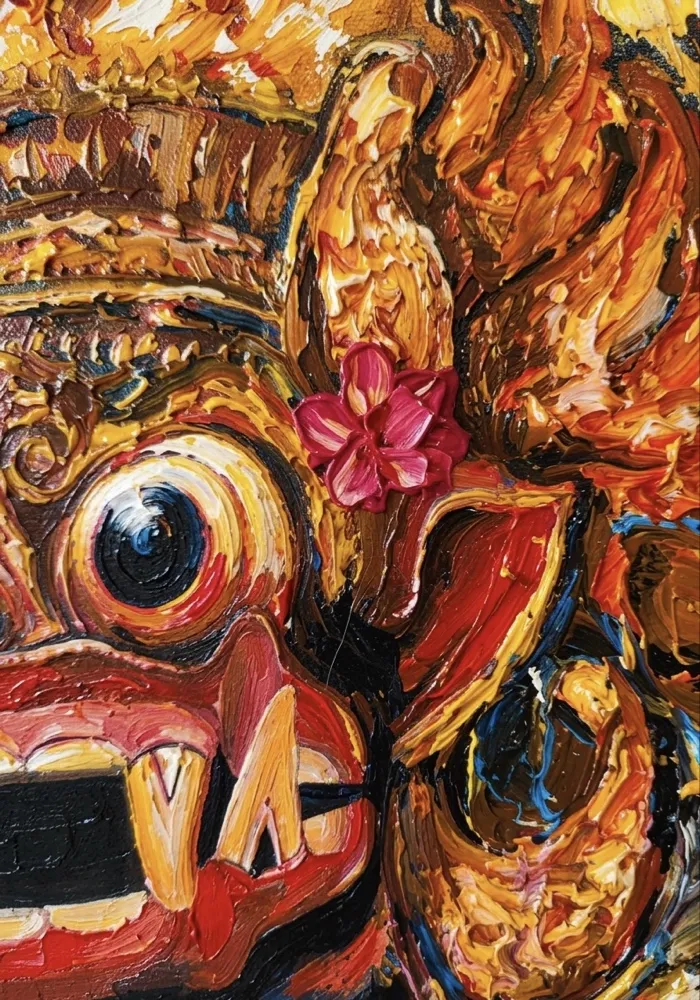
Macro close-up of palette knife impasto Barong painting — Arts of Bali

Barong Composition — impasto detail. Paint layers applied by palette knife create relief of up to 4mm, casting genuine shadows.

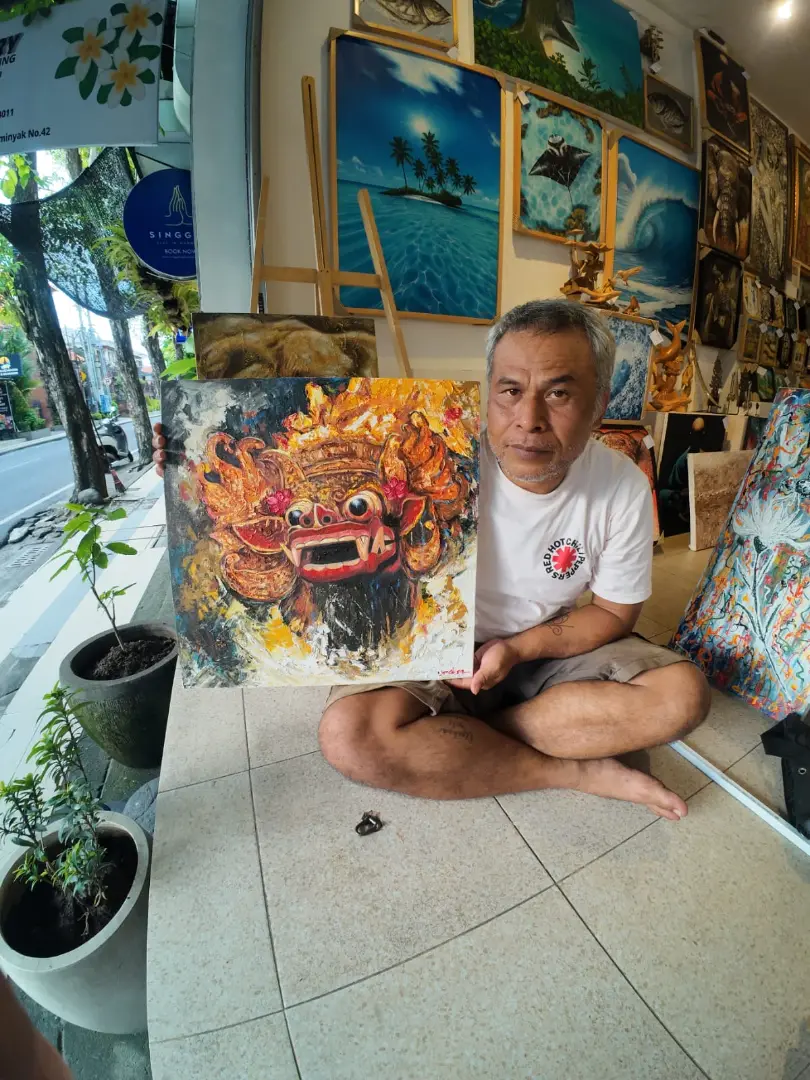
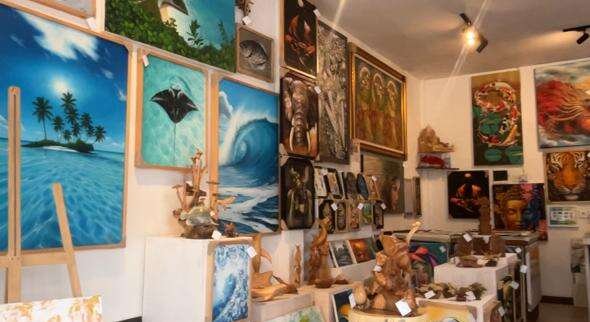
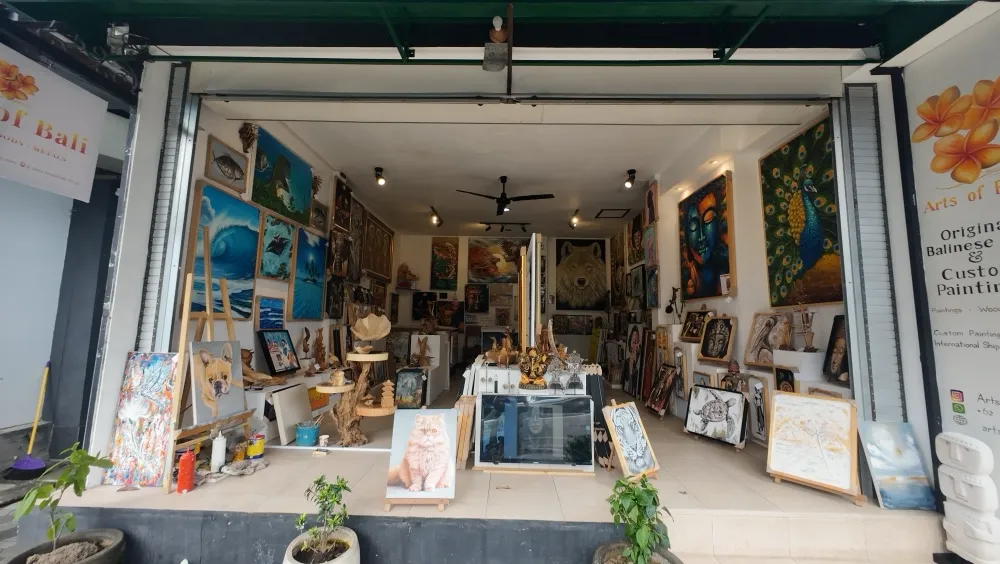
Arts of Bali at Jl. Raya Seminyak No. 42

Arts of Bali occupies a street-level gallery on Bali’s primary commercial art corridor. Founded by Putu, the gallery was built around a single curatorial thesis: that an investment-grade Balinese Hyper-Realism art investment must originate from artists with deep, verifiable specialization in a specific technique — not generalists. This principle aligns directly with how auction houses assess artist value in the secondary market.

The Specialists: Technical Rationale for Investment

Alzhen — Lead Artist & Wildlife Specialist

At the emotional core of Arts of Bali stands lead artist Alzhen. He works exclusively in wildlife subjects — wolves, tigers, and large mammals — using a technique developed over more than a decade of focused practice. His method involves layering individual fur strands in stages: first the undercoat in monochrome, then mid-tones, then highlight strands using a brush of between 3 and 5 bristles. Under magnification, it reveals the individual decision behind every mark — proof that no digital process was involved. A large-format Alzhen wolf portrait typically requires 8 to 14 weeks of continuous studio work.

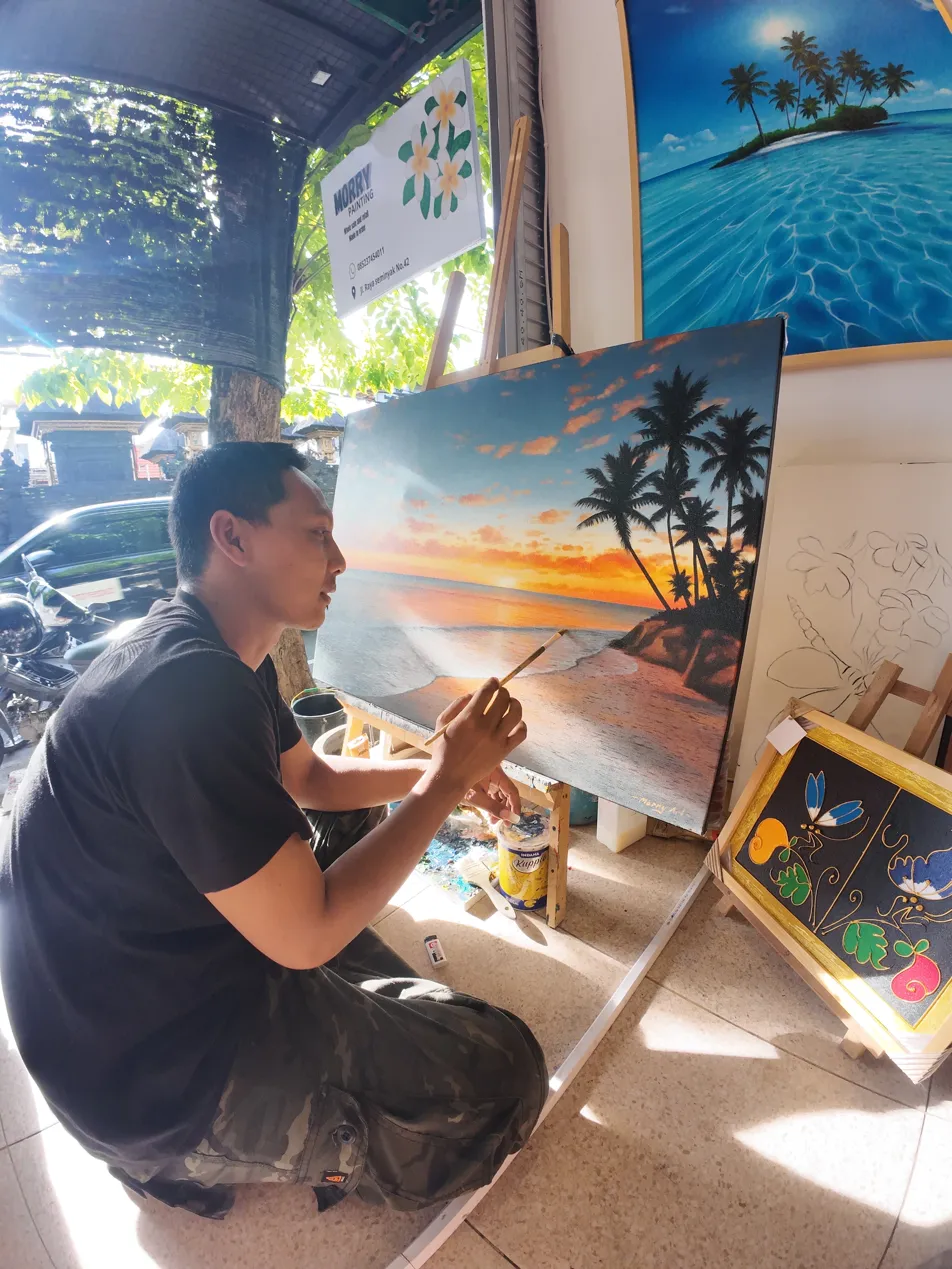
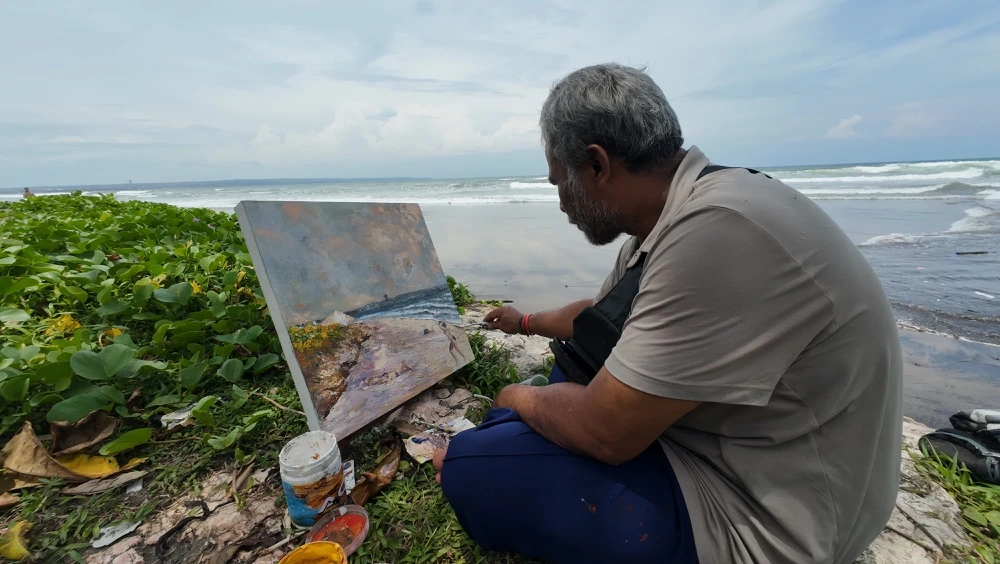
Bahtiar Ifanuri painting at Arts of Bali studio

Bahtiar Ifanuri

Marine & Coastal Specialist

Bahtiar’s subject is the Indonesian coastal environment — turquoise shallows and the quality of equatorial ocean light. His technical challenge is rendering water transparency: depicting sky reflection, wave refraction, and seafloor visibility in a single painted surface. This optical complexity rewards extended looking.

Upeksa master artist palette knife Bali

乌佩克萨

Palette Knife Painting Specialist

Originally trained in traditional realism, Upeksa made a radical choice to trade his brushes for palette knives. From Nusa Penida to Kuta, his journey is defined by a signature heavy-texture style. He uses the knife not just to apply color, but to build dimension, character, and soul into every canvas.

Farhan applying palette knife impasto

Farhan

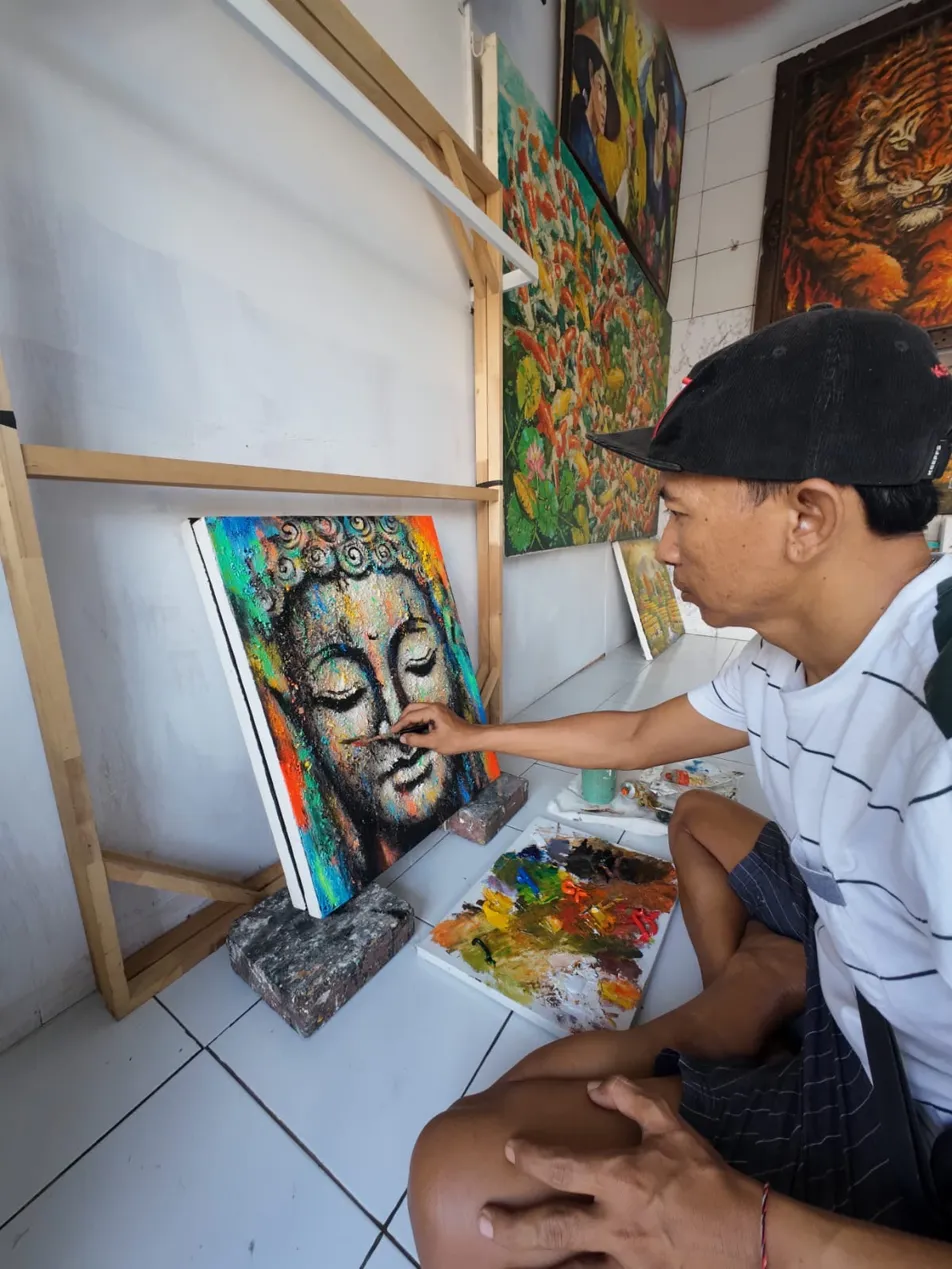
Palette Knife & Impasto Specialist

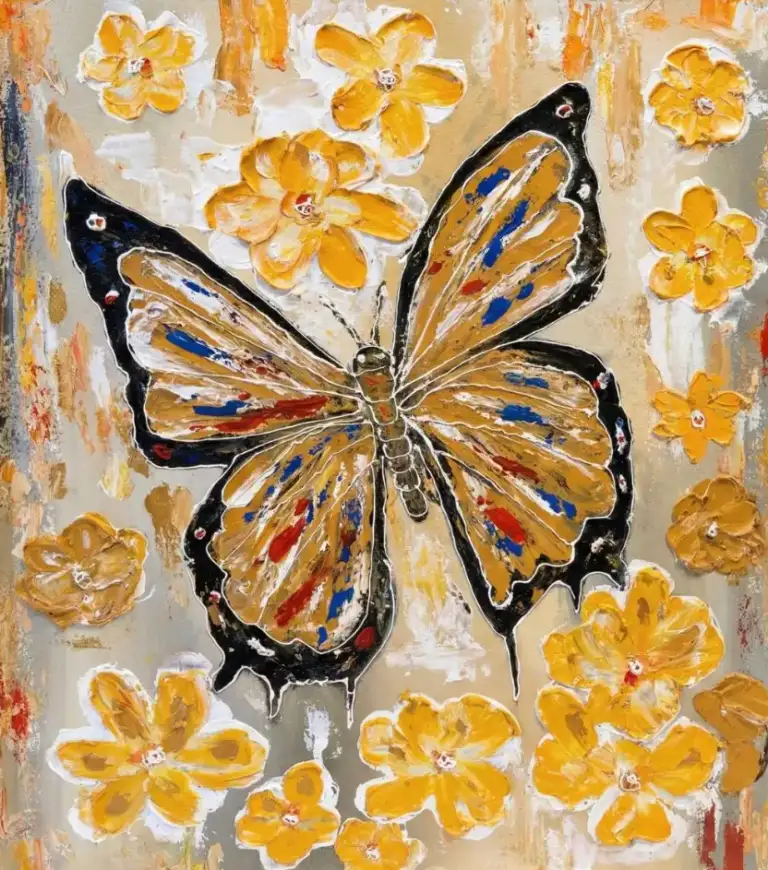
Farhan abandoned conventional brushwork in favor of the palette knife, repositioning painting closer to low-relief sculpture. His works — ranging from spiritual figures like Buddha to ceremonial subjects — carry visible raised surfaces that cast genuine shadows under interior lighting.

Gandara painting Bali landscape

甘达拉

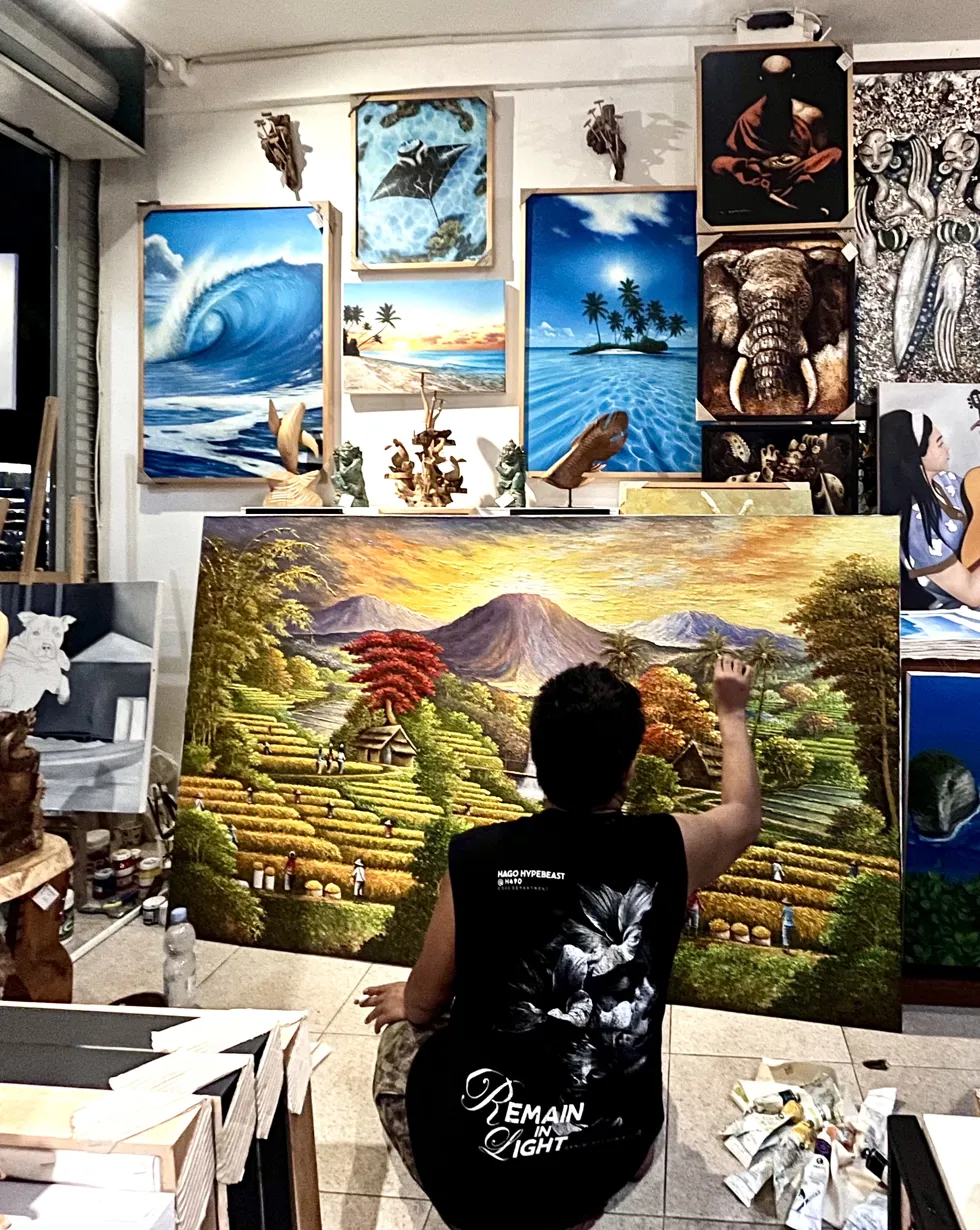
Landscape & Nature Specialist

Gandara’s large-format canvases document the agricultural and volcanic landscape with intensity. His works are built using layered oil glazes that create luminosity in the sky and atmospheric depth, functioning simultaneously as cultural document and investment-grade art.

2026 Price & ROI Reference Guide

This data highlights why a Balinese Hyper-Realism art investment consistently outperforms speculative categories. ROI ranges reflect observed historical performance.

Art CategoryTechnical ComplexityObserved 5-Yr ROI
Traditional Balinese Folk ArtHigh narrative iconography15–25%
Palette Knife / Impasto (Upeksa, Farhan)High physical relief60–85%
Hyper-Realism (Alzhen, Bahtiar)Ultra-high micro-precision110–130%

Technical Terms Explained

Micro-Texturing

Painting surface detail at a resolution finer than the human eye resolves at normal viewing distance.

Impasto

The application of paint in thick, physically raised layers that cast genuine shadows.

Provenance

The documented history of an artwork’s creation, ownership, and exhibition.

Barong

Bali’s sacred lion-like protective deity, central to ceremonial life and fine art.

Atma Kerthi

Purification and elevation of the soul — a curatorial theme for 2026.

Technical Scarcity

Skills that cannot be learned quickly or automated, creating a structural supply constraint.

常见问题

How can I verify a Balinese Hyper-Realism art investment painting is an original?
Physical verification is most reliable. Authentic oil paintings exhibit measurable paint thickness (1 to 5mm). At Arts of Bali, every work is accompanied by a signed certificate of authenticity and trademark registration.
What technical factors make Alzhen’s wildlife paintings investment-grade?
Three criteria: Technical Scarcity (15 years of training), Time Investment (8–14 weeks per canvas), and global market demand breadth.
How long does it take to complete a Hyper-Realism masterpiece?
Wildlife works by Alzhen require 8–14 weeks. Palette knife works by Upeksa and Farhan take 4–8 weeks. Landscape works by Gandara take 5–9 weeks.
Is it safe to ship heavily textured paintings internationally?
Yes. We use custom-built wooden crates with foam isolators. Full customs documentation and material specifications are provided with each shipment.
Why choose physical paintings over NFTs in 2026?
Physical art has demonstrated lower volatility, supported by tangibility and cross-border liquidity through auction houses.
What is the cultural significance of the Barong motif?
The Barong represents documented UNESCO-adjacent cultural heritage, supporting long-term value beyond aesthetics.
Disclosure: Arts of Bali is a commercial gallery. ROI data is drawn from internal transaction records and is not financial advice.

Begin Your Balinese Hyper-Realism art investment

Visit our gallery at Jl. Raya Seminyak No. 42, Bali or browse the 2026 collection online.

Explore Collection Contact via WhatsApp
分享到
在 Facebook 上
WhatsApp
推特
电子邮件

发表回复

您的邮箱地址不会被公开。 必填项已用 * 标注

订阅我们的通讯

与我们联系