“In Bali, art is not merely something hung on a wall to be observed. It is a prayer rendered in color — a physical offering that lives between the ancient temples and the breaking waves.”
If you’ve ever been caught in Bali traffic because a long procession of villagers dressed in white, carrying ceremonial umbrellas and towering fruit offerings, was slowly making its way toward the sea — you were watching the spiritual heartbeat of the island. In Balinese Hindu cosmology, the balance of the universe is maintained not through silence, but through celebration. Daily rituals, temple worship, and purification ceremonies are the foundation of life here, not the exception.
This is exactly why Bali temple ceremony paintings have become some of the most sought-after subjects by international collectors. These canvases aren’t decorative prints. They are visual documents of an island that refuses to surrender its traditions. Here’s what those images actually mean — and why collectors keep coming back for them. Explore the collection with us at Arts of Bali.
What is a Balinese Ceremony Painting?
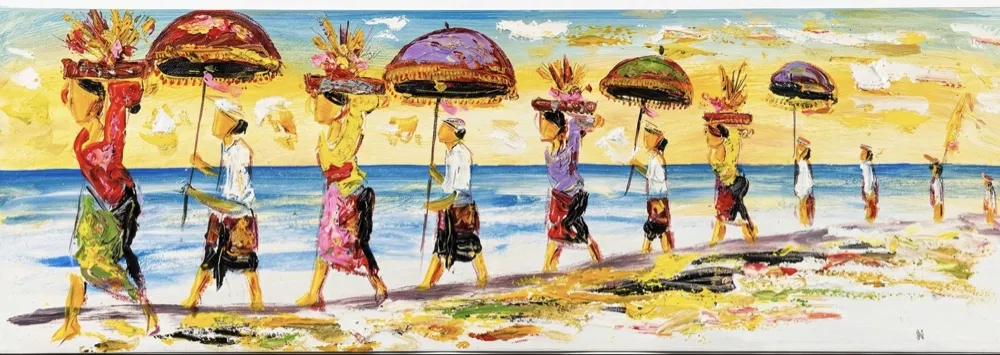
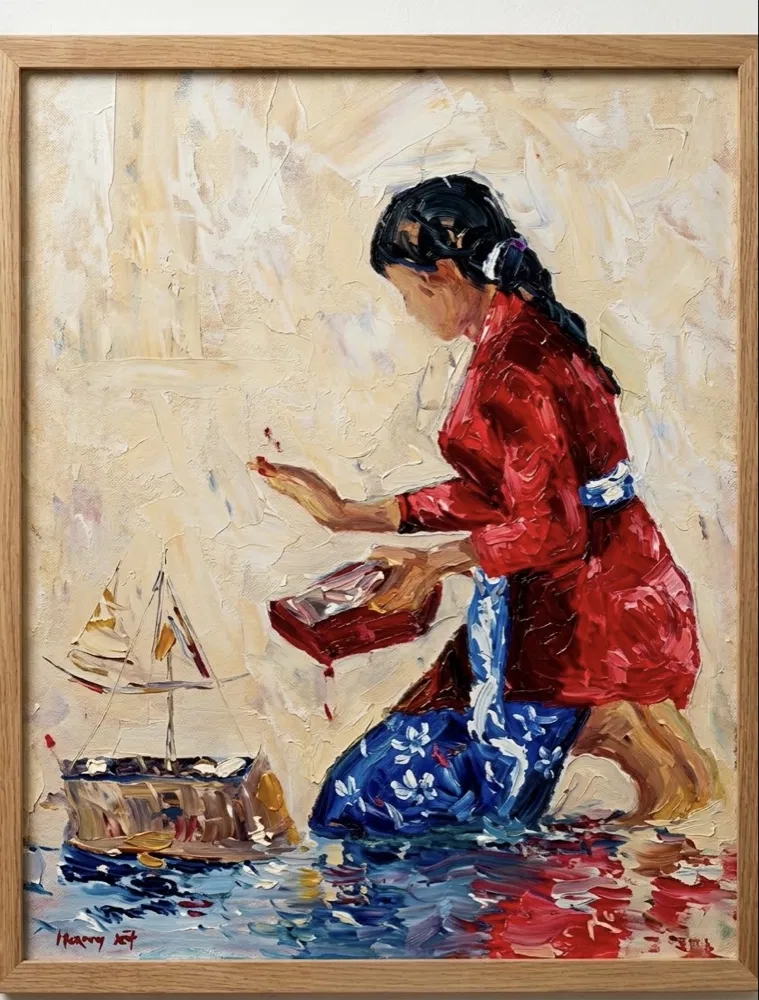
Bali temple ceremony paintings depict the sacred rituals of Balinese Hinduism. The primary subjects usually include Pura (the temple) as the spiritual epicenter, Banten (fruit and flower offerings carried by Balinese women as an act of devotion), and grand processions like Melasti (ocean purification) or Odalan (temple anniversary festivals). In contemporary Balinese art, these subjects are frequently executed using heavy palette knife (impasto) techniques to capture the raw, sacred energy of the ceremony in three-dimensional paint.
Bali Temple Painting: Where Earth Meets the Divine
Every village in Bali has at least three main temples (Kahyangan Tiga), and every family compound has its own private shrine. In painting, a Pura (Temple) is never just an architectural subject. The multi-tiered meru roofs represent sacred Mount Mahameru — the dwelling place of the gods. When a Balinese artist paints a temple, they’re painting the exact point where humanity, nature, and the divine converge.
Landscape painters from Bali are masters at capturing the relationship between these sacred structures and the forces around them. Paintings of coastal temples — inspired by iconic sites like Tanah Lot or Uluwatu — are studies in contrast: solid ancient rock, wild crashing surf, and the burning glow of a Bali sunset, all on a single canvas.
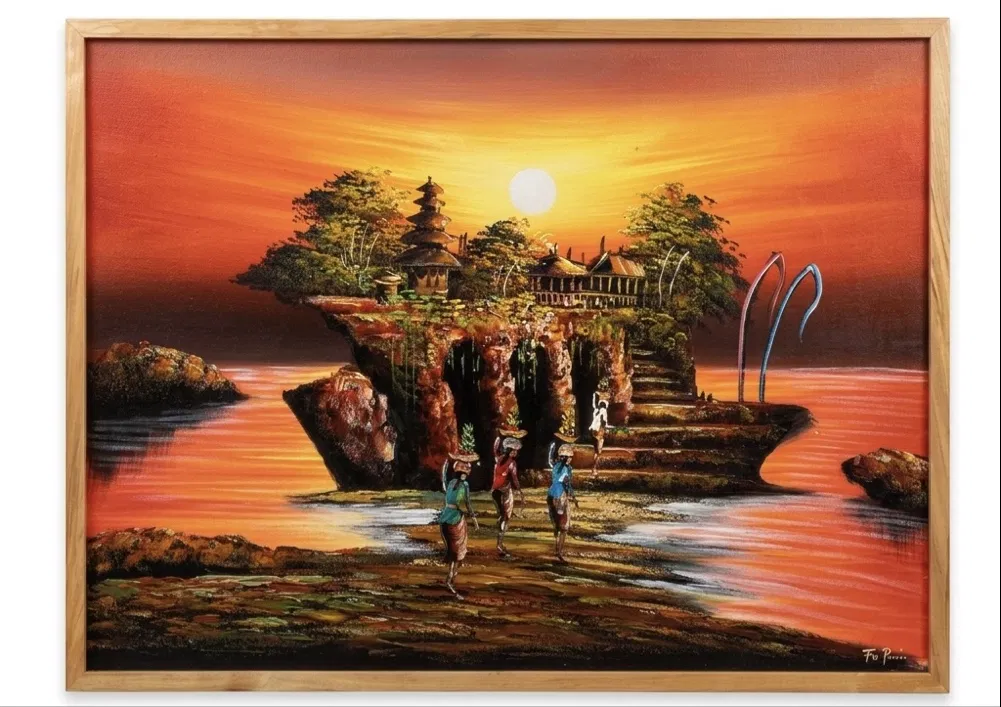
The Ceremonial Umbrella (Tedung)
In many Bali temple ceremony paintings, you’ll notice tall, vibrant umbrellas called Tedung. Their colours aren’t decorative — they carry sacred meaning. A white tedung symbolises purity. Yellow or gold represents the deities. Red belongs to Brahma, and black to Vishnu. These umbrellas function as spiritual shelters, welcoming ancestral spirits and gods down to earth for the duration of the ceremony.
Banten: The Art of the Daily Offering
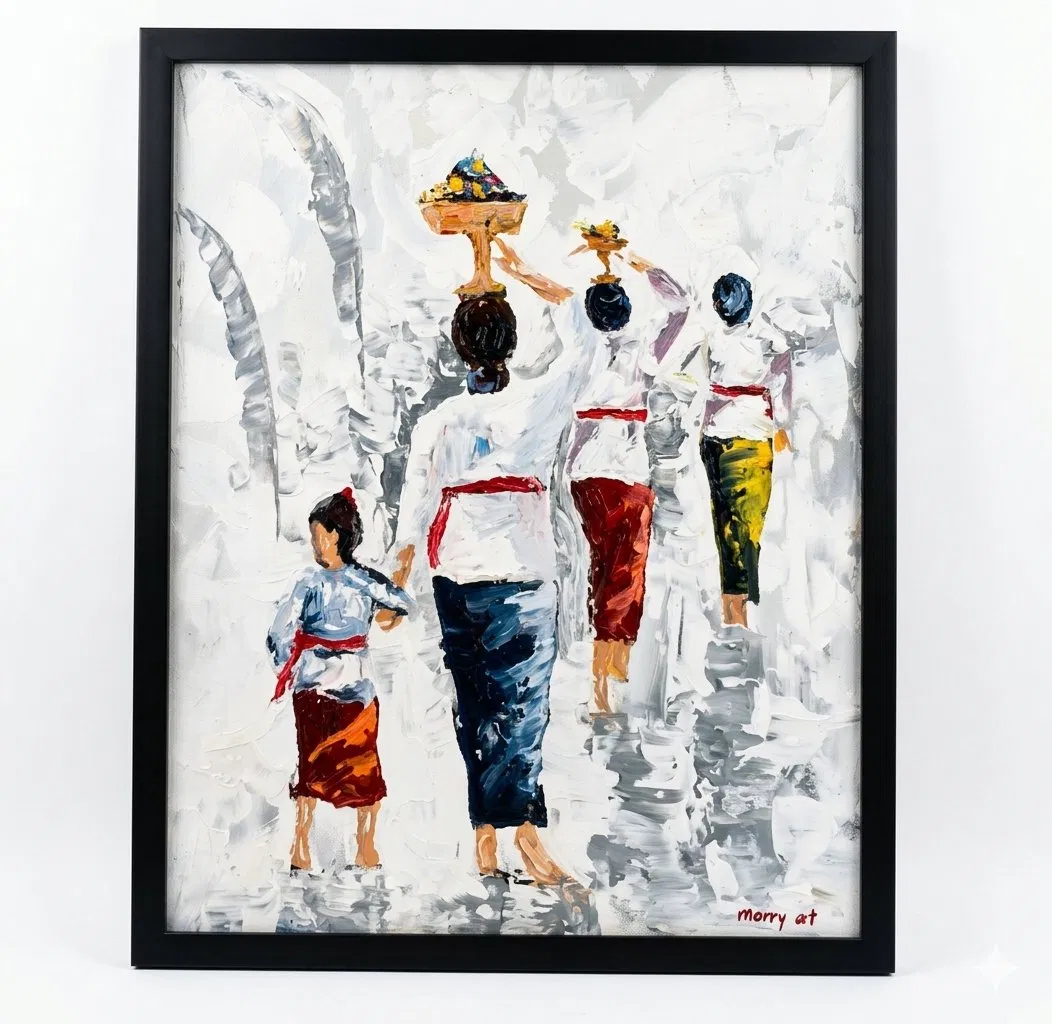
One of the most iconic figures in Balinese painting is the woman balancing a towering arrangement of fruit and flowers on her head. This offering is called a Banten — specifically a Gebogan. Assembling one takes hours: a complex geometric stack of woven young coconut leaves, tropical fruits, traditional rice cakes, and fresh flowers, built purely to be presented to the divine. The moment it reaches the temple, it’s laid down and left.
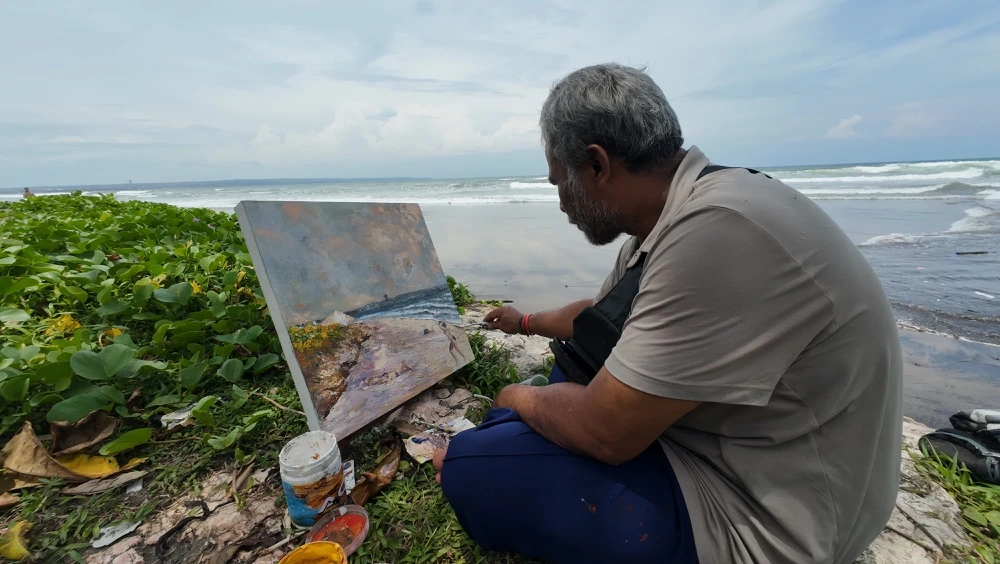
For collectors, a painting of a woman carrying a banten is a statement about grace, strength, and the quiet persistence of tradition. It’s a visual record of devotion — selfless, sincere, and centuries old. Contemporary Balinese painters increasingly use heavy impasto palette knife techniques to give these offerings real physical weight on the canvas, lifting them from flat classical renderings into bold modern statement pieces.
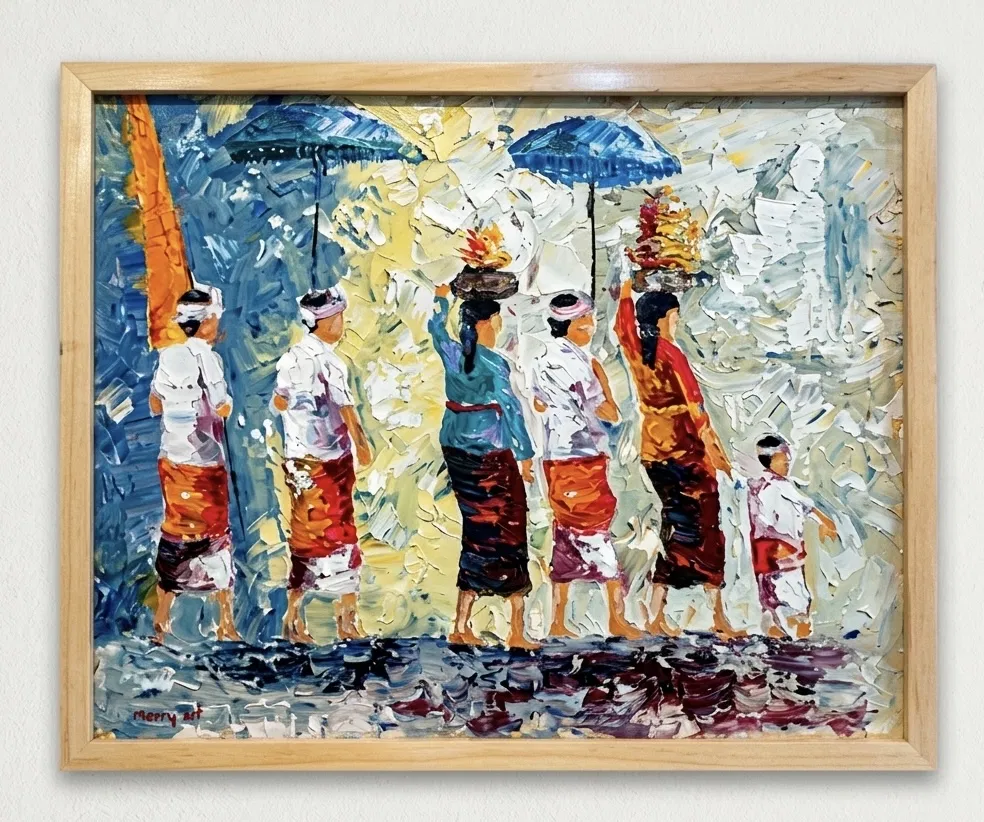
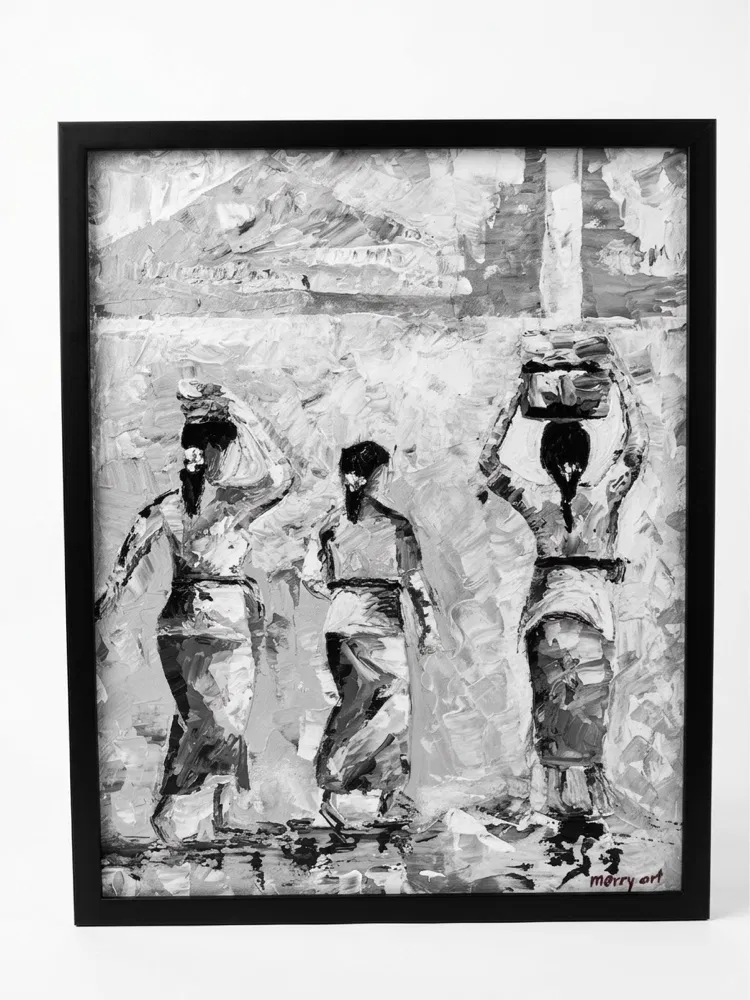
“On these textured canvases, you can almost feel the weight of the offerings, the ocean breeze, and the distant chime of a priest’s bell. It’s not just a painting — it’s a sensory memory.”
Water Rituals: Melasti and the Religion of Holy Water
Water is the most sacred element in Balinese Hinduism — the tradition is often called Agama Tirtha, the Religion of Holy Water. Many ceremony paintings are set against a beach or river for a specific reason. They reference the Melasti ritual, performed in the days before Nyepi (the Day of Silence), when entire villages march to the sea to cleanse sacred temple objects and wash away negative forces. The sight of thousands of white-clad devotees processing to the ocean — umbrellas raised, offerings balanced — is among the most visually powerful spectacles in Southeast Asia.
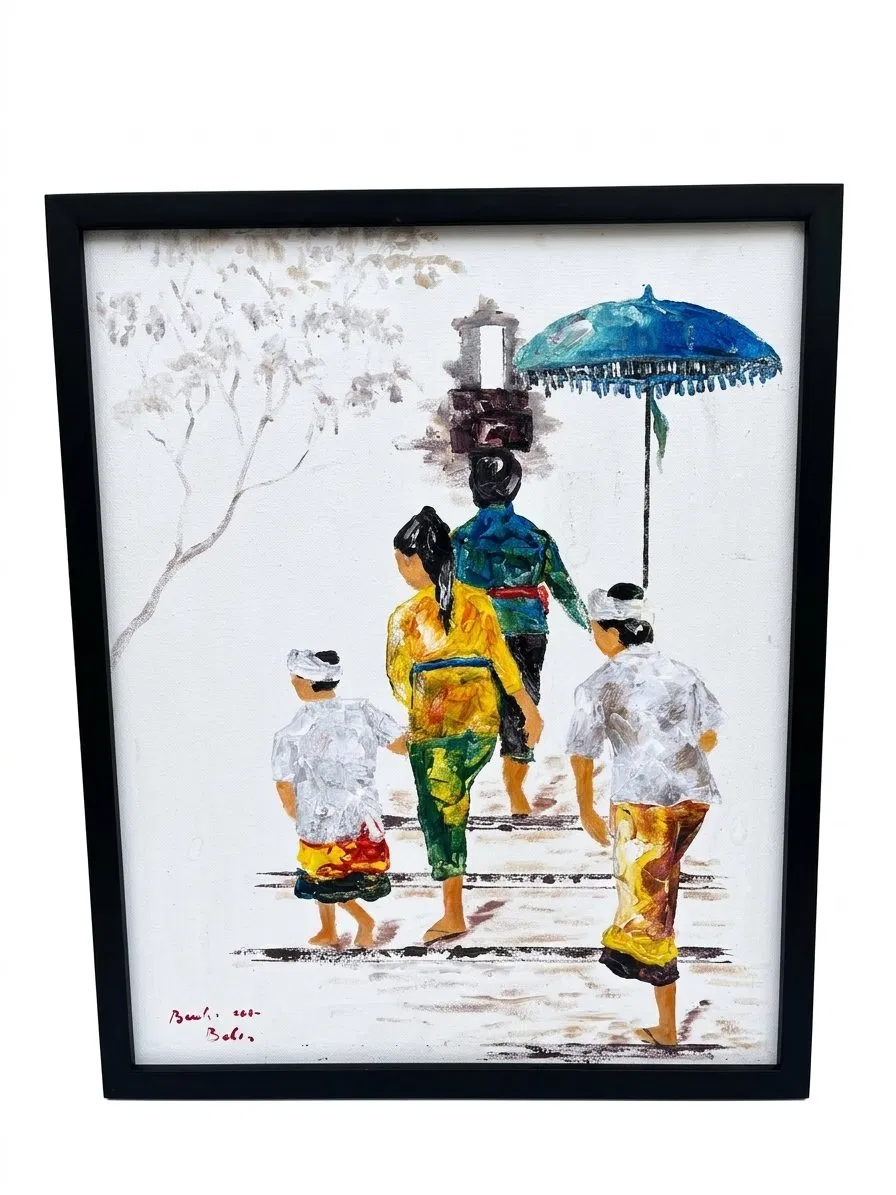
Want to go deeper into the mythology behind these rituals? Our guide on Balinese Mythology Paintings covers the epic deities — Barong, Rama, and Rangda — who preside over many of the ceremonies depicted in this genre. Or browse the full collection of originals at our Arts of Bali gallery in Seminyak.
Common Questions About Balinese Ceremony Art
What is the meaning of women carrying fruit on their heads in Balinese paintings?
These women are carrying Banten — specifically the Gebogan type, which are tall stacked offerings of fruit, flowers, and traditional rice cakes. This subject represents sincere devotion to the divine, gratitude for the earth’s harvest, and the extraordinary strength and grace of Balinese women as the primary keepers of their spiritual heritage. In Balinese culture, making and carrying a Gebogan is itself considered a sacred act.
Why are many Bali ceremony paintings created with thick texture (palette knife)?
The palette knife (heavy impasto) technique is popular for ceremonial subjects because the physical texture of the paint perfectly mirrors the dynamic energy of the ceremony itself. Thick layers of paint cast real shadows on the canvas — making ceremonial umbrellas, the folds of sarongs, and crowded processions feel genuinely three-dimensional. As a statement piece for a villa wall, a palette knife ceremony painting commands a room in a way that a flat print never can.
Why is the Melasti ceremony so often painted with a beach background?
Melasti is a mass purification ritual performed by Balinese Hindus in the days before Nyepi (the Day of Silence). Entire village populations walk together to the sea — or the nearest holy water source — carrying sacred temple objects to be cleansed of negative forces. The visual spectacle of thousands of white-clad devotees with colourful umbrellas against a vast ocean backdrop makes Melasti one of the most naturally dramatic subjects in Balinese art.
Does Arts of Bali accept custom commissions for ceremony paintings?
Absolutely. If you photographed a ceremony moment during your time in Bali and want it rendered in paint, or if you’d like a specific temple scene in a colour palette that suits your home, we take custom requests. Read our full guide on how to commission art in Bali to understand the process, timeline, and pricing.
Where can I buy authentic Bali temple and ceremony paintings?
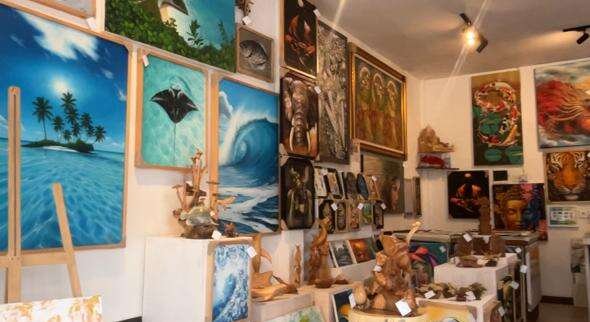
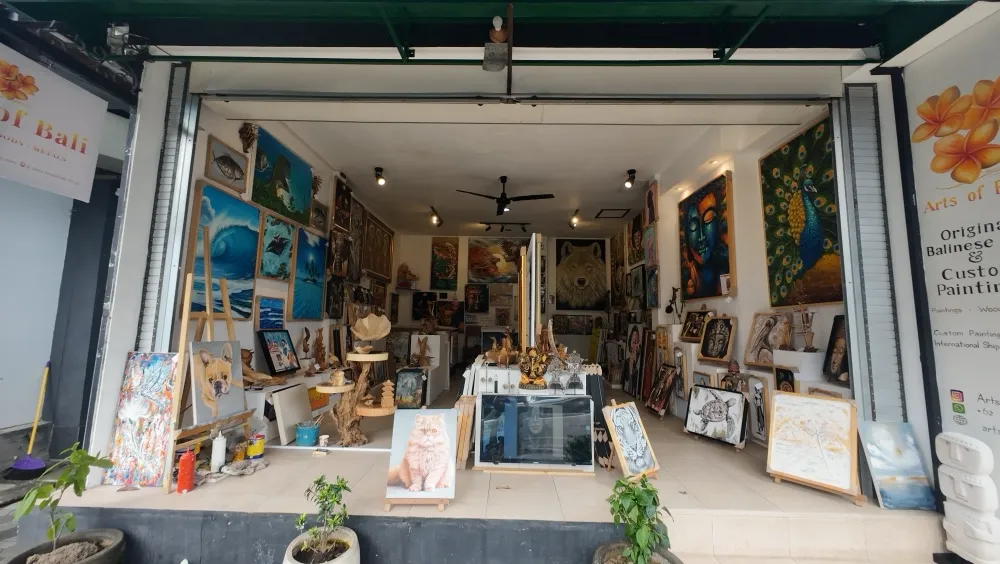
The Arts of Bali gallery at Jl. Raya Seminyak No. 42 carries an original collection of ceremony paintings by master Balinese artists — from small works perfect for a holiday souvenir to large commission pieces for villa walls. Every painting is authentic and hand-painted. For overseas buyers, we ship internationally with full tracking via DHL and FedEx.
For pricing, see our Bali painting price guide before you visit.
Discover Your Masterpiece at Arts of Bali
Looking to bring the energy of a Balinese ceremony into your home? Visit the gallery in Seminyak and experience the impasto textures of our ceremony paintings in person — the paint rises off the canvas and the colours are deeper than any screen can show. Browsing from overseas? WhatsApp us with your wall dimensions and we’ll send the current collection directly to you.
Consult With Us on WhatsApp