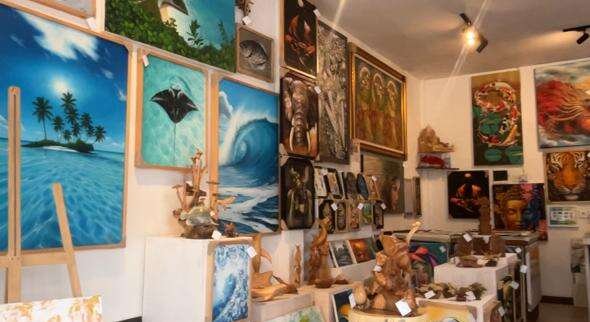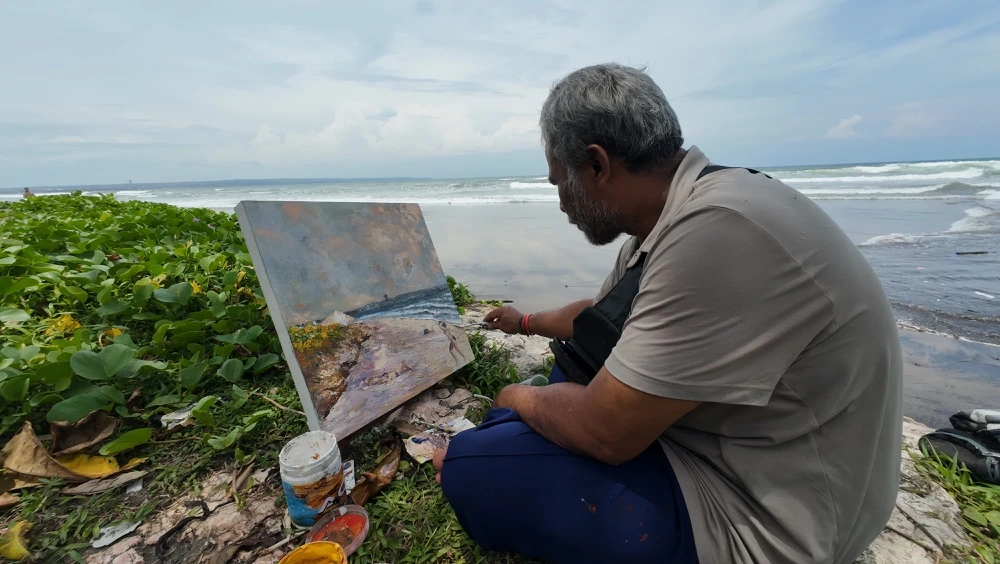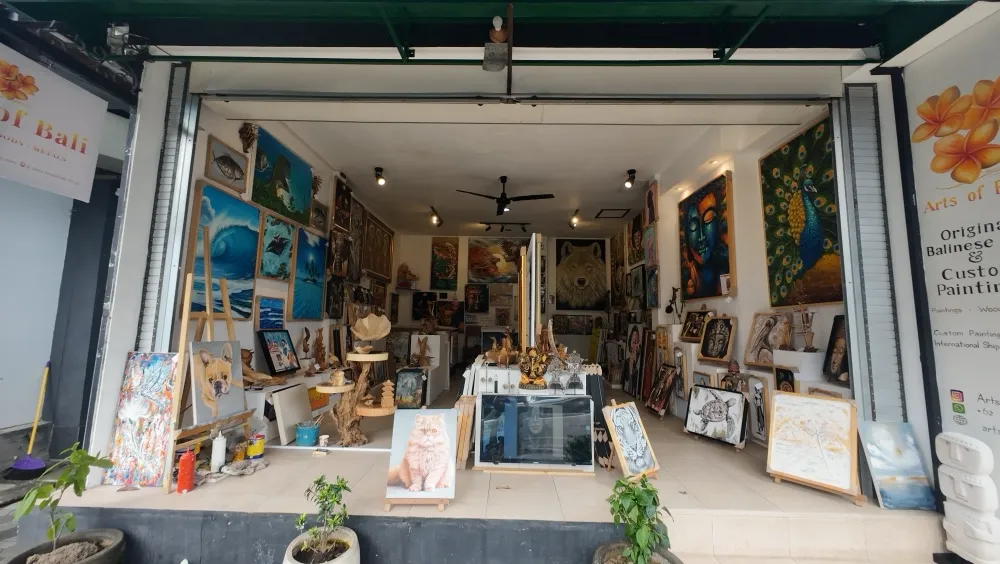
From the gallery floor to your wall.
Here is exactly how it happens.
“Buyers ask us the same three questions every time. How will it be packed. How much will it cost. Will it get through customs without trouble. This guide is our honest answer to all three.”
— Putu Sucipta, propriétaire d'Arts of Bali
If you are asking how to ship art from Bali, you are probably standing in front of a painting you already want, doing the math on whether getting it home is realistic. It usually is. This guide walks through what actually happens after you say yes: how the canvas is packed, what it costs to send to Australia, the US, the UK, or elsewhere, and what paperwork customs will expect on the other end. Everything here reflects how Arts of Bali actually ships, based on real packages going out of our gallery in Seminyak.
Shipping art from Bali internationally generally involves three steps: the painting is either rolled (canvas removed from its stretcher bars) for cost efficiency, or crated flat with the stretcher intact for fragile or textured surfaces. The package is then sent via international courier (DHL, FedEx, UPS) for faster delivery, or via Pos Indonesia / sea freight for larger or heavier shipments at lower cost. Customs in the destination country may require a commercial invoice, and in some cases an export declaration from Indonesia, depending on the value and size of the artwork.
How to Ship Art from Bali: Rolled Canvas vs. Crated Shipping
The first decision in shipping any painting is whether it travels rolled or flat. This decision is made by the gallery, not the buyer, but understanding it helps explain the cost difference you will see on a shipping quote.
Rolled Canvas Shipping
For most oil and acrylic paintings on canvas, the work is removed from its wooden stretcher bars, rolled around a wide cardboard or PVC tube with the painted surface facing outward, and protected with several layers of acid-free tissue and plastic sheeting. The rolled canvas is then placed inside a rigid cardboard shipping tube, which is itself wrapped and reinforced with fragile tape and corner protectors.
This method dramatically reduces the size and weight of the package, which lowers shipping cost significantly for larger paintings. A 100 x 150 cm canvas that would require a bulky flat crate becomes a tube under 15 cm in diameter and roughly the length of the canvas’s longer side. On arrival, the canvas is unrolled and re-stretched onto new stretcher bars, which any local framer can do.
Rolling is not suitable for every painting. Works with thick impasto, palette knife texture, or mixed media elements (sand, gold leaf, modeling paste) can crack if rolled, because the paint film does not flex the same way the canvas does. For these pieces, flat crating is the only safe option.
Flat Crated Shipping
Paintings with significant surface texture, works already mounted on stretcher bars that the buyer wants to keep assembled, and wood carvings or sculptural pieces all ship flat or in custom-built wooden crates. The piece is wrapped in foam, bubble wrap, and cardboard, then placed inside a crate sized specifically to the dimensions of the work with minimal empty space, which is then sealed and marked.
Crated shipping costs more, both because the package is larger and heavier, and because some couriers calculate cost on volumetric weight rather than actual weight for oversized items. For most buyers, the additional cost is justified when the alternative is risking damage to a textured or three-dimensional surface.
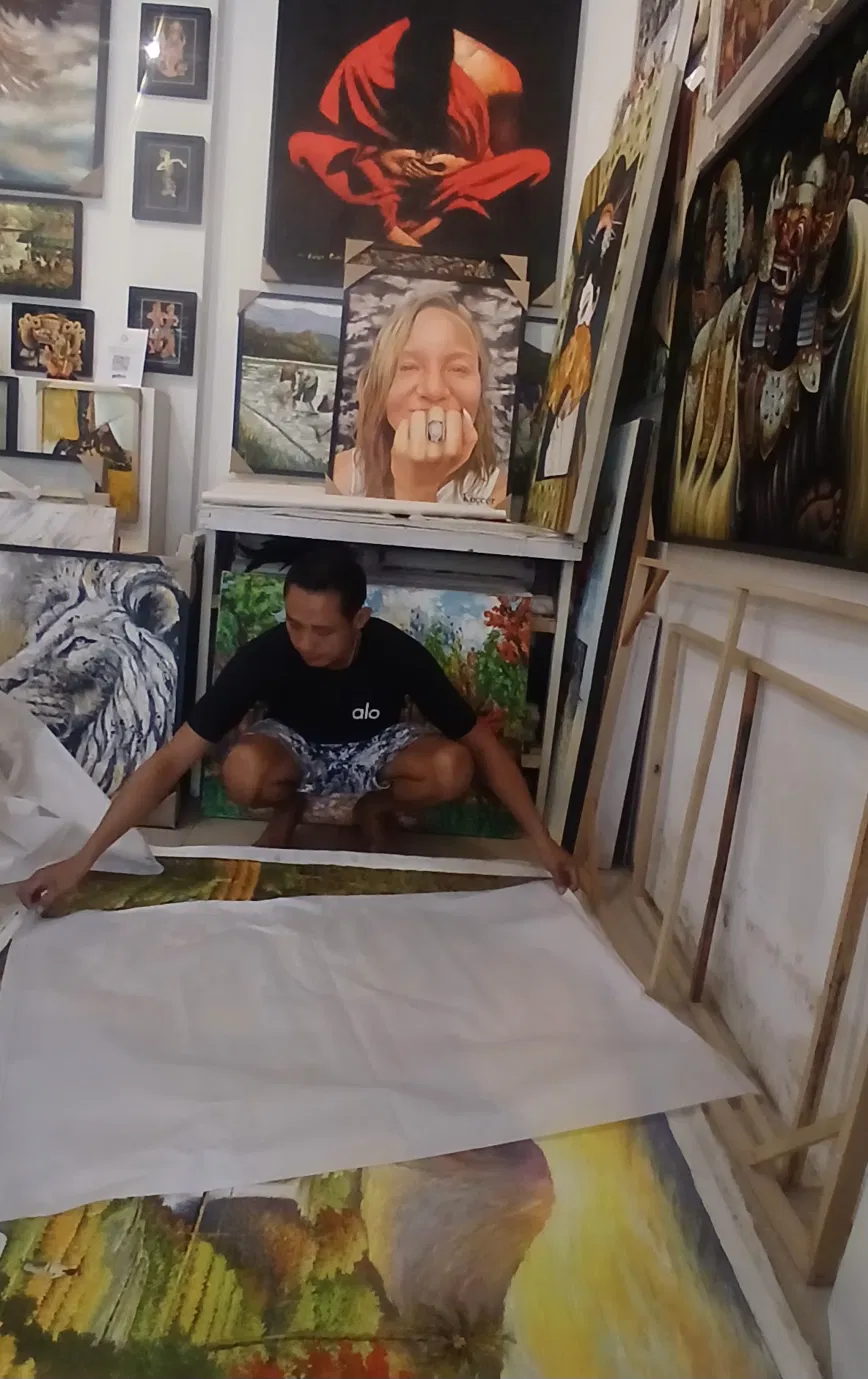
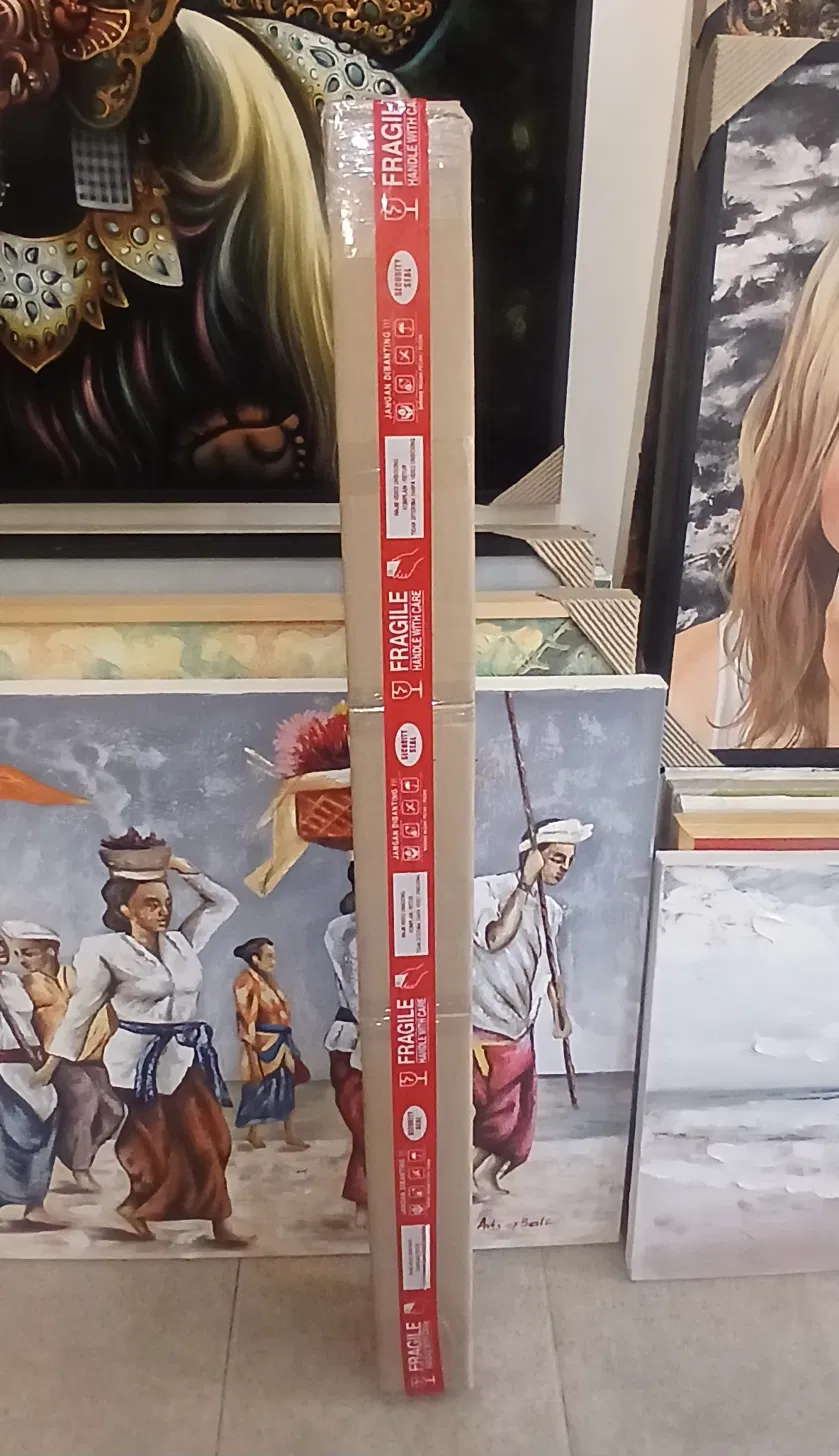
“A buyer in Melbourne once asked me to send a photo of the package every step of the way. I sent six photos before it even left the building. By the time it arrived, he said it felt like he had been part of sending it himself.”
— Putu Sucipta, Les arts de Bali
Shipping Cost for Art from Bali: Courier Options Compared
There is no single answer to what shipping art from Bali costs. It depends on the size and weight of the package, the destination country, and how quickly you want it to arrive. Below is how the main options compare for a typical rolled canvas in the 80 to 150 cm range.
International Courier (DHL, FedEx, UPS)
The fastest option, typically 4 to 8 business days door to door to Australia, the US, the UK, and most of Europe. For a rolled canvas tube under 5 kg, cost generally runs from roughly USD 80 to 180 depending on destination. Full tracking, signature on delivery, and the most reliable customs processing of the three options because these couriers handle the paperwork directly.
Pos Indonesia (EMS / Standard Post)
The most economical option for rolled canvases and smaller crated pieces. Delivery time runs from 2 to 6 weeks depending on destination and service level. Cost for a rolled canvas tube typically runs from roughly USD 30 to 70. Tracking is available but less granular than commercial couriers. This is the method shown in the photos throughout this guide.
Sea Freight (Large Crates)
For multiple paintings, wood carvings, or very large crated works, sea freight consolidates everything into one shipment. Transit time runs 4 to 10 weeks depending on the destination port and customs clearance. Cost is calculated by volume rather than per item, which makes it efficient for buyers purchasing several pieces at once or furnishing an entire room.
For a single mid-size painting, Pos Indonesia or international courier covers nearly all cases. Sea freight becomes worthwhile mainly when shipping multiple large pieces together, where the per-item cost drops significantly compared to shipping each one separately.
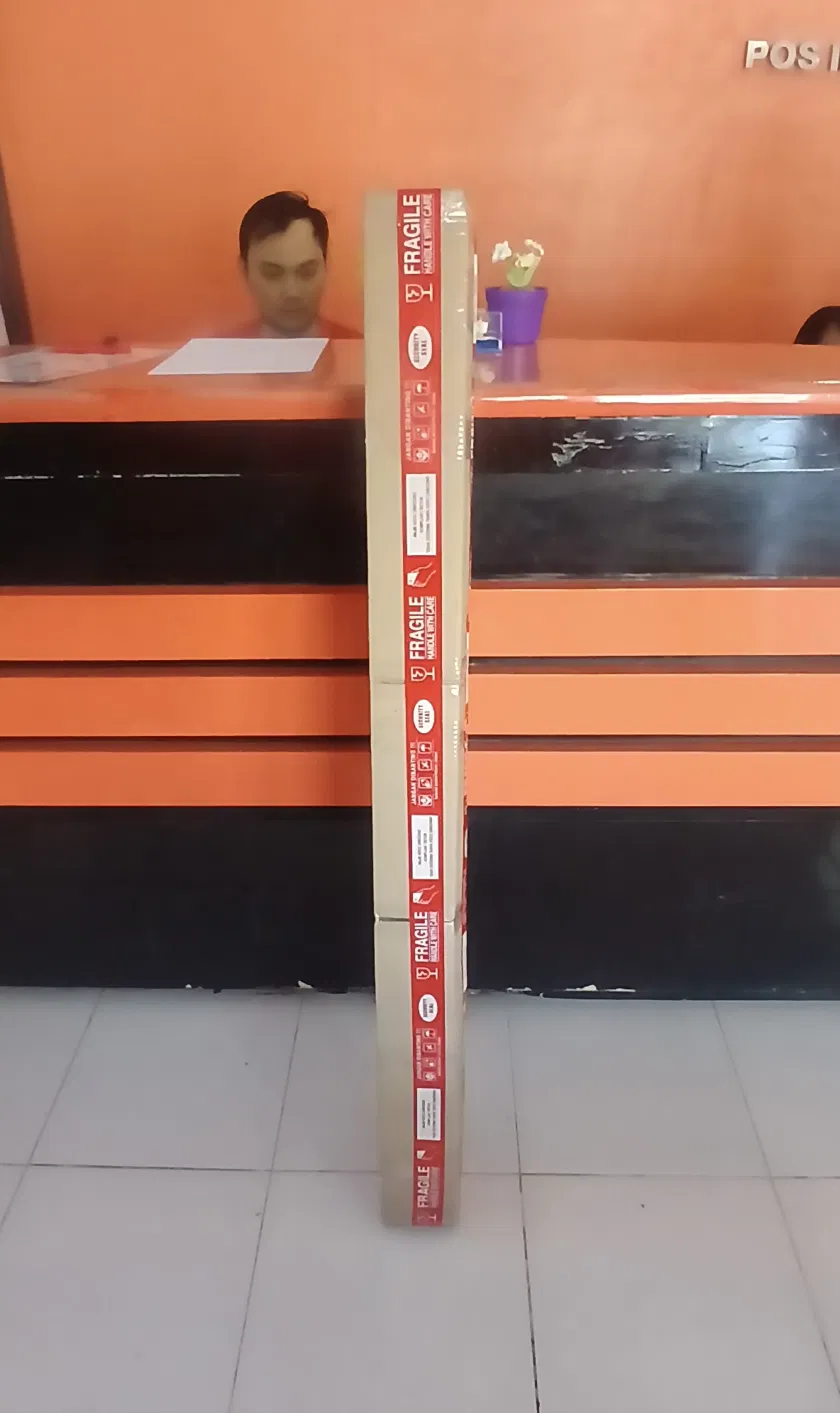
A rolled canvas from Arts of Bali at the Pos Indonesia counter, Seminyak, prepared for international dispatch.
Customs Documents for Importing Art: What Australia, US, and EU Buyers Need
This is the part that worries most first-time buyers, and it is usually simpler than expected. Original paintings, sculptures, and handcrafted artwork are treated favorably by most customs authorities compared to general merchandise, but the paperwork still matters.
The Commercial Invoice
Every international shipment needs a commercial invoice: a document stating what the item is, its declared value, the sender’s and recipient’s details, and the country of origin (Indonesia). Arts of Bali prepares this invoice for every shipment and attaches it to the outside of the package, as customs authorities require it to be visible without opening the box.
The declared value should reflect the actual purchase price. Under-declaring to reduce duty is not something we do, and it can cause a shipment to be held or returned if customs suspects the value does not match the item. For most personal art purchases under typical duty-free thresholds, declared correctly, clearance is straightforward.
Country-Specific Notes
Australia: Original paintings and artworks generally clear without issue. Buyers should be aware that GST may apply on imports above a certain value threshold, which is collected by the courier or Australia Post on delivery, not paid in advance.
United States: Original works of art (paintings, drawings, and most sculptures classified as fine art rather than decorative goods) are typically duty-free under US tariff schedules, though this can change and should be confirmed at the time of shipping. The US Customs and Border Protection import basics guide outlines the general documentation process for personal imports.
European Union: Original artworks from outside the EU may be subject to import VAT, which varies by member state, generally applied at a reduced rate for art compared to standard goods. The commercial invoice and correct tariff classification are what customs uses to apply the correct rate.
For wood carvings specifically, some countries (notably Australia, New Zealand, and the US) have biosecurity declarations for wooden items. Arts of Bali includes the appropriate phytosanitary information on the package documentation where applicable. Our Guide de sculpture sur bois covers material types in more detail, which can help with declarations.
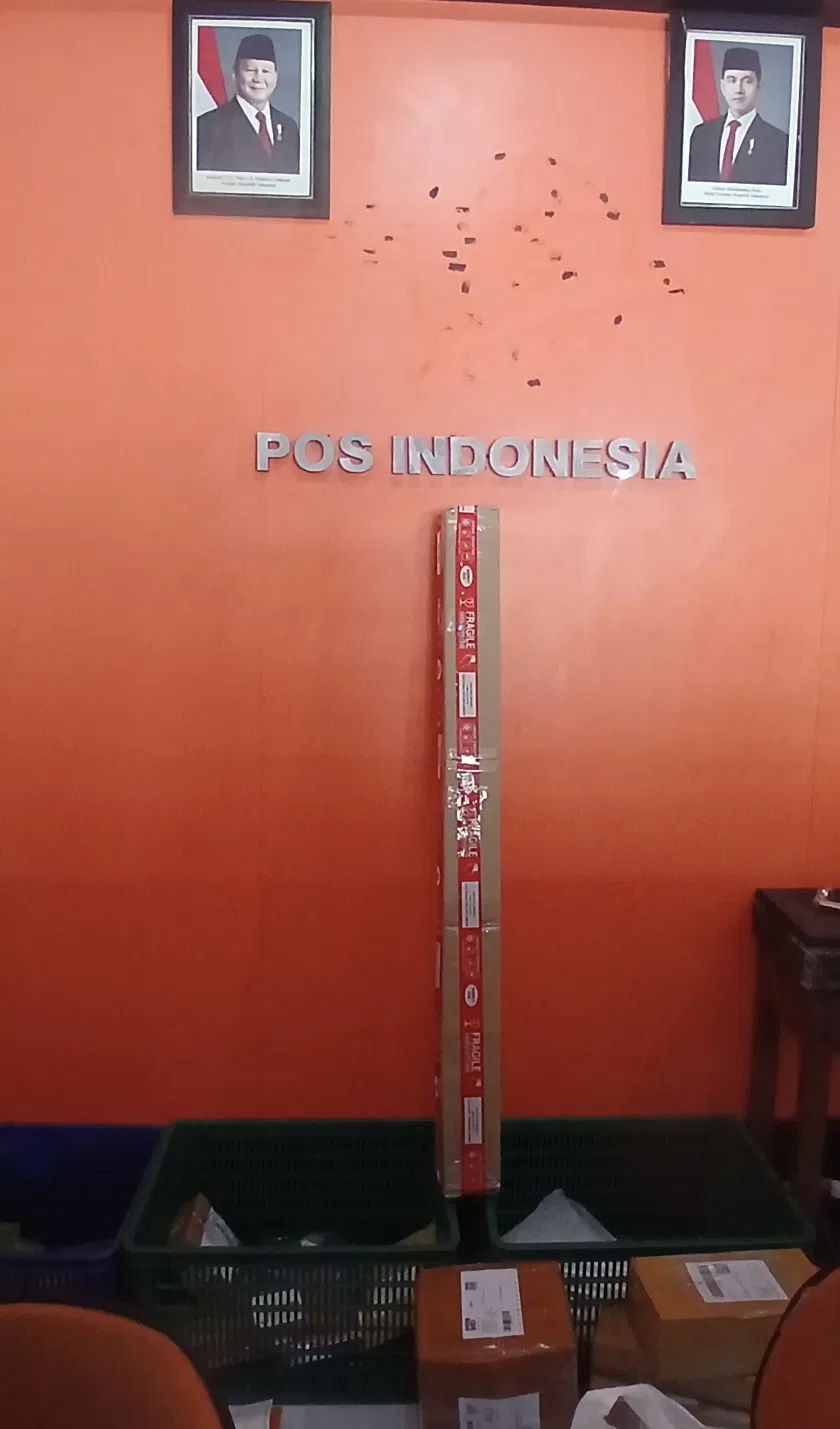
Shipping a Painting from Arts of Bali: What’s Included and What to Expect
When you purchase a painting from Arts of Bali, whether in person or remotely, shipping is handled as part of the process rather than something you arrange separately. Here is what that looks like in practice, step by step.
Assessment and Method
We assess the painting’s surface, size, and your destination to decide between rolled or crated shipping. For textured or mixed media works, we will tell you directly if rolling is not advisable, even if it would be cheaper.
Packing with Photos
The painting is packed at the gallery. For remote buyers, we send photos of the packing process on request, the same way it happens for in-person purchases. Nothing is packed out of sight.
Documentation
Commercial invoice, declared value, and any country-specific documentation (such as biosecurity notes for wood items) are prepared and attached before the package leaves Bali.
Tracking and Updates
A tracking number is sent via WhatsApp as soon as the package is dispatched. For longer transit times (Pos Indonesia, sea freight), we follow up proactively rather than waiting for you to ask.
For a sense of what this looks like from the buyer’s side over a longer relationship, our post on a collector’s experience shipping from Bali to India follows one buyer’s journey from gallery visit to delivery.
When to Order: Timing Your Art Shipment from Bali
If you are buying during a trip to Bali and want the piece to arrive before a specific date at home (a renovation completion, a gift occasion, a move), work backward from that date using the transit times above, and add a buffer of at least one week for customs clearance, particularly during December and around major holidays when import volumes spike everywhere.
For custom commissions, add production time on top of shipping. Our commission process typically takes two to four weeks for paintings and four to eight weeks for wood carvings, before the shipping clock even starts. If timing matters, mention your deadline when you place the commission. We will tell you honestly whether it is achievable.
Insurance
All shipments from Arts of Bali include basic carrier insurance as standard. For higher-value pieces, additional insurance coverage is available and recommended. We will discuss this directly for any painting where the declared value makes additional coverage worthwhile, rather than leaving it for you to ask about.
An Example Shipment: Large Format Landscape Painting
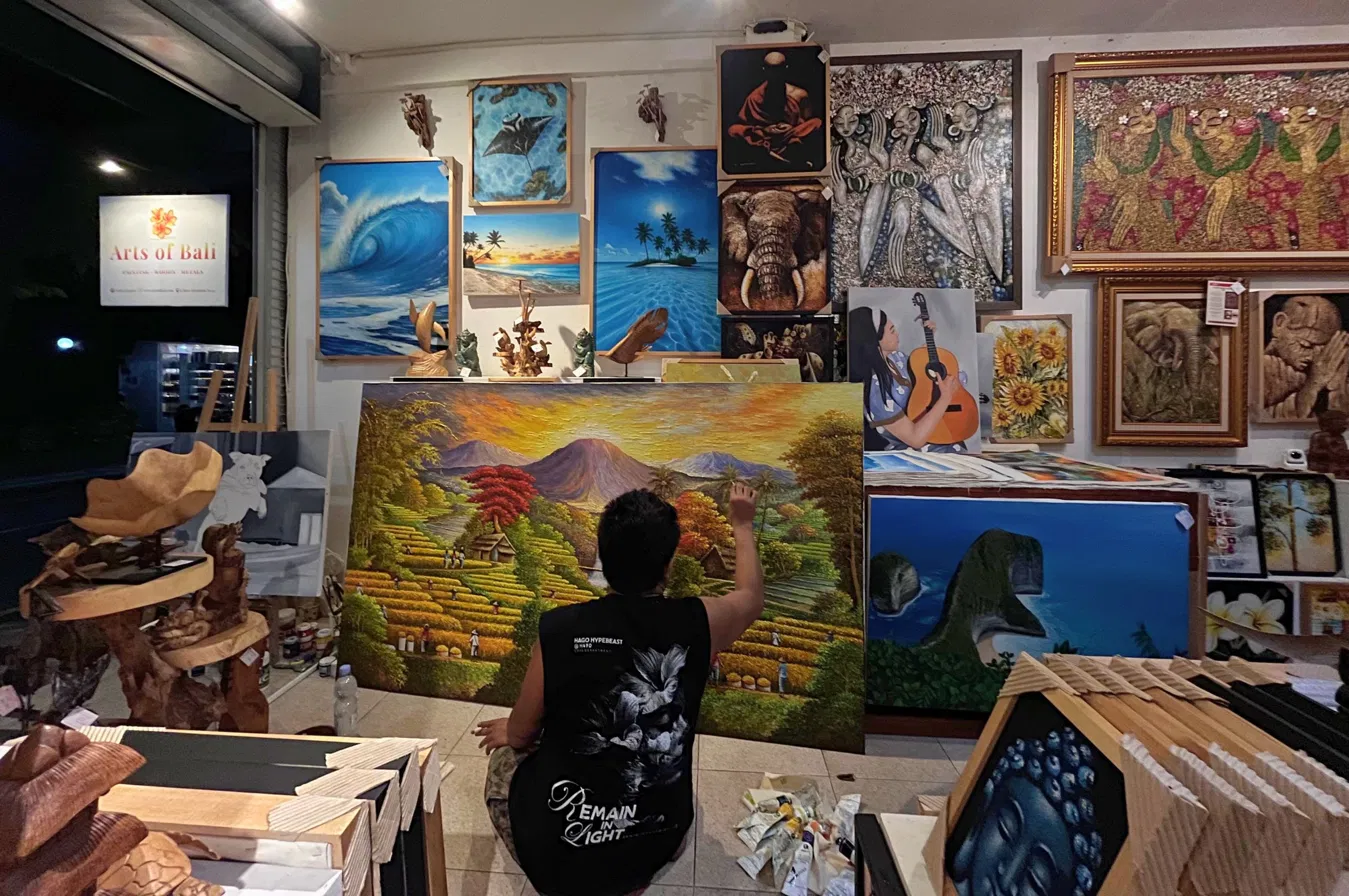
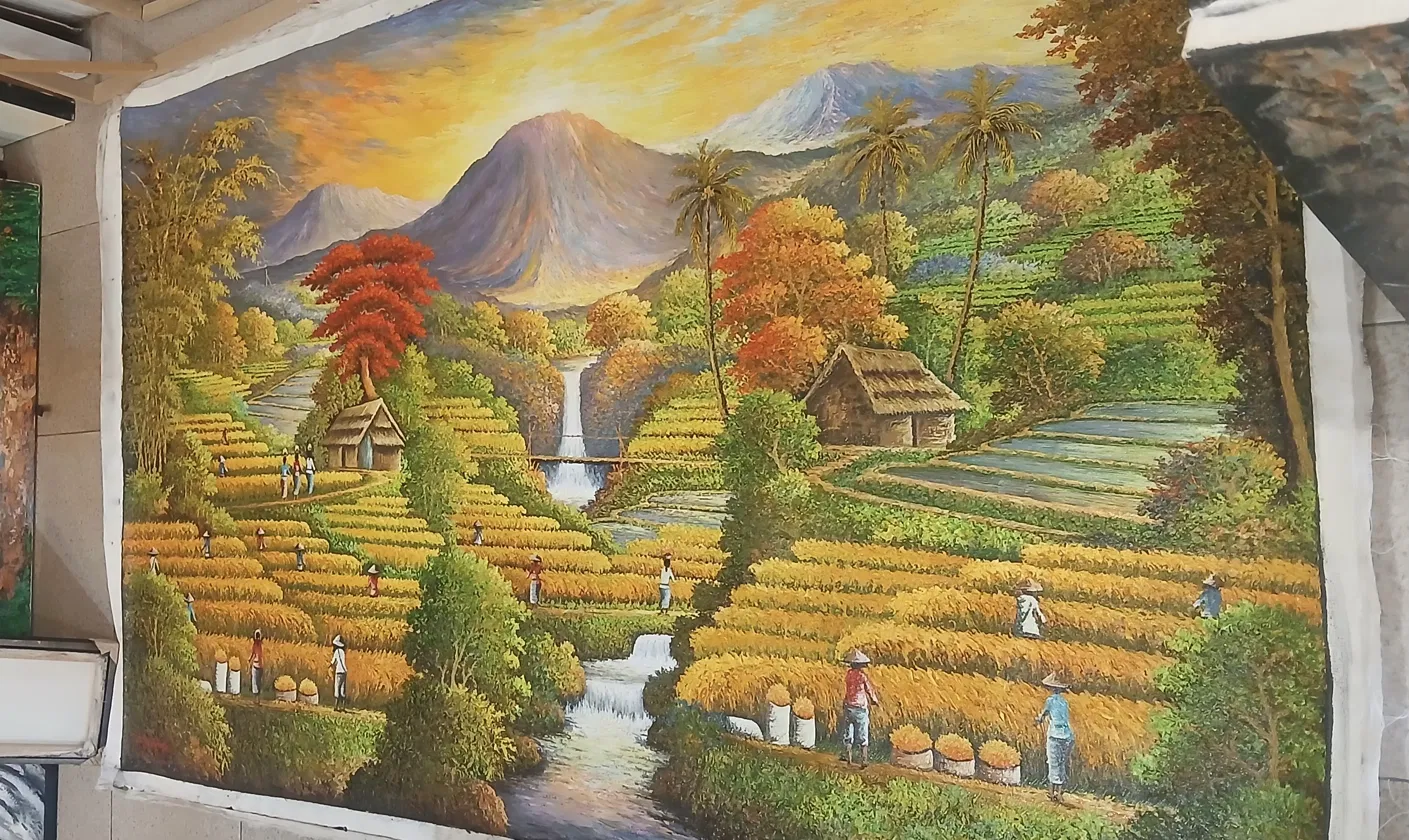
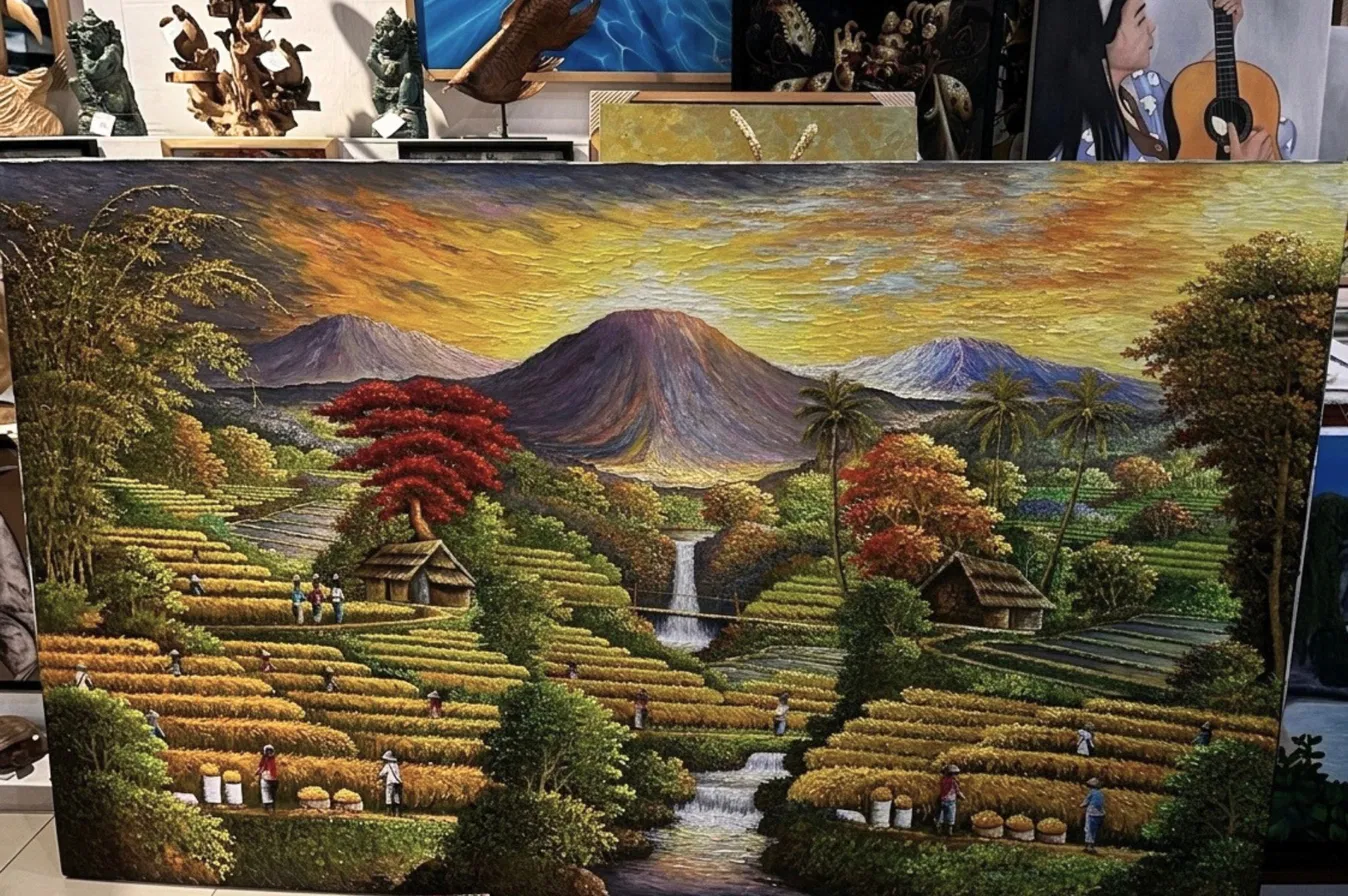
To make this concrete, here is how shipping works for a piece like the large-format rice field and volcano landscape shown below: an oil painting roughly 90 x 150 cm with thick impasto texture in the sky and mountains.
Because of the textured sky, this piece would not be rolled. It would be crated flat, with the stretcher bars intact, foam-wrapped, and boxed to its exact dimensions. For a buyer in Australia, this would ship via international courier or a smaller sea freight consignment if combined with other purchases, with a transit time of roughly one to three weeks depending on the method chosen. The commercial invoice would list it as an original oil painting on canvas, country of origin Indonesia.
Ask About Shipping Before You Commit
If you are considering a piece and want to know exactly how it would be packed and what shipping to your country would cost, send us a message on WhatsApp with the painting and your destination. We will give you a real estimate, not a guess, before you decide. The same applies to custom commissions and pieces from the full gallery collection.
Discuter sur WhatsApp Parcourir la galerie