Every 210 days, the ancestors come home.
The whole island lines the road for them.
“You can explain Galungan to a visitor in five minutes. You cannot explain why it still moves you after forty years of watching it. That part you have to see for yourself.”
— Putu Sucipta, Owner of Arts of Bali
Galungan Bali is not a single day so much as a season, one that arrives every 210 days whether or not the Gregorian calendar agrees. Residents prepare for weeks in advance. Streets fill with curved bamboo penjor leaning over the road like a procession of golden arches.
Stone guardians at every temple gate get fresh sashes of black and white cloth. Families wake before dawn to carry towering fruit offerings to the family temple. If you are reading this while it is happening around you, you already know the feeling is hard to put into words.
This guide explains what Galungan actually celebrates, what its recurring symbols mean, and why so many of those same symbols, the penjor, the guardian figures, the women carrying offerings on their heads, keep showing up in the paintings and carvings on the walls of Arts of Bali.
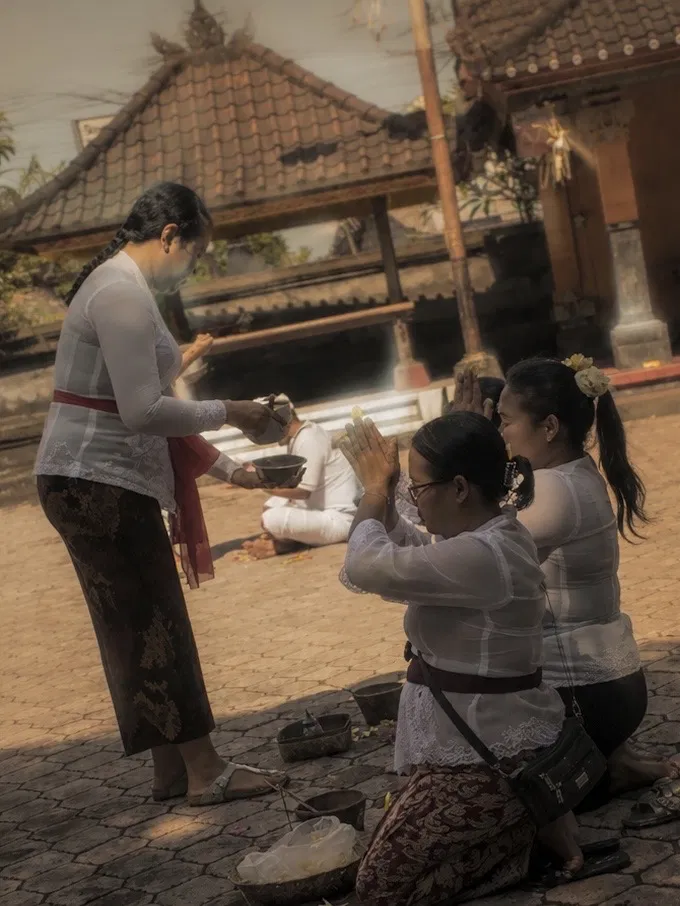
Galungan is a Balinese Hindu festival celebrating the victory of dharma, goodness and cosmic order, over adharma, chaos and disorder. Balinese tradition holds that ancestral spirits descend to visit their living families during this period, and the festival closes ten days later with Kuningan, when those spirits are believed to return to the heavens. Galungan follows the 210-day Pawukon calendar rather than the 365-day Gregorian year, so its date shifts each time it occurs and does not fall on the same calendar day from one year to the next.
What Galungan Celebrates: Dharma’s Victory and the Return of Ancestors
At its center, Galungan marks a single idea repeated across Balinese cosmology: dharma, the principle of order, harmony, and right conduct, prevails over adharma, the forces of chaos and moral disorder. This is not framed as a one-time historical victory. It is treated as a renewal, something that has to be honored and reaffirmed every cycle, which is part of why the festival carries such weight even though it repeats so often.
Alongside that theme runs a second, more intimate belief: that the spirits of deceased family members descend to visit their living relatives during Galungan. Homes are cleaned and decorated as if for an arriving guest, because in a sense, that is exactly what is happening. Offerings are prepared not only for the gods but for ancestors who are believed to be present, watching, and participating in the family’s life again for a short while. Ten days later, on Kuningan, those spirits are believed to make their return journey to the heavens, and the mood of the closing ceremonies shifts accordingly, calmer, more reflective, often finished before midday.
The Ten-Day Arc, From Preparation to Farewell
Galungan is rarely experienced as a single day by anyone who lives here. It is the visible peak of a sequence that begins roughly a week earlier and closes ten days after. Sugihan Bali opens the cycle as a day of purification, for homes, for sacred objects, for the self.
A few days later, Penyekeban sees green bananas placed in clay pots to ripen ahead of the offerings that will need them. Penampahan Galungan, the day directly before Galungan itself, is when penjor are raised along every street and animals are prepared for the feast that follows.
Then comes Galungan, followed the next day by Umanis Galungan, a gentler day for visiting family rather than formal ceremony. The second half of the arc mirrors the first in miniature, building toward Kuningan and its own day of visiting and rest, Umanis Kuningan.
None of these days are interchangeable. Each carries a specific household task and a specific meaning, and the rhythm of the whole island shifts visibly as the dates approach, market stalls filling with offering materials, family compounds smelling of incense and fresh-cut palm leaf days before the festival itself arrives.
Galungan and Kuningan in 2026: Galungan fell on Wednesday, June 17, 2026, with Kuningan following ten days later on Saturday, June 27, 2026. Because the 210-day Pawukon calendar does not divide evenly into the 365-day Gregorian year, Galungan usually occurs twice within twelve months. 2026 is an exception, with only this single cycle falling in June. The next Galungan after this one lands on January 13, 2027.
“People ask if Galungan ever feels routine after the hundredth time. It does not. If anything, watching your own children carry the offerings you used to carry changes what the day means each time it comes around.”
— Putu Sucipta, Arts of Bali
The Guardians and Symbols That Define Galungan
Walk through any Balinese village during Galungan and certain recurring figures appear at almost every gate and threshold. Understanding what they represent makes the whole season legible in a way that simply photographing it does not.
Poleng Cloth and the Balance of Opposing Forces
The black and white checkered cloth wrapped around temple guardian statues, sacred trees, and certain ceremonial figures is called poleng. It represents rwa bhineda, the Balinese Hindu concept that opposing forces, light and dark, good and evil, sacred and ordinary, exist in necessary balance rather than simple conflict. A guardian statue wrapped in poleng is not just decorated. It is marked as a figure that holds both forces at once, which is precisely the role a temple gate guardian is meant to play: a threshold presence that keeps what is harmful out while remaining, by nature, capable of either force itself.
These guardian figures, carved from stone at the temple itself and from wood in the gallery pieces sold at Arts of Bali, share the same visual vocabulary: wide eyes, bared teeth, a stance that confronts rather than welcomes. The decorative masks covered in our Balinese wood carving mask guide draw on this exact lineage, the same fierce, protective face that has stood at temple gates for centuries, now carved at a smaller scale for a wall rather than a threshold.
The Offering Bearer: Suun and the Procession Pose
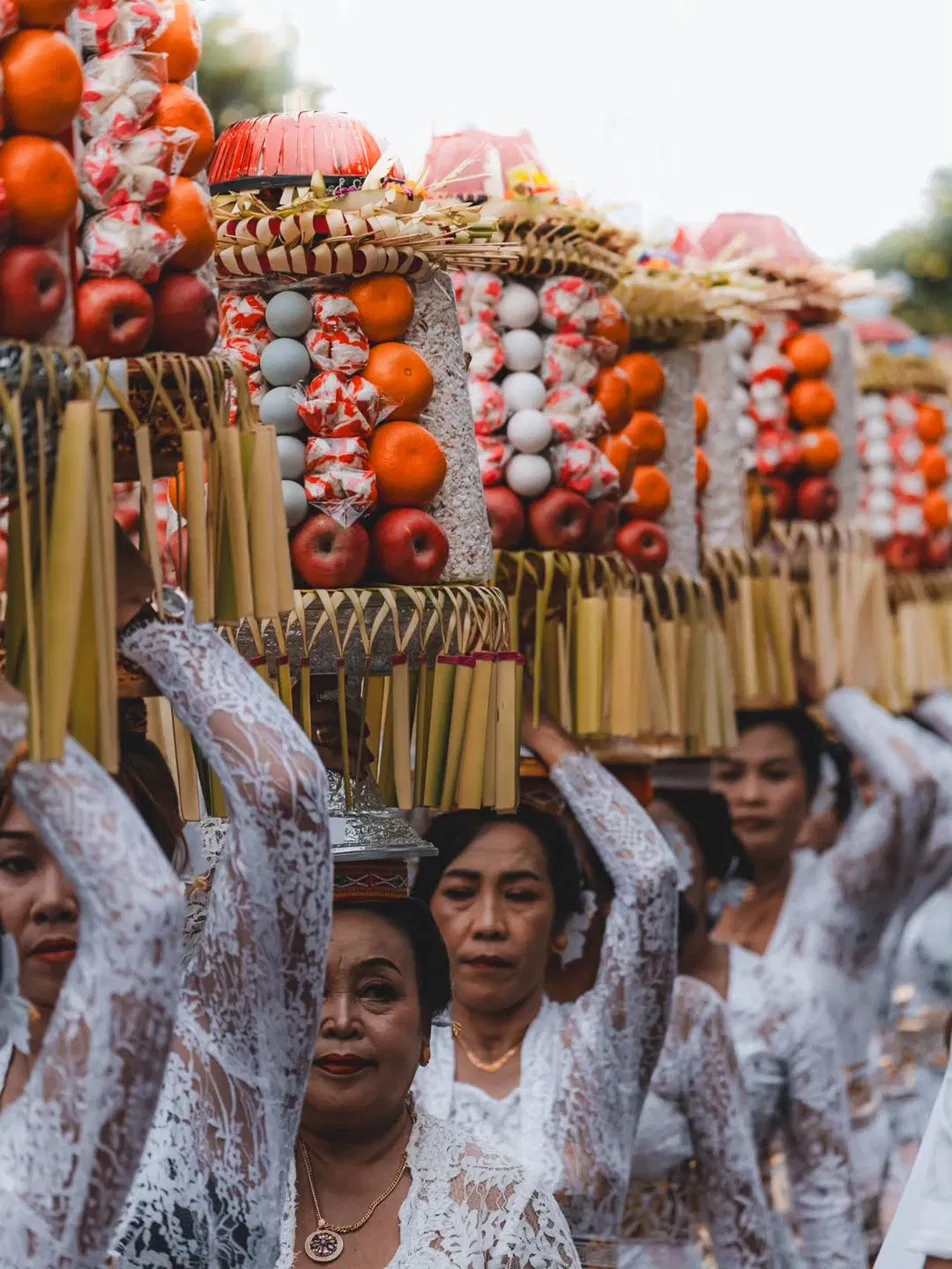
The second recurring figure is gentler: a woman carrying an offering balanced on her head, one arm raised to steady it, the posture upright and composed regardless of the weight involved. This practice, called suun, is both entirely practical, it is simply the most efficient way to carry a tall offering over distance, and visually iconic enough that it has become one of the most recognizable images associated with Balinese ceremonial life. Stone versions of this figure stand at temple entrances and family compounds. The same pose, captured in paint rather than stone, appears in the gallery’s own collection: the acrylic painting collection includes an original piece depicting exactly this tradition, a Balinese woman in ceremonial dress carrying a gebogan offering tower on her head against a richly patterned background.
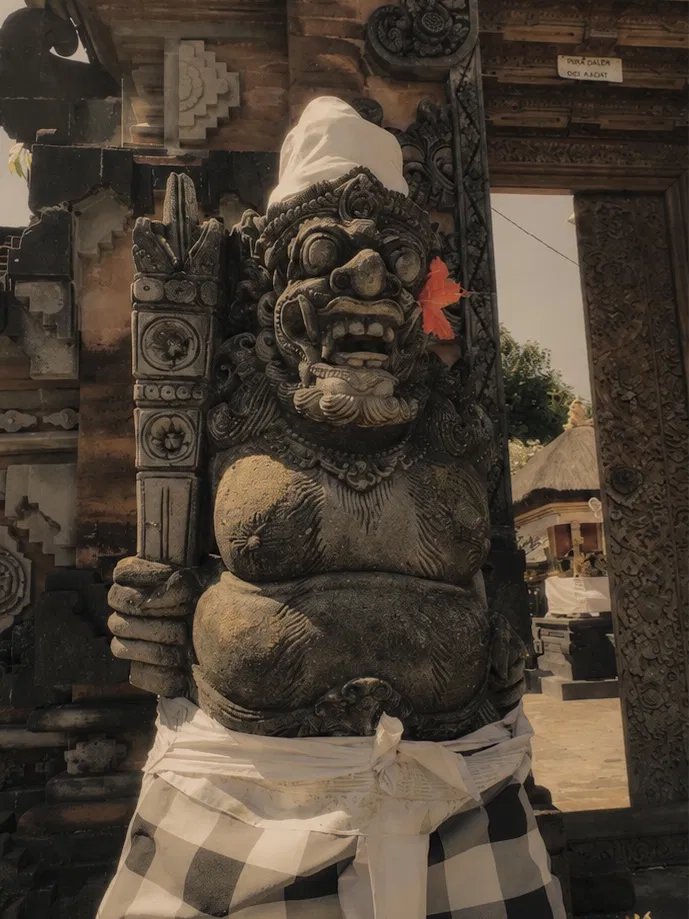
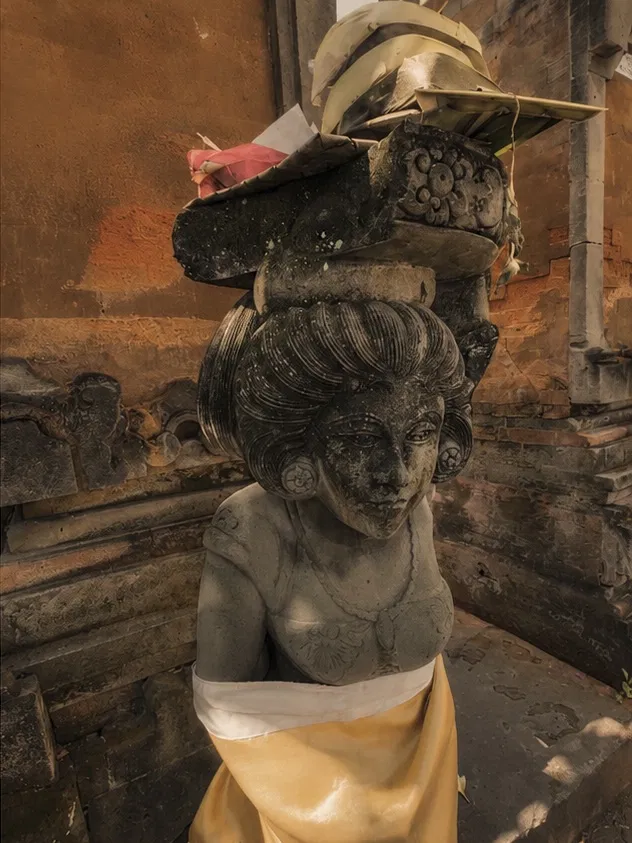
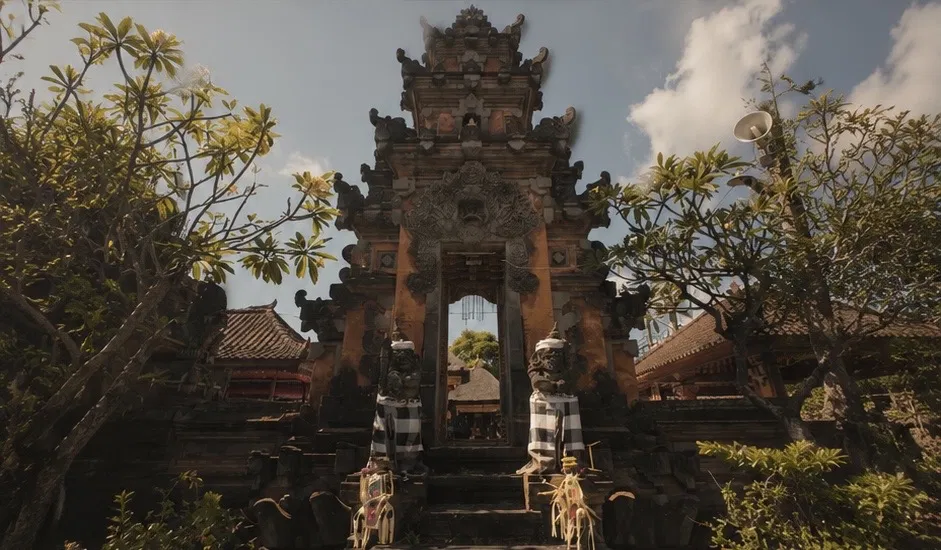
Twin guardians flank a temple’s split gate, dressed in poleng for the Galungan season, watching over the threshold between the everyday world and sacred ground.
Penjor: The Curved Bamboo Poles That Define the Season
Of every visual marker associated with Galungan, penjor is the one no visitor misses. These tall, curving bamboo poles, decorated and leaned out over the road at a consistent graceful arc, line nearly every street in Bali in the days leading up to the festival. The curve itself is symbolic, most commonly read as representing the silhouette of a mountain, often specifically associated with Gunung Agung, Bali’s highest and most sacred peak, expressing gratitude toward Sang Hyang Widhi, the supreme divine principle in Balinese Hinduism, for prosperity and the harvest.
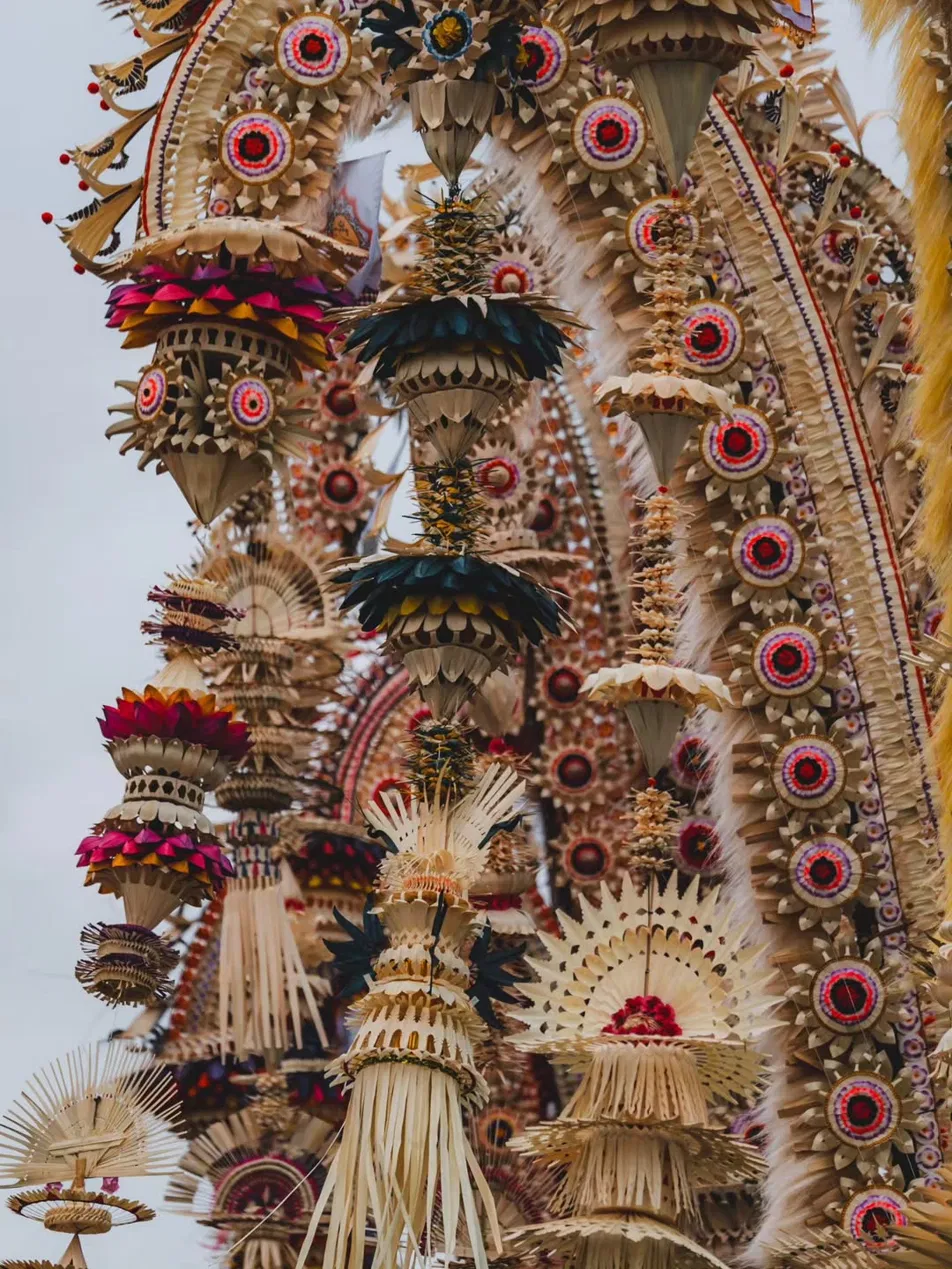
A penjor is not simply a decorated pole. Its construction follows convention: the bamboo itself is selected and shaped while still green and flexible enough to hold its curve, then dressed with sampian, woven decorations made primarily from young coconut leaf, janur, along with rice stalks, fruit, and flowers tied at intervals along its length. The base often includes a small shrine or offering platform. Together, a street lined with penjor reads as a kind of collective offering, each household’s pole an individual gesture that, multiplied across a village, becomes the single most photographed image of the entire festival season.
What the Decorations Mean
Up close, a penjor’s sampian decorations are genuinely intricate, woven and folded palm leaf shaped into radiating fans, layered cones, and small sculptural forms, often dyed in deep reds, golds, and greens for additional color against the natural cream of dried palm fiber. The materials themselves carry meaning: rice represents agricultural abundance, fruit represents the harvest more broadly, and the woven palm forms are understood as offerings of craft and care rather than purely decorative flourishes.
This same combination of material symbolism and dense ornamental craft is part of what connects penjor-making to the broader tradition of Balinese decorative carving covered in our wood carving guide, different material, same instinct toward layered, meaningful ornament rather than empty decoration.
Inside the Temple: Offerings, Prayer, and the Pemangku
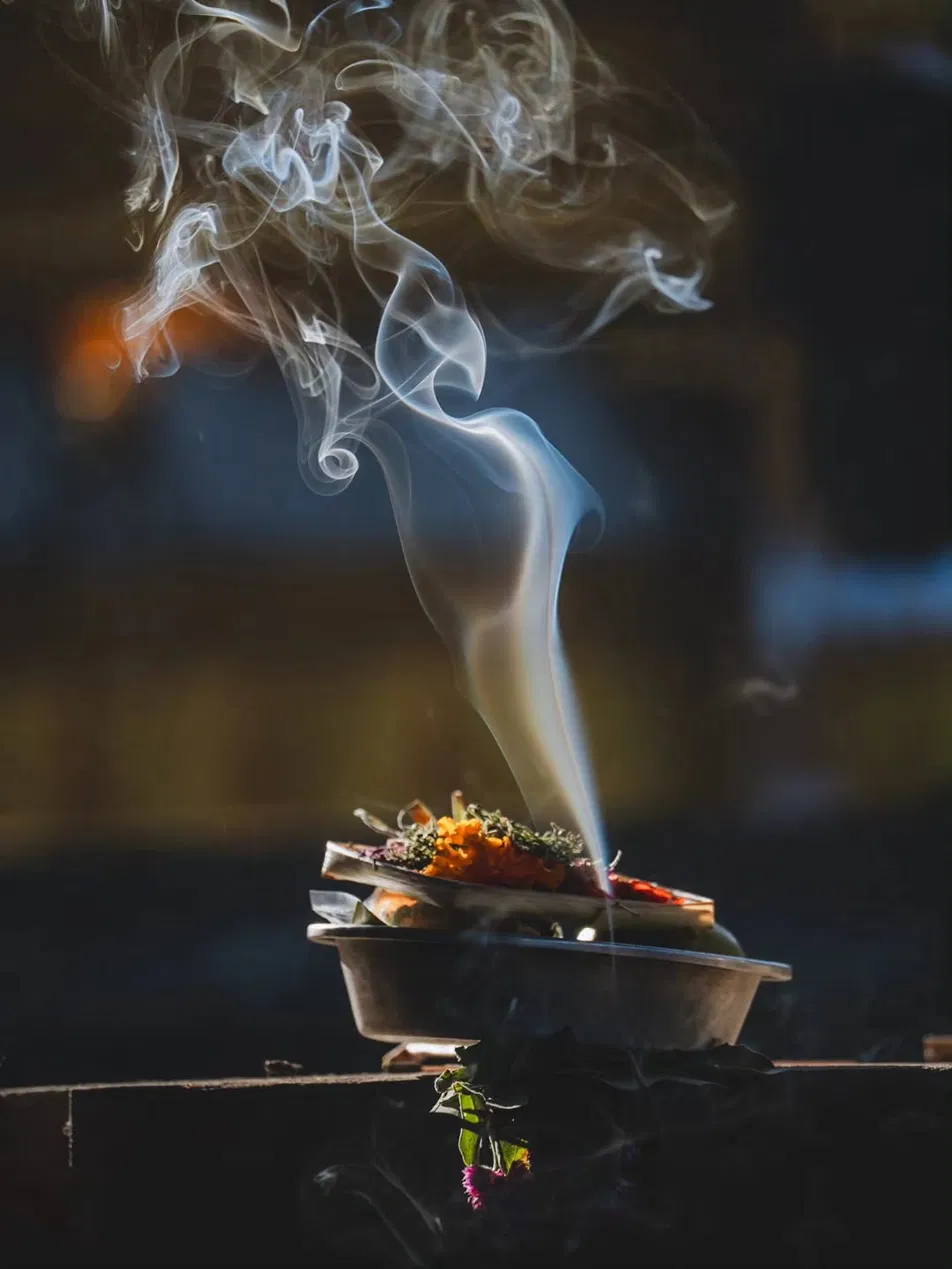
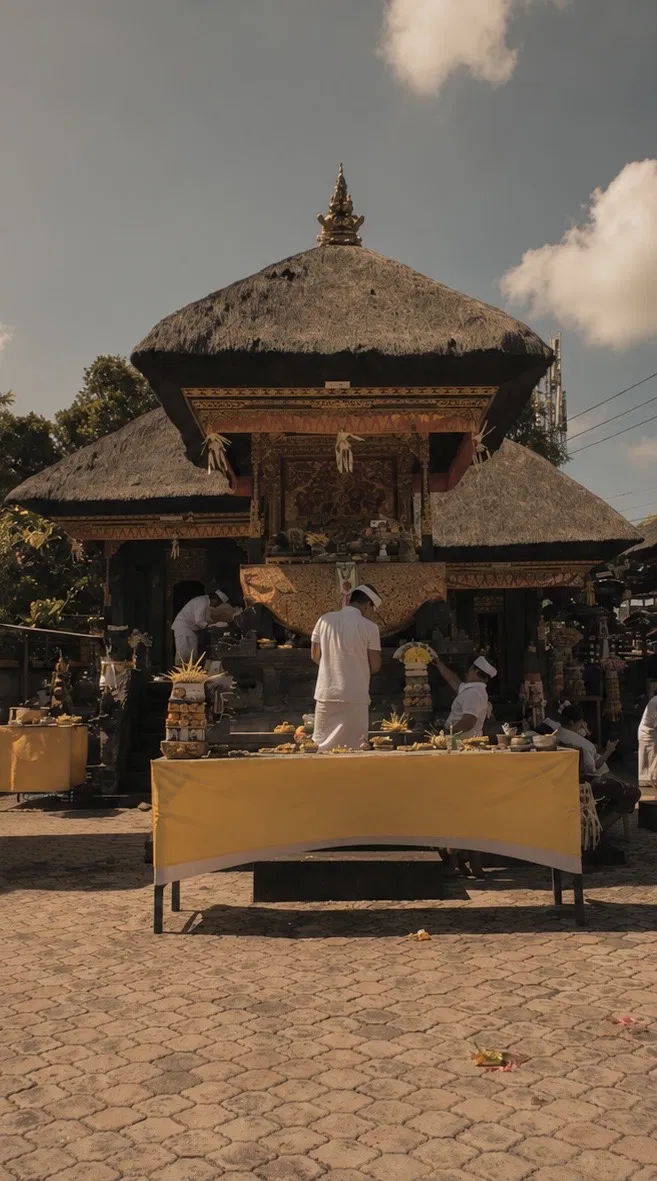
Behind every penjor and every guardian statue is the actual work of the festival, which happens largely inside the temple compound and largely before sunrise. Banten, the general term for ceremonial offerings, range from the small, everyday canang sari placed at thresholds and shrines throughout the year to elaborate, multi-tiered constructions assembled specifically for occasions like Galungan, built from fruit, rice, woven palm leaf, and flowers, often stacked into towering forms that require real skill and patience to construct correctly.
A pemangku, a temple priest, typically oversees the formal prayer sequence, leading families through the postures and gestures of sembah, the hands-raised prayer position, and administering tirta, holy water, as a closing blessing. Families often arrive at the temple in full ceremonial dress, white tops for both men and women being the most common color through this part of the season, with offerings carried in and arranged on long tables ahead of the prayer itself. The atmosphere is simultaneously solemn and social, neighbors greeting each other, children moving between adults, the actual prayer sequence itself quiet and focused.
The Procession: Gebogan and the Walk to the Temple
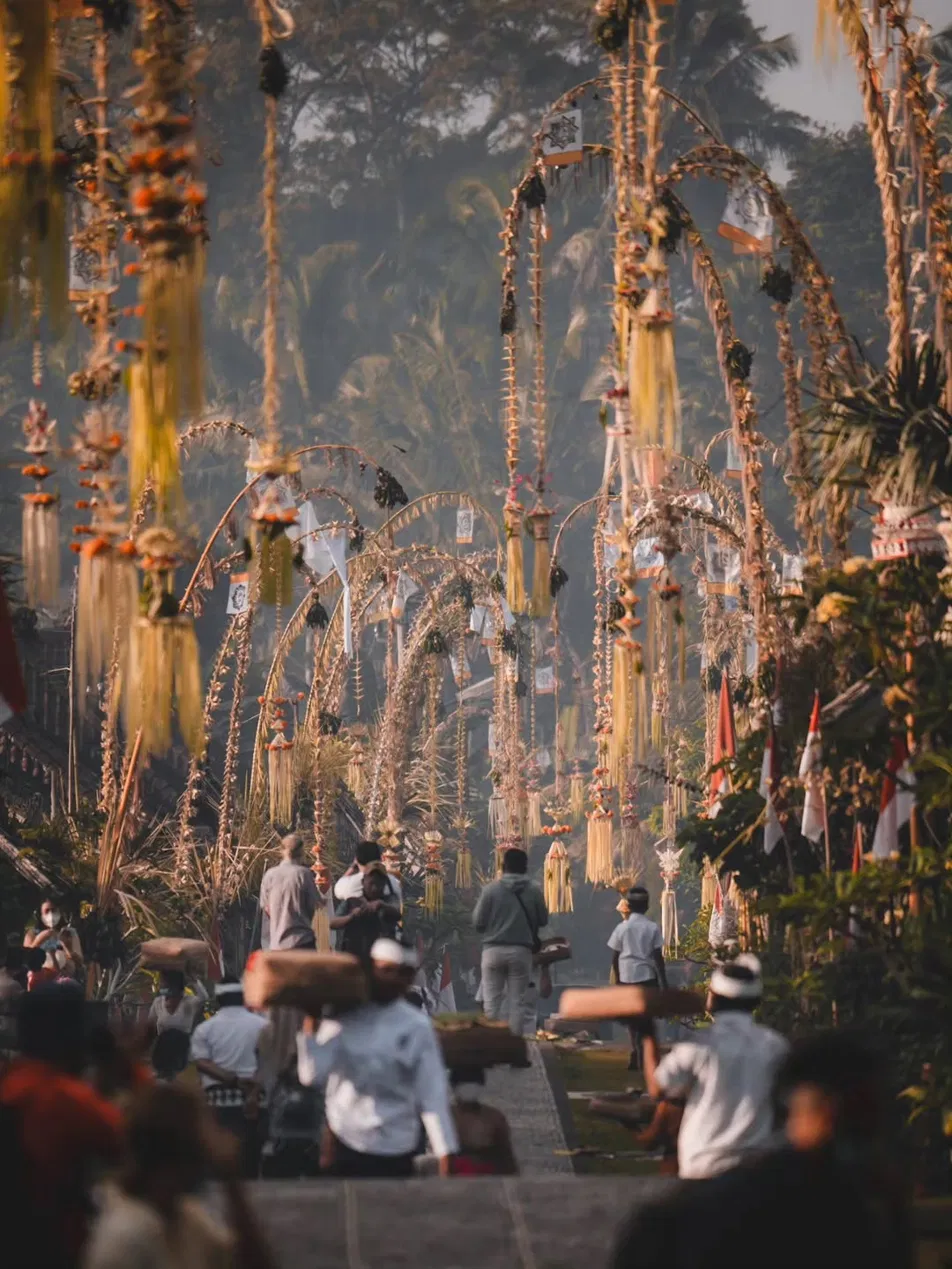
One of the most visually striking parts of the Galungan and Kuningan period is the procession itself, women dressed in white lace kebaya walking in long lines along village roads, each carrying a gebogan, a towering arrangement of fruit, rice cakes, and flowers built around a tall central frame, balanced directly on the head in the suun position described earlier. These processions move with a particular rhythm, unhurried, upright, often accompanied by gamelan music drifting from somewhere nearby, and they are one of the clearest visual expressions of community participation in the festival: dozens of families converging on the same temple, each contributing an offering built by hand at home.
For visitors arriving in Bali during this window, encountering one of these processions, even unexpectedly, while walking through a village street lined with penjor in the early morning mist, is often the single most memorable moment of the trip. It is also, not coincidentally, one of the most consistently requested subjects for custom commissions at Arts of Bali, visitors who witnessed exactly this scene and wanted a painting that held onto it.
Galungan in Balinese Art: From Temple to Canvas
The reason these symbols, the guardians, the penjor, the offering bearers, recur so consistently across Balinese painting and carving is not decoration for its own sake. They are the visual language the culture already uses to express devotion, balance, and gratitude, and artists working in Bali draw on that same language because it carries meaning a viewer here recognizes instantly, the way a specific color or gesture might in any visual tradition rooted in lived ritual rather than invented from scratch.
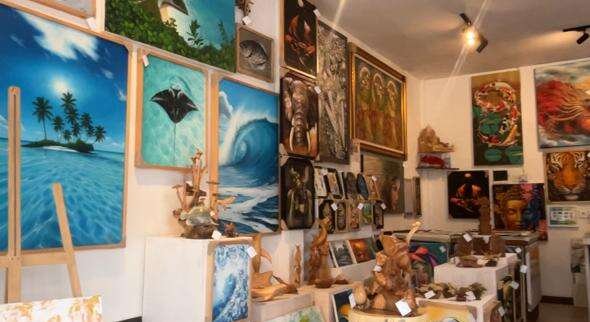
At Arts of Bali, this connection shows up across several different parts of the collection, not as a single themed series but as a current running underneath very different styles. Our temple ceremony painting guide covers paintings built specifically around scenes like the ones described in this post, banten offerings, ceremonial umbrellas, palette knife works that render the texture of a procession in thick, deliberate paint.
The guardian face carved into the masks covered in our wood carving mask guide draws on the same fierce, protective visual tradition as the stone figures at every temple gate during this season. And the koleksi lukisan mitologi goes further into the dharma and adharma framework itself, the gods and demons whose ongoing balance Galungan exists to honor.
None of this is presented as a substitute for witnessing the festival itself. It is closer to the opposite: for visitors who do witness it, even briefly, these works are often the clearest way to hold onto what they saw, a single image that carries the same weight as the memory.
Visiting Bali During Galungan: What Travelers Should Know
Galungan is a working religious festival, not a staged event, and visitors are generally welcome to observe respectfully rather than asked to stay away. A few practical notes make that observation easier and more appropriate.
Temples typically require a sarong and sash for entry, often available to borrow or rent at the temple itself if you do not have your own. Photography is usually fine from a respectful distance, but avoid stepping in front of a prayer line, blocking a procession, or photographing a pemangku mid-ceremony without first gauging whether it would be welcome. Some businesses, particularly smaller family-run shops and restaurants, may close or operate reduced hours during the core days of Galungan and Kuningan, since staff are often observing the festival with their own families. Larger hotels, gallery, and restaurant operations generally continue as normal.
If your visit happens to align with the festival, even by coincidence, treat it as a genuine privilege rather than an inconvenience to plan around. The streets, the temples, and the families preparing offerings are not performing for an audience. You are simply fortunate enough to be present for something the island does for itself, every 210 days, regardless of who happens to be watching.
Bring Home What You Witnessed: Custom Art Inspired by Galungan
Visitors who experience Galungan or Kuningan in person often want something more durable than a photograph to carry the moment home, a specific street lined with penjor at dawn, the exact angle of light through incense smoke, a procession glimpsed from a particular corner. Arts of Bali accepts custom commissions built directly from a visitor’s own reference photos or description of what they saw, worked into an original painting or wood carving in the style and medium of their choosing.
The commission process starts with a short conversation, no obligation, about what you want the piece to capture and where it will eventually hang. Most commissions in this category take two to four weeks, and international shipping is available for visitors who commission a piece during their trip and want it sent home afterward. Our guide to shipping art from Bali covers packing, cost, and customs in detail for exactly this situation.
The Asia department of the British Museum holds an extensive collection of Hindu and Buddhist sculpture and Southeast Asian decorative art, useful broader context for understanding how deeply rooted this visual language is across the wider Hindu-Buddhist world, well beyond Bali alone, even as the island’s own version remains distinct.
Experience the Art Behind the Festival
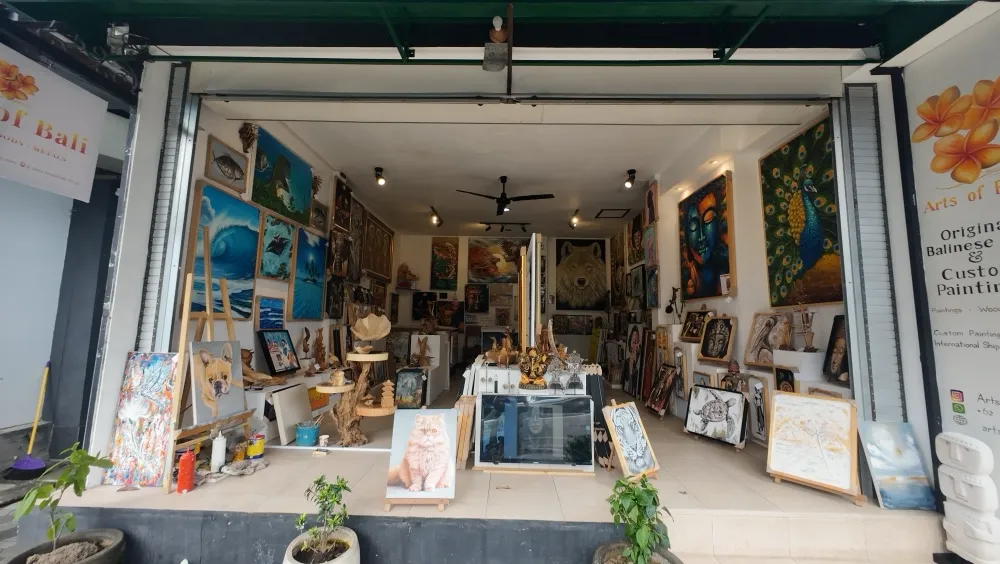
Arts of Bali is open throughout the Galungan and Kuningan season at Jl. Raya Seminyak No. 42, Kuta, Badung, Bali 80361. Visit to see ceremony paintings, guardian masks, and offering-themed works in person, or reach out on WhatsApp to discuss a custom piece inspired by what you witnessed during your visit.
Mengobrol di WhatsApp Jelajahi Galeri