Legong dance is a refined Balinese dance form known for intricate finger movements, complicated footwork, and expressive gestures and faces, danced to gamelan by two young dancers and a third called the condong. Wikipedia says it probably began in the 19th century as royal entertainment, while another source pushes the date earlier. This guide covers what legong is, the two origin stories, the Lasem plot, who dances it today, what to look at in the costume, and how a painter catches it on canvas.
Key Takeaways
- The core cast is two dancers plus the condong, who, per Wikipedia, sets the scene, presents the dancers with their fans, and later plays the raven.
- The origin is disputed. Wikipedia says probably the 19th century, Indonesia Travel says the 17th or 18th. Two stories explain it: a Sukawati prince’s dream, and descent from sanghyang dedari.
- Traditionally the dancers were girls who had not reached puberty, training from about age five. Today dancers may be of all ages.
- Wikipedia files legong under balih-balihan, the category of dances made for entertainment.
- Our gallery lists The Elegant Legong Dancer Painting, a watercolor on cotton canvas, 60 × 80 cm, at Rp1,500,000.
What Is Legong Dance? Fingers, Footwork and Faces
Search for legong dance Bali and most results are show listings and hotel pages. That is fine if you are booking, but we carry a legong painting in the gallery and wanted the dance itself on one page, with every source named.
Wikipedia’s Legong entry calls it a refined dance form characterized by intricate finger movements, complicated footwork, and expressive gestures and facial expressions. The music is gamelan. The core cast is two young dancers plus a third, the condong. In Wikipedia’s Balinese dance entry, legong sits in balih-balihan, the entertainment category, next to wali for sacred dances and bebali for semi-sacred ones.
If you have read our Baris dance guide or our kecak dance guide, legong is the opposite pole. Baris is a warrior in stance, kecak is a crowd of men chanting, and legong is two dancers, small gestures, and a lot of control.
The HistoryLegong Dance History: A Prince’s Dream and Sanghyang Roots
Nobody agrees on the date, so here is what each source says. Wikipedia’s Legong entry says the dance probably originated in the 19th century as royal entertainment. It gives two explanations. In the legend, a prince of Sukawati fell ill and dreamed of two maidens dancing to gamelan music, and after he recovered he had such dances performed. In the alternative theory, legong descends from the sanghyang dedari ceremony, in which beneficent spirits voluntarily possess two young girls.
| Source | What it says about origin |
|---|---|
| Wikipedia, Legong | Probably the 19th century, as royal entertainment. A Sukawati prince’s dream, or descent from sanghyang dedari. |
| Wikipedia, Balinese dance | Legong developed from Sanghyang Dedari and Gambuh. |
| Indonesia Travel | Believed to have originated in the 17th or 18th century, during Bali’s royal courts, inspired by a prince’s dream of celestial maidens. |
Sources: Wikipedia’s Legong dan Balinese dance entries, and the Indonesia Travel page on legong. They disagree on the date, and we do not pick one.
The sanghyang connection matters because it links legong to a ritual, not just a palace. Sanghyang dedari, as Wikipedia’s Balinese dance entry describes it, is a sacred trance dance performed by two young girls in Karangasem to counteract negative supernatural forces. We cover the wider sanghyang roots in our kecak guide, since kecak grew from the same family of rituals.
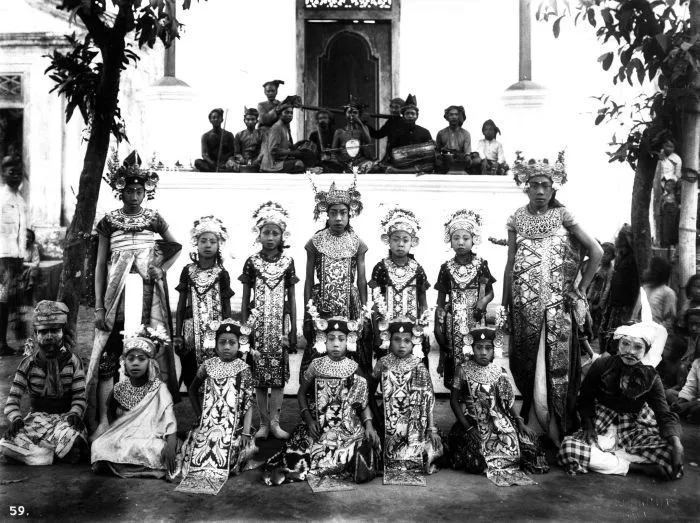
The Legong Story: Lasem, Princess Rangkesari and the Raven
Classical legong enacts traditional stories. Wikipedia says the most common is based on the Malat, a collection of heroic romances. In that plot, a king of Lasem, in East Java, is at war with the father or brother of Princess Rangkesari. He wants to marry her, but she flees, is captured in the forest, and is imprisoned. He launches a final assault on her family and is attacked by a monstrous raven that foretells his death.
Wikipedia adds that fifteen types of legong were traditionally performed and names eight of them: Bapang Sabab, Jebog, Kraton, Kuntir, Lasem, Raja Cina, Semarandana, and Sudasarna. They varied in length and movement style, and some could last an hour. Today most visitors see excerpts.
The two dancers
The core of the piece. Wikipedia credits legong with intricate finger movements and complicated footwork, and the pair is where you see both.
The condong
The third dancer. Wikipedia says she sets the scene, presents the dancers with their fans, and later plays the raven.
The music
Gamelan, the Balinese percussion orchestra. Indonesia Travel describes it as including gongs, metallophones, and drums.
The stories
Classical legong draws on tales such as the Malat romance of the king of Lasem, so the dance is theater as much as display.
What to Look At: Headdress, Cloth, Fan and Eyes
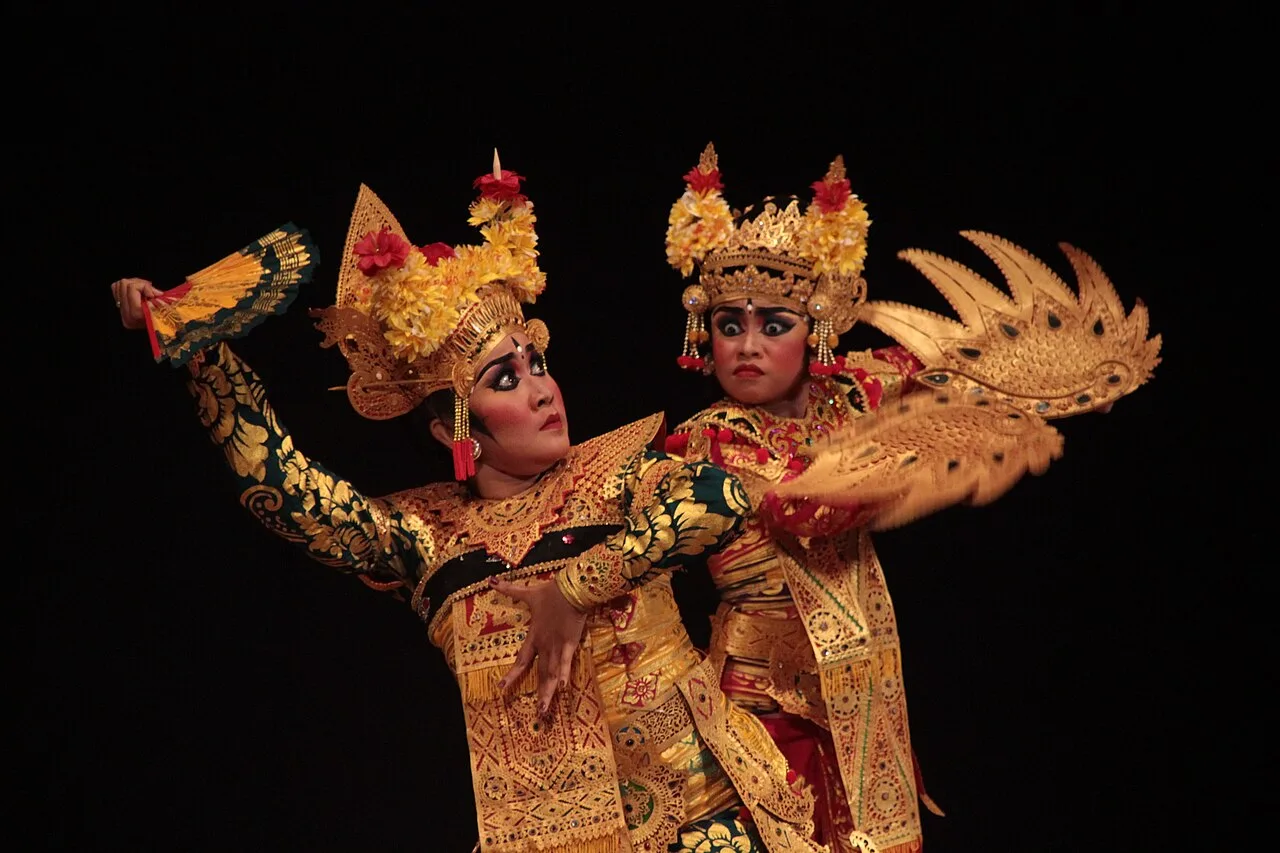
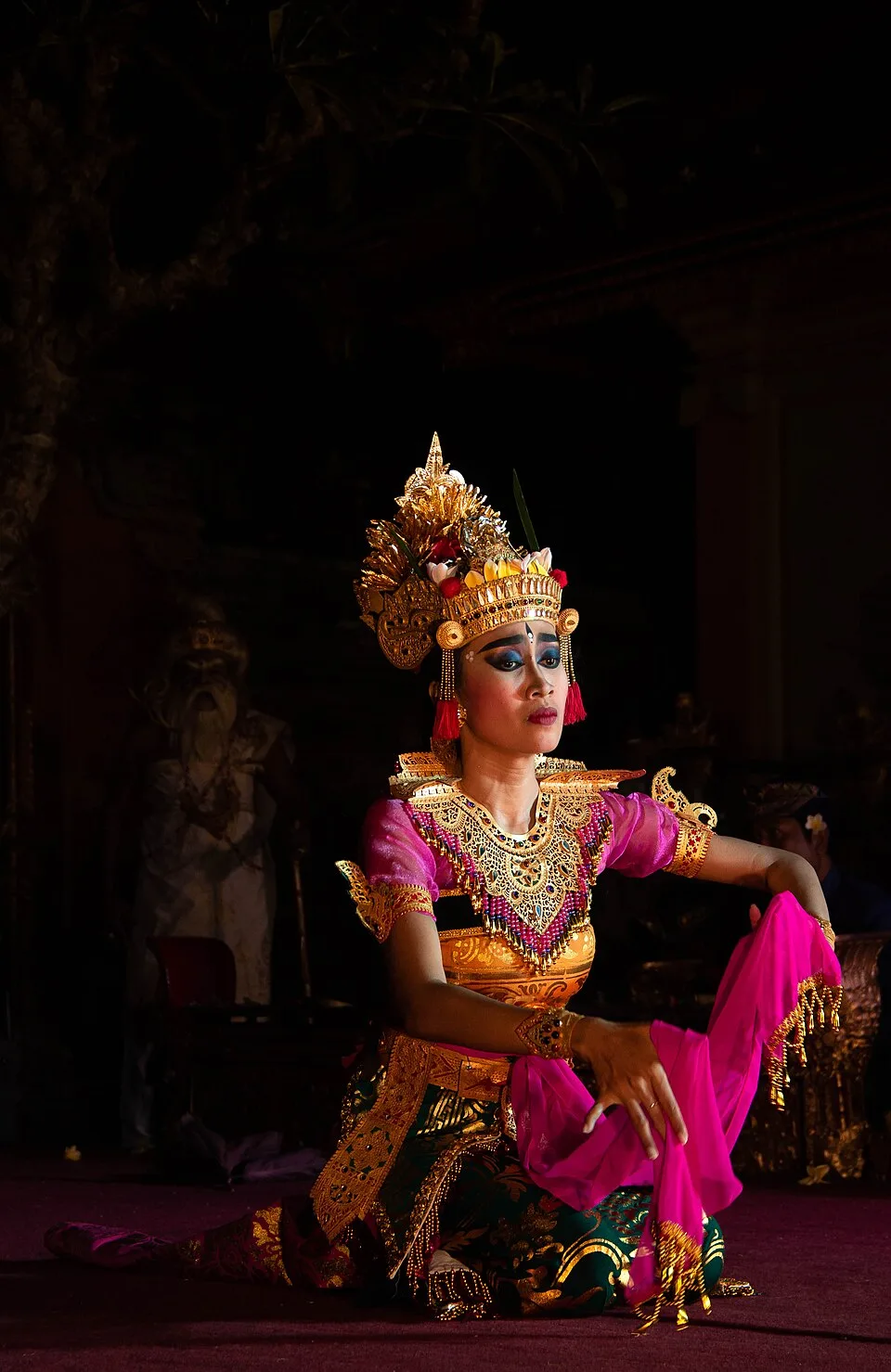
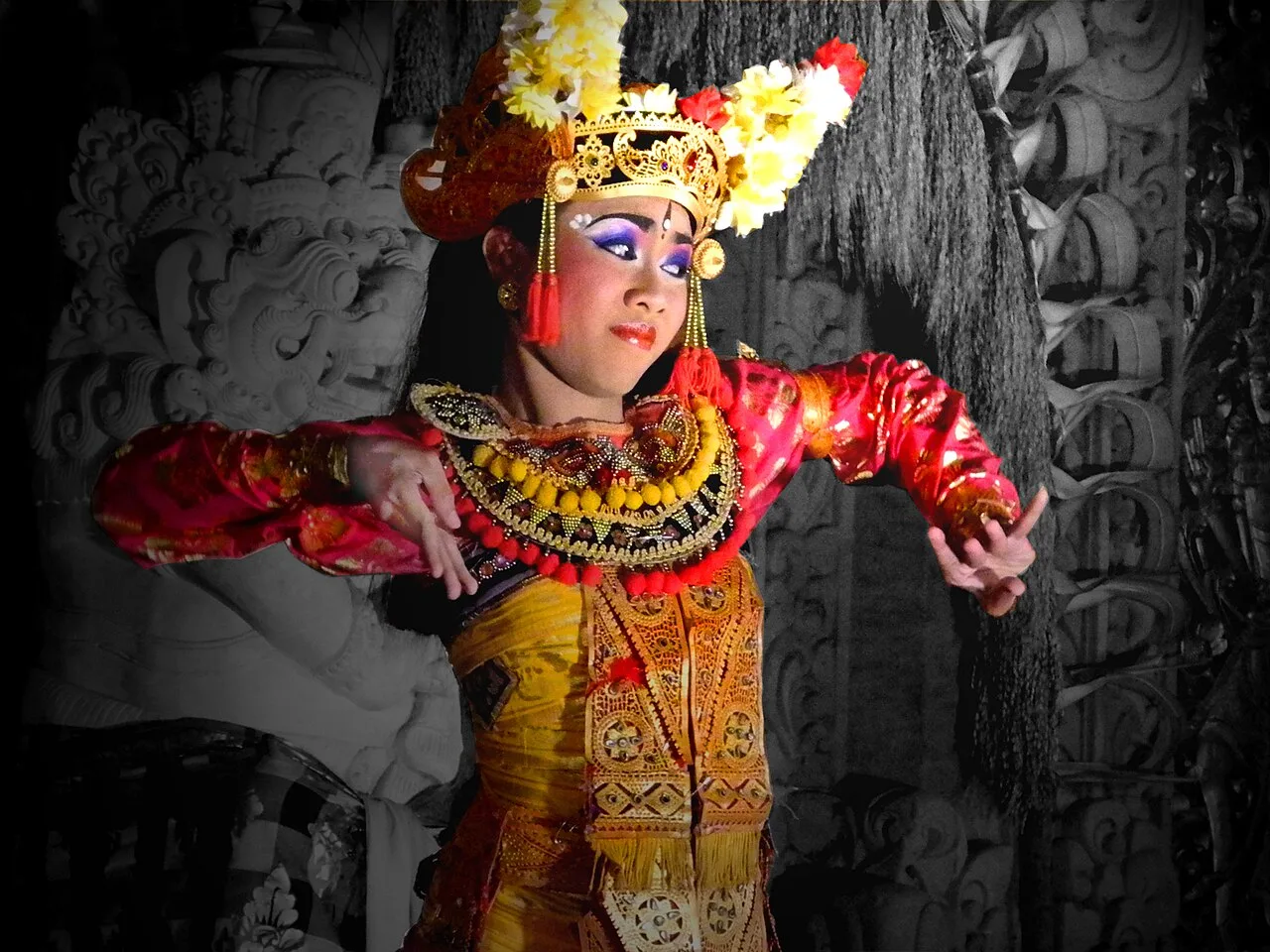
The costume is the part painters ask us about most, so it is worth slowing down. In the photographs on this page you can see the same set of features. A gilded headdress set with fresh flowers sits high above the brow. Layered cloth printed or worked in gold is wrapped tight at the chest and hips. A fan is held in the hand. Indonesia Travel summarizes it as silk sarongs, shimmering accessories, and ornate golden headdresses.
Then there is the face. Wikipedia lists expressive gestures and facial expressions as defining features, and in a close photograph the eyes and hands do as much work as the feet. If you want to see how a painter handles the same costume in paint, our guide to Lukisan penari Bali covers the headdress, gold, and technique side.
Who Dances Legong, Then and Now
According to Wikipedia, the dancers were traditionally girls who had not reached puberty, starting rigorous training around age five. They were highly regarded and often became wives of royalty or wealthy merchants, usually stopping dancing after marriage. Today the article says dancers may be of all ages, and it reports performances by men in women’s costumes.
That change in who dances is also a change in where a Balinese legong dance lives. Wikipedia says excerpts from legong dance dramas are performed for tourists, and legong is also danced at public festivals. Indonesia Travel lists Ubud Palace, Pura Dalem in Ubud, the annual Bali Arts Festival in Denpasar, and the cultural villages of Batubulan and Gianyar as places to see it.
| Where | What Indonesia Travel says |
|---|---|
| Ubud Palace (Puri Saren Agung) | Nightly performances. |
| Pura Dalem Temple, Ubud | Performances take place in the courtyard. |
| Bali Arts Festival | Held annually in Denpasar. |
| Batubulan and Gianyar | Cultural villages where performances take place. |
Source: the Indonesia Travel page on legong dance. Schedules and prices change, so confirm with the venue or your hotel. We are a gallery with no ticket desk.
From Our SideWhat We Know and What We Defer On
We are a gallery, not a dance school. What we write here comes from the sources named in this post and from the pieces in our own collection. On points of dance technique and ritual, we defer to the teachers and performers who carry legong. If you spot something we should correct, tell us and we will fix it.
In the GalleryLukisan Penari Legong yang Elegan
The Elegant Legong Dancer Painting is listed as an original watercolor on cotton canvas, 60 × 80 cm, in an impressionistic watercolor style, priced at Rp1,500,000. The listing describes a dancer in full ceremonial attire holding a fan, with soft sweeping washes of warm earthy tones in the background. It does not name the painter, so we do not either.
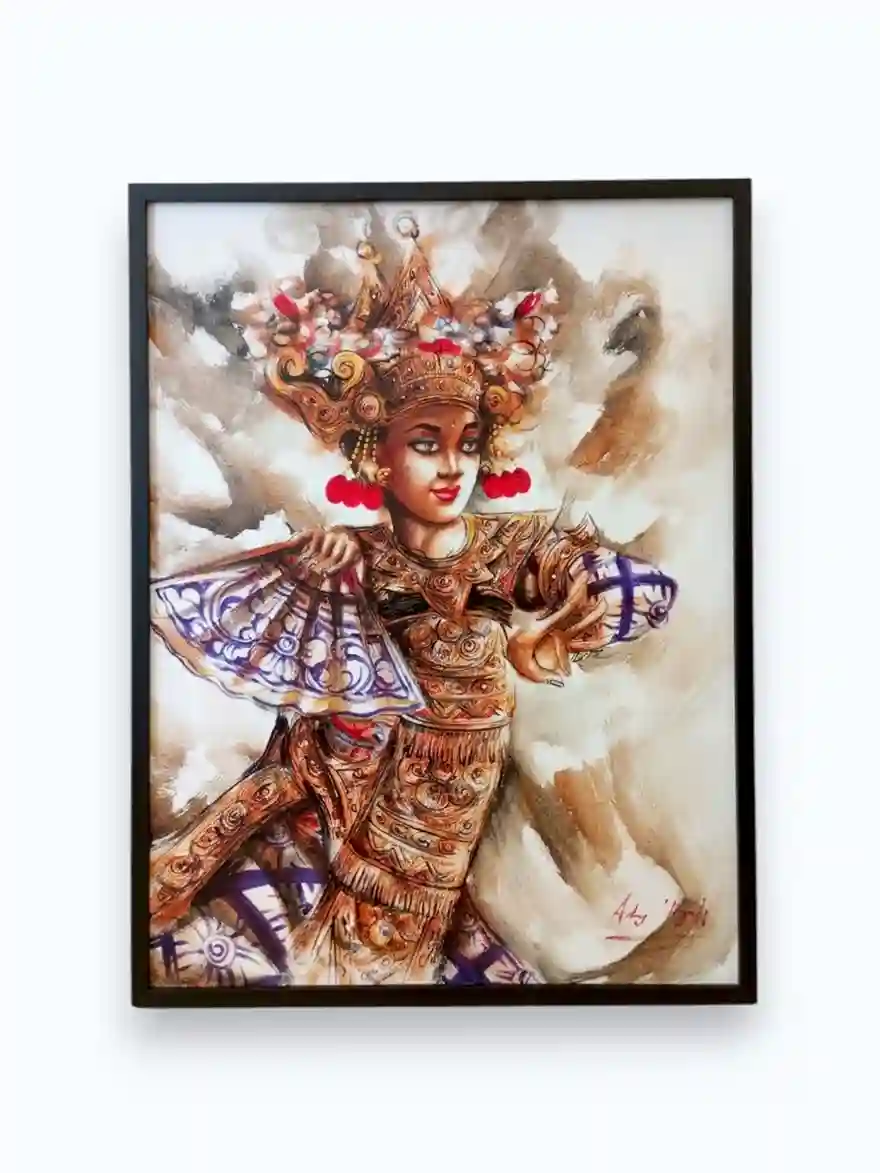
| Detail in the painting | What it refers to |
|---|---|
| Fan held up in one hand | Fans are part of the dance. Wikipedia says the condong presents the dancers with theirs |
| Tiered gilded headdress with red flowers | The gold headdress seen in the photographs above |
| Sweeping brown and grey washes behind the dancer | The painter’s choice of background |
Details are from the product listing and our own photographs, checked on 14 October 2026. Price and availability can change.
Ask About the Legong Painting
Tell us the wall you have in mind and we will send close-up photos, the exact size, and shipping options for The Elegant Legong Dancer Painting. We ship worldwide.
Mengobrol di WhatsAppView the Legong Dancer Painting