
Balinese Rooster Tradition: Tabuh Rah, Tajen, and the Bond With a Prized Bird
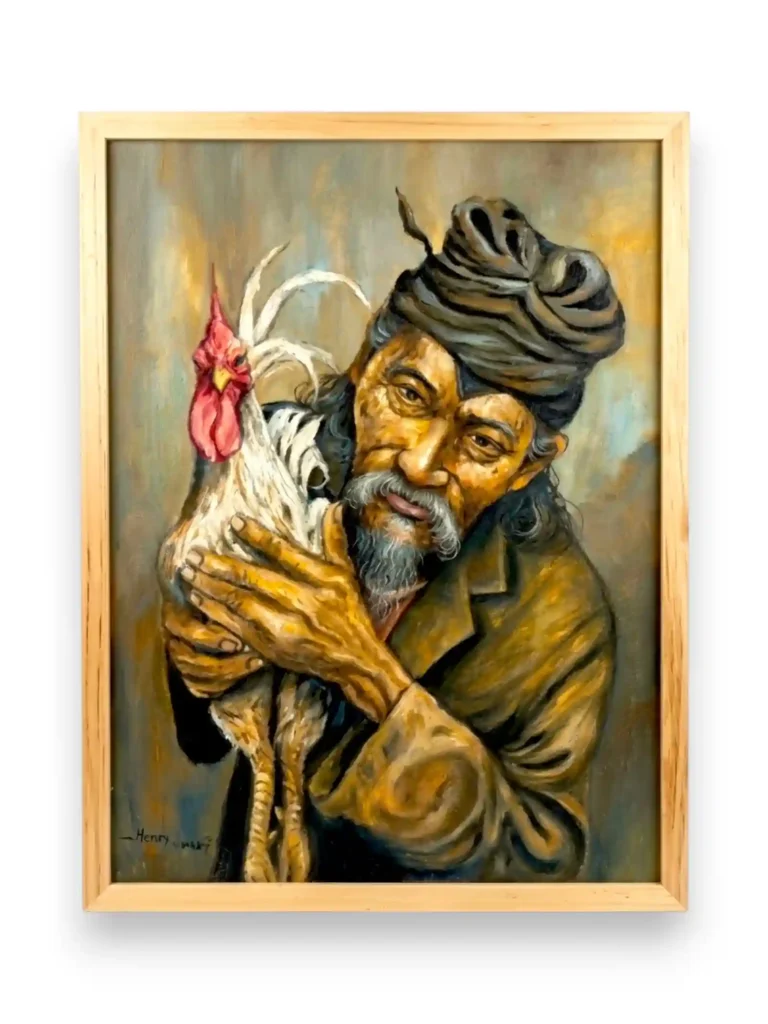
The Balinese rooster tradition behind tabuh rah, a sacred temple ritual distinct from tajen, and the bond between an elder and his prized bird.
Calon Arang: The Witch of Girah Behind Bali’s Rangda and the Calonarang Dance
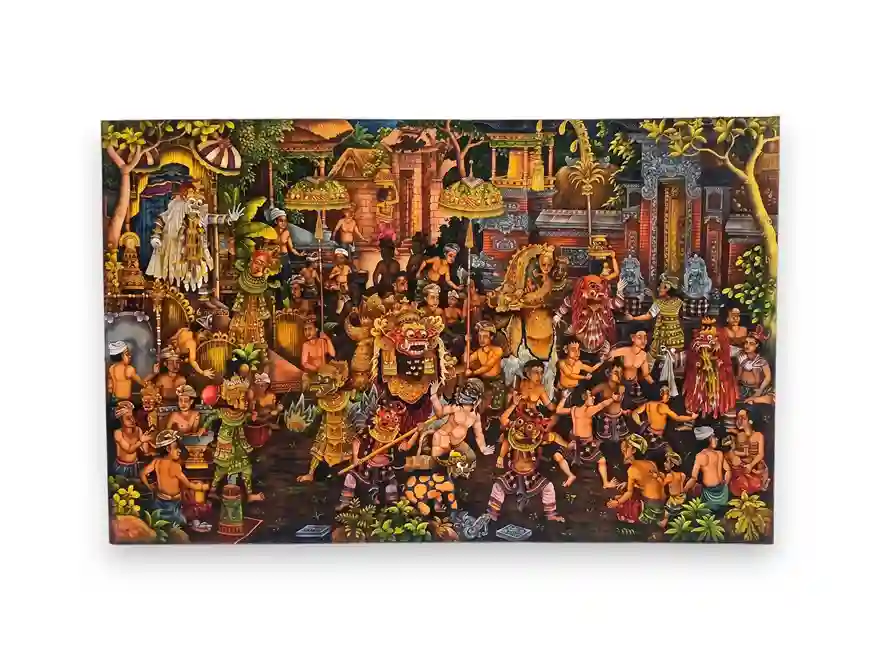
Calon Arang is the legendary witch of Girah whose story explains the origin of Rangda and Bali’s Calonarang dance, still performed today.
Sumba Barkcloth Art: The Andung Motif Explained
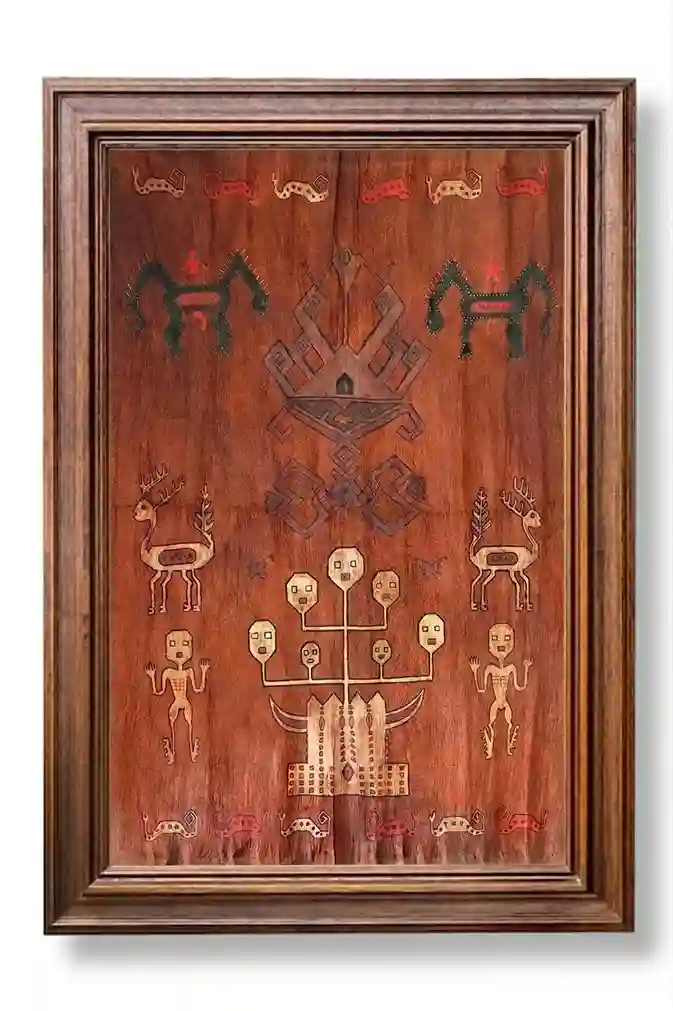
“Most of what we sell here was born on this island. This piece was not, and I think that is exactly why people stop in front of it. It reminds you Bali is one voice in a much larger conversation.” — Putu Sucipta, Owner, Arts of Bali This Sumba barkcloth textile is the clearest reminder […]
Gebogan Bali: How the Offering Tower Is Built, Layer by Layer
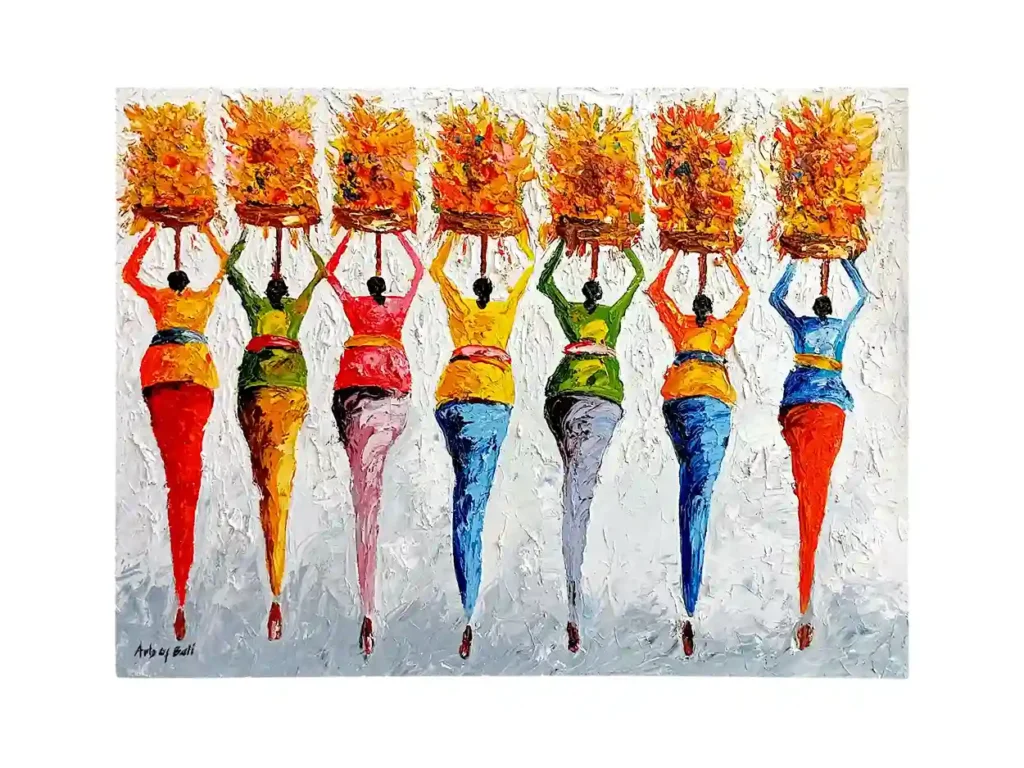
A gebogan bali is a towering offering built from fruit, rice cakes, and flowers, stacked in a cone shape on a wooden base and carried on a woman’s head to the temple. It is not simply decorative: every layer, from the woven palm base to the flower crown, follows a specific order, and the cone […]
Lotus in Balinese Art: Padma, Padmasana, and the Nine Gods
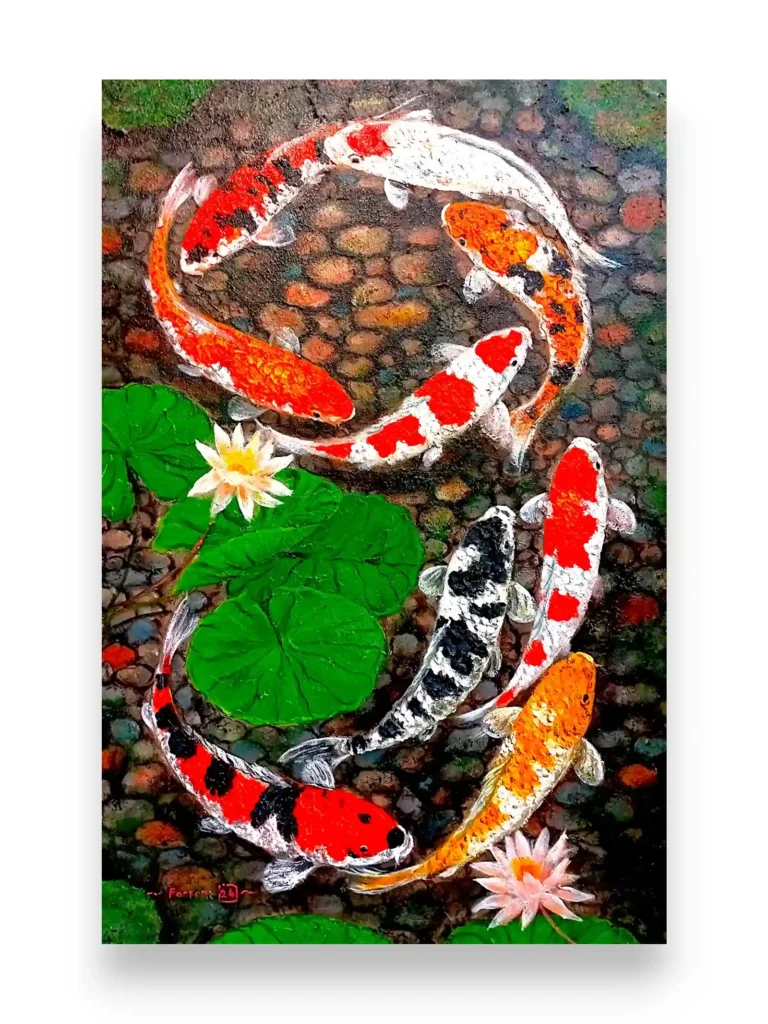
Lotus in Balinese art, called padma in Sanskrit and Kawi, is far more than a decorative flower: it lends its name to Bali’s holiest shrine, sits at the center of a nine-god cosmological diagram, and shows up in the colors of offerings laid out across the island every single day. Key Takeaways Padmasana, the tallest […]
Pura Ulun Danu Beratan: Bali’s Temple Behind the 50,000 Rupiah Note
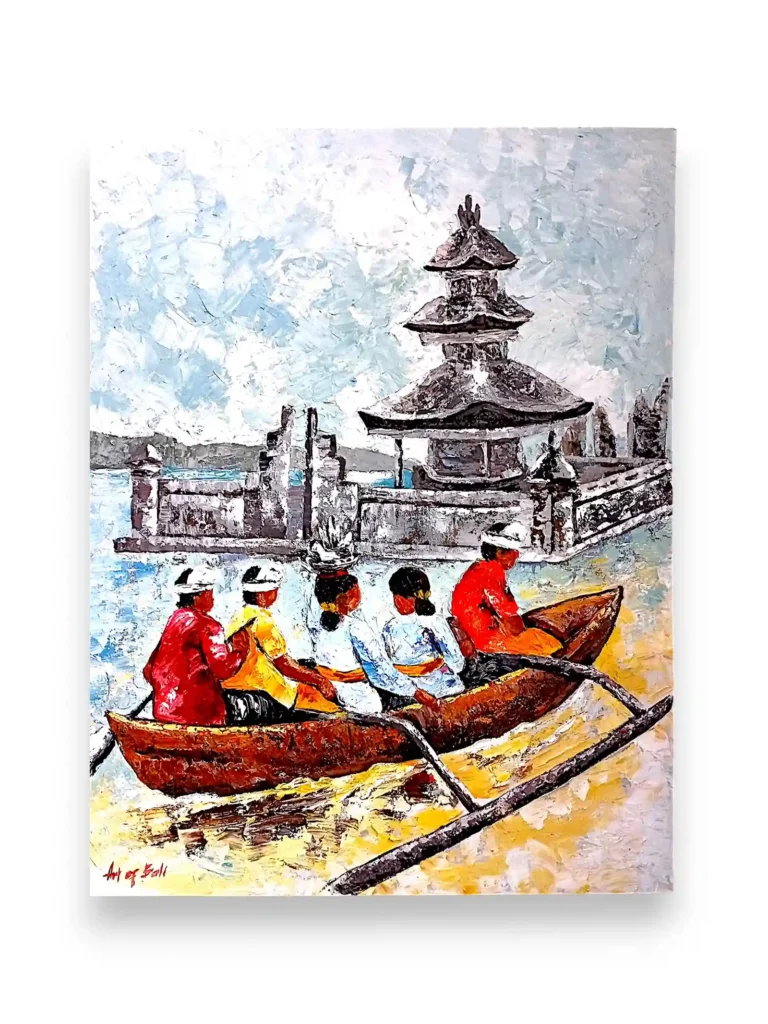
Pura Ulun Danu Beratan is Bali’s water temple on the shore of Lake Beratan in the Bedugul highlands, built around 1633 by a king of the Mengwi kingdom to honor Dewi Danu, the Balinese goddess of lakes and rivers. Its cluster of pagoda-roofed meru shrines, reflected in the lake behind them, is one of the […]
Mahabharata Kamasan Painting: Bali’s Version of India’s Epic War
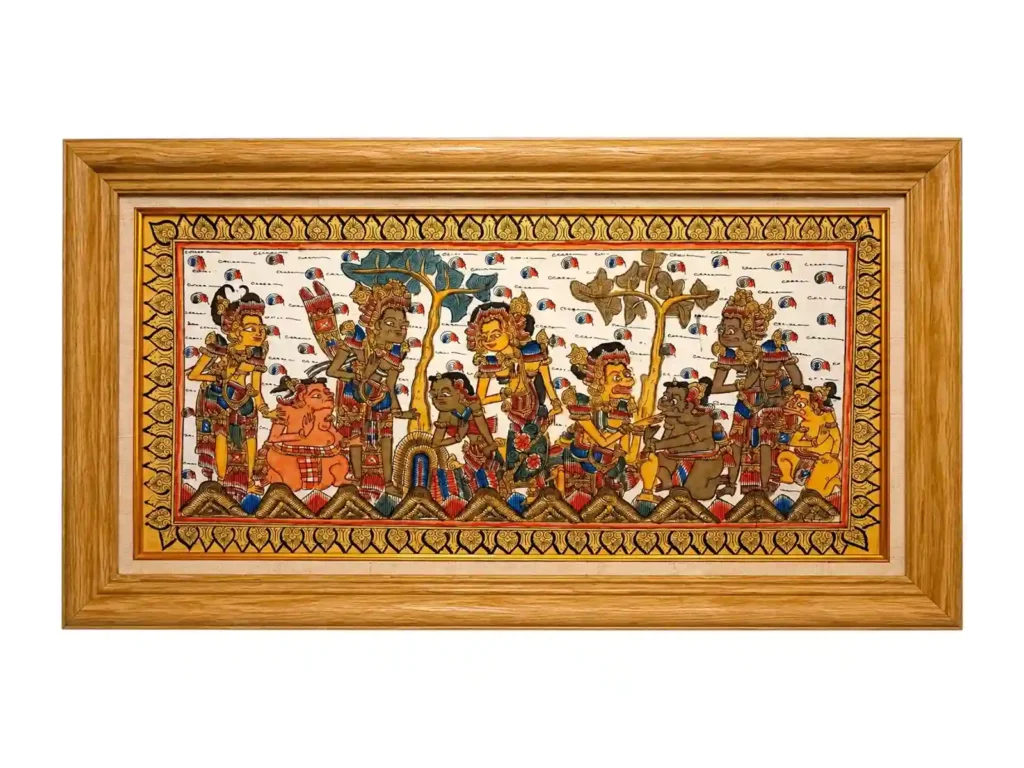
A Mahabharata Kamasan painting depicts scenes from the Mahabharata, the 18-book Sanskrit epic about a war between two royal families, painted in Kamasan style: flat wayang-shaped figures, natural pigments, and gold leaf, the same visual language Bali uses for its shadow puppets. It’s one of Kamasan painting’s two core source epics, the other being the […]
Kelingking Beach: The T-Rex Cliff of Nusa Penida in an Original Painting
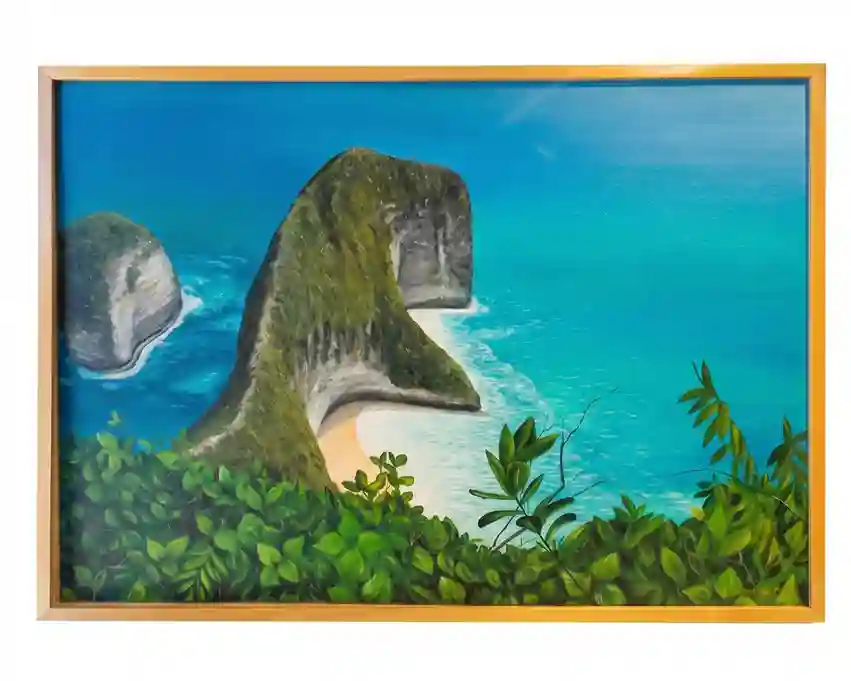
Kelingking Beach is the cliff-top viewpoint on Nusa Penida, an island off Bali’s southeast coast, known for a limestone headland whose silhouette is widely compared to a dinosaur’s head and neck, earning it the nickname T-Rex Cliff. The name Kelingking itself comes from the Indonesian word for “little finger,” a reference to the promontory’s curled […]
Baris Dance: Bali’s Solo Warrior Performance
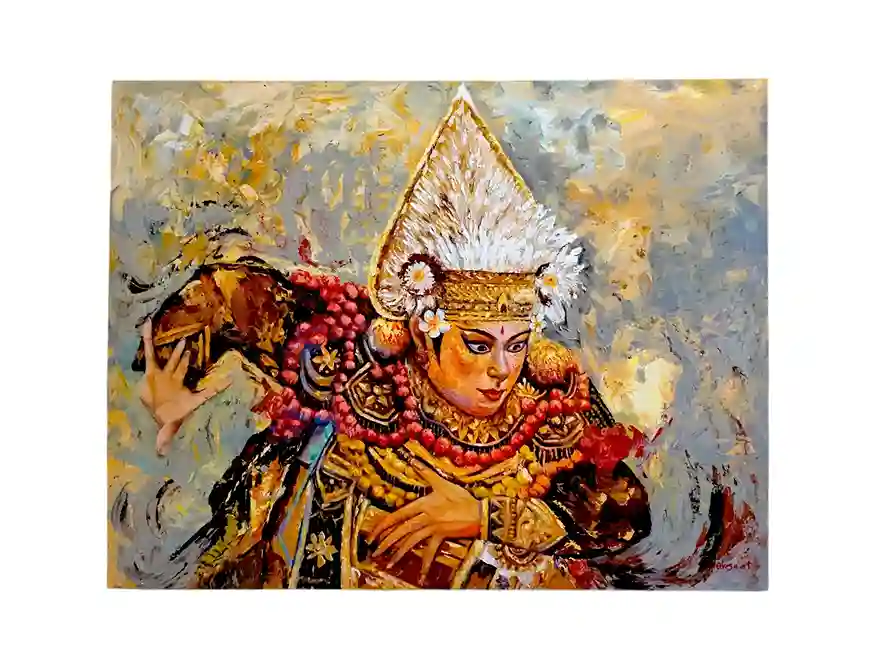
Baris dance is Bali’s warrior dance tradition, performed either as a sacred group ritual called Baris Gede, honoring temple deities at ceremonies like Odalan, or as a solo showcase called Baris Tunggal, in which a single dancer, usually a boy, portrays a warrior’s alertness through sharp, darting eye movements called sledet. Both forms trace back […]
Dewi Sri: Bali’s Rice Goddess Behind Every Rice Field Painting
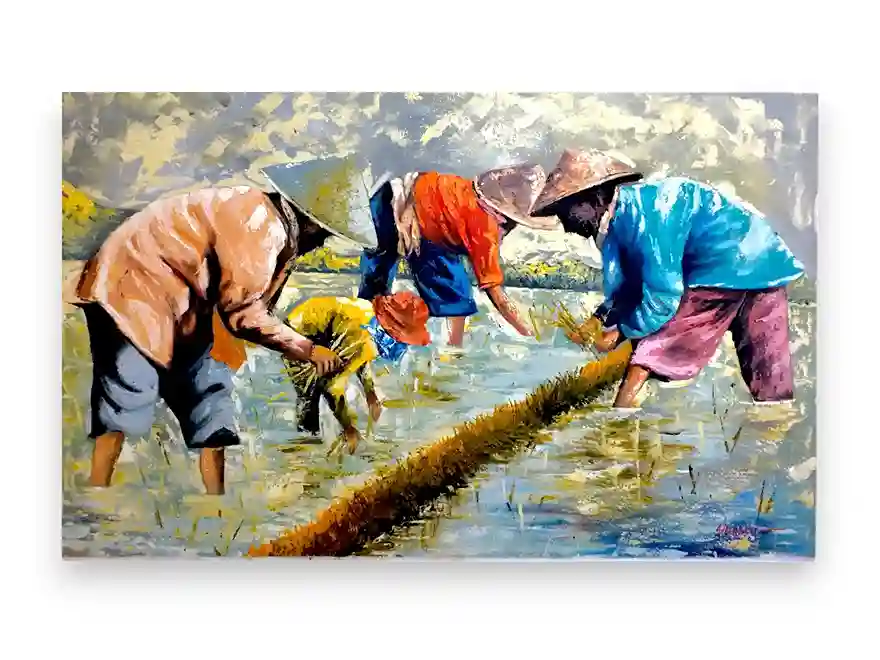
Dewi Sri is Bali’s Hindu goddess of rice, fertility, and prosperity, honored through the Subak system and represented by the woven Cili effigy. Though rarely painted as a standalone figure, her presence runs through the rice field and rice harvest paintings that are among Bali’s most recognizable images.