Ida Bagus Nyana (1912–1985) and his son Ida Bagus Tilem (1936–1993) were the father-son sculptors from Mas village, Gianyar, whose work took Balinese wood carving from temple ritual object to internationally recognized fine art. Nyana developed the compact, serene figural style that became the signature of Mas village carving; Tilem pushed it further, letting the natural grain and deformities of the wood itself shape emotionally expressive forms. Their family gallery, the Njana Tilem Museum, still stands in Mas today.
Key Takeaways
- Nyana and Tilem were father and son, both born and working in Mas village, Gianyar.
- Nyana joined Pita Maha, the 1930s artists’ association that reshaped Balinese art alongside Walter Spies and Rudolf Bonnet.
- Their carvings were collected by Indonesia’s first president, Sukarno, and shown at the 1964 New York World’s Fair.
- Nyana’s serene, closed-form figures and Tilem’s wood-grain-driven expressionism are still the reference points Mas carvers are measured against.
- The Njana Tilem Museum in Mas is officially registered as a Special Museum (Type C) preserving their work today.
Definition: Nyana and Tilem refers to Ida Bagus Nyana and his son Ida Bagus Tilem, the two Balinese sculptors most credited with establishing Mas village’s reputation as Bali’s wood carving center.
Every time we’ve written about wood carving from Mas village on this blog — the masks, the relief panels, the reason a “Mas-lineage” piece costs more than a roadside copy — one name keeps sitting quietly behind the explanation. This is the article where we stop referencing that name in passing and actually tell the story.
Ida Bagus Nyana and his son Ida Bagus Tilem didn’t invent Balinese wood carving — the craft is older than either of them, tied to temple building and ritual objects for centuries. What they did was turn a village craft into something the rest of the world recognized as fine art, without cutting its roots.
Who Was Ida Bagus Nyana?
Nyana was born in 1912 into a Brahmin family in Mas, a descendant — by family tradition — of Dang Hyang Nirartha, the 16th-century Hindu priest credited with shaping much of Balinese temple architecture and ritual practice after arriving from Java. His father, Ida Bagus Saren, worked as an undagi — a priest-architect and craftsman — and gave Nyana a traditional education grounded in Balinese poetry, classical stories, and architecture before he ever picked up a chisel professionally.
That background matters, because it means Nyana didn’t arrive at carving as an outsider learning a trade. He arrived already fluent in the stories the carving was meant to tell.
The Turning PointThe Pita Maha Moment: When Carving Became “Art”
The 1930s changed Bali’s art world, and Nyana was in the middle of it. When German painter Walter Spies and Dutch artist Rudolf Bonnet settled on the island, they didn’t just paint — they helped organize local artists into Pita Maha, an artists’ association formed in 1936 with Balinese royal patron Cokorda Gede Agung Sukawati, aimed at protecting and developing Balinese art beyond purely ceremonial production. Nyana and his cousin, Ida Bagus Ketut Gelodog, were among the young Mas carvers who joined.
Pita Maha didn’t ask carvers to abandon religious subject matter — Barong, deities, and dancers stayed central. What it changed was permission: carving could now be made, priced, and collected as an artistic object in its own right, not only commissioned for a specific temple or ceremony. That single shift is the reason a wood carving gallery in Seminyak can exist at all today.
The same association reshaped painting alongside carving — Spies and Bonnet worked most closely with Ubud-area painters, and the detailed, ceremonial style that emerged is still what most visitors picture when they imagine “traditional Balinese painting.” Our Panduan melukis gaya Ubud covers that side of the same Pita Maha story.
How His Style ChangedNyana’s Style, Decade by Decade
Nyana’s carving didn’t stay still across his career — it moved through three fairly distinct phases, each one still visible in how Mas carvers approach the human and animal figure today.
| Period | Style | What Changed |
|---|---|---|
| Early (1930s) | Elongated, fluid figures | Became the early hallmark of the Mas carving school under Pita Maha |
| 1940s | Fuller, less decorated forms | Moved away from ornamental detail toward stronger, simpler silhouettes |
| 1950s onward | Compact, closed, serene style | Perfected his signature: rounded, corpulent men and women carved with a calm, settled presence |
Style timeline compiled from biographical sources on Ida Bagus Nyana (see Sources at the end of this article); treat decade boundaries as approximate, not exact.
Ida Bagus Tilem: The Son Who Let the Wood Lead
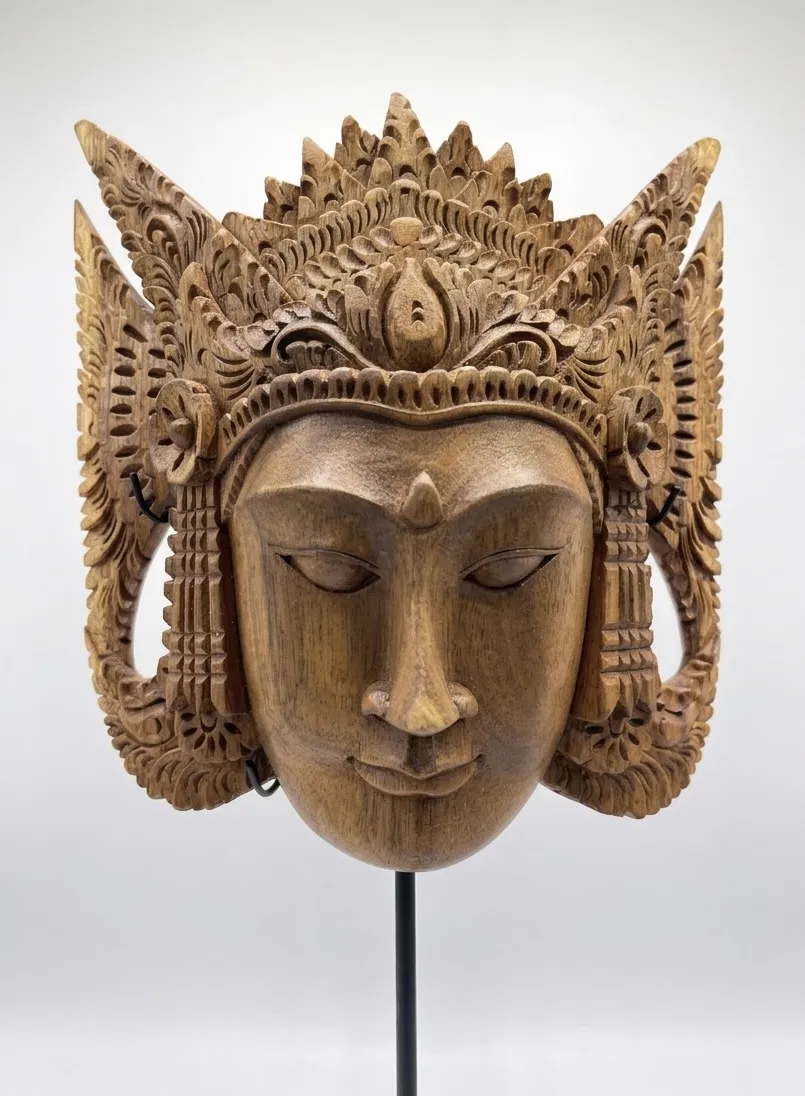
Tilem, born in 1936, grew up watching his father work and became an internationally recognized sculptor in his own right. Where Nyana composed toward calm and closure, Tilem went the opposite direction: he let a piece of wood’s natural distortions, knots, and irregular grain suggest the emotional posture of the figure, rather than forcing the wood into a predetermined pose. The result reads as more raw and more ambiguous — carvings that seem to be caught mid-feeling rather than settled into it.
It’s a genuinely different sensibility from his father’s, carved from the same training and the same village. That contrast — discipline and calm passed down, then deliberately pushed somewhere new — is part of why the Nyana-Tilem lineage gets treated as a complete artistic argument rather than one carver’s style repeated twice.
Beyond BaliFrom a Village Workshop to the World’s Fair
By the late 1950s and into the 1960s, demand from tourists and collectors was rising fast enough that The New York Times covered it directly in a 1961 piece describing the boom in Bali wood carving and noting Indonesia’s first president, Sukarno, as a personal customer of the father-son team. In 1964, their work was shown at the New York World’s Fair as part of the Indonesian Pavilion — a level of international exposure almost no other Balinese craft workshop had at the time. Nyana was recognized with a high national award in 1974.
None of that recognition moved the workshop out of Mas. It stayed exactly where it started.
The Njana Tilem Museum in Mas Village
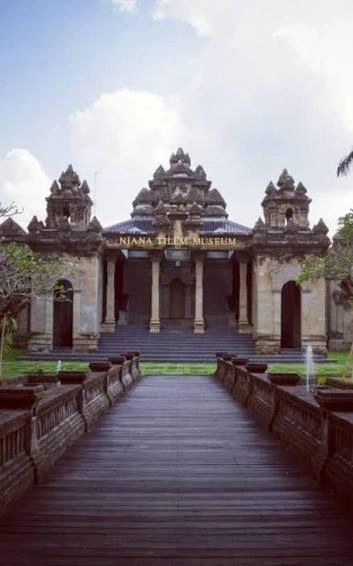
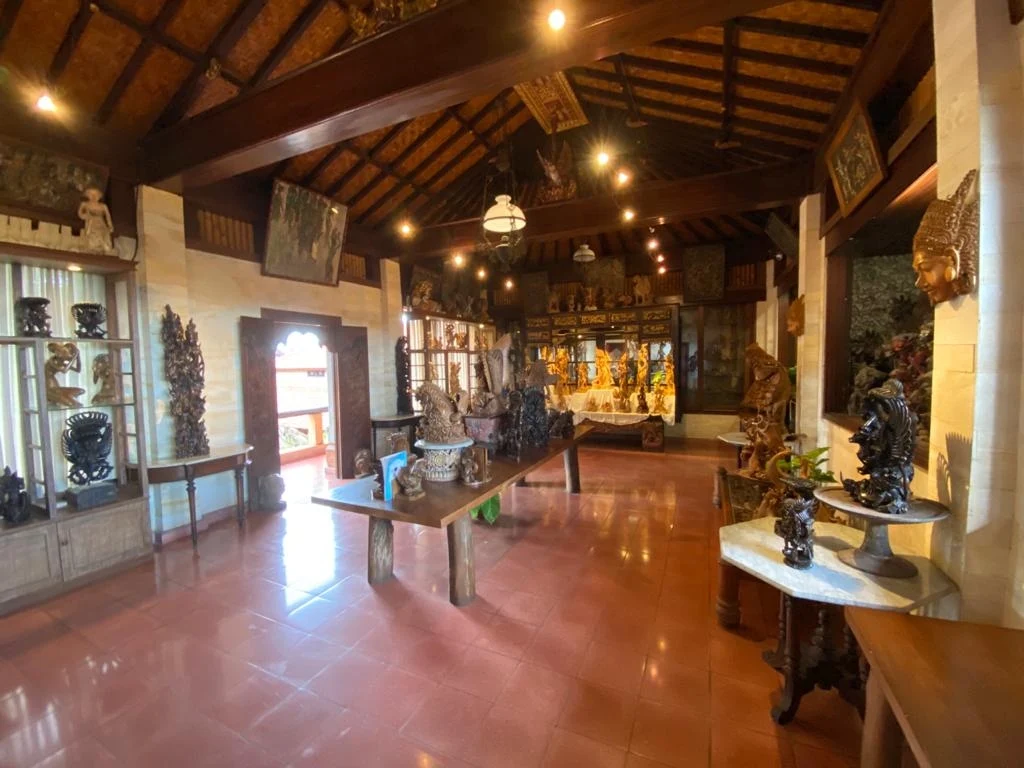
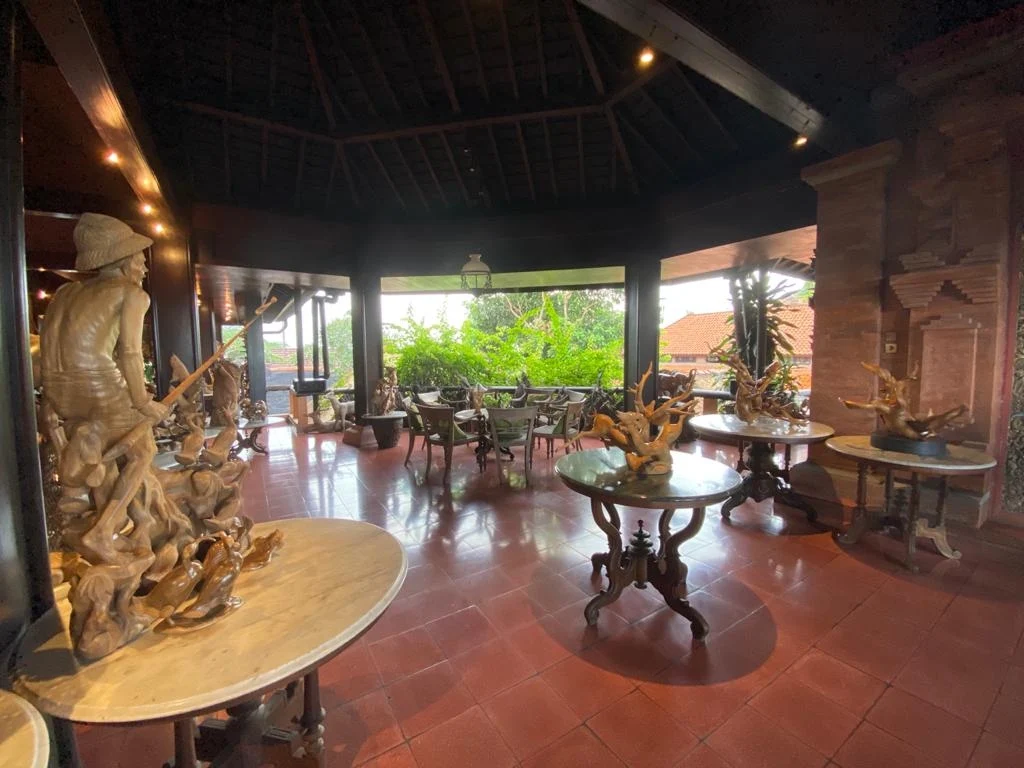
The family’s workshop is now the Njana Tilem Museum, officially registered in Indonesia’s national museum system as a Special Museum, Type C — a classification for institutions focused on a single artistic discipline rather than general history. It’s still owned and run by the Tilem family, housing signature carvings by both father and son alongside related Balinese antiques, masks, and paintings connected to the wider Mas village tradition. The building itself draws on Majapahit-era architectural elements, tying the display space to the same historical period their carving subjects often come from.
Museum hours and visiting details are freshness-sensitive and not independently verified for this article — check current information before planning a visit.
Why This Still MattersWhy Every Mas Carving Still Answers to This Lineage
When we wrote our Bali wood carving price guide, one of the four factors driving price was “artisan and village provenance” — the idea that a piece carrying real Mas-lineage technique costs more because that skill took decades to build. This is the lineage that claim is actually pointing to. Deep undercutting, anatomically confident faces, and controlled proportion in figures aren’t abstract quality markers; they’re the specific vocabulary Nyana spent thirty years refining and Tilem spent another three decades pushing further.
A carver working in Mas today isn’t required to copy either style. But the standard they’re measured against — by other carvers, by galleries, by anyone who has spent time comparing a rushed piece to a considered one — traces back to this workshop.
Wood isn’t the only material Balinese sculptors turned devotional figures into fine art with. The same deities and guardian figures Nyana and Tilem carved also appear cast in bronze using the lost-wax method — a parallel sculptural tradition covered in our Bali bronze statue guide. Different material, same underlying instinct: temple iconography treated as collectible art rather than ceremonial furniture. For how this fits into the wider picture of Bali’s carving output, see our Wood Carving Bali overview; for the artist-profile side of the site, our Seniman Bali yang Terkenal series covers the island’s leading painters the same way this article covers its leading carvers.
Pertanyaan yang Sering Diajukan
Who were Ida Bagus Nyana and Ida Bagus Tilem? ▼
What is Pita Maha and why does it matter to wood carving? ▼
Can I buy an original Nyana or Tilem carving today? ▼
What makes a carving “Mas-lineage” style? ▼
Is the Njana Tilem Museum open to visitors? ▼
Why did Sukarno collect their work? ▼
How is Tilem’s style different from his father’s? ▼
See This Tradition in Today’s Carving
Our wood carving price guide breaks down what Mas-lineage technique actually costs, tier by tier. If you’re comparing carving against Bali’s painting and metalwork traditions too, our complete Balinese art guide maps how all three fit together. Or browse the current collection directly and see the tradition in the pieces themselves.
Mengobrol di WhatsApp Jelajahi GaleriSources: Wikipedia — Mas, Bali; Wikipedia — Pita Maha; The New York Times, 1961; Indonesia.travel — Njana Tilem Museum (Ministry of Tourism, Republic of Indonesia).