An original Bali painting can be told apart from a print by checking four things, in this order: the certificate of authenticity, the texture of the paint surface, the artist’s hand painted signature on the canvas itself, and the back of the canvas. A genuine oil or acrylic painting shows raised, uneven brushwork you can feel with a fingertip, while even a very good print stays completely flat. No single check is conclusive on its own. Together, the four are close to it.
Key Takeaways
- A hand painted surface has raised, uneven brushwork. A print, however sharp, stays flat to the touch.
- A real certificate of authenticity names the artist, title, medium, size, and year, with a genuine signature.
- The unpainted edge of an original canvas is rough. A printed canvas edge is smooth all the way around.
- The back of a real canvas shows raw fabric, wooden stretcher bars, and often a gallery label.
- Under strong magnification, a print reveals a fine dot pattern that hand applied paint never has.
Definition: A certificate of authenticity is a signed document, usually from the gallery or the artist, that records a specific painting’s title, medium, size, and year of completion, and confirms in writing that the work is an original rather than a copy.
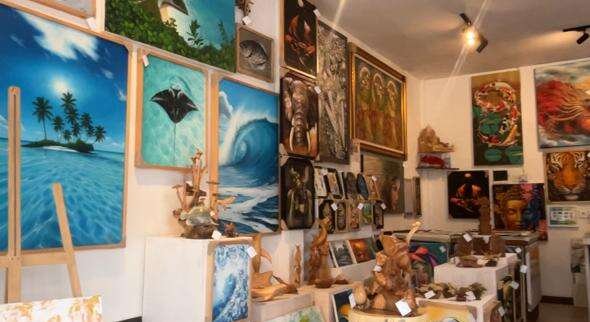
A visitor once stood in front of a painting at our gallery in Seminyak holding up her phone, comparing it to an almost identical image she had found for a tenth of the price at a stall near Sukawati market. She wasn’t wrong to ask. Under warm gallery lighting, a well made print can look exactly like an oil painting at a glance, and plenty of sellers on the island are happy to let that confusion work in their favor.
The difference is not cosmetic. A printed reproduction fades within a few years under Bali’s tropical sun and humidity. An original oil painting, properly cared for, can hold its color for generations. The gap in price reflects that gap in lifespan, and it is also the reason an original tends to hold or gain resale value while a print generally does not. If you are about to spend real money on a piece of Balinese art, you deserve to know exactly what is on your wall.
This guide walks through the four checks our team actually uses to confirm an original Bali painting when someone brings one in and asks, quite reasonably, is this real. None of them require special equipment, and all of them take a few minutes once you know what to look for.
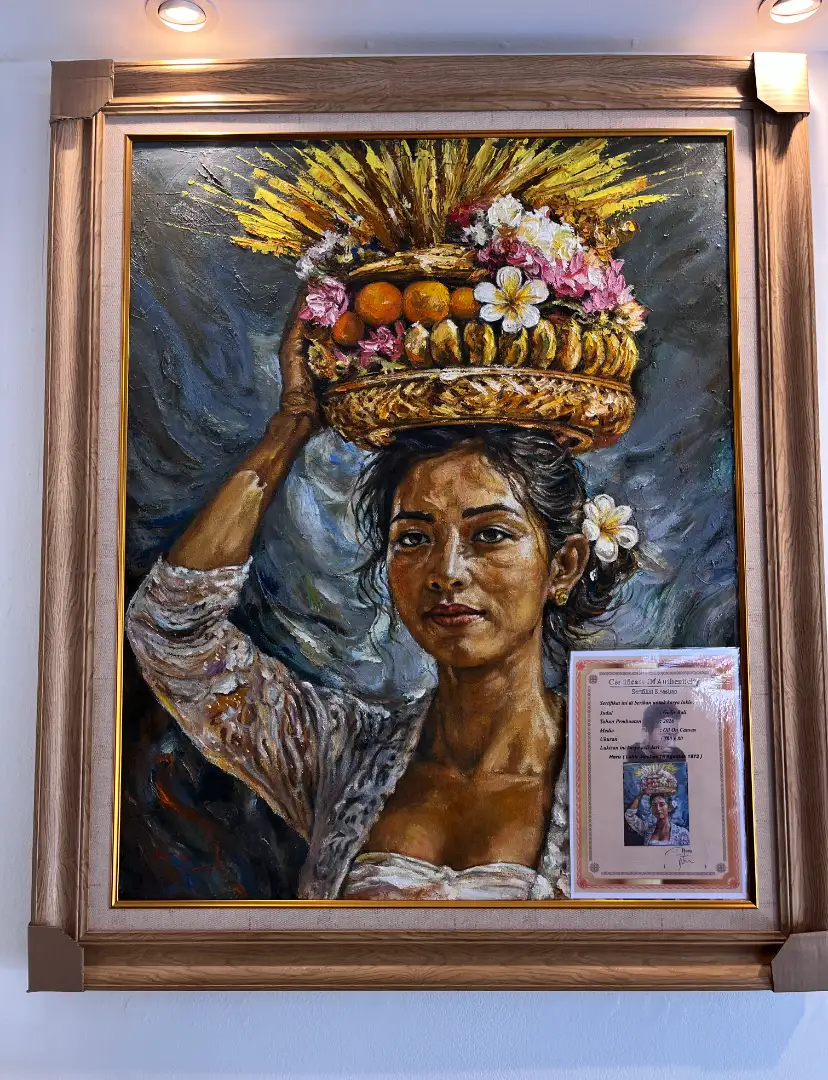
Why This Question Comes Up So Often in Bali
Bali sells more painted imagery per square kilometer than almost anywhere else in the world, which is exactly why the original versus print question matters here more than in most art markets. Sukawati market and the roadside stalls along the road toward Ubud move large volumes of printed reproductions of a handful of popular compositions: rice terraces, Barong masks, women carrying offering baskets. Many are sold honestly as prints. Some are not labeled clearly at all, and a buyer working from a phone photo of a painting she liked in a gallery has no easy way to tell the two apart from across a stall.
The confusion is not limited to street markets. It also affects buyers shopping online, where a small photograph tells you almost nothing about the surface of a painting. The four checks below work whether you are standing in front of the canvas or trying to verify a purchase you already made from somewhere else.
A print can borrow a composition in an afternoon. It cannot borrow the years a painter spent learning how a palette knife holds light.
For a broader sense of where to shop with confidence, see our guide to the best art galleries in Bali.
Check OneRead the Certificate of Authenticity Carefully
A legitimate certificate of authenticity is specific, not decorative. It should name the exact title of the work, the medium (oil on canvas, acrylic, mixed media), the dimensions, the year it was completed, and the full name of the artist, ideally with enough biographical detail that the artist could be identified and verified independently. It should carry a real signature, not a printed one, and that signature should visually match the one on the canvas itself.
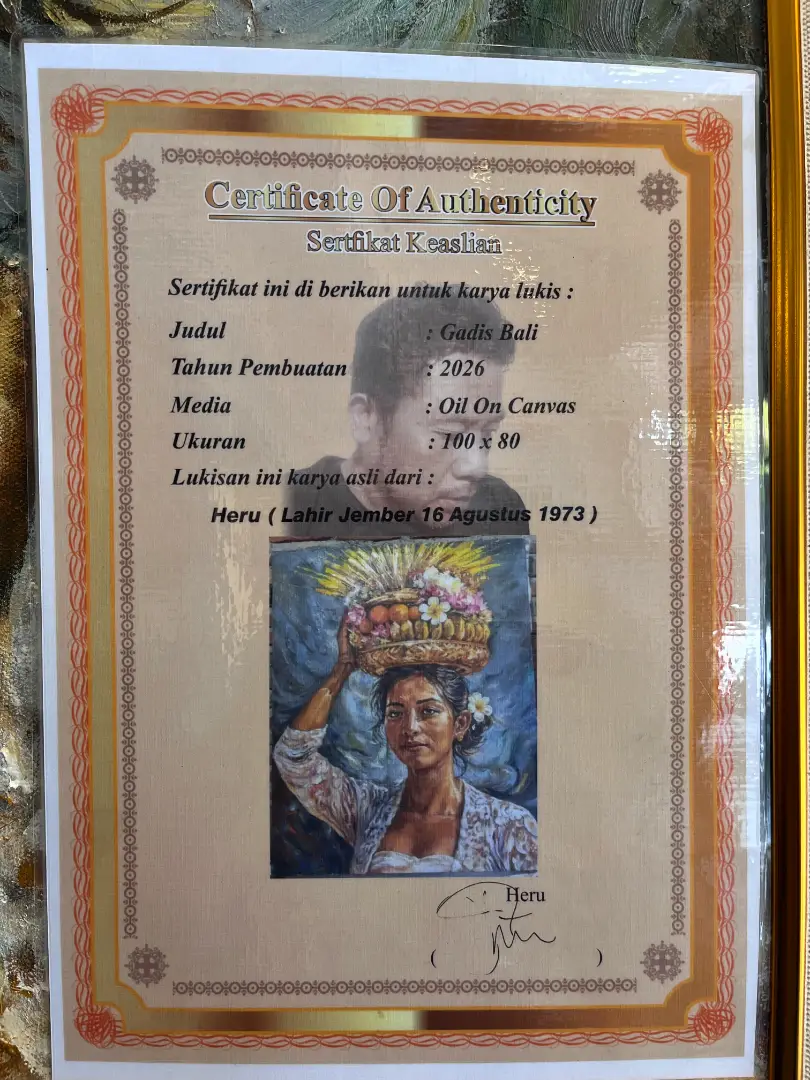
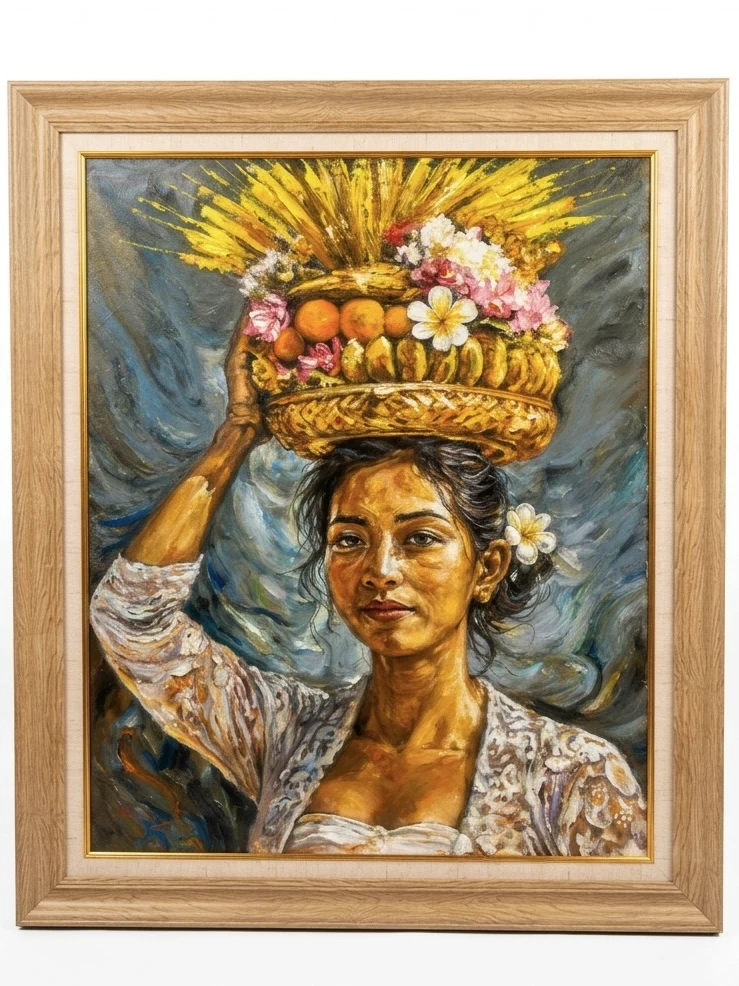
This certificate, for a piece titled Gadis Bali, records the medium as oil on canvas, the size as 100 by 80 centimeters, and the artist by name and birth year, with his signature at the bottom. That level of specificity is what separates a real certificate from a generic printed insert that could accompany any painting a gallery happens to have in stock.
A certificate alone is not proof. Some sellers of prints hand out certificates too, and a piece of paper is only as trustworthy as the gallery that issued it. Treat the certificate as the first check, not the last. For more on what to expect from a reputable seller, see our guide to bagaimana memilih karya seni di Bali.
Check TwoFeel the Paint, Don’t Just Look at It
This is the check that settles the question fastest. Run a fingertip lightly across the surface of the painting, away from the frame edge. An original oil or acrylic painting has texture you can feel: ridges where the brush or palette knife left paint standing slightly proud of the canvas, small variations in thickness from one stroke to the next. A print, no matter how good the canvas it is mounted on, is completely flat. There is nothing for a fingertip to find.
Angling a light across the surface instead of straight onto it, the way a raking light works in a conservation studio, makes the texture visible even without touching the work. Genuine brushwork throws small shadows. A print reflects evenly across its whole surface because there is no texture to interrupt the light.
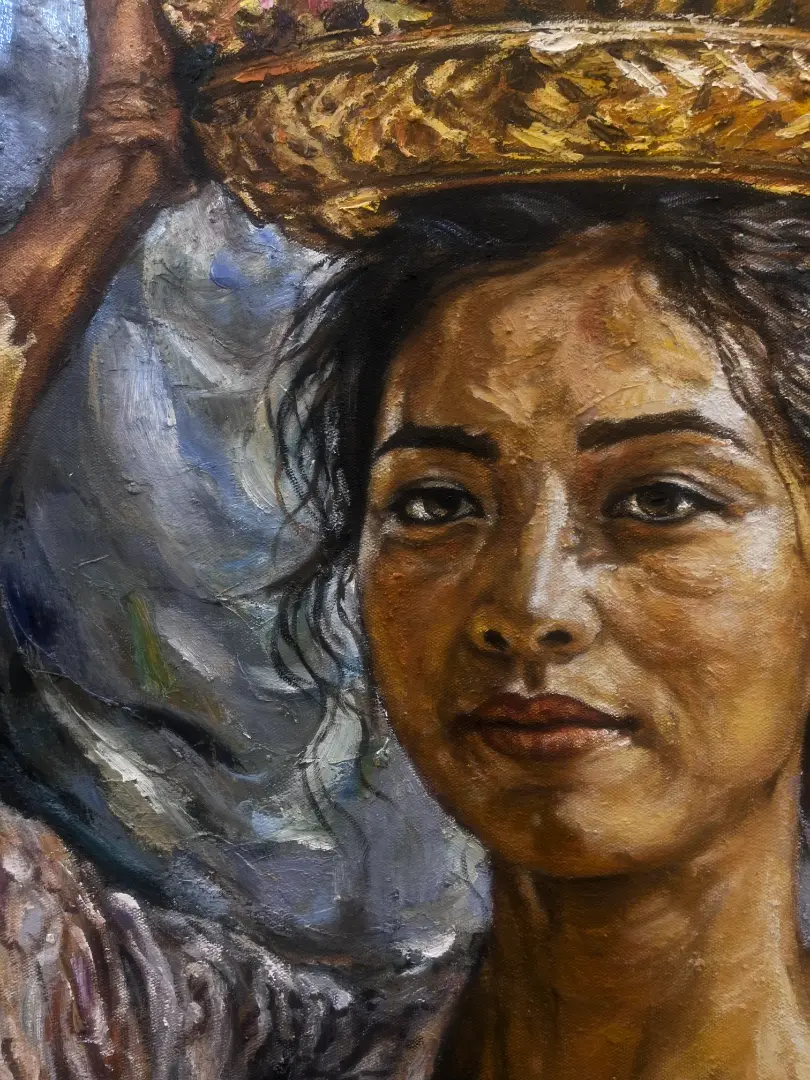
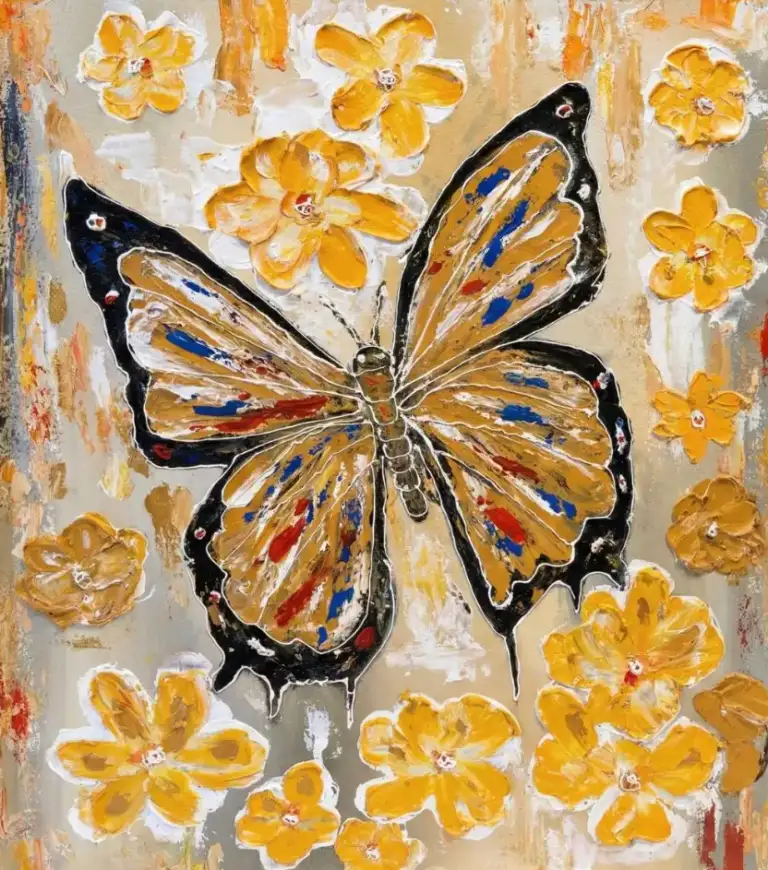
Palette knife work, one of the most collected styles at Arts of Bali, makes this check especially easy. The paint sits in visible ridges that catch gallery light differently depending on where you stand, one reason collectors say these paintings seem to change throughout the day. See more examples in our guide to palette knife painting in Bali.
The fingertip and raking light method described here is standard practice among professional appraisers, not something specific to our gallery. Appraisily, a professional art appraisal resource, describes the same surface and edge checks, and notes that under strong magnification a printed reproduction, including a high quality giclée, will still show a fine, regular dot pattern that hand applied paint never produces.
Look at the Signature on the Canvas Itself
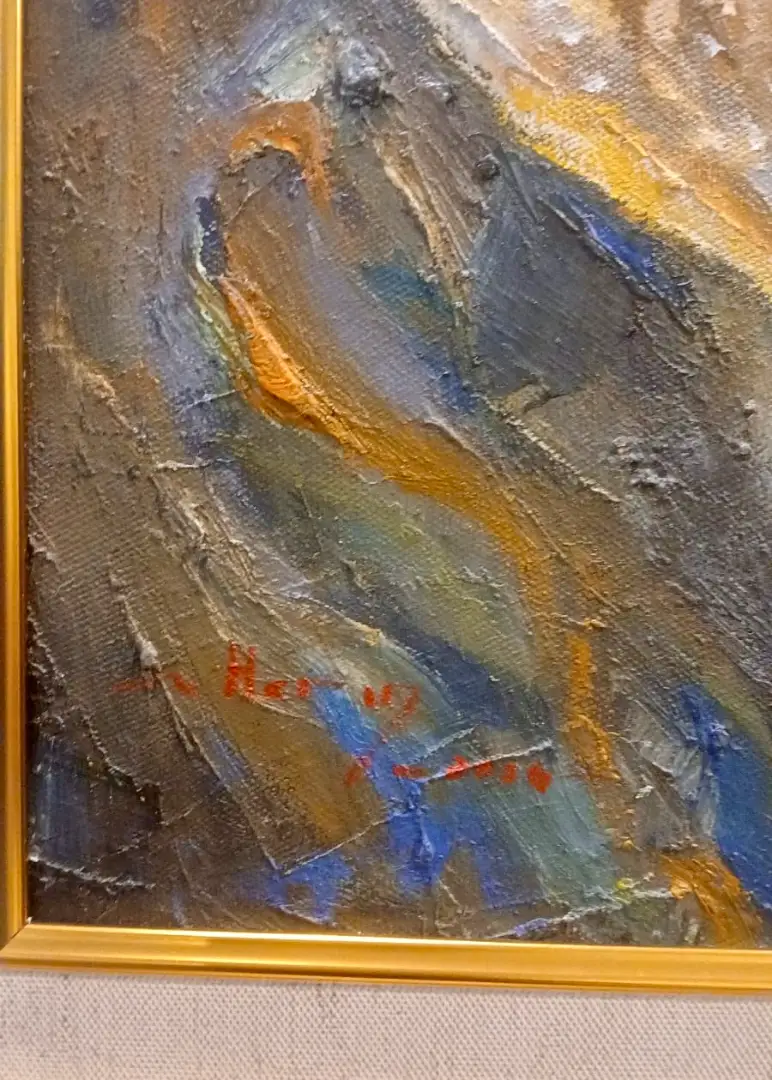
A painted signature sits on top of the paint layer, usually applied last, in the artist’s own hand. Look closely and you can often see a slightly raised line of paint or ink, with small variations in pressure the way any handwriting has. A signature that is part of a printed reproduction sits perfectly flat, absorbed into the same uniform surface as the rest of the image, with none of the texture a real signature leaves behind.
Compare the signature on the canvas to the signature on the certificate of authenticity. The two should match in style, even if one is faster or more compressed than the other, because both came from the same hand. Our guide to seniman Bali yang terkenal is a useful reference if you want to learn what a specific painter’s signature typically looks like.
Turn the Painting Around
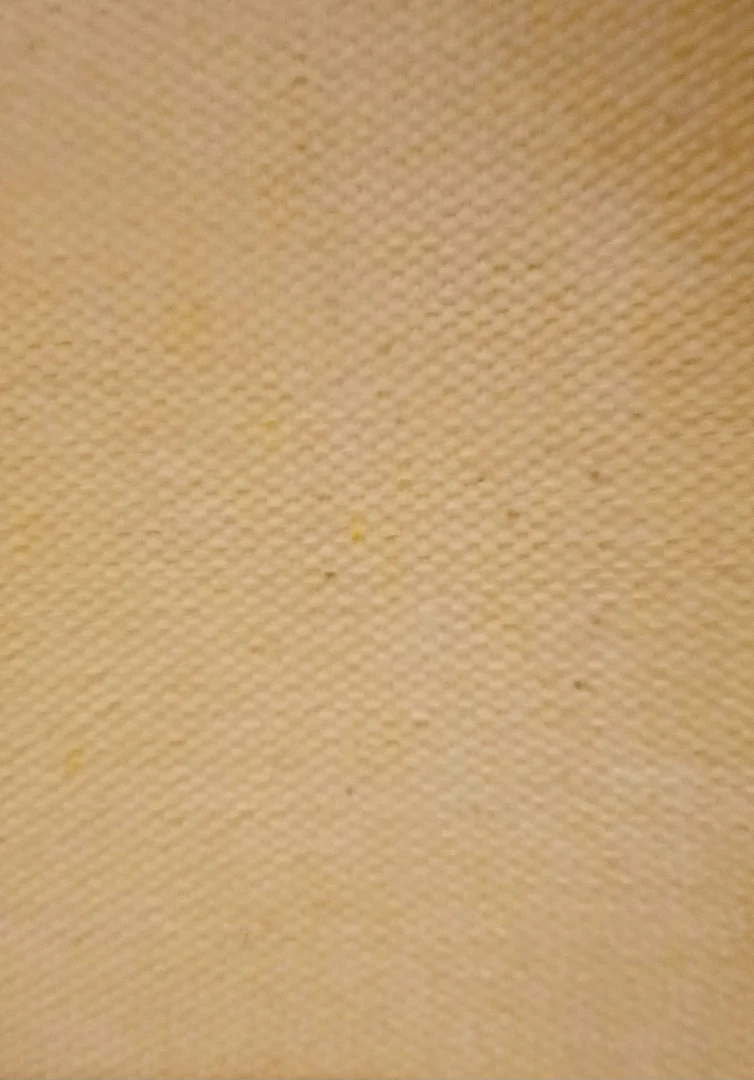
The back of a genuine stretched canvas tells its own story. You should see raw canvas fabric, a wooden stretcher frame with visible joints, and often a trace of paint that has seeped slightly through to the reverse near the edges. Many galleries, including ours, add a handwritten or printed label with the title, artist, and inventory number. A printed reproduction mounted to look like a canvas usually has a flat, uniform back with no seepage, and if it carries a label at all, it is often a barcode or a generic product sticker rather than a gallery record.
If you are buying from overseas and having a painting shipped, this is also a good moment to review our guide to how to ship art from Bali, since a genuine stretched canvas needs different handling than a flat print.
At a GlanceOriginal Bali Painting vs. Print: A Quick Comparison
The table below summarizes all four checks side by side, useful as a quick reference the next time you are standing in front of a painting and want a fast answer.
| Feature | Original Painting | Print / Reproduction |
|---|---|---|
| Surface texture | Raised, uneven brushwork you can feel | Completely flat, even under close inspection |
| Canvas edge | Rough, uneven, paint often visible over the edge | Smooth and even all the way around |
| Back of canvas | Raw fabric, wooden stretcher bars, possible paint seepage | Flat and uniform, often a sticker or barcode only |
| Signature | Slightly raised, hand applied, matches the certificate | Flat, printed as part of the image |
| Certificate of authenticity | Specific artist name, title, medium, size, real signature | Often missing, generic, or absent altogether |
| Value over time | Can hold or gain value, especially by named artists | Depreciates, little to no resale value |
For a closer look at how value differs between styles once authenticity is confirmed, see our guide to Balinese hyper-realism as an art investment.
Buying With ConfidenceHow Arts of Bali Documents Every Original We Sell
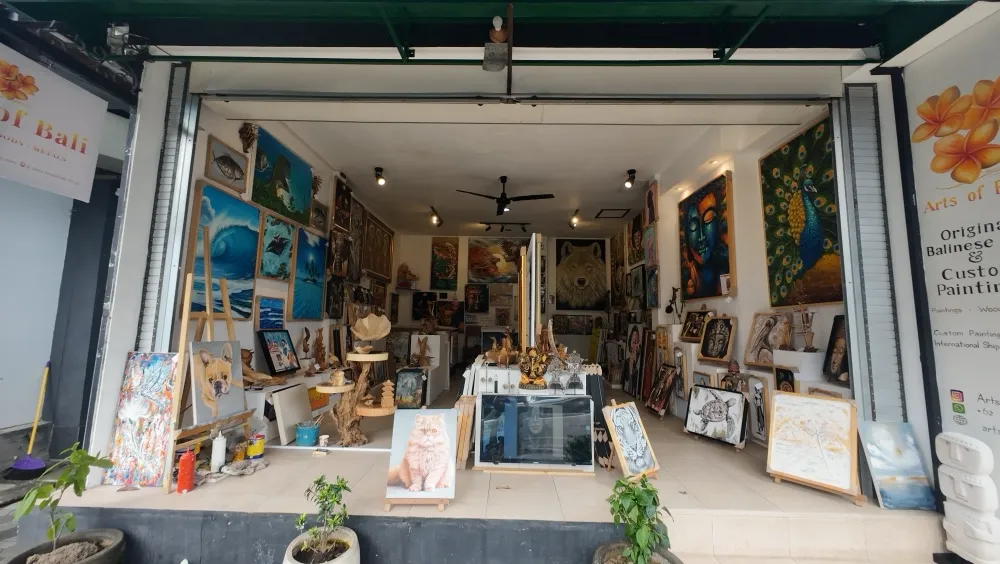
Every original Bali painting that leaves our gallery in Seminyak is sold with a certificate of authenticity naming the artist and recording the work’s title, medium, size, and year, matched to a signature on the canvas itself. We do not sell prints or reproductions of any kind, and we are always glad to walk a prospective buyer through all four checks in this guide before they decide. If you already own a painting bought elsewhere and want a second opinion, bring it in. Our team looks at Balinese paintings every day, and we are happy to help you understand exactly what you have.
Start with our broader guide to buying art in Bali, or if you would rather commission a documented original made to order, see our guide to cara memesan karya seni di Bali.
Bring In a Painting, Ask Us Anything
Not sure what you’re holding, whether it’s from a market stall or a gallery overseas? Visit us in Seminyak and our team will walk through these checks with you in person, at no charge.
Contact the GalleryFrequently Asked Questions About Bali Painting Authenticity
How can I tell if a Bali painting is an original or a print?
Feel the surface first. An original Bali painting has raised, uneven brushwork you can feel with a fingertip, while a print stays completely flat. Then check the certificate of authenticity, the hand painted signature on the canvas, and the back of the canvas for raw fabric and stretcher bars. Together these four checks are close to conclusive, even without professional equipment.
What should a real certificate of authenticity include?
A legitimate certificate names the exact title, medium, dimensions, and year of the specific work, along with the artist’s full name and a genuine handwritten signature matching the one on the canvas. Generic certificates that could apply to any painting in stock, or ones with a printed rather than handwritten signature, are a warning sign.
Are giclée prints considered original art?
No. A giclée is a high quality inkjet reproduction of an existing painting or digital image, not an original work. Even the best giclée prints show a fine, regular dot pattern under strong magnification and a completely flat surface, unlike the raised brushwork of a hand painted canvas.
Can a printed reproduction have a real signature on it?
Sometimes, if an artist has hand signed a limited edition print. This does not make the print an original painting, only a signed print, which typically carries far less value. Ask directly whether the signature sits on a painted surface or a printed one, and check whether the certificate specifies print or original.
Does Sukawati market sell original paintings?
Both, and the mix varies from stall to stall. Sukawati is known for large volumes of printed reproductions of popular compositions, priced well below what a genuine hand painted original would cost. Some vendors also carry real paintings by local artists. The checks in this guide apply equally at a market stall or in a gallery.
How much more does an original painting cost than a print?
The gap varies by size, technique, and artist reputation, but originals typically cost several times more than a print of the same image, reflecting the hours of hand work involved and the fact that only one original exists. See our Panduan harga lukisan Bali for a full breakdown by size and style.
Can Arts of Bali verify a painting I bought somewhere else?
Yes. Bring the painting and any documentation you have to our gallery in Seminyak, and our team will walk through the surface, signature, and canvas checks with you in person. We cannot issue a certificate for a work we did not sell, but we can give you an honest read on what you are holding.
See Original Balinese Paintings, Certified and Signed
Visit Arts of Bali in Seminyak to see original oil, acrylic, and palette knife paintings by named Balinese artists, each sold with a certificate of authenticity and a signature you can verify in person.
Kunjungi Galeri See Our Painting Price Guide