A Bali bronze statue is a cast metal figure of a Hindu deity, made using the lost-wax technique passed down through generations of Balinese metalsmiths. Each deity carries its own meaning: Ganesha for beginnings and removing obstacles, Saraswati for knowledge and the arts, Shiva for meditation and transformation, and five more covered in this guide. The finish, whether a bright silver tone or a weathered green patina, is a stylistic choice made after casting, not a sign of age or value on its own.
Key Takeaways
- Each deity in a Bali bronze statue collection represents a different domain: wisdom, protection, creation, devotion.
- Statues are cast using the lost-wax method, where a wax model is destroyed to create each unique mold.
- Green patina and bright silver-tone finishes are both common; neither one alone indicates age.
- Size (commonly 25 to 45 centimeters in home collections) affects both presence in a room and price.
- The deity you choose is often tied to intent, whether that’s a meditation space, a home altar, or an interior design statement.
Definition: A Bali bronze statue is a cast metal sculpture of a Hindu deity, produced in Bali using the lost-wax casting method, in which a wax original is enclosed in a mold and melted away to leave a cavity later filled with molten metal.
Most people who walk into a gallery looking for Balinese art are picturing a painting. Then they see a small elephant-headed figure catching the light differently than anything on the walls around it, and the conversation changes.
A Bali bronze statue works on a different register than painting. It has weight in your hand. It holds a specific pose that took a sculptor weeks to model in wax before it ever touched metal. And unlike a painting, where the subject is interpreted, a statue of a Hindu deity follows an iconography that has stayed remarkably consistent for centuries: the number of arms, the objects held in each hand, the animal a deity rides or carries, all of it means something specific, and none of it is arbitrary.
This guide covers eight deities commonly cast as a Bali bronze statue: Ganesha, Wisnu (Vishnu), Brahma, Durga, Hanoman, Krisna (Krishna), Saraswati, and Siwa (Shiva). For each, we cover what the figure represents, how to read the objects in its hands, and what to expect in terms of size and finish. We also cover how these pieces are made, and how to choose and care for one.
How a Bali Bronze Statue Is Made
Every one of these figures begins as wax, not metal. The sculptor first models the deity in wax at full detail, down to the jewelry and the folds of cloth. That wax model is encased in clay to form a mold, then the whole thing is heated until the wax runs out through a channel left for exactly that purpose, hence the name lost-wax casting, known locally as cire perdue. Molten bronze or brass is poured into the cavity the wax left behind. Once the metal cools, the clay mold is broken away, which means every mold is destroyed in the process of freeing the statue inside it, a process also known more broadly as lost-wax casting. No two castings from a hand-built wax model are ever perfectly identical, and the original wax figure exists only once, briefly, before it becomes the statue.
Bali’s most established center for this kind of metal casting is Celuk, a village in Gianyar regency better known internationally for silver jewelry, where the same lost-wax tradition scaled up over generations to include larger devotional and decorative statues. The artisans who carry this work forward are traditionally called Pandai, a term that carries the same weight in Balinese craft culture as master carver or master painter does elsewhere on the island.
The technique itself is not unique to Bali. Lost-wax casting has been used across cultures for thousands of years, and the Metropolitan Museum of Art’s overview of the technique is a useful reference for understanding why it remains the preferred method for detailed figurative bronze work anywhere in the world. What is specifically Balinese is the iconography poured into that mold, and that is what the rest of this guide covers.
The DeitiesEight Hindu Deities Commonly Cast as a Bali Bronze Statue
Balinese Hinduism draws on the same core pantheon found across Hindu traditions in India, adapted through centuries of local practice. The eight deities below are among the most requested subjects for a cast metal statue, each for a different reason.
Ganesha, Remover of Obstacles
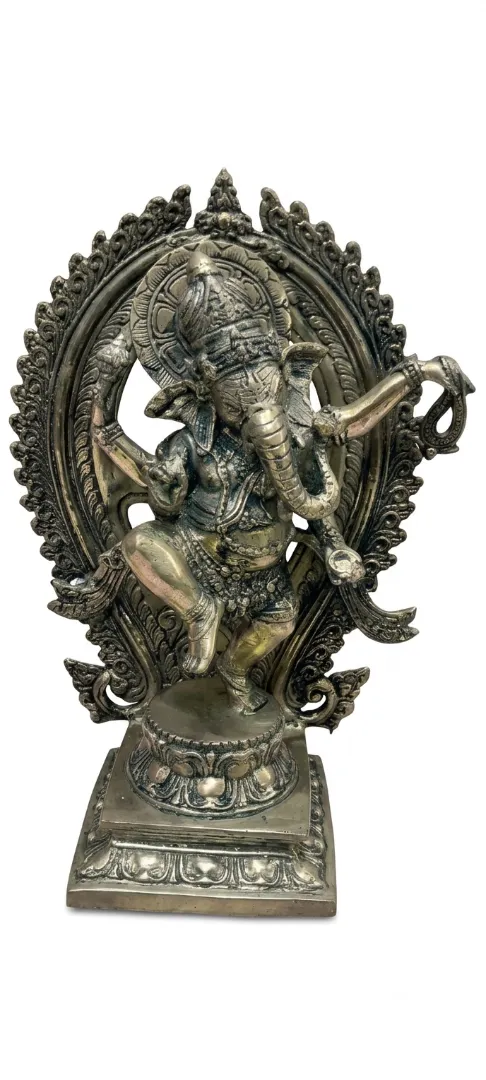
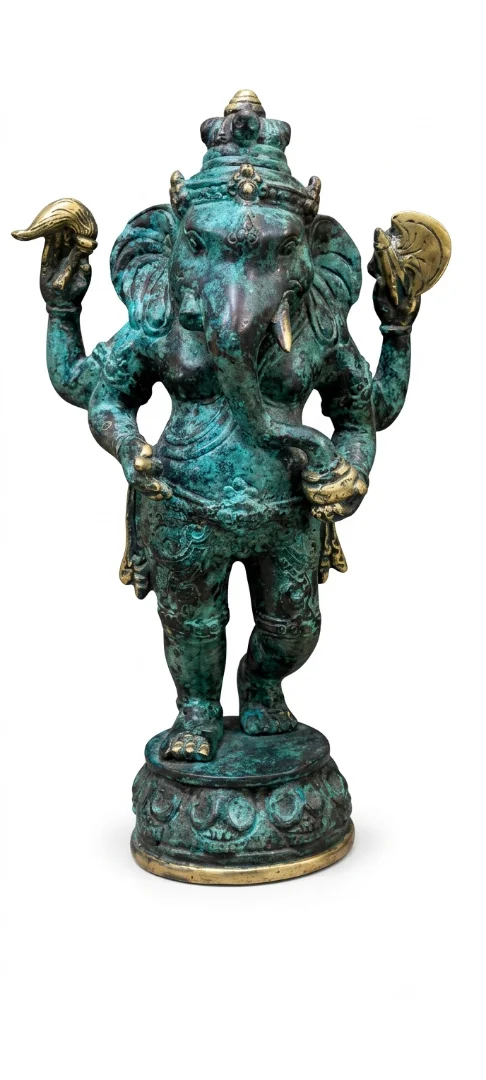
The elephant-headed son of Shiva and Parvati is the deity most people recognize on sight, and the one most often placed at a doorway or the start of a new venture. Ganesha is invoked before beginnings: a new home, a new business, a difficult decision. In this piece, he is shown dancing within a full ornamental arch, one hand raised, a common devotional pose that reads as celebratory rather than static. Collectors often choose Ganesha first, both for the meaning and because the wide ears and curled trunk give sculptors room for the kind of ornamental detail that photographs well from every angle.
Wisnu (Vishnu), the Preserver
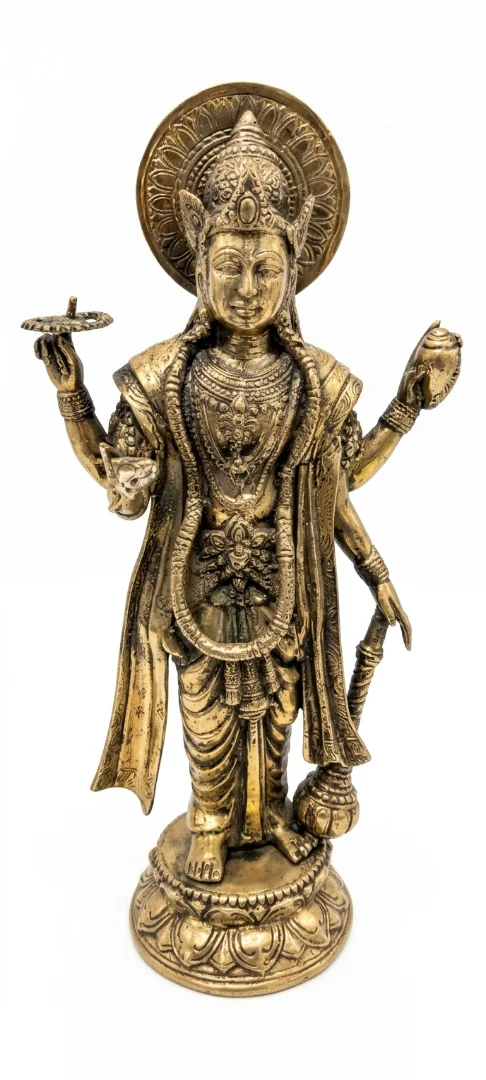
Wisnu is the deity charged with maintaining cosmic order, typically shown with four arms, each holding an object that identifies him: a lotus for purity, a conch shell whose sound is said to have marked the beginning of creation, a mace representing authority, and often a discus. The halo behind his crowned head, seen clearly in this piece, is standard iconography across Hindu sculpture and signals divine radiance rather than a specific narrative moment. Wisnu statues suit collectors drawn to themes of stability and protection.
Brahma, the Creator
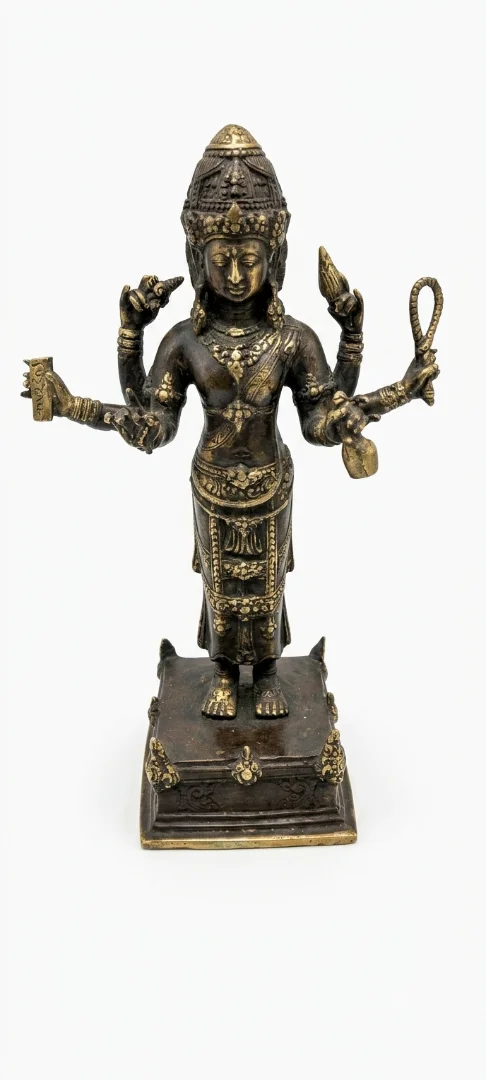
Brahma completes the trinity alongside Wisnu and Siwa, holding the role of creator within Hindu cosmology. He is traditionally depicted with four arms and, in fuller iconography, four faces looking in each cardinal direction, though tabletop statues often simplify this to a frontal figure with the four-armed posture intact. This particular casting carries a dark, unpolished patina rather than a bright finish, giving it a grounded, ancient presence that suits a quiet meditation space more than a brightly lit display shelf.
Durga, the Protector
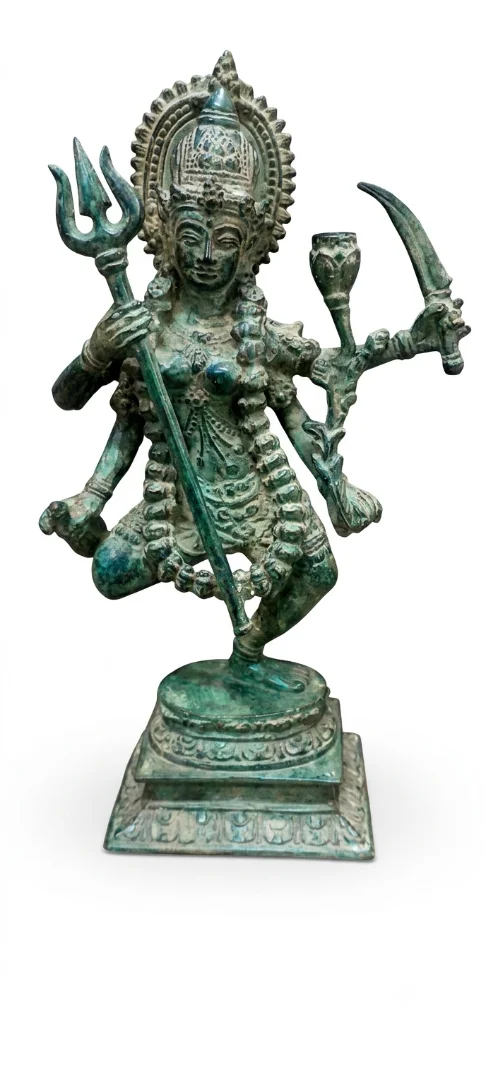
Durga is the fierce, multi-armed form of the divine feminine, called upon specifically to confront what gentler deities cannot. This casting shows her with the trident (trisula) and additional weapons distributed across her arms, a visual shorthand for readiness rather than aggression for its own sake. The green patina here is common on Durga pieces specifically, since the weathered finish reinforces her association with battle-tested strength rather than domestic serenity.
Hanoman (Hanuman), the Devoted
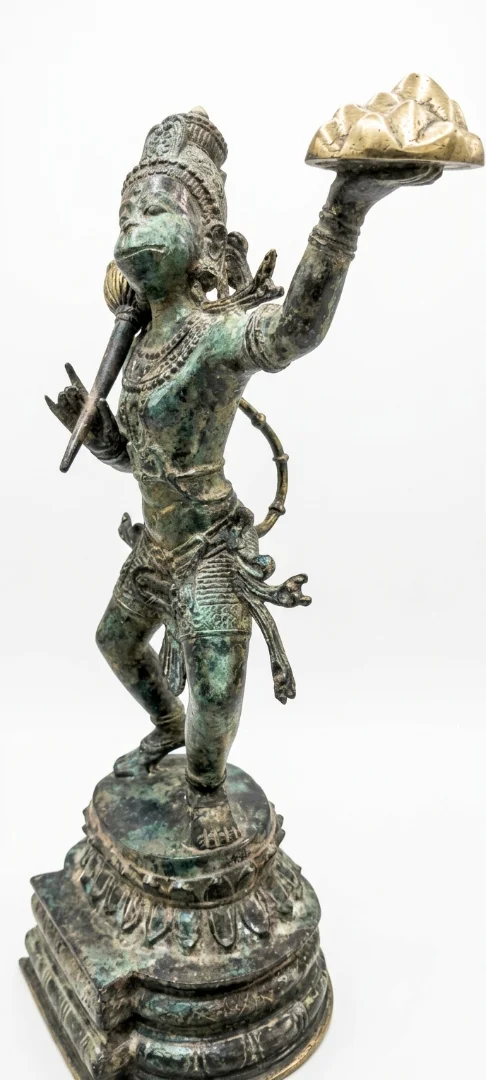
Hanoman is not one of the core trinity but is arguably the most beloved figure in the wider Ramayana tradition, the monkey general whose devotion to Rama is treated as the model for loyalty itself. This casting captures the specific moment collectors request most often: Hanoman mid-flight, one arm raised holding an entire mountain, a reference to the episode where he could not identify a single healing herb quickly enough and simply carried the whole mountainside back instead. It is a story about devotion outrunning perfectionism, and it is why this pose outsells every other Hanoman posture.
Krisna (Krishna), the Beloved
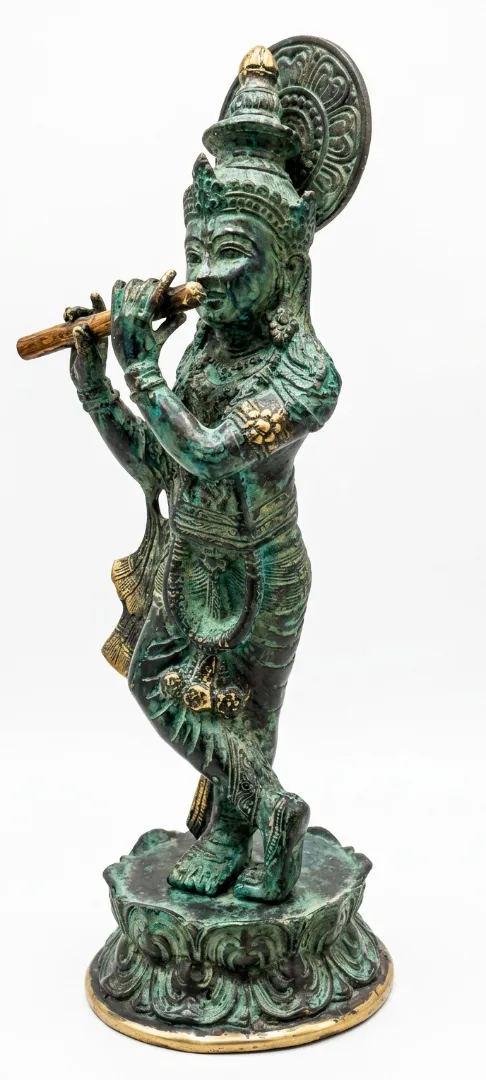
Krisna appears here in his most recognizable form: standing at ease, flute raised to his lips, a pose so consistent across Hindu art that it functions almost as a signature rather than a scene. The flute represents the call that draws devotees toward the divine, an invitation rather than a command. Krisna statues tend to suit collectors drawn to devotional warmth rather than the more commanding presence of deities like Durga or Wisnu.
Saraswati, Goddess of Knowledge
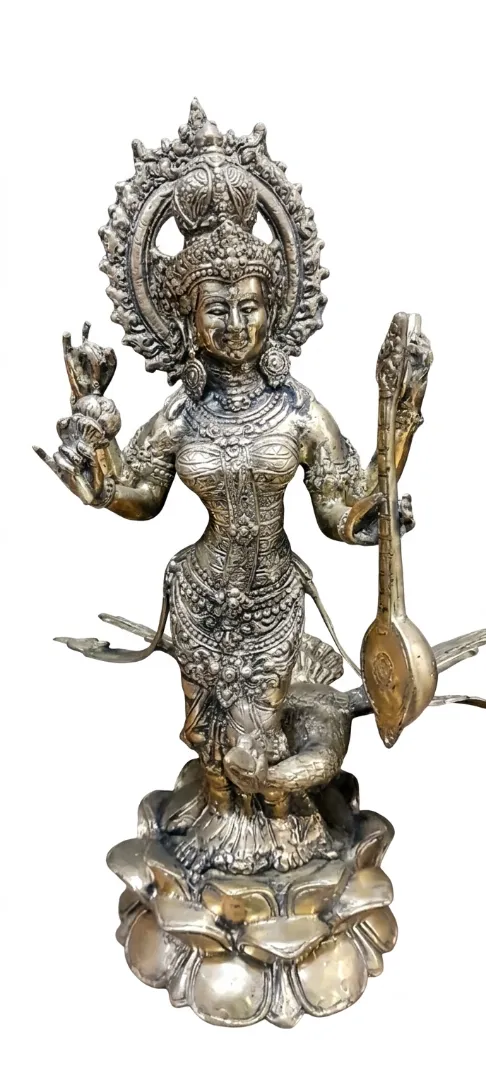
Saraswati governs knowledge, music, and the arts, which makes her a frequent choice for students, writers, musicians, and anyone building something creative. She is shown here seated on a lotus, four-armed, holding a veena (a stringed instrument) in two hands, a detail that ties her directly to music as much as scholarship. In Bali specifically, Saraswati is honored with her own dedicated festival day, a detail worth knowing if you plan to give this piece as a gift tied to a milestone in someone’s education or creative work.
Siwa (Shiva), the Transformer
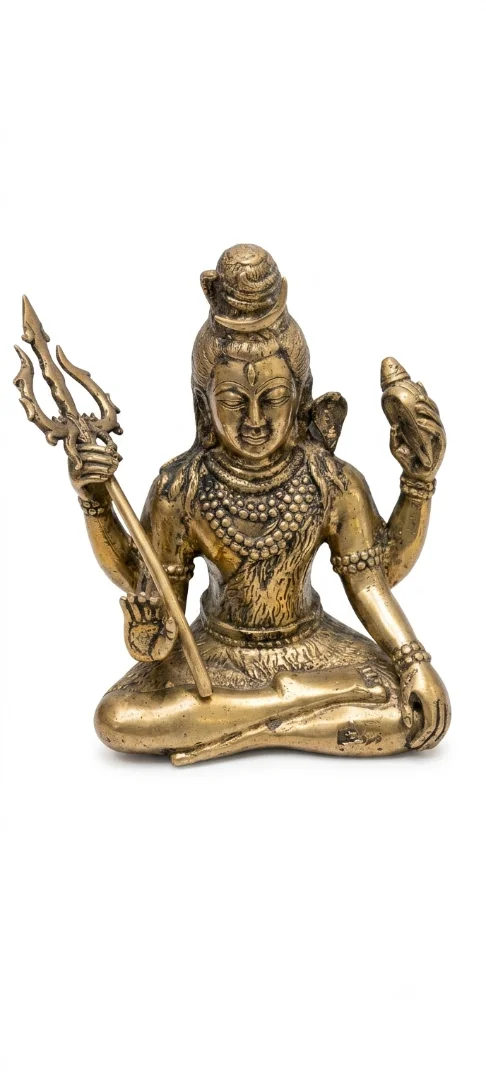
Siwa completes the trinity as the deity of dissolution and transformation, a role frequently misread as purely destructive when it is better understood as the necessary clearing that allows renewal. This casting shows him seated in meditation, trident in one hand, conch in the other, a posture of stillness rather than the more dynamic dancing forms Siwa is sometimes shown in elsewhere. For a meditation corner or a quiet reading space, this is often the deity collectors reach for last, after the more overtly decorative pieces have found their place.
For a wood-carved take on Balinese deity iconography, worth comparing against these metal pieces, see our guide to Balinese wood carving masks.
Reading the FinishSilver, Gold, and Patina: What the Finish Actually Tells You
New buyers often assume a green, weathered patina means a statue is old, and a bright silver or gold finish means new. Neither assumption holds reliably. Patina can be applied intentionally after casting to achieve an antique look, and a bright polish is simply a maintenance choice, not an age marker. What the finish does tell you is intended context: a bright silver or gold-tone statue tends to read as celebratory and works well somewhere it will be seen often, while a patinated piece has a quieter, more contemplative presence suited to a meditation space or a shaded corner.
A genuine Bali bronze statue in either finish should feel dense for its size, since cast metal has real weight that a resin or composite imitation cannot fully replicate. If a piece feels unusually light for its dimensions, ask directly what it’s cast from before buying.
Руководство по покупкеHow to Choose and Care for a Bali Bronze Statue
Choosing by intent. Start with what the statue is for. A doorway or entryway calls for Ganesha. A desk or study space suits Saraswati. A meditation corner suits a seated Siwa. A living room centerpiece often calls for a larger, more dynamic pose, such as the dancing Ganesha or a multi-armed Durga.
Choosing by size. The pieces in this guide range from 26 to 45 centimeters, a practical range for a tabletop, shelf, or small altar without requiring a dedicated display stand. Larger commissioned pieces are possible for a threshold or garden setting; ask the gallery directly for options outside this range.
Care. Cast metal is durable but not maintenance-free. Dust regularly with a soft dry cloth. Avoid harsh metal polish on a patinated piece, since polishing will strip the intentional finish rather than clean it. For a bright silver or gold-tone statue, a specialized metal polish used sparingly can restore shine, but test on a small hidden area first. Keep any piece with fine detail, such as the arch behind the Ganesha statue above, away from high-traffic areas where it could be knocked.
For collectors purchasing from overseas, review our guide to shipping art from Bali, since cast metal pieces need different packing than framed paintings.
At a GlanceThe 8 Deities Compared
| Deity | Represents | Common Attributes | Best Placement |
|---|---|---|---|
| Ganesha | New beginnings, removing obstacles | Elephant head, dancing pose, ornamental arch | Entryway, new venture |
| Wisnu (Vishnu) | Preservation, cosmic order | Four arms, conch, lotus, mace, halo | Living room, family space |
| Brahma | Creation | Four arms, dark or muted finish | Study, meditation space |
| Durga | Protection, strength | Multiple arms, trident, weapons | Entrance, protective placement |
| Hanoman | Devotion, loyalty | Mid-flight pose, mountain in hand | Office, desk, motivational space |
| Krisna (Krishna) | Devotional warmth, love | Standing, flute raised | Living room, bedroom |
| Saraswati | Knowledge, music, the arts | Lotus seat, veena, four arms | Study, creative workspace |
| Siwa (Shiva) | Transformation, meditation | Seated, trident, conch | Meditation corner, quiet room |
Bali Bronze Statues at Arts of Bali, Seminyak
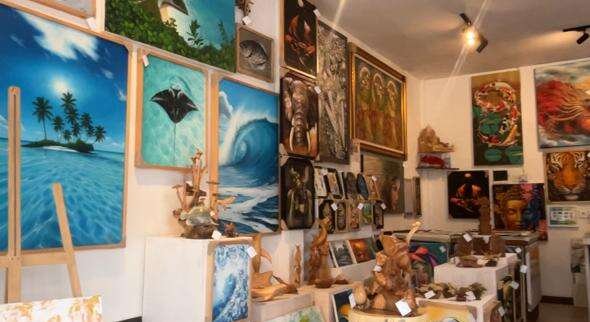
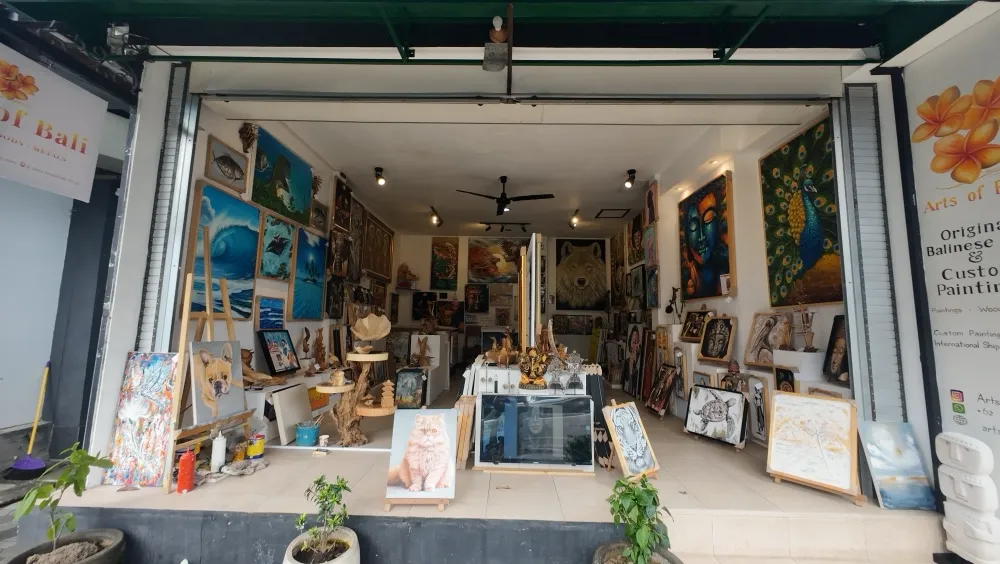
Arts of Bali carries cast metal deity statues alongside the gallery’s painting collection, part of a broader Metals category that also includes tribal jewelry and ceremonial silverwork covered in our guide to Indonesian metal art and tribal artifacts. Each piece is available for viewing in person at the Seminyak gallery, where you can feel the weight and finish directly before deciding.
Start with our broader guide to покупка произведений искусства на Бали, or visit the gallery in Seminyak directly to see the current collection of cast metal statues in person.
Not Sure Which Deity Is Right for Your Space?
Tell us where the piece will live and what it’s for, a desk, an entryway, a meditation corner, and our team will help you choose between finishes, sizes, and deities in person or by message.
Ask the GalleryFrequently Asked Questions About Bali Bronze Statues
What is a Bali bronze statue made from?
Most cast metal deity statues from Bali are made from bronze or brass using the lost-wax casting method, then finished with a polish, silver or gold plating, or an applied patina. The exact alloy and finish can vary piece to piece, so it’s worth asking the seller directly if metal composition matters to you.
Does a green patina mean a statue is old or valuable?
Not necessarily. A patina finish is often applied intentionally after casting to achieve an antique look, regardless of how recently the piece was made. Age and value depend more on the sculptor, the detail of the casting, and provenance than on the finish alone.
Which Hindu deity statue should I choose for a home altar?
It depends on intent. Ganesha suits new beginnings and entryways, Saraswati suits study or creative spaces, and Siwa in a seated meditation pose suits a quiet altar corner. There’s no single correct choice, most collectors choose based on what they want the space to support.
How is a bronze Hindu statue actually cast?
Through lost-wax casting: a detailed wax model is built first, encased in a clay mold, then melted out through a channel, leaving a cavity that molten metal fills. The mold is broken to release the finished statue, which means each mold is used only once and no two castings from a hand-built model are perfectly identical.
What size Bali bronze statue is best for a shelf or desk?
Between 25 and 35 centimeters works well for most shelves, desks, and small altars without needing a dedicated stand. Pieces above 40 centimeters, like the Ganesha and Saraswati in this guide, read better as a floor or console statement piece.
How do I clean and care for a cast metal deity statue?
Dust regularly with a soft dry cloth. Do not use harsh metal polish on a patinated piece, since it will strip the intentional finish. For a bright silver or gold-tone statue, a gentle metal polish used sparingly can restore shine, tested first on a small hidden area.
Can I have a Bali bronze statue custom commissioned?
Yes, custom sizes and finishes can typically be arranged directly with the gallery, especially for larger threshold or garden pieces outside the standard 25 to 45 centimeter range. Contact Arts of Bali directly to discuss timeline and specifications.
See the Full Bali Bronze Statue Collection in Seminyak
Visit Arts of Bali to see Ganesha, Saraswati, Siwa, and the rest of this collection in person, feel the weight of the casting, and compare finishes before you choose.
Посетите галерею Read Our Buying Guide