На Бали женщина является хранительницей священного. Она несет подношения, танцует для богов и движется по миру, являясь одновременно человеком и молитвой. Художники понимают это уже на протяжении веков.
Ни один сюжет в балийском изобразительном искусстве не изображался так последовательно, на протяжении стольких веков и в стольких стилях, как балийская женщина. Задолго до того, как на остров прибыли международные коллекционеры, живопись, изображающая балийских женщин, уже была серьёзной и многогранной традицией — фигуры, несущие башни с подношениями «гебоган» через храмовые дворы, танцовщицы в разгаре церемонии с головными уборами, сияющими золотом и багрянцем, богини, изображённые в символической форме на фоне декоративных орнаментов. То, что делает этот сюжет вечным, одновременно и делает его сложным: балийская женщина в своем культурном контексте никогда не является просто человеком. Она — воплощение преданности в движении.
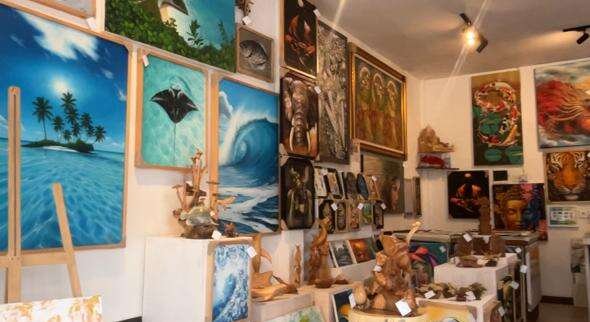
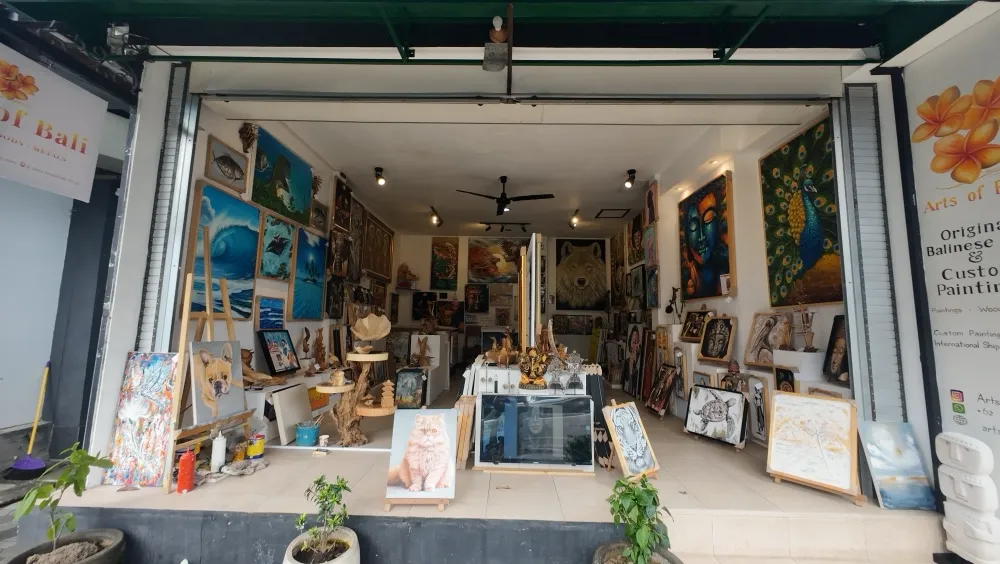
В галерее «Arts of Bali» наша коллекция оригинальных балийских картин с изображением женщин охватывает весь этот спектр — от больших полотен, написанных в технике импасто, на которых изображены танцовщицы Легонг в полном церемониальном наряде, до камерных портретов, выполненных мастихином, где женщины несут подношения в утреннем свете. Каждая работа из этой коллекции является оригиналом, написанным вручную известным балийским художником, и доступна для международной доставки из нашей галереи по адресу Jalan Raya Seminyak, 42. На этой странице представлены восемь актуальных работ, объясняется культурный и художественный контекст, лежащий в основе темы, а также даются рекомендации по выбору стиля и размера, которые лучше всего подойдут для вашей коллекции или интерьера.
Последнее обновление: июнь 2026 года
В живописи, посвящённой балийским танцовщицам, основное внимание уделяется формальному исполнению — танцовщица предстаёт как театральный персонаж, часто запечатлённая в момент выполнения жеста в сценическом контексте. Живопись, изображающая балийских женщин, представляет собой более широкую категорию: она включает в себя не только танцовщиц, но и женщин, участвующих в повседневных ритуалах (несущих гебоган, готовящих подношения, идущих в процессии), женские духовные образы (Деви Шри, богиню риса; фигуры апсар), а также портреты реальных балийских женщин, чье присутствие и роль в рамках балийского индуизма возвышают повседневность до уровня сакрального. В коллекции «Искусство Бали» представлены обе категории; они различаются по тематике, настроению и культурному прочтению.
Почему балийские женщины всегда занимали центральное место в искусстве острова
Балийский индуизм отводит женщинам особую и незаменимую ритуальную роль, не имеющую близкого аналога в большинстве других культур. Именно женщины готовят и несут сложные подношения — башни «гебоган» из фруктов, цветов и плетеных пальмовых листьев, — которые занимают центральное место в каждой религиозной церемонии, от ежедневных домашних подношений до крупных храмовых праздников. Эта повседневная близость к сакральному сделала женщин естественным объектом религиозного искусства на протяжении всей истории балийской живописи.
Традиция изображения балийских женщин в живописи сформировалась в 1930-е годы, когда западные художники, в том числе Вальтер Спис и Рудольф Бонне, поселились в Убуде и начали сотрудничать с балийскими художниками в Кооператив «Пита Маха». Возникшее в результате этого движение вдохновило балийских художников на изображение сцен из собственной повседневной и обрядовой жизни — и женщины в процессиях, во время молитвы и танца стали одними из наиболее часто изображаемых сюжетов той эпохи. Эта традиция сохранялась на протяжении всех последующих стилистических изменений: от классического фигуративного искусства через импасто-экспрессионизм до современных смешанных техник.
Сайт Танец Легонг, один из самых изысканных и древних видов придворного танца Бали, исполняется исключительно молодыми женщинами и девочками. Его визуальный облик — сложный позолоченный головной убор, изящные жесты рук, церемониальный костюм, сшитый из слоев золота и шелка, — сделал его одним из самых популярных сюжетов во всем балийском искусстве. Несколько произведений из этой коллекции изображают исполнительниц легонга, и каждое из них по-своему интерпретирует одну и ту же тему: с помощью импасто, декоративной поверхности или тонкой акварельной линии.
КоллекцияВосемь оригинальных картин, изображающих балийских женщин — в настоящее время представлены в галерее «Arts of Bali»
Каждая из представленных ниже работ — это оригинальная, единственная в своём роде картина. Никаких репродукций, никаких тиражей. Все работы отправляются по всему миру из Семиньяка в упакованных ящиках и с страховкой. Цены предоставляются по запросу через WhatsApp.
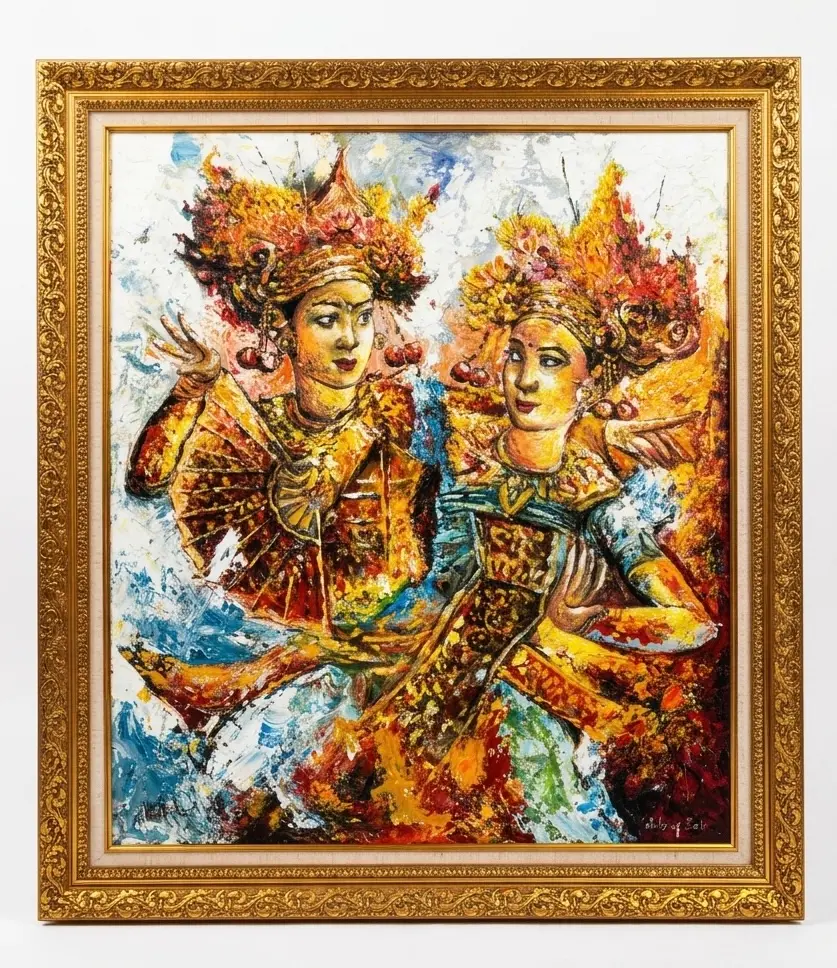
Священный Легонг
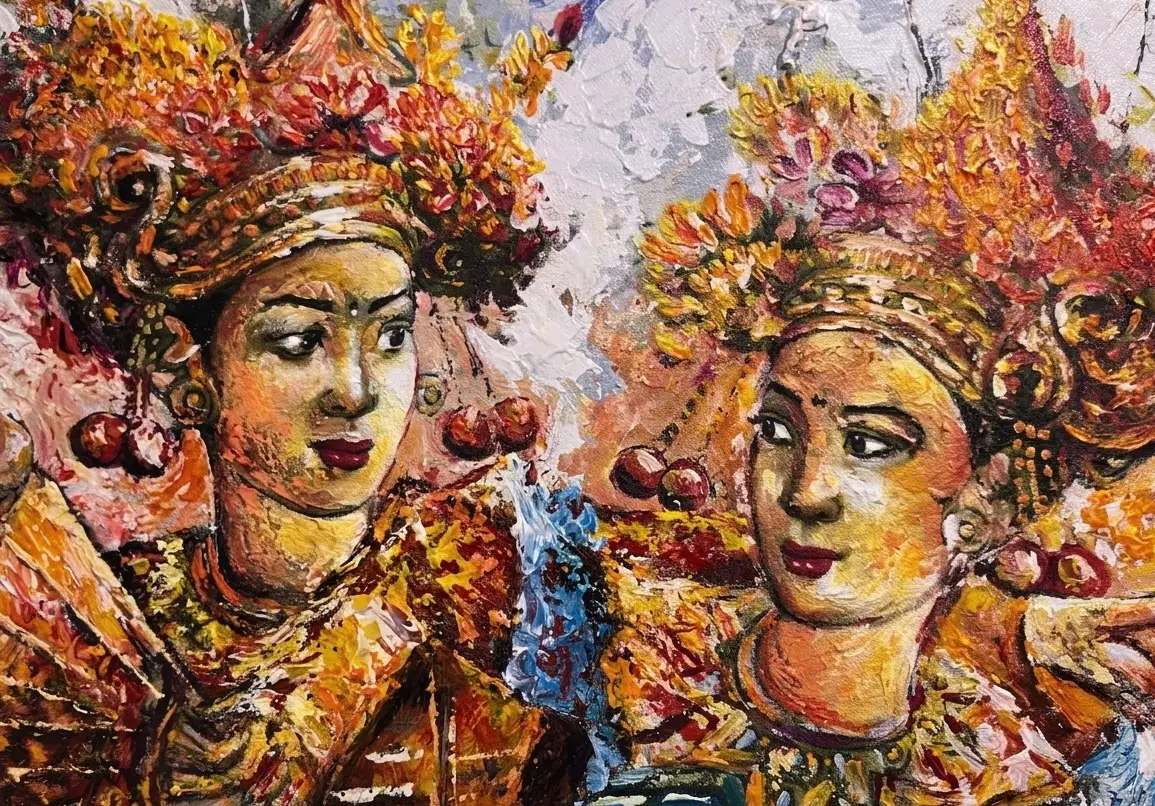
Самое впечатляющее с архитектурной точки зрения произведение в этой коллекции. Две танцовщицы Легонг запечатлены в самый разгар выступления — их головные уборы сияют багрянцем и золотом, руки вытянуты в точных церемониальных жестах, а тела в костюмах переданы многослойными мазками мастихина, выступающими на несколько миллиметров над поверхностью холста. Техника мастихина наиболее заметна в головных уборах танцовщиц, где каждый лепесток и орнаментальный диск представляет собой отдельную приподнятую плоскость краски. Богато украшенная золотая рама была выбрана намеренно: она перекликается с позолоченными церемониальными нарядами самих танцовщиц, создавая визуальную целостность между объектом и рамой, которой удаётся добиться лишь немногим другим произведениям. Подпись ’Arts of Bali“ в правом нижнем углу.
Профессиональная картина, написанная акрилом на холсте
Импасто, нанесенное мастихином
Богато украшенная золотая рама
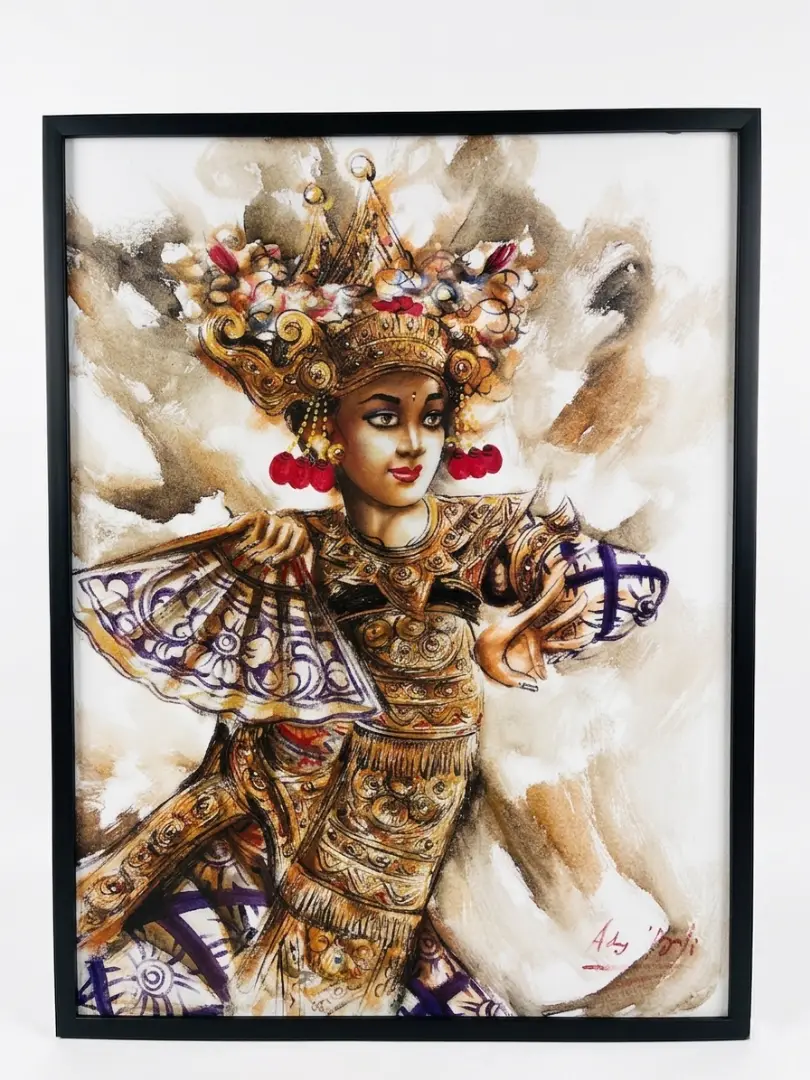
«Золотая танцовщица»
Совершенно иная интерпретация той же темы — если в картине “Священный Легонг” изображение построено из толстых импастовых слоев, то в этой работе с помощью акварельных растушек и тушевых линий создана фигура танцовщицы, отличающаяся почти прозрачной утончённостью. Золотистые оттенки церемониального платья созданы с помощью многослойных растушек, а не рельефной краски, что придает фигуре сияющий вид, который хорошо смотрится в помещениях с естественным освещением. Линии туши на веере, завитках головного убора и кайме костюма придают точность и целенаправленность тому, что в противном случае могло бы восприниматься как размытое. Подпись в правом нижнем углу указывает, что автором является Ади. Черная рама без обрамления позволяет сосредоточить внимание исключительно на фигуре на фоне мягкого, как дым, фона.
Акварель и тушь на холсте
Многослойная промывка, контур чернилами
Черная рама с зазорным краем
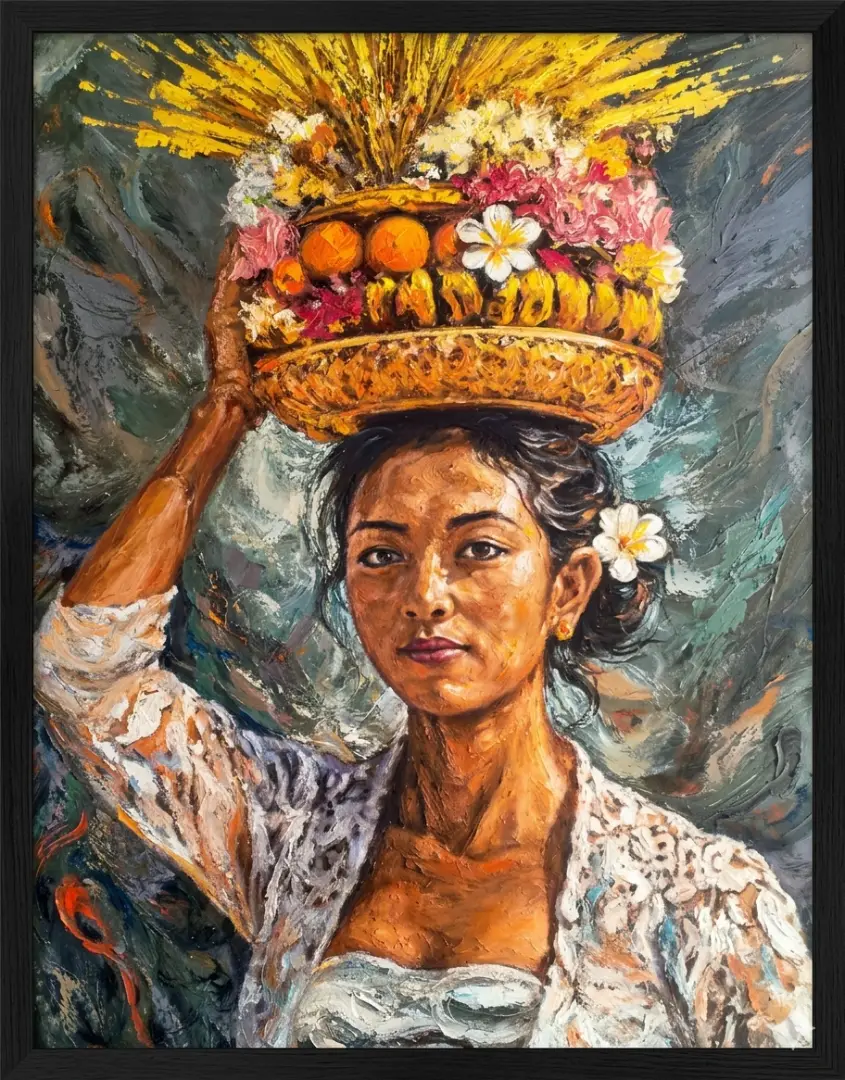
Благодать приношения
Портрет, отличающийся необычайной непосредственностью. Молодая балийская женщина уверенно встречает взгляд зрителя, удерживая на голове одной рукой «гебоган» — башню из фруктов, цветов и плетения из пальмовых листьев. Техника мастихина с поразительной точностью передаёт тепло и фактуру её кожи, а корзина с подношениями над ней изображена с той же физической насыщённостью, что и вихревой фон бирюзово-серого цвета. Это документальная живопись в лучшем смысле этого слова: конкретный человек, конкретный момент, конкретный акт поклонения, который происходит каждый день по всему Бали, но при этом редко изображается с такой физиологической честностью.
Профессиональная картина, написанная акрилом на холсте | Импасто, нанесенное мастихином | Черная рама
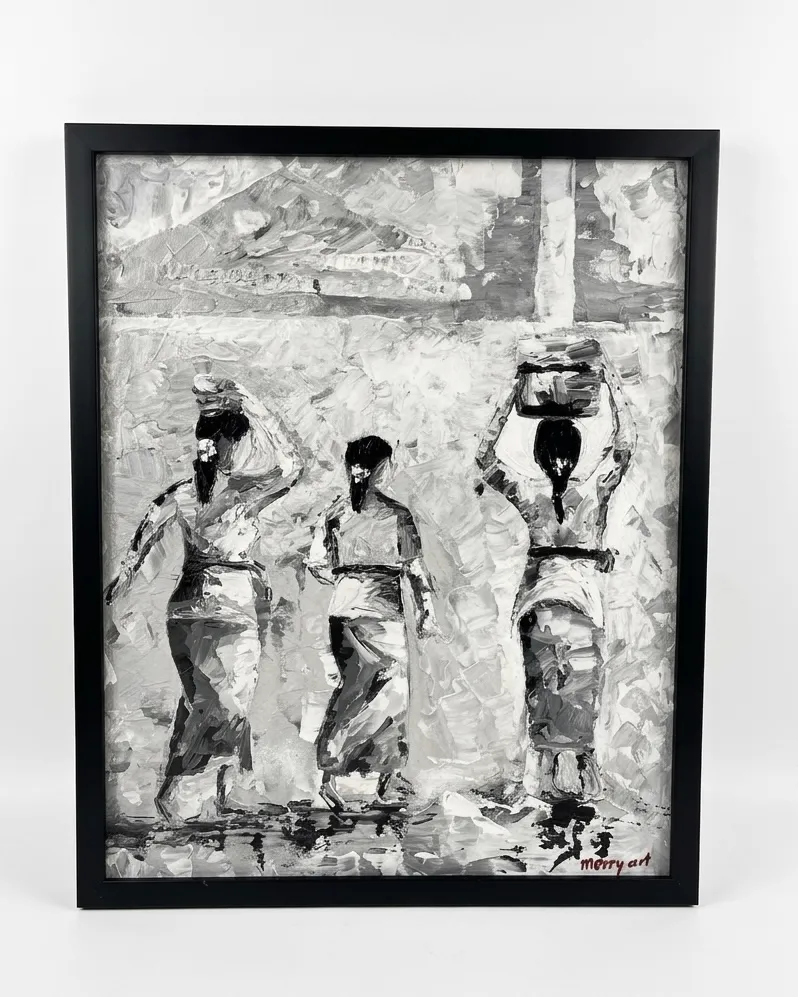
Женщины в процессии
Эта работа, подписанная “Merry Art”, отличается ярким формальным решением: три балийские женщины, идущие в процессии, изображены исключительно в черном, белом и оттенках серого. Импасто, нанесенное мастихином, ощущается так же физически, как и в любой цветной картине — видны рельефные выступы и края отдельных мазков, — но в отсутствие цвета внимание зрителя сразу переключается на позу, жесты и тяжесть того, что несут женщины. В результате получилась картина, которая воспринимается одновременно вневременной и документальной — как свидетельство ритуала, который на протяжении веков совершается на Бали каждое утро. Для интерьеров, оформленных в монохромной или нейтральной цветовой гамме, эта работа станет исключительным дополнением.
Акрил на холсте | Монохромная импасто-техника с использованием мастихина | Подпись: Merry Art | Чёрная рама
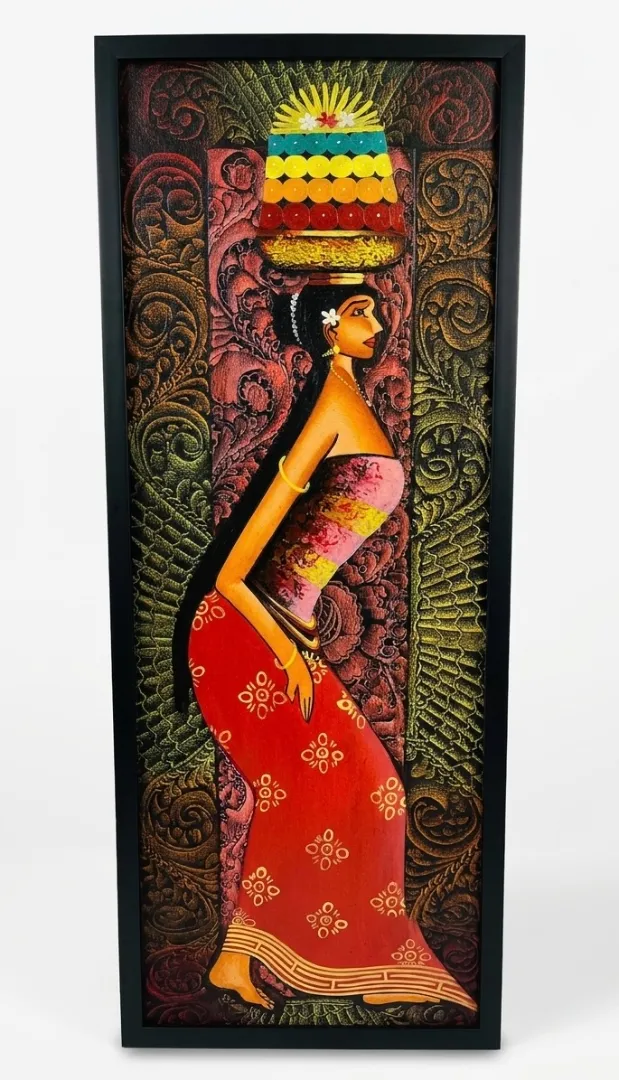
Носитель Гебогана
Высокая картина узкого формата, выполненная в традиции удлиненной фигуративной живописи — женщина и её гебоган вместе образуют единую вертикальную композицию, заполняющую всю плоскость картины от основания до верха. Эта гебоган — это многоярусная подношение-башня, сооруженная из фруктов, цветов, пальмовых листьев и церемониальных украшений, которую балийские женщины несут в храм в священные дни. На этой работе гебоган изображён в мельчайших деталях — чётко прорисованы многоярусные уровни с подношениями жёлтого, бирюзового и красного цветов, — а стоящая внизу женщина одета в красное платье с узором «поленг» и церемониальный головной убор из плюмерии. Фон, выполненный в стиле батика, придаёт картине теплоту и глубину, не отвлекая внимания от фигуры. Такой формат идеально подходит для узких стен, коридоров и акцентных стен в спальнях.
Смешанная техника на картоне | Декоративно-фигуративная живопись | Чёрная рама, высокий портрет
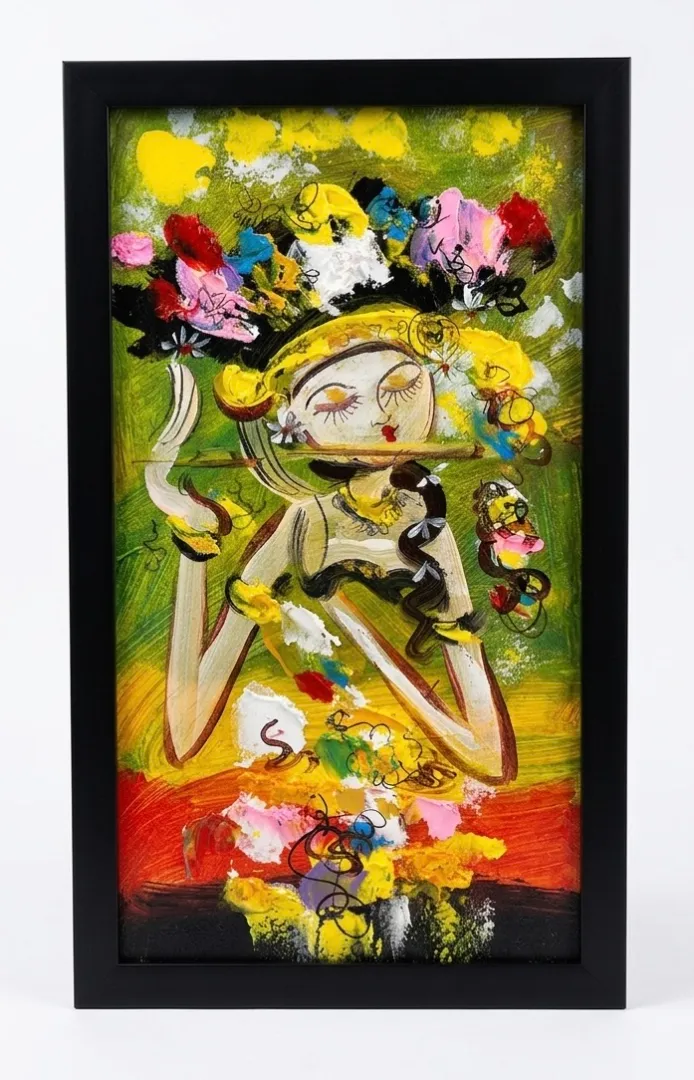
Деви из Сада
Самая энергичная и современная работа в этой серии. Вместо того чтобы изображать конкретный ритуал или церемонию, эта картина рассматривает женское начало как стихийную силу — женщину, чей головной убор из распускающихся цветов одновременно ассоциируется с садом, богиней и духом. Манера письма намеренно свободна: широкие жестикулярные мазки зелёного, жёлтого и красного цветов создают фон, вибрирующий энергией, в то время как центральная фигура остаётся различимой, но не фотореалистичной. Результат ближе к Деви Шри — балийской богине риса и плодородия — чем к какому-либо конкретному человеку или обряду. Для коллекционеров, которым более реалистичная балийская живопись кажется слишком буквальной, эта работа предлагает те же культурные отсылки в совершенно ином визуальном ключе.
Акрил на холсте | Экспрессионизм, свободная манера письма | Чёрная рама
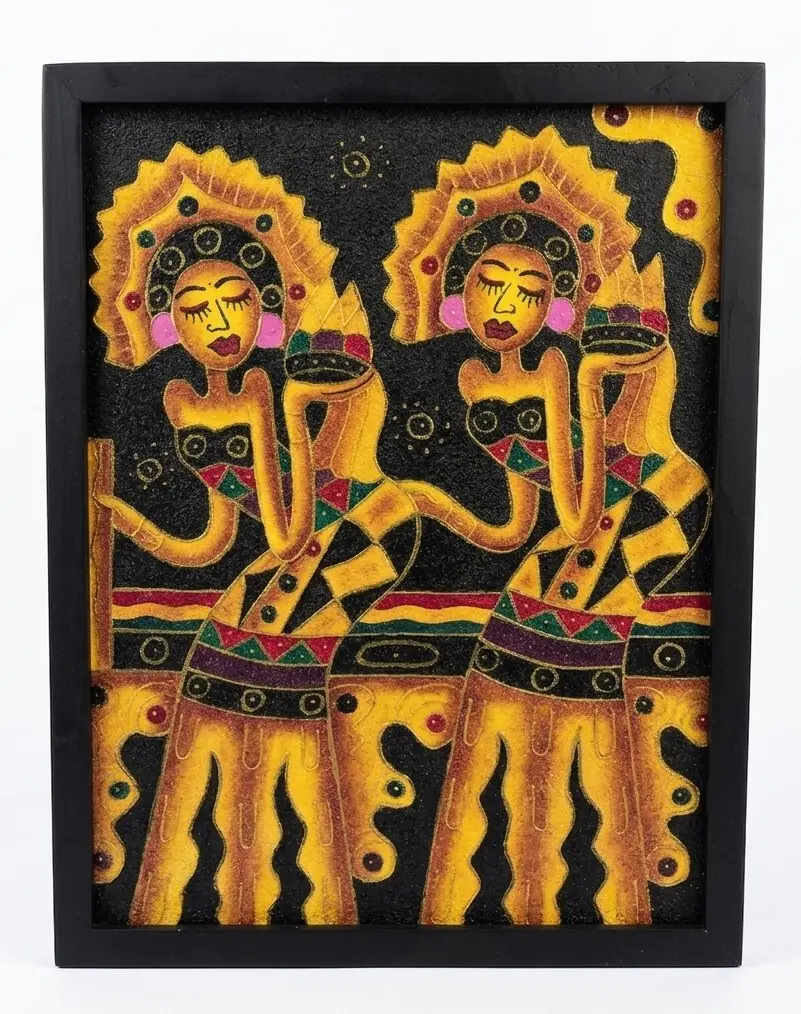
«Золотой Легонг» ночью
Эта работа относится скорее к декоративной традиции, чем к живописной — две танцовщицы Легонг здесь изображены в теплых золотых и янтарных тонах на фоне глубокого черного цвета с использованием многослойной техники, создающей эффект, находящийся где-то на стыке батика, песочной живописи и иконописи. Здесь присутствует каждая деталь церемониального костюма: головной убор в виде солнечных лучей с отдельными «иглы», нарисованными тонкой линией, красочные треугольные украшения на лифе, розовые серьги в форме дисков. Фигуры находятся в стилизованном ночном пространстве, рассеянном мелкими золотыми круглыми мотивами, которые воспринимаются как звезды или церемониальные точки. Это именно та картина, которая станет ярким, самобытным акцентом в помещении, оформленном в современном или минималистском стиле — декоративная традиция плодотворно контрастирует с лаконичными современными интерьерами.
Смешанная техника на картоне | Декоративное золото на чёрном фоне | Чёрная рама
Как различные живописные приёмы определяют образ балийских женщин
“Один и тот же объект — балийская женщина во время церемонии — вызывает совершенно разные эмоциональные реакции в зависимости от техники. Импасто придает ей физическую осязаемость. Акварель делает её сияющей. Декоративный стиль придает ей символический характер. Каждый из этих подходов — полноценное прочтение одной и той же истины”.”
— Команда галереи «Arts of Bali» о традициях балийской фигуративной живописиВосемь произведений, представленных в этой коллекции, отражают четыре различных технических подхода к одной и той же широкой тематике. Понимание этих подходов поможет вам выбрать произведение, которое наилучшим образом впишется в ваше конкретное пространство и будет соответствовать вашему эстетическому вкусу.
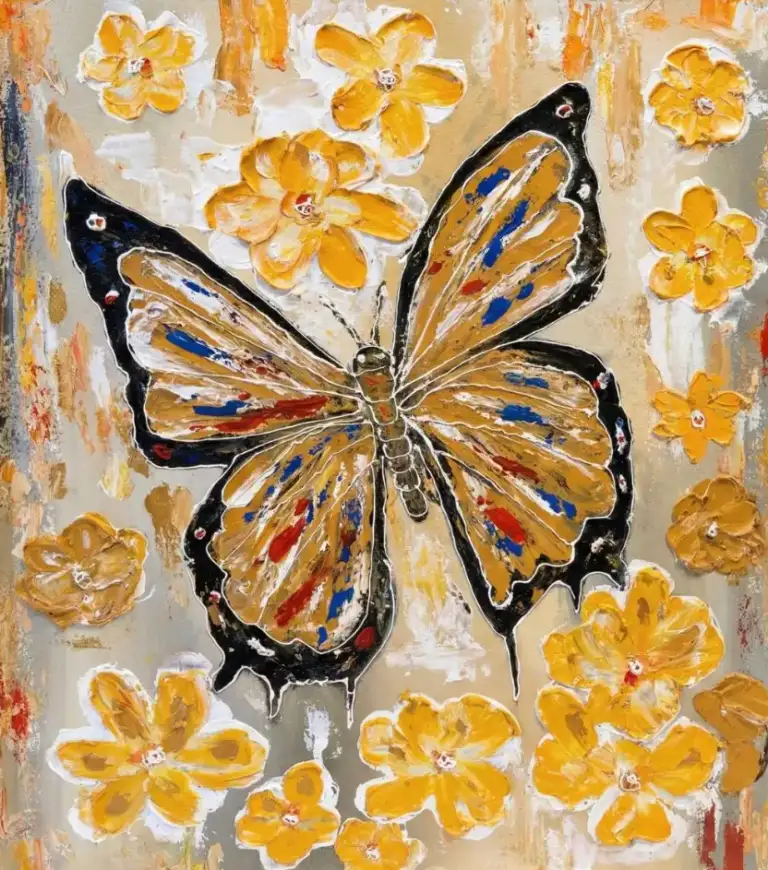
Импасто, нанесенное мастихином — использованная в работах “Священный Легонг”, “Благодать подношения” и “Женщины в процессии” — заключается в нанесении краски трехмерными гребнями, которые отражают и переливаются в зависимости от освещения. Эти картины обладают наибольшей физической выразительностью; их стоит рассматривать как вблизи, так и с расстояния, характерного для помещения. Поверхность меняется в течение дня по мере изменения угла падения света. В помещениях с ярким направленным освещением этот эффект особенно выражен. Работы, выполненные в этой технике, также относятся к числу самых сложных с технической точки зрения, что находит отражение в их редкости. Монохромные работы Мерри Арт демонстрируют, как тактильные качества этой техники сохраняются даже без использования цвета.
Смешанная техника: акварель и тушь — использованная в картине “Золотая танцовщица” — создает противоположный эффект: прозрачность, светимость и ощущение, будто фигура едва удерживается холстом. Акварельная растушёвка создаёт тон за счёт наслоения, а не за счёт физической толщины слоя. Линии, нанесённые тушью, придают композиции структурную чёткость, не создавая тяжёлого эффекта, характерного для непрозрачных пигментов. Эти работы лучше всего смотрятся в помещениях с естественным освещением и в интерьерах, где преобладают мягкие, тёплые оттенки.
Образное декоративное — использованный в работе “Носитель Гебогана” — занимает промежуточное положение между этими крайностями. В нём сочетается точность тонкой кисти с отсылками к традиционному балийскому декоративно-прикладному искусству, что позволяет создавать образы, которые воспринимаются одновременно как исторические и современные. Фоны в этом стиле, вдохновленные батиком, часто выступают в качестве второго сюжетного элемента наряду с фигурой.
Символический декоративный — использованный в картинах “Золотой Легонг ночью” и “Деви из сада” — наиболее отдаляется от прямого изображения. Эти картины воспринимаются скорее как культурные символы, чем как произведения наблюдательного искусства. Их сила заключается в создании обстановки, требующей яркого, самобытного высказывания, а не документального содержания.
Культурное значение«Гебоган», «Легонг» и повседневное сакральное в жизни балийских женщин
В данном сборнике, а также в истории балийской живописи в целом, постоянно повторяются две конкретные темы: женщина, несущая церемониальное подношение, а также танцовщица Легонг во время выступления. Понимание значения каждого из этих мотивов в балийской культуре меняет ваше восприятие картин, на которых они изображены.
Гебоган — это не просто корзина с фруктами. Это сложенная башня из подношений — как правило, включающая свежие фрукты, рисовые лепешки, цветы и изделия из пальмовых листьев, — которую балийские женщины собирают вручную и несут на голове в храм в священные дни и во время праздников. Гебоган символизирует связь между человеческим домом и божественным миром, а женщина, несущая его, выступает в роли живого посредника между ними. Поэтому картины, изображающие женщин, несущих гебоган, являются воплощением преданности в её самой практической, физической форме: это не молитва у алтаря, а молитва, которую несут на себе по улицам.
Танцовщица легонг занимает столь же особое место в культуре. Легонг — одна из древнейших традиций придворного танца на Бали, и его исполнительницами традиционно являются молодые девушки, которые годами тренируются перед своим первым публичным выступлением. Изысканный головной убор, золотой костюм и точные жесты рук — всё это несет в себе определённый смысл в рамках церемониального повествования. Картина с изображением танцовщицы легонг — это не просто картина танцовщицы, а изображение живого культурного института, который балийские общины продолжают поддерживать и передавать из поколения в поколение.
Процесс формирования комиссииКак заказать индивидуальную картину с изображением балийских женщин
Заказ позволяет вам точно указать тему, размер, технику исполнения и цветовую гамму — и является одним из самых распространенных способов сотрудничества покупателей с Arts of Bali. Компания Arts of Bali отправляла работы, выполненные по заказу, коллекционерам в более чем 30 стран, причем весь процесс осуществлялся исключительно через WhatsApp, несмотря на разницу во времени, без задержек, характерных для электронной почты.
Отправной точкой всегда служит обсуждение темы и замысла: конкретная поза танца Легонг, процессия гебоган в определенном освещении, экспрессионистская интерпретация в приглушенных тонах. Художники галереи создают эскиз предварительной композиции для утверждения заказчиком еще до начала работы над картиной. Для большинства крупных заказов размером 80 см и более срок изготовления составляет от 14 до 21 рабочего дня, после чего следует 7–14 дней на упаковку в ящик и международную доставку. Заказ подтверждается 50-процентным авансом, а остальная сумма оплачивается перед отправкой. Каждый заказ сопровождается сертификатом подлинности, фотодокументацией хода работы и подписью художника непосредственно на холсте. Цены на работы из этой коллекции начинаются от 150 долларов США, а более крупные произведения, выполненные мастихином в технике импасто, обычно стоят от 350 до 650 долларов США.
Инициировать расследование комиссии
Сообщите нам тему, размер и стиль. Наша команда ответит в течение 24 часов, предоставив эскиз и расценки.
Чат в WhatsAppУход за оригинальной картиной, написанной балийской художницей, в любых климатических условиях
Оригинальные холсты, расписанные вручную, отличаются долговечностью при правильном уходе, однако тропическая влажность Бали и сухой климат многих зарубежных направлений создают свои сложности. Наиболее распространённой проблемой для картин, выполненных в технике импасто с использованием мастихина, в условиях высокой влажности является отслоение слоёв краски — когда очень толстые рельефные участки начинают отрываться, если произведение подвергается резким перепадам температуры и влажности. Предотвратить это просто: не вешайте работы, выполненные в технике импасто, на наружные стены, на стены, подвергающиеся прямому воздействию солнечных лучей более двух часов в день, или в помещения, где влажность резко меняется в зависимости от сезона. Идеальным является стабильный микроклимат в помещении с относительной влажностью от 45 до 65 процентов.
Для очистки следует использовать очень мягкую сухую кисть, которой нужно аккуратно провести по поверхности, чтобы удалить пыль, не повреждая слой краски. Не следует использовать влажные тряпки на поверхностях с импасто. Работы, выполненные акварелью и тушью — такие как “Золотая танцовщица” из этой коллекции — ни в коем случае не должны подвергаться длительному воздействию прямых солнечных лучей, поскольку ультрафиолетовое излучение вызывает выцветание прозрачных пигментов быстрее, чем непрозрачных. В условиях очень сухого климата холст может сжиматься, что приводит к деформации слоя краски; наиболее эффективной профилактической мерой является использование увлажнителя воздуха в том же помещении, где находится картина, в течение сухих месяцев года.
Часто задаваемые вопросы о картинах с изображением балийских женщин
Какие сюжеты обычно изображаются на картинах, посвящённых балийским женщинам? ▼
Чем отличается картина, изображающая балийскую женщину, от картины, изображающей балийскую танцовщицу? ▼
Какое культурное значение имеет «гебоган» в женском искусстве Бали? ▼
Какие стили и техники живописи используются при изображении балийских женщин в галерее «Arts of Bali»? ▼
Подходят ли картины с изображением балийских женщин как для жилых, так и для коммерческих интерьеров? ▼
Могу ли я заказать у компании «Arts of Bali» индивидуальную картину с изображением балийских женщин? ▼
Запросить информацию о картине с изображением балийских женщин
Все работы, представленные на этой странице, являются оригинальными, доступны для покупки и отправляются по всему миру из нашей галереи в Семиньяке. Стоимость работ из этой коллекции обычно составляет от 150 до 650 долларов США в зависимости от размера, техники исполнения и сложности. Для уточнения цен, наличия работ или по вопросам заказа работ обращайтесь напрямую в «Arts of Bali» через WhatsApp.
Чат в WhatsApp Просмотреть всю коллекцию