Kain prada is Bali’s traditional gold leaf textile, cloth hand-decorated with sheets or powder of real gold, historically bonded using a natural adhesive called ancur. Once reserved for royalty, temple ceremony, and sacred display, the craft was so labor-intensive that a single piece could reportedly take years to complete. The same gold-leaf finishing technique carries over from cloth to canvas in Kamasan painting, where real gold is still applied by hand as the final step on headdresses, jewelry, and divine attributes.
Основные выводы
- Kain prada is Bali’s traditional technique for applying gold leaf or gold powder to cloth, historically bonded with a natural fish glue called ancur.
- Real gold-leaf prada was once reserved for royalty and temple use, decorating garments, ceremonial umbrellas, and temple shrine backdrops known as pelinggih.
- Making a single piece of true gold-leaf prada by hand was so labor-intensive that, according to Bali’s provincial culture office, some pieces reportedly took years to finish.
- Most kain prada sold in Bali today no longer uses real gold, having shifted to gold-colored powder, plastic foil, or stamped and silkscreened substitutes.
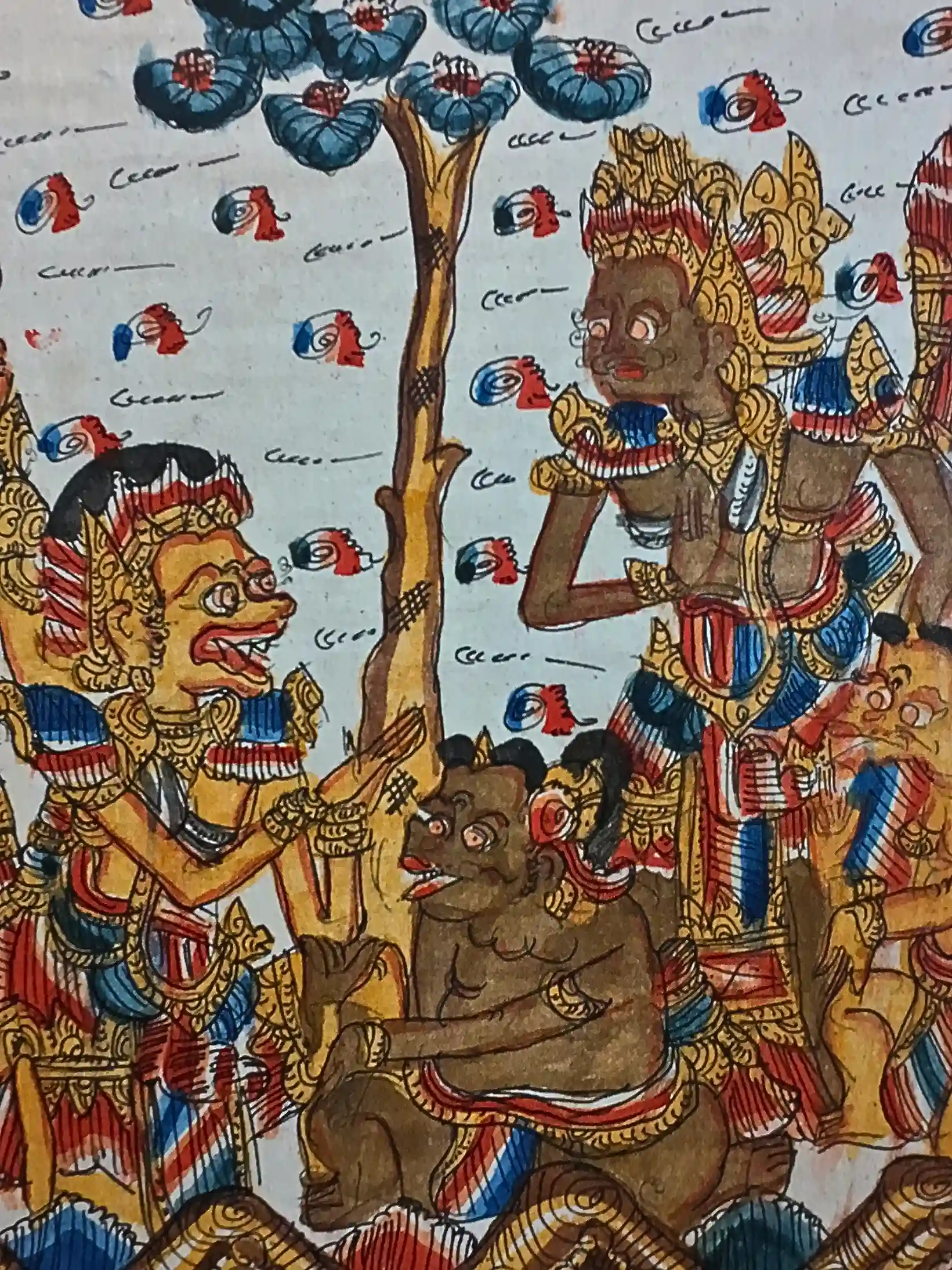
- Kamasan painting carries the same tradition onto canvas. Artists apply real gold leaf as the final step to headdresses, jewelry, and the attributes of divine figures.
- The gold-leaf accents visible on Arts of Bali’s Kamasan paintings continue this same centuries-old craft rather than a modern substitute for it.
Kain prada rarely gets mentioned on its own. It shows up as a footnote in the story of Balinese textiles, a caption under a photograph of a royal costume, a passing detail in a longer article about Kamasan painting. Yet the craft it describes, hand-applying real gold to cloth, once required some of the most patient, specialized labor on the island, reserved for the courts of Klungkung and the temples they served. Anyone who has looked closely at a Kamasan painting and noticed the gold catching the light on a crown or a piece of jewelry has already seen where that same tradition ended up.
This guide covers what kain prada actually is, how it was traditionally made, what it was used for, and how the same gold-leaf technique continues today, not on cloth but on canvas, in the Kamasan paintings still hand-painted and sold in Bali. For the broader picture of how Balinese painting styles relate to one another, see our complete guide to Balinese art.
What Is Kain Prada?
Kain prada is the name for Balinese cloth decorated with gold, whether that gold is applied as thin hand-cut leaf or as a fine powder pressed into a pattern. Some sources trace the word prada to Old Javanese, where it simply means gold, though the exact etymology is not settled across every source. What is consistent is the outcome: a pattern is drawn onto the cloth first, then gold is applied over it, so that the finished textile catches light in a way plain dye never could.
Traditional motifs drawn before the gold was applied included the padma, or lotus blossom, mythical birds, climbing vines, and sacred geometric symbols, among them an ancient swastika motif that in Hindu iconography represents balance and wellbeing, a meaning that long predates and is unrelated to its twentieth-century political use elsewhere. These were not decorative choices made casually. Kain prada motifs were drawn from the same symbolic vocabulary used across Balinese temple art and classical painting, which is part of why the craft was historically kept close to the island’s courts and temples rather than produced as everyday cloth.
The CraftHow Kain Prada Is Made: Gold Leaf, Ancur Glue, and Years of Work
The traditional process starts with drawing the intended pattern directly onto the cloth. Thin gold leaf, historically imported into Bali, is then applied over the drawn design using ancur, a natural adhesive made from fish glue. The same adhesive is also used as a binding agent for pigments in traditional Balinese court painting, which is one of several points where the two crafts overlap in materials as well as in artisans. Applying the gold by hand, sheet by careful sheet, over an entire length of cloth was slow work by design. According to Bali’s provincial culture office, producing a single piece using real gold sheets could reportedly take a long time, in some cases stretching to years, which is part of why finished kain prada was historically so tightly associated with wealth and status.
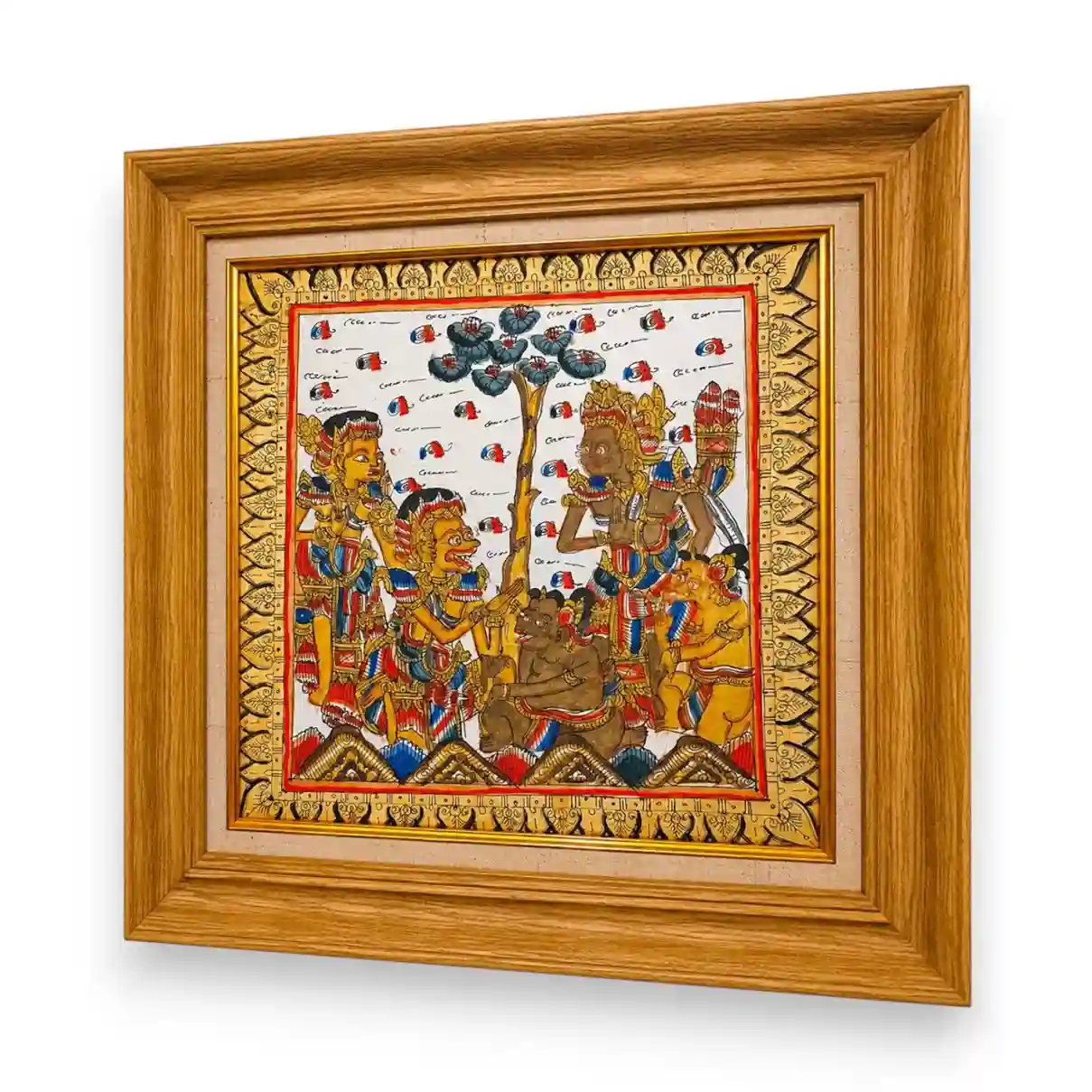
The artisans behind kain prada were traditionally known as sangging, a title that, according to the Australian Museum’s collection records, often described the same craftsmen who produced palace paintings. That overlap still shows in the language used in Kamasan village today, where the painters’ neighborhood is called Banjar Sangging and sangging remains the word locally used for a painter or decorator. A center of prada production still active in Klungkung’s Satria district sits inside the same regency as Kamasan village itself, a short distance from where the painting tradition continues.
Traditional UseFrom Royal Courts to Temple Shrines: What Kain Prada Was Used For
Kain prada was historically a marker of rank as much as a textile. Worn as a chest cloth called saput or kampuh, tied under the arm and falling to the knee, it identified aristocrats and, on occasion, dancers performing at court. Beyond clothing, kain prada was used to decorate temple shrines known as pelinggih, functioning as a kind of sacred backdrop rather than a garment at all, and it dressed ceremonial umbrellas used in temple processions.
The craft also had a place in Bali’s recurring festival calendar. Kain prada traditionally appeared in the elaborate displays mounted for Galungan and Kuningan, in wedding attire, and in the costumes worn for sacred dances such as Legong and Barong, the same performances that inspired generations of Balinese dancer paintings. In every one of these settings, the gold was doing the same symbolic work: marking a cloth, a shrine, or a costume as belonging to something set apart from ordinary use.
The Painting ConnectionThe Same Gold, A Different Canvas: Kain Prada and Kamasan Painting
Kain prada’s closest living relative in Bali today is not another textile. It is Kamasan painting, the classical narrative style that originated in Klungkung and still draws its stories from the Ramayana, the Mahabharata, and episodes such as the Arjuna Wiwaha. Kamasan artists finish their work with the same material kain prada is built around: real gold leaf or gold powder, applied by hand as the last step over the paint, reserved for headdresses, jewelry, and the attributes that mark a figure as divine or noble. The gold is not a border or a frame added afterward. It sits inside the composition itself, on the same figures a kain prada garment would once have dressed.
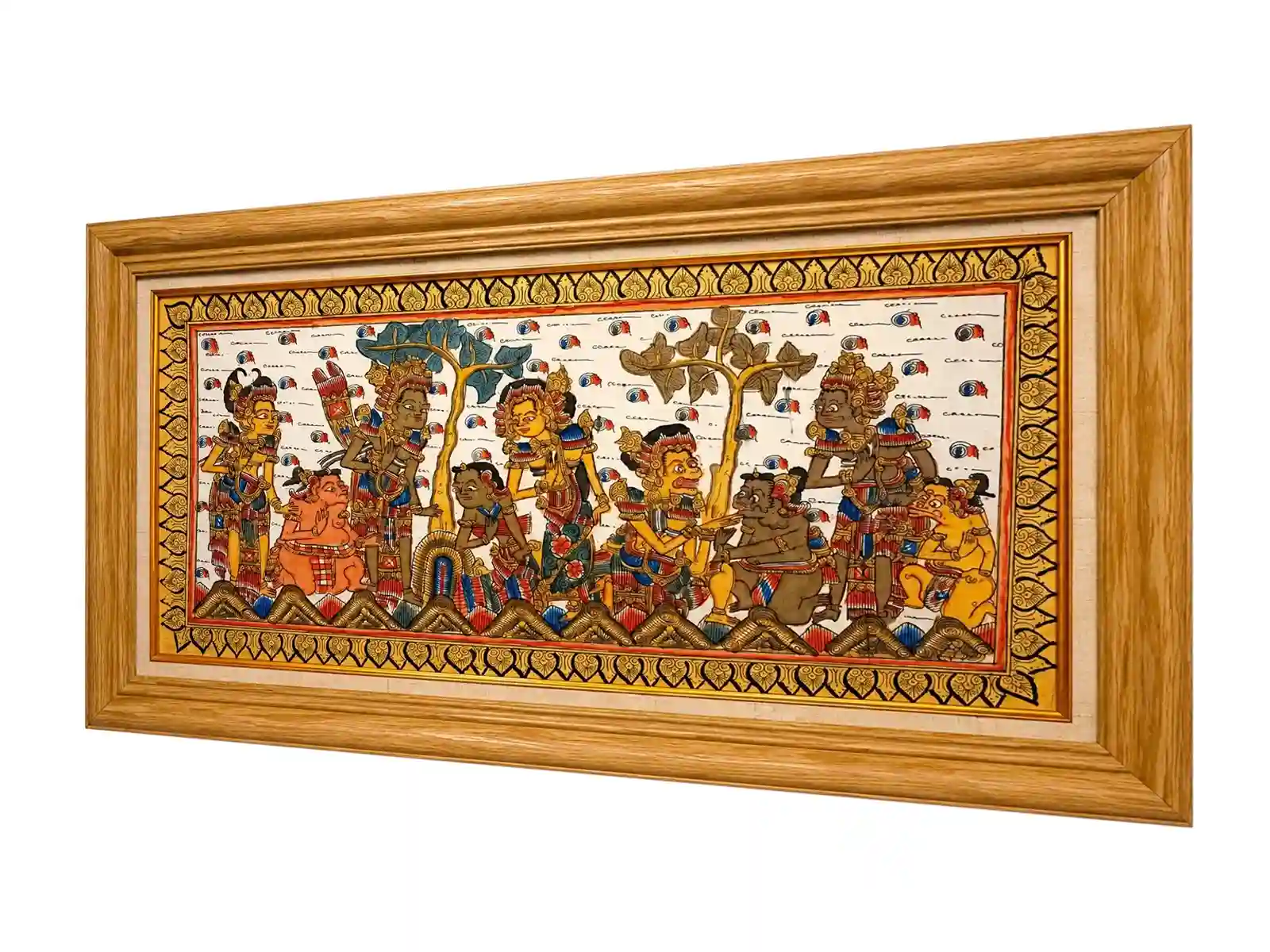
The connection is not only material but historical. Both crafts trace back to the same Klungkung court culture, both were traditionally produced by artisans known as sangging, and both used gold specifically to signal that a figure, whether painted or worn, belonged to a sacred or royal register rather than an ordinary one. For a closer look at how this same gold-finished style renders individual deities, see our guide to Kamasan Ganesha painting, and for the wider set of myths and sacred figures depicted across Balinese painting generally, see our guide to Картина из балийской мифологии.
Old Craft, New MaterialsIs Kain Prada Still Made With Real Gold Today?
Mostly, no. According to both the Australian Museum’s collection notes and Bali’s provincial culture office, real gold leaf has largely been replaced in contemporary kain prada production by cheaper substitutes: gold-toned pigment made from bronze, plastic gold foil, or patterns stamped and silkscreened on rather than applied sheet by sheet. Bali’s provincial culture office notes that even ancur, the natural glue the traditional method depends on, has grown scarce. This shift is practical rather than dishonest. Real gold leaf is expensive, the traditional application process is slow, and the materials it depends on are harder to source than they once were, which is a common enough pattern once a labor-intensive craft outgrows the narrow court market it was originally made for.
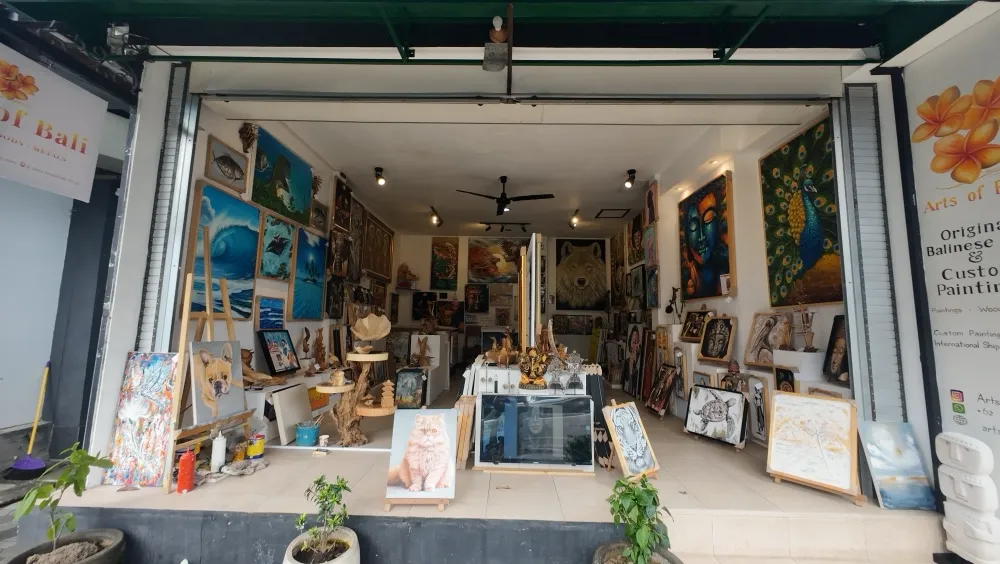
That shift is exactly what makes genuine hand-applied gold leaf work worth noticing where it still survives. The Kamasan paintings sold at Arts of Bali use real gold leaf as their finishing step, continuing the older, slower version of this tradition rather than a modern stand-in for it. The gold on a Kamasan painting’s crown or divine attribute is doing the same job kain prada’s gold once did: marking the figure it touches as something set apart.
See Bali’s Gold Leaf Tradition on Canvas
Arts of Bali carries original Kamasan paintings finished with real gold leaf, hand-applied to headdresses, jewelry, and divine attributes in the same tradition kain prada carries on cloth.
Чат в WhatsApp View the Ramayana Painting View the Mahabharata PaintingЧасто задаваемые вопросы
What is kain prada?
Kain prada is Bali’s traditional gold leaf textile, cloth decorated with real gold sheets or gold powder applied over a hand-drawn pattern. It was historically bonded using ancur, a natural fish glue, and reserved for royalty, temple ceremony, and sacred display.
How is kain prada made?
A pattern is drawn onto the cloth first, then thin gold leaf is applied over the design using ancur as a binding adhesive. The process was traditionally done entirely by hand and could take a long time to finish a single piece.
What is ancur, and why is it used in kain prada?
Ancur is a natural adhesive made from fish glue. In kain prada it binds gold leaf to cloth, and the same adhesive is used as a binding agent for pigments in traditional Balinese court painting, including Kamasan painting.
Is kain prada always made with real gold?
No. Most kain prada produced today uses substitutes such as bronze-based gold pigment, plastic gold foil, or stamped and silkscreened patterns rather than real gold leaf, since the traditional hand-applied method is slow and the material is expensive.
What was kain prada traditionally used for?
It was worn as a chest cloth by aristocrats, used to decorate temple shrines called pelinggih, applied to ceremonial umbrellas, and featured in festival displays for Galungan and Kuningan as well as in dance costumes and wedding attire.
How is kain prada connected to Kamasan painting?
Kamasan painting uses the same gold-leaf finishing technique kain prada is built around, applying real gold by hand to headdresses, jewelry, and divine attributes. Both crafts trace back to the same Klungkung court culture and were traditionally produced by artisans known as sangging.
Is kain prada still made today?
Yes, though most contemporary production uses gold-colored substitutes rather than real gold leaf. Hand-applied real gold survives more narrowly today, including in the finishing work of traditional Kamasan painting.
Where can I see genuine gold leaf detailing on Balinese art?
Arts of Bali carries original Kamasan paintings finished with real gold leaf on headdresses, jewelry, and divine attributes. Message us on WhatsApp or visit each piece’s page for current price and availability.