Tumpek Wayang is a Balinese Hindu holy day that falls every 210 days on Saturday Kliwon of wuku Wayang, one of the most significant Tumpek Saturdays in the Pawukon calendar for anyone connected to Bali’s arts. It honors Sanghyang Iswara, regarded as the deity of the arts, and is the day when dalang, the puppeteers of Bali, take their wayang kulit shadow puppets out of storage to be blessed, and when painters, carvers, and musicians across the island give thanks for their craft. The next occurrence falls on October 10, 2026. An earlier occurrence already passed this year on March 14, 2026, since the 210-day Pawukon cycle is short enough to complete twice within a single Gregorian year.
Основные выводы
- Tumpek Wayang 2026’s next occurrence is October 10, 2026. It already fell once this year, on March 14, 2026, because the 210-day Pawukon cycle is shorter than a Gregorian year.
- The day falls on Saturday Kliwon of wuku Wayang, calculated from the Pawukon calendar rather than the Gregorian one, so the date shifts every year.
- Dalang take their wayang kulit puppets out of their cases, present offerings, and arrange them as if a performance were underway, even though no performance is actually held that day.
- Sanghyang Iswara, considered the deity of the arts, is the figure honored on this day.
- The day extends beyond puppetry. Painters, carvers, and musicians across Bali present offerings for their tools and talents, which is why Kamasan painters, working in the same visual tradition as wayang puppetry, mark the day too.
- Children believed to be born on Tumpek Wayang traditionally undergo a purification ritual called sapuh leger, performed by a pemangku dalang.
Tumpek Wayang is one of the dates on the Balinese Hindu calendar that rarely appears on a tourist itinerary, yet it sits close to the heart of how Bali understands its own art. It is not a public holiday with parades and closed offices, and there is no single spectacle staged for an audience. It is smaller and more personal than that: a dalang alone with his puppets, a painter’s workshop with a small offering set beside the paints, a gamelan set touched with holy water before it is played again. For anyone trying to understand why Balinese art, from a temple relief to a Kamasan painting, so often carries the flattened, narrative figures of wayang, Tumpek Wayang is the day that explains where that reverence comes from.
This guide covers what actually happens on Tumpek Wayang, how the day is calculated, the purification ceremony performed for children born under this wuku, and how the day connects to the Kamasan painting tradition still practiced and sold in Bali today. For the broader picture of how Balinese painting styles relate to one another, see our complete guide to Balinese art.
What Is Tumpek Wayang?
Tumpek Wayang belongs to the Pawukon, a 210-day calendar built from ten concurrent week cycles running side by side, the best known of which is the 30-week wuku cycle. Each wuku lasts seven days, and wuku Wayang is one of the thirty named weeks in that cycle. Tumpek Wayang falls on the Saturday, called Saniscara, that coincides with Kliwon, the fifth day of the five-day Pancawara week, while the calendar sits inside wuku Wayang. Because the Pawukon repeats every 210 days rather than following the Gregorian year, Tumpek Wayang lands on a different Gregorian date each time and can fall twice within a single calendar year, exactly as happened in 2026 with observances on March 14 and October 10.
The day is widely described as one of several Tumpek, or holy Saturday, observances that occur across the 210-day cycle, and it is generally regarded as the one most closely tied to the arts, since wuku Wayang itself is named for wayang, the shadow puppet tradition. The deity honored on Tumpek Wayang is Sanghyang Iswara, considered the patron of the arts in Balinese Hindu belief, which is why the day is sometimes referred to locally as a day of thanksgiving for artistic skill rather than only a puppeteer’s holiday.
The Central RitualHow Dalang Honor Their Wayang Kulit Puppets
At the center of Tumpek Wayang is the dalang, the puppeteer who performs wayang kulit, Bali’s shadow puppet theater. On this day, a dalang removes his wayang kulit puppets from the cases where they are normally stored, lays out offerings, and arranges the puppets as though a performance is about to begin, even though no actual performance is staged. The gesture is a form of respect toward the puppets as sacred tools of a spiritual craft, not merely props. The gender wayang, the small gamelan ensemble that traditionally accompanies a wayang kulit performance, is honored alongside the puppets, since the instruments are considered part of the same living tradition.
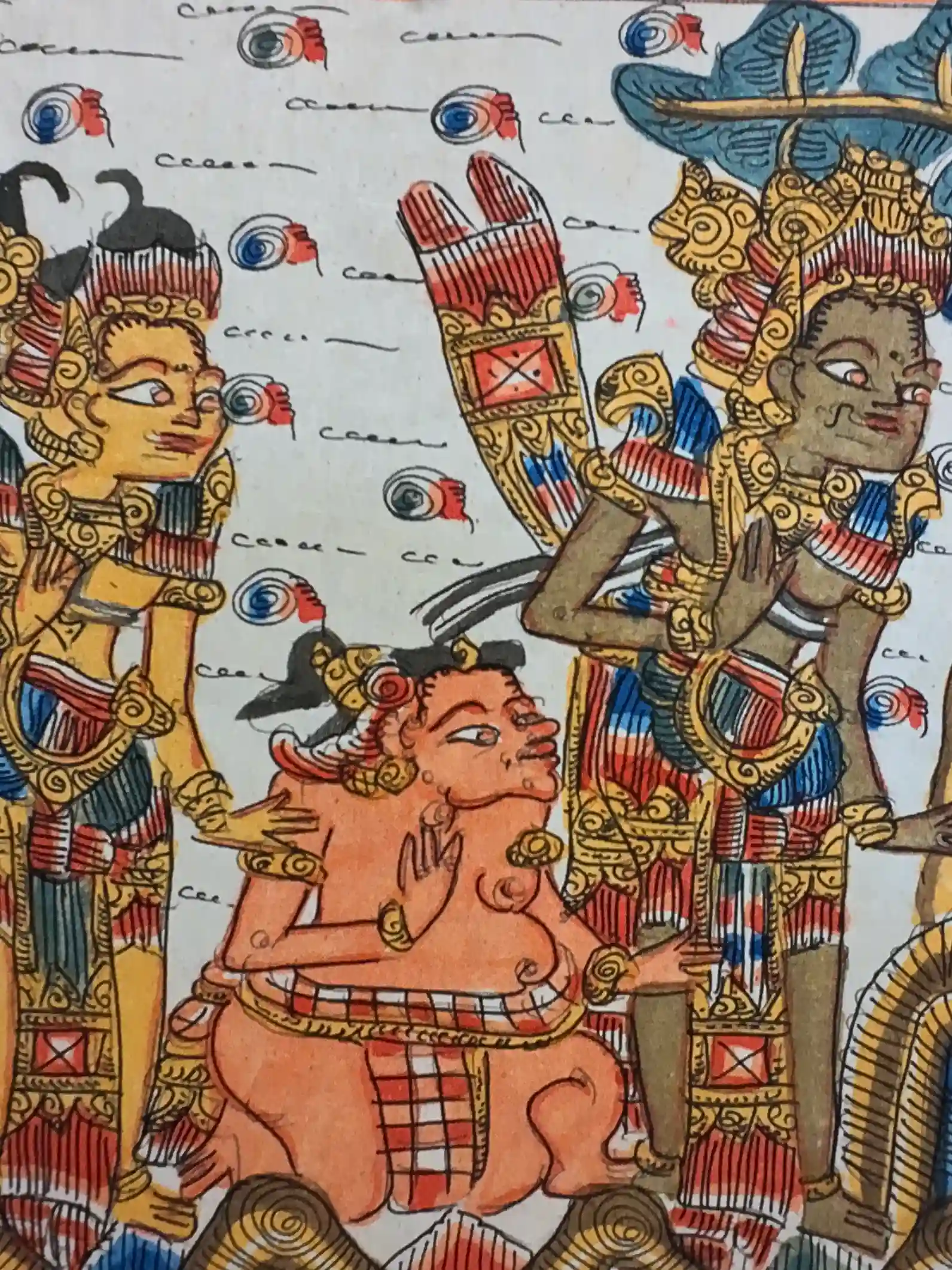
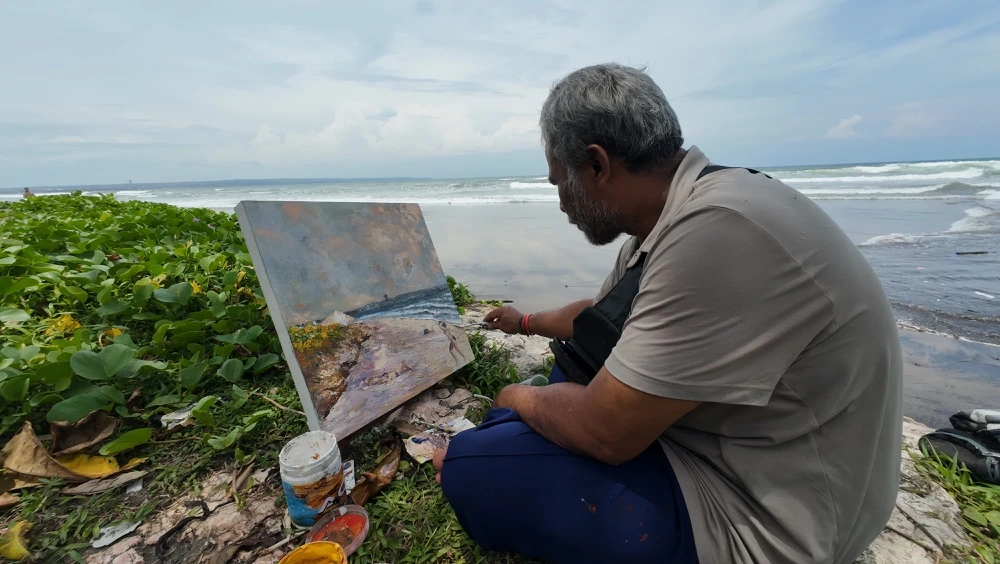
The custom is not limited to professional dalang. Balinese families who own a set of puppets, and artists who work in wayang-derived styles, place their own offerings that day as a smaller, quieter version of the same gesture. This is also the wider reason the day is described as extending beyond puppetry into painting, sculpture, dance, and music generally. Artists across galleries and workshops present offerings on Tumpek Wayang to give thanks for their talents, which places Kamasan painters, wood carvers working in wayang-derived relief, and gamelan musicians inside the same day of observance as the dalang themselves.
Protection and PurificationThe Sapuh Leger Ceremony: Protecting Children Born on Tumpek Wayang
Tumpek Wayang carries a second, more solemn layer of meaning tied to anyone believed to be born during wuku Wayang. In Balinese Hindu belief, the god Bhatara Kala and his brother Rare Kumara are said to share the same symbolic birthday, and Kala’s resentment over this is the origin of a belief that children born under wuku Wayang face heightened vulnerability to misfortune, illness, or Kala’s influence throughout life.
To address this, families commission a purification ceremony known as sapuh leger, a form of ruwatan performed specifically by a pemangku dalang, a puppeteer who has undergone additional ritual ordination beyond that of an ordinary performer. The ceremony centers on a specific wayang kulit performance depicting Kala being pacified, after which the pemangku dalang uses mantras and the puppets themselves to produce holy water. That water is then used to purify the child. The ritual is still actively commissioned by Balinese families today, and it is one of the clearest examples of wayang functioning as an act of spiritual protection rather than only as storytelling entertainment.
The Painting ConnectionTumpek Wayang and the Kamasan Painting Tradition
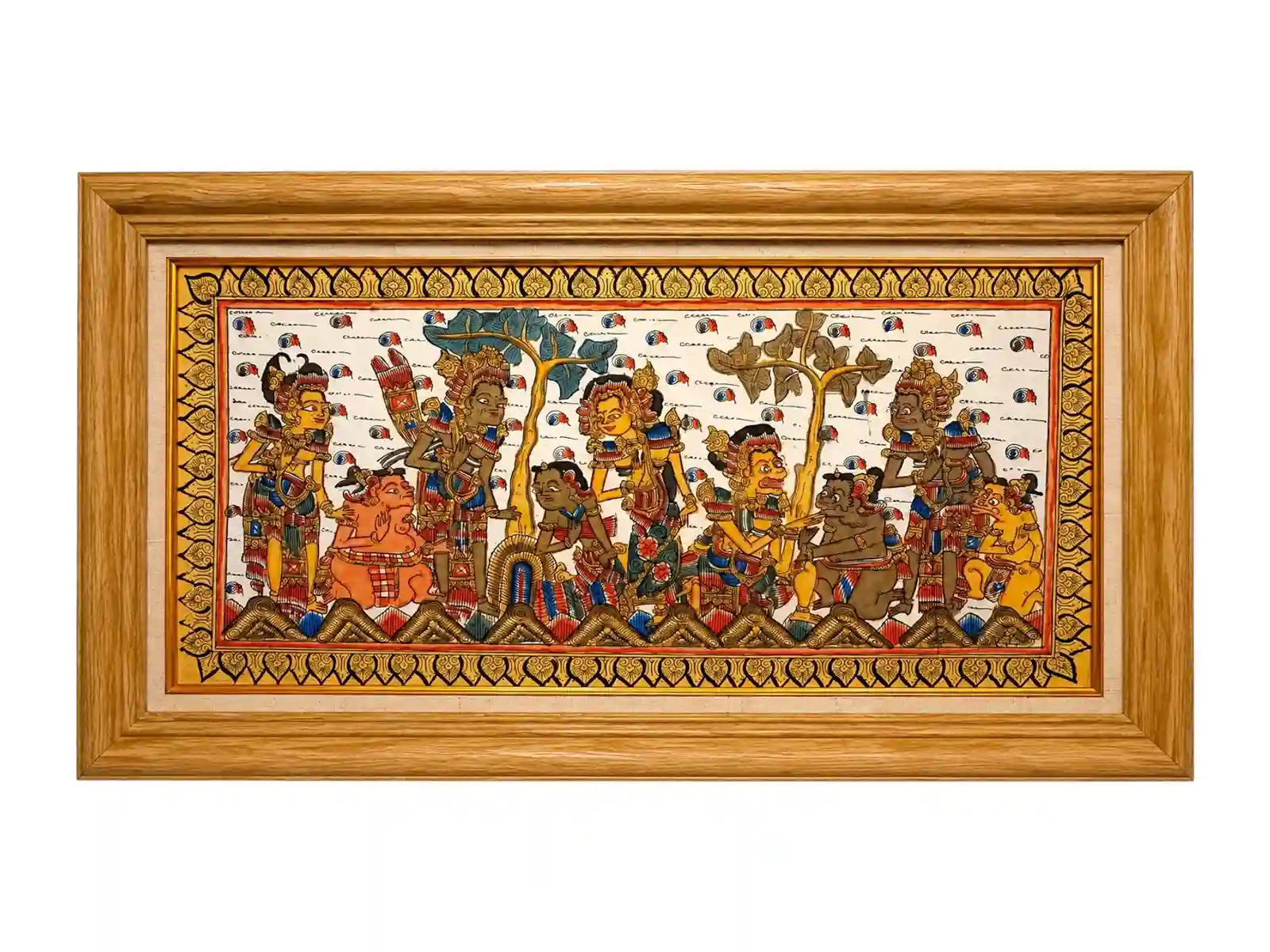
Tumpek Wayang honoring artists beyond dalang is the reason the day matters to Kamasan painting specifically. Kamasan painting, the classical style that originated in Klungkung, is often described as painting in the wayang style. Its figures share the same flattened profile, the same narrow eyes and elaborate headdresses, and the same repertoire of stories, drawn from the Ramayana, the Mahabharata, and episodes such as the Arjuna Wiwaha, that a dalang performs on stage with leather puppets. A Kamasan painting and a wayang kulit puppet are, in a real sense, telling the same story in two different materials.
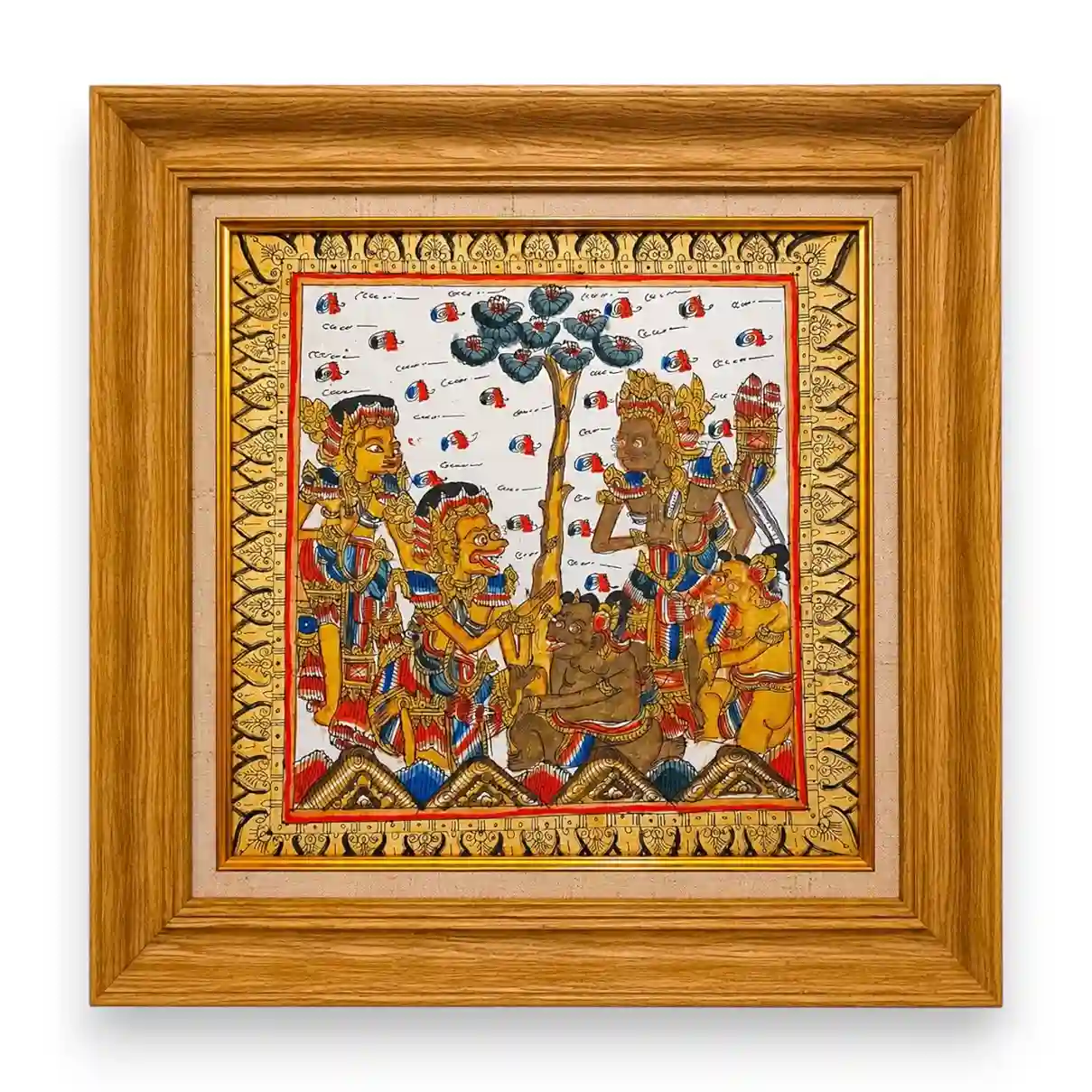
This is why Tumpek Wayang is relevant to a painting gallery, not only to a puppet theater. Kamasan painters continue a visual tradition that grew directly out of wayang, and the day of thanksgiving for wayang art extends naturally to the painters who keep the same stories alive on canvas rather than leather. For a closer look at how this style renders a single deity rather than a full epic scene, see our guide to Kamasan Ganesha painting, and for the wider set of myths and sacred figures depicted across Balinese painting generally, see our guide to Картина из балийской мифологии.
The CalendarWhen Is Tumpek Wayang in 2026?
Tumpek Wayang 2026 fell on March 14, 2026, and falls again on October 10, 2026, exactly 210 days later. Because the Pawukon cycle does not follow the Gregorian calendar, these dates will shift again in 2027. Anyone planning to commission a sapuh leger ceremony, or simply wanting to see a dalang honor his puppets, should confirm the current year’s date against a Balinese calendar publisher or a local temple, since minor regional variation in ceremonial timing does exist.
See Bali’s Wayang Painting Tradition in Person
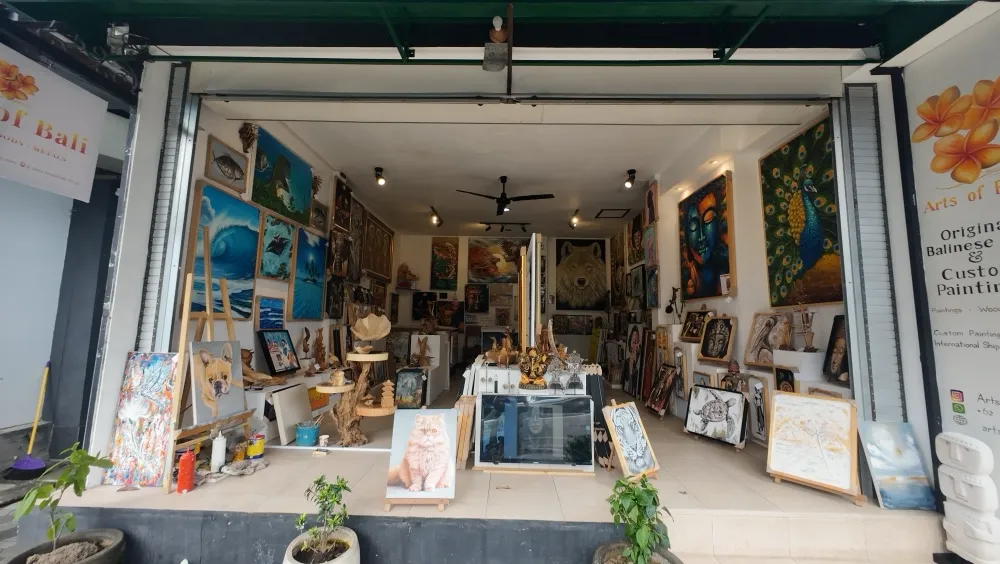
Arts of Bali carries original Kamasan paintings in the classical wayang style, hand-painted on canvas, each telling a story from the same epic literature a dalang performs on stage.
Чат в WhatsApp View the Mahabharata Painting View the Ramayana PaintingЧасто задаваемые вопросы
What is Tumpek Wayang?
Tumpek Wayang is a Balinese Hindu holy day that falls every 210 days on Saturday Kliwon of wuku Wayang. It honors Sanghyang Iswara, the deity of the arts, and is the day dalang bless their wayang kulit puppets and painters, carvers, and musicians give thanks for their craft.
When is Tumpek Wayang in 2026?
Tumpek Wayang fell on March 14, 2026, and falls again on October 10, 2026, exactly 210 days later. The date is calculated from the Pawukon calendar, so it moves every year rather than sitting on a fixed Gregorian date.
What happens during a Tumpek Wayang ceremony?
A dalang takes his wayang kulit puppets out of their storage cases, presents offerings, and arranges the puppets as though a performance is about to begin, even though no actual performance is held. Gender wayang gamelan instruments are honored alongside the puppets.
What is the sapuh leger ceremony?
Sapuh leger is a purification ceremony performed for people believed to be born during wuku Wayang, who are traditionally considered spiritually vulnerable. A pemangku dalang, a specially ordained puppeteer, performs a specific wayang kulit story and produces holy water used to purify the person.
Why are children born on Tumpek Wayang considered vulnerable?
Balinese belief holds that the god Bhatara Kala and his brother Rare Kumara share the same symbolic birthday, and Kala’s resentment over this is said to place children born under wuku Wayang at greater risk of misfortune, which the sapuh leger ceremony is performed to address.
How does Tumpek Wayang connect to Kamasan painting?
Kamasan painting is often described as painting in the wayang style, sharing the same flattened figures and the same repertoire of epic stories that a dalang performs with leather puppets. Because Tumpek Wayang honors artists across painting, carving, dance, and music, Kamasan painters are considered part of the same tradition it honors.
Can visitors watch a Tumpek Wayang ceremony?
There is no large public event staged for tourists. The ceremonies are personal and take place at homes, workshops, and temples across the island, so a visitor who happens to be near one respectfully is more likely to see it than someone seeking it out as a scheduled attraction.
Does Arts of Bali have Kamasan or wayang-style paintings available?
Yes. The gallery carries original Kamasan paintings hand-painted on canvas, including pieces depicting the Mahabharata and the Ramayana. Message us on WhatsApp or visit each piece’s page for current price and availability.