Carved by hand.
Shaped by centuries of knowing how.
“A painting shows you what the artist saw. A wood carving shows you what the artist’s hands knew.”
— Путу Сучипта, владелец компании «Arts of Bali»
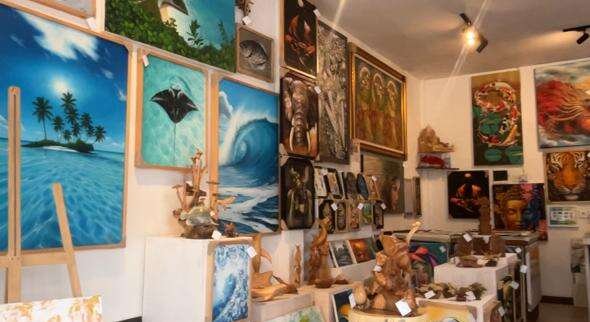
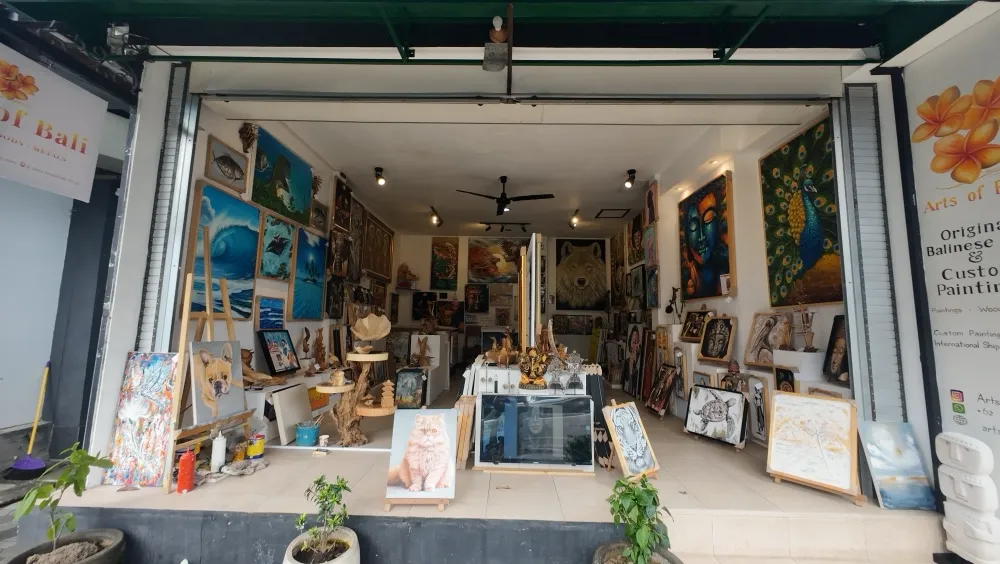
Wood carving Bali artists produce at the highest level is not craft tourism. Stand in front of a serious piece and that becomes obvious immediately. The grain of the wood moves around the figure rather than cutting across it. The gesture locks into the natural shape of the log. Decades of inherited technique go into objects a visitor might pick up, turn slowly in their hands, and put back down because they don’t quite believe a human hand made it. At Arts of Bali gallery in Seminyak, we carry exactly those pieces.
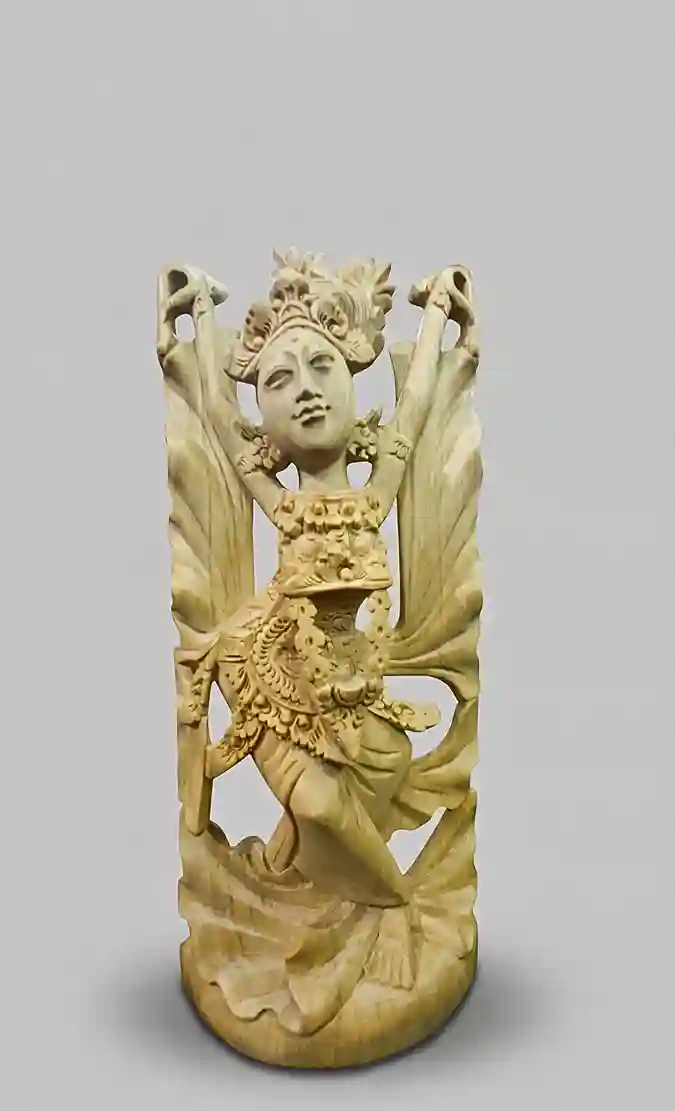
Balinese wood carving is a traditional sculptural art form in which artisans hand-carve hardwood and semi-hardwood into figures depicting classical dancers, Hindu epic characters, deity forms, and ceremonial couples. The craft has been practiced continuously in Bali for centuries, with technique passed through family apprenticeship and village traditions. At the finest level, each piece is worked individually from a single piece of wood, shaped to the natural grain, and never exactly reproduced.
Wood Carving in Bali: What Sets Fine Pieces Apart
Balinese wood carving has a documented history that predates the island’s fame as a destination. Temples needed carved gates, shrine panels, and sacred doors. Royal courts required ceremonial objects of precise specification. Classical dance demanded costumes, masks, and props carved according to conventions that had been fixed by tradition for generations.
The carvers who built those objects passed technique within families and across villages through apprenticeships that no formal training replicates. What emerged is a visual language recognizable anywhere in the world. The elongated figure. The gesture caught mid-motion and frozen at its most expressive point. The face with its particular stillness, serene and precise, behind the animation of the body. Costume rendered in wood so exactly that individual necklace beads, headdress feathers, and flower petals are each individually shaped.
The Victoria and Albert Museum’s South and South East Asia collection holds documented examples of this tradition within a broader regional context. The wood carvings available at Arts of Bali carry the same lineage, made in the same island environment, by carvers working within the same inherited methods.
What Separates Fine Carving from Souvenir Work
The distinction between fine Balinese wood carving and souvenir work comes down to three things: material, method, and time.
Souvenir pieces typically use soft wood, often machine-assisted for the rough form, and finished with opaque paint that hides both the grain and the tool marks underneath. Fine carving starts with hardwood or semi-hardwood chosen specifically for density and natural grain pattern. No machine touches the figure. The grain of the particular log actually influences how the carver positions the subject within it. Two pieces made by the same carver from different logs will never be identical. This is not a flaw. It is the point.
The warm golden tone visible throughout the collection at Arts of Bali comes from the wood itself. No stain was applied. The natural color deepens over years of handling, which is part of what makes aged pieces collectible and what signals, at a glance, that the material is genuine.
Run your hand along the surface of a serious piece. You feel slight variations: the raised edge of a headdress, the shallow depression where fabric folds, the distinct grain visible at thin carved sections. Paint conceals wood. A well-made piece needs no paint. The color, the grain, and the shadow that falls into a carved line are the aesthetics themselves.
“Every carver in Bali learns the same subjects. What makes a piece exceptional is the moment the carver stops following the lesson and starts following the wood.”
— Путу Сучипта, «Искусство Бали»
Subjects Found in Wood Carving from Bali: The Dance Figures
Two of the most important dances in Balinese classical tradition appear directly in this collection. Janger and Tari Kebyar both carry precise costume conventions that a skilled carver must understand from the inside, not from a photograph.
Джангер
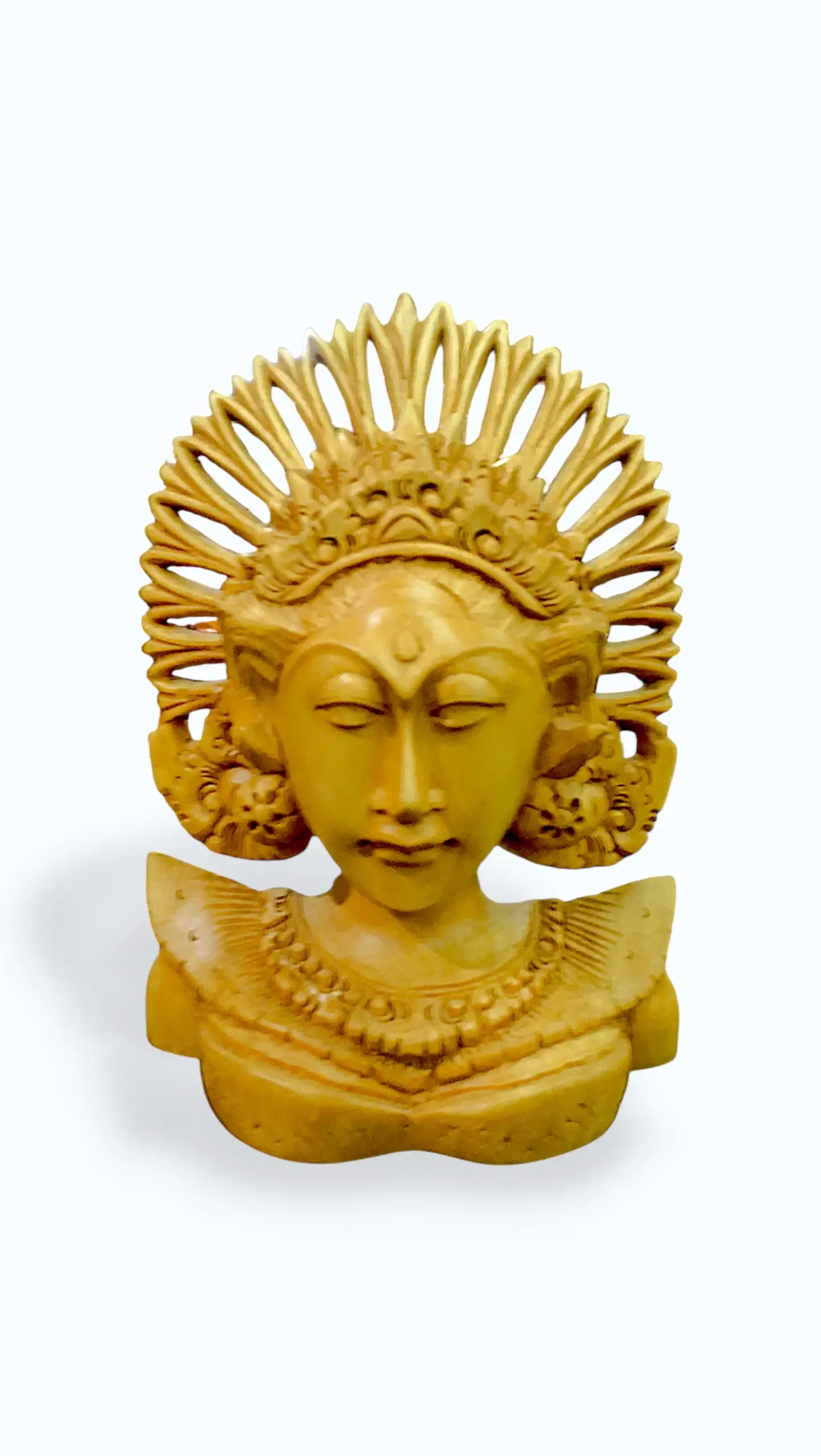
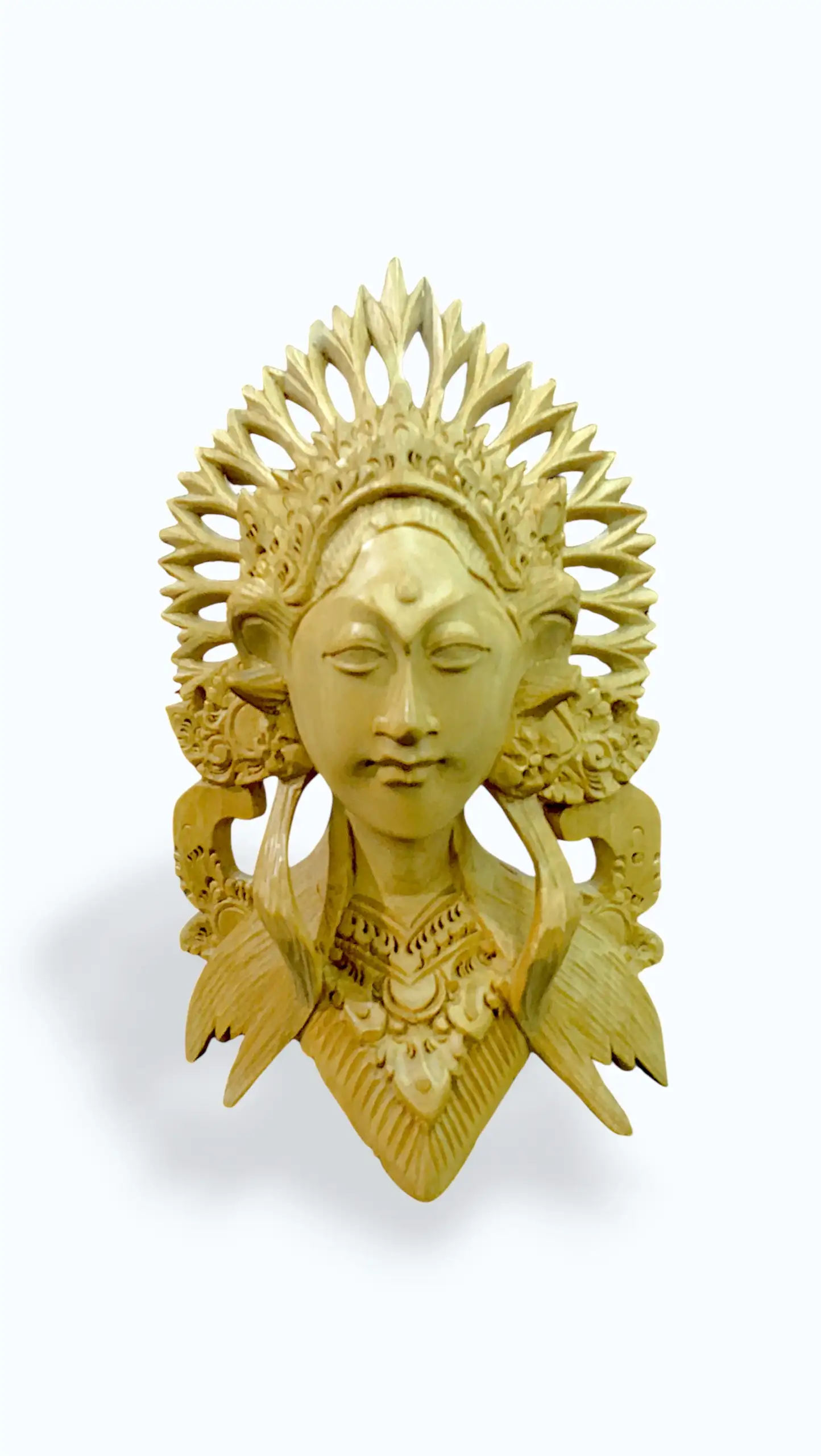
Janger is a social dance performed by young men and women in pairs, characterized in the female figure by her distinctive crown: a tall radiating headdress with many pointed petals extending outward like a sun, flanked by floral ear ornaments. The face beneath it carries a specific composure. Eyes slightly lowered, expression serene but not vacant. The Janger pieces in this collection feature two exquisite bust carvings in different natural wood tones, both showcasing the complex radiating crown correctly proportioned to the face.
Tari Kebyar
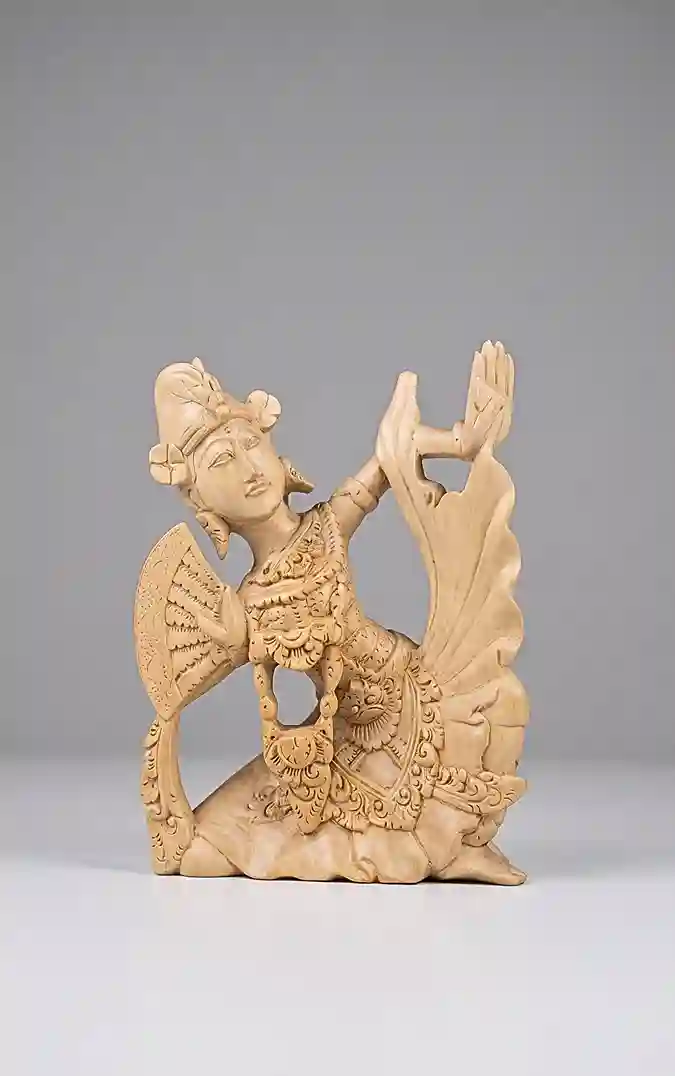
Tari Kebyar is technically one of the most demanding forms in Balinese dance. The name translates loosely as “to flare like fire.” In the Kebyar Duduk variation, the performer sits throughout, communicating the entire narrative through hand position, eye movement, and the precise angle of a wrist. The audience reads a performance almost entirely from the upper body.
The Kebyar piece in this collection shows the dancer in that seated position, right hand raised in mudra with fingers placed exactly at the point of a phrase. A carver who knows the dance carves the mudra correctly. Misplaced fingers are the first thing a knowledgeable buyer checks, and the first sign that a piece was made from a quick reference image rather than real understanding.
Sita, Rama, and the Pengantin: Wood Carving Bali Tradition Carries Forward
Beyond dance, Balinese wood carving draws from two other deep sources: Hindu epic literature and the ceremonies of Balinese daily life. Both produce subjects that have been carved on this island for generations, each time slightly differently, each time shaped by the carver who worked the wood.
Sita and the Ramayana
The Ramayana runs through Balinese culture at every level. Performances of Kecak and Sendratari draw from it constantly. Its characters appear in temple reliefs, in painting, in the gestures of classical dancers, and in carved wood across several centuries.
Sita, abducted by the demon king Ravana and loyal to Rama through extraordinary trial, is one of the most consistently carved figures in Balinese sculptural tradition. The standing figure shown here depicts her with the full architectural crown of a noble figure, one hand raised in greeting, a guardian form at her side. The expression on that face combines serenity with something harder to name precisely. A carver who has lived with this story for decades carves it differently from someone who worked from a reference image. That difference is visible in the piece if you know what you are looking for.
For the broader iconographic context of Balinese sacred figures, our overview of Стили балийского искусства explains the conventions used across painting, sculpture, and ceremonial craft.
Pengantin: The Wedding Couple
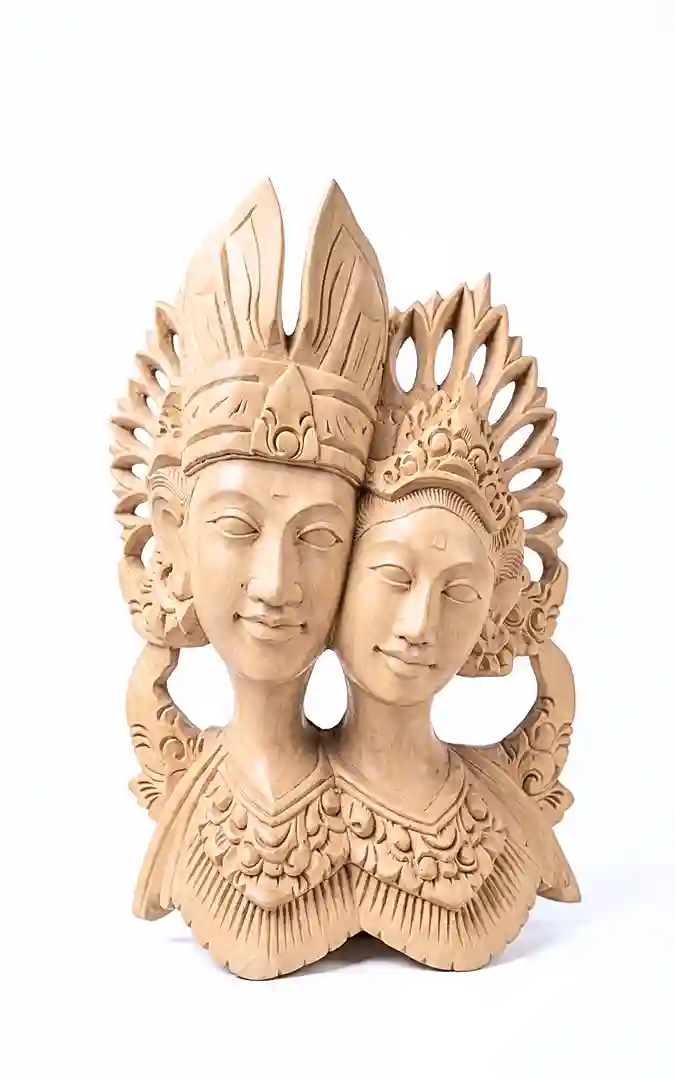
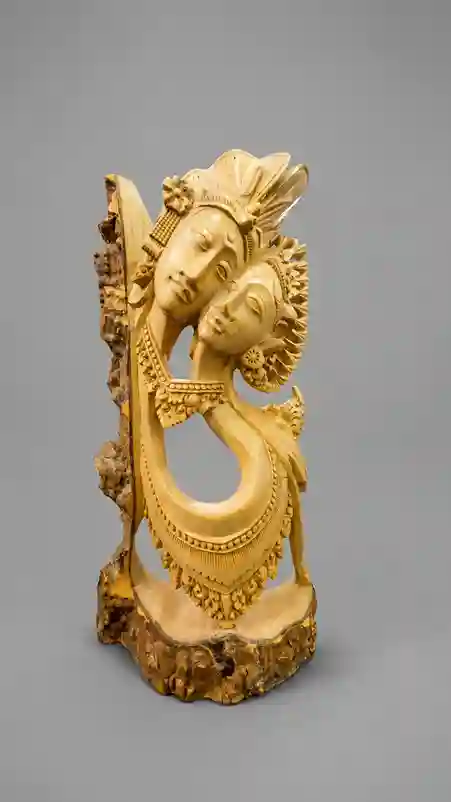
Pengantin means the wedding couple in Indonesian. As a sculptural subject in Bali it refers to a specific tradition: two figures, often rendered as interlocking busts or joined double portraits, positioned in proximity that suggests intimacy without requiring contact. The male figure carries a tall pointed crown. The female wears a rounder, florally ornamented headdress. The convention has been consistent for generations.
The collection holds two distinct interpretations of this subject. The first is a joined double bust: both figures facing forward with the slight inward lean that suggests belonging together. The second is a more elongated, vertical form with both faces tilted toward each other within a single carved volume, the crowns intersecting above.
These are not the same piece made twice. They are two carvers reading the same subject through different eyes, with different wood in different hands on different days. Comparing them is part of understanding what makes Balinese wood carving genuinely interesting as a collecting area.
Wood Carving Bali Collectors Pursue: Three Enduring Subjects
The collection at Arts of Bali organizes naturally into three categories that reflect the three worlds Balinese carving has always drawn from.
Dance Tradition
Figures from Janger, Tari Kebyar, Legong, and other classical forms represent the most technically demanding subjects in Balinese wood carving. Costume details, hand positions, and body angles are each governed by choreographic convention. The carver must understand the dance to carve it accurately. The collection includes standing figures, seated dancers, full busts, and wall-mounted face masks.
Sacred Epic
Characters from the Ramayana and Mahabharata have been carved in Bali for centuries. Sita, Rama, and their associated guardian figures carry specific iconographic attributes that identify them precisely: crown form, hand gesture, accompanying figure. A collector who acquires a Sita figure is acquiring a piece connected to a narrative tradition with deep roots in Balinese Hindu practice and daily ceremonial life.
The Couple
Pengantin sculptures are among the most consistently sought-after pieces in Balinese wood carving. Two figures, rendered as interlocking busts or joined vertical forms, carry distinct crown and costume elements that identify the ceremonial role of each. They work as wedding gifts, as anniversary pieces, and as standalone objects for collectors drawn to the subject of partnership rendered in permanent form.
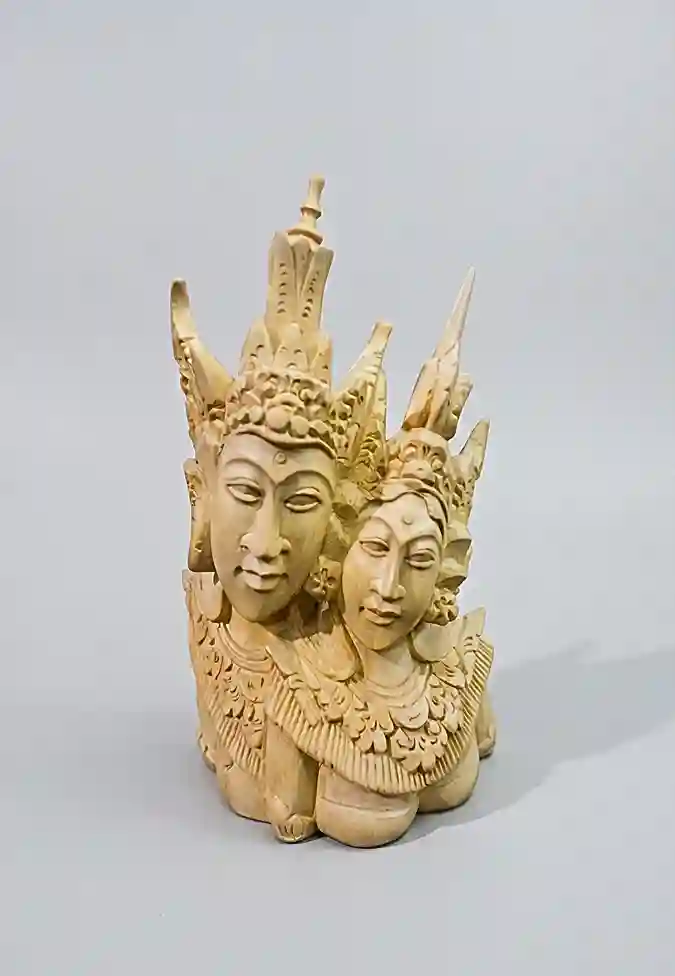
Rama and Sita double portrait — Ramayana epic, hand-carved in local hardwood. Available at Arts of Bali, Jl. Raya Seminyak No. 42.
How to Choose Wood Carving in Bali for Your Interior
Wood carving reads differently from room to room. A tall standing figure needs ceiling height and uncluttered surroundings. A bust sits well on a surface that contrasts in material: polished stone, dark timber, matte concrete. The couple pieces tend to anchor rather than fill a space. They work on a shelf, a sideboard, or anywhere the eye needs somewhere to settle.
Color Temperature and Material Pairing
The warm golden tone of the pieces in this collection reads differently against cool neutral interiors (white walls, grey stone, concrete) versus warm material environments (exposed brick, terracotta tile, teak furniture). Against cool surfaces, the natural wood appears almost luminous. Against warm materials, it integrates more quietly into the room. Neither effect is wrong. The question is whether you want the piece to be a focal object or a contributing element.
Наш сайт руководство по выбору произведений искусства на Бали covers the same principles of scale, visual weight, and placement that apply equally to three-dimensional work. Worth reading before you visit the gallery.
Care Over Time
Balinese hardwood carving requires minimal care. Keep pieces away from direct air conditioning airflow and out of prolonged direct sunlight. Both dry out the surface unevenly and can cause micro-cracking at thin sections over years. Once annually, a small amount of natural oil (teak oil, coconut oil, or a light furniture oil) applied with a soft cloth and buffed off maintains the tone and prevents surface fatigue. Do not use water-based products or wax on unfinished raw wood.
Wood carving ages well. The color deepens. The grain becomes more pronounced at the surface. A piece purchased now in its initial golden tone will look distinctly different in ten years, and in most cases more interesting.
Shipping from Bali
Wood carvings ship internationally from Arts of Bali. Pieces are wrapped individually in foam, cushioned, and placed in custom-dimensioned timber crates built to the dimensions of each piece. Larger standing figures (above approximately 50 cm) are shipped in reinforced containers. Insurance and tracking are standard. We can advise on Customs documentation requirements for specific destination countries, particularly Australia, New Zealand, and the United States, which have declared-item requirements for wooden objects.
Browse the full collection at the Галерея "Искусство Бали online, or visit in person at Jl. Raya Seminyak No. 42.
Buy or Commission Original Wood Carving in Bali
The wood carving collection at Arts of Bali changes as pieces sell. Contact us on WhatsApp before visiting to confirm what is currently in the gallery, or to discuss a custom commission. Subject, size, stance, and costume detail can all be specified. Custom pieces take four to eight weeks depending on complexity. The commission process starts with a free consultation, no obligation.
Чат в WhatsApp Просмотреть галерею