A wild animal, painted by a hand that has spent years learning how to be honest about fur and light and the particular weight of a gaze — that is not decoration. That is a presence. And a presence like that changes a room.
Wildlife painting Bali is a category that most visitors to the island do not expect to find taken seriously. Bali’s reputation as a centre for art is built on its ceremonies, its rice fields, its dancers and its sacred imagery.
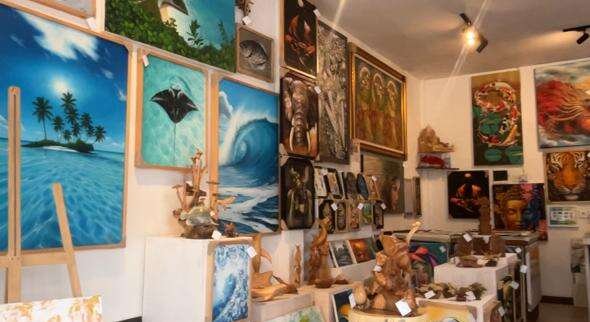
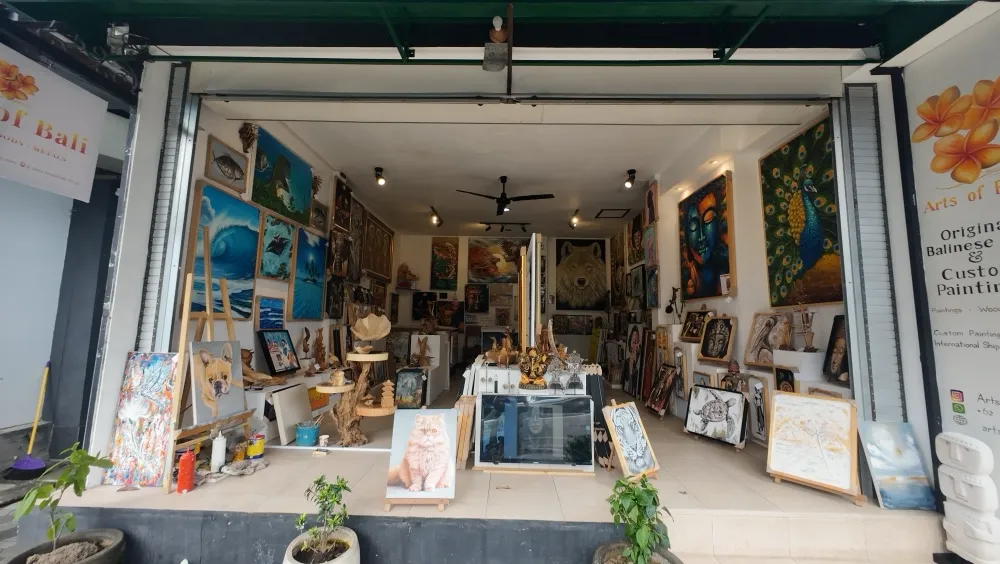
But at Arts of Bali gallery on Jl. Raya Seminyak No.42, another conversation is happening alongside that one. It is a conversation about animals, about the particular challenge of painting a creature that cannot pose, that has its own logic and its own beauty.
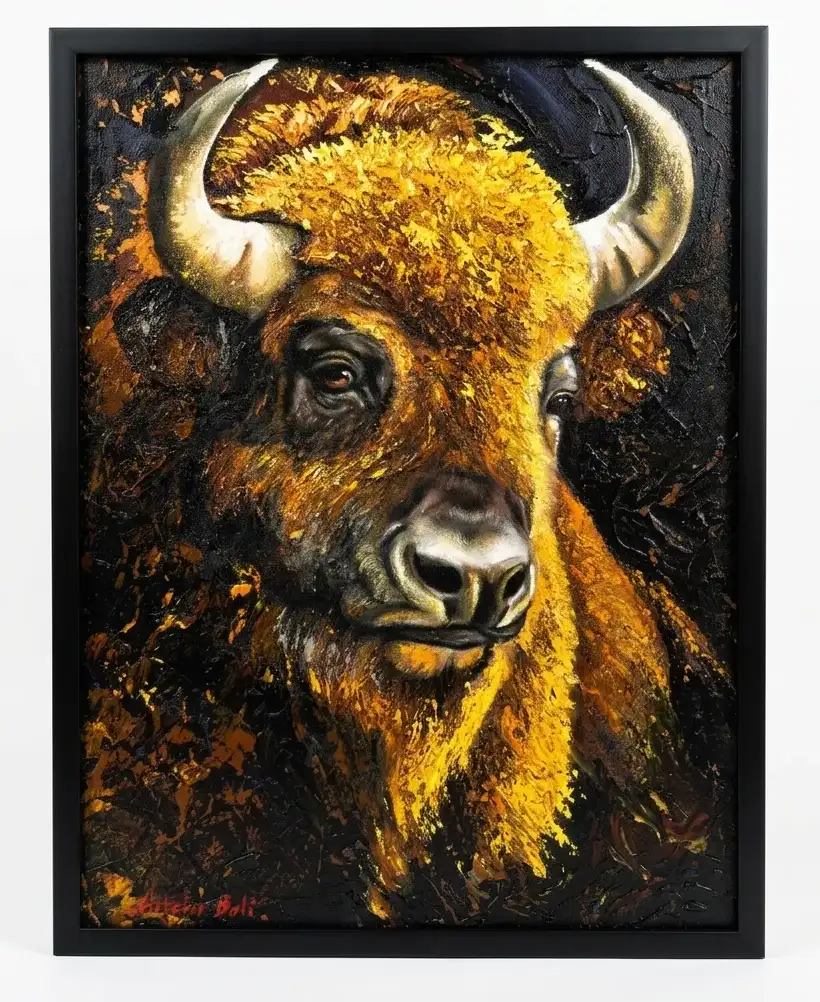
The wildlife collection here — lions, wolves, horses, a bison, a butterfly, a Labradoodle puppy — is among the most technically ambitious work in the gallery. This is where that work comes from, and what makes it worth looking at seriously.
Why Wildlife Painting Bali Demands More From an Artist Than Almost Any Other Subject
Painting a wild animal honestly is one of the most demanding things a painter can attempt. The subject cannot be asked to hold still. It cannot be directed into better light or asked to turn its head.
What the painter works from is observation. The fur of a lion, the feathers of an eagle, the markings of a wolf: each of these is a system, not just a texture. A painter who understands the system produces something that a painter working from surface appearance alone never can.
The tradition of wildlife art stretches back to the earliest marks humans made on cave walls. What changes across that history is not the impulse but the technique.
How do you render a living thing — something with weight and breath and specific physical character — in a medium that is essentially flat, static, and silent? The artists whose work is collected here have found their own answers to that question.
Two Approaches to Wildlife Painting — Alzen’s Hyperrealism and Farfan’s Textured Expression
The wildlife collection at Arts of Bali is not a single style. It represents two distinct artistic philosophies, and placing them alongside each other reveals something interesting about what each approach can do.
Alzen — Hyperrealism: When Paint Disappears
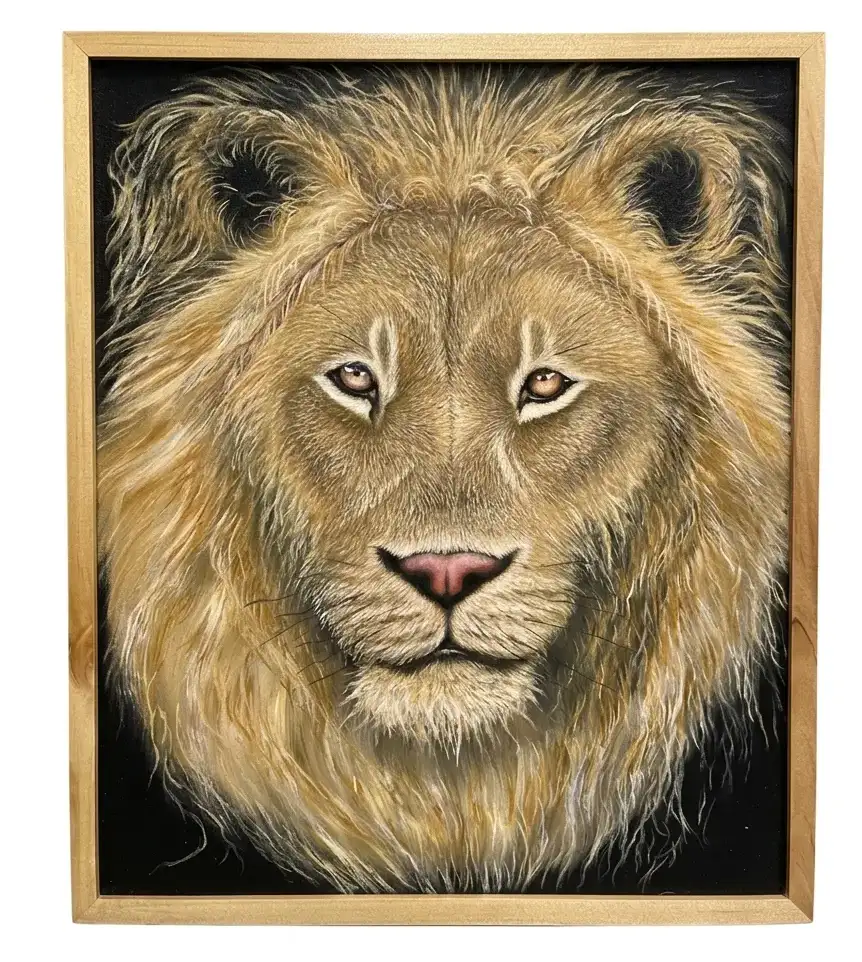
Alzen’s wildlife paintings pursue a particular kind of ambition: the complete concealment of the painter’s hand. In a finished hyperrealist work, the technique becomes invisible. You do not see brushstrokes — you see fur.
Achieving this requires a process that most painters find almost prohibitively slow: building form from the surface up, using brushes so fine that individual hairs in a mane are rendered individually.
The same technical discipline that Alzen applies to his custom portrait commissions is visible in every wildlife piece he produces. The lion in this collection is the result of that discipline applied to one of the most challenging subjects.
Farfan — Sand Texture: When the Surface Becomes the Subject
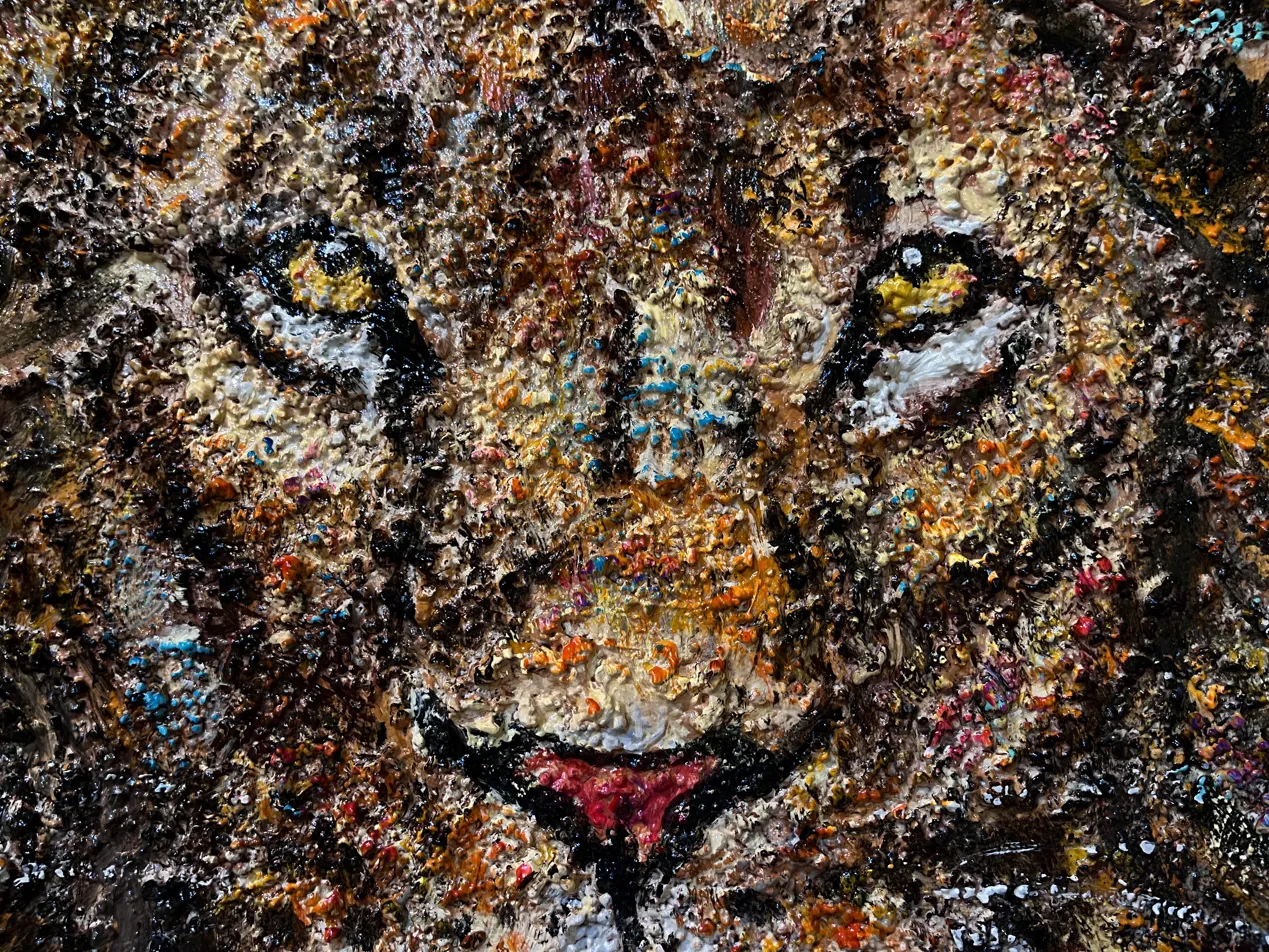
Farfan works in a completely different register. His sand texture technique — in which mixed media materials are built up into a heavily impastoed surface — produces wildlife paintings that make no attempt to conceal the maker’s presence.
In Farfan’s lion, the mane is not rendered hair by hair. Instead, the accumulated texture of the surface itself creates an impression of density and warmth that is the equal of photographic precision.
Standing close, you see the material: the sand, the paint, the physical evidence of a hand moving through the surface. Standing back, you see the animal. Both distances are rewarding.
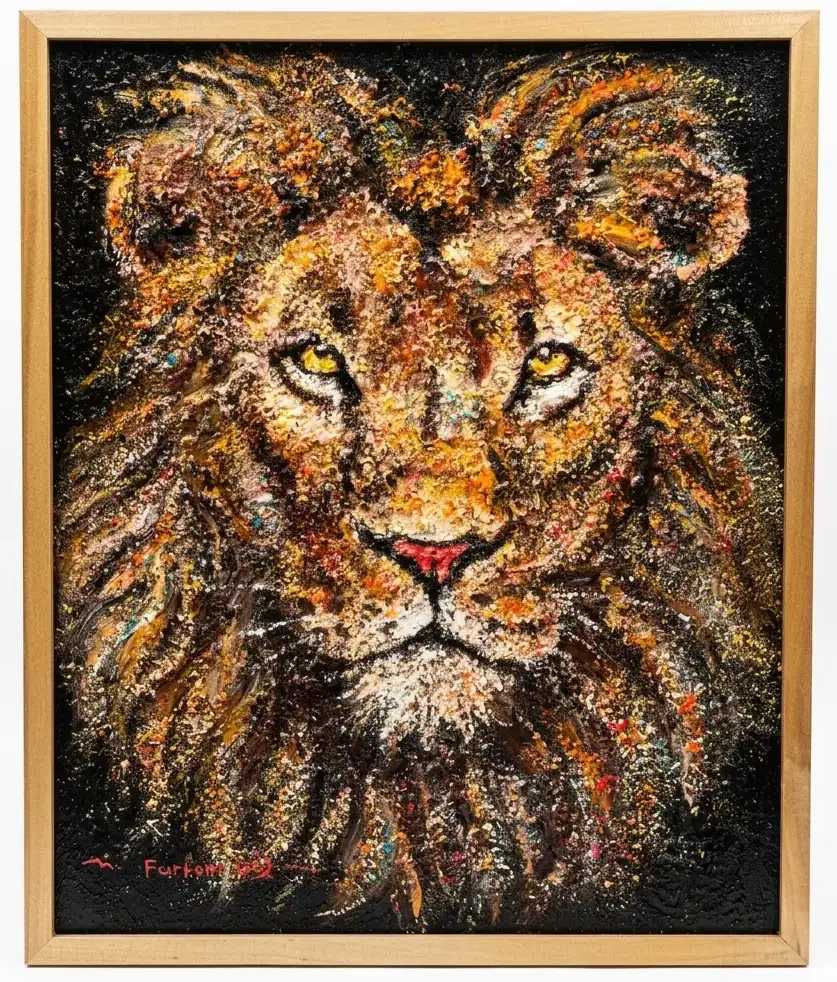
Two painters, two lions, two completely different answers to the same question. Neither is more correct than the other. Both are honest.
Beyond the Lion: The Full Wildlife Painting Bali Collection at Arts of Bali
The wildlife collection at Arts of Bali extends well beyond its most dramatic subjects. Each work in the collection approaches the relationship between painter and animal from a different direction.
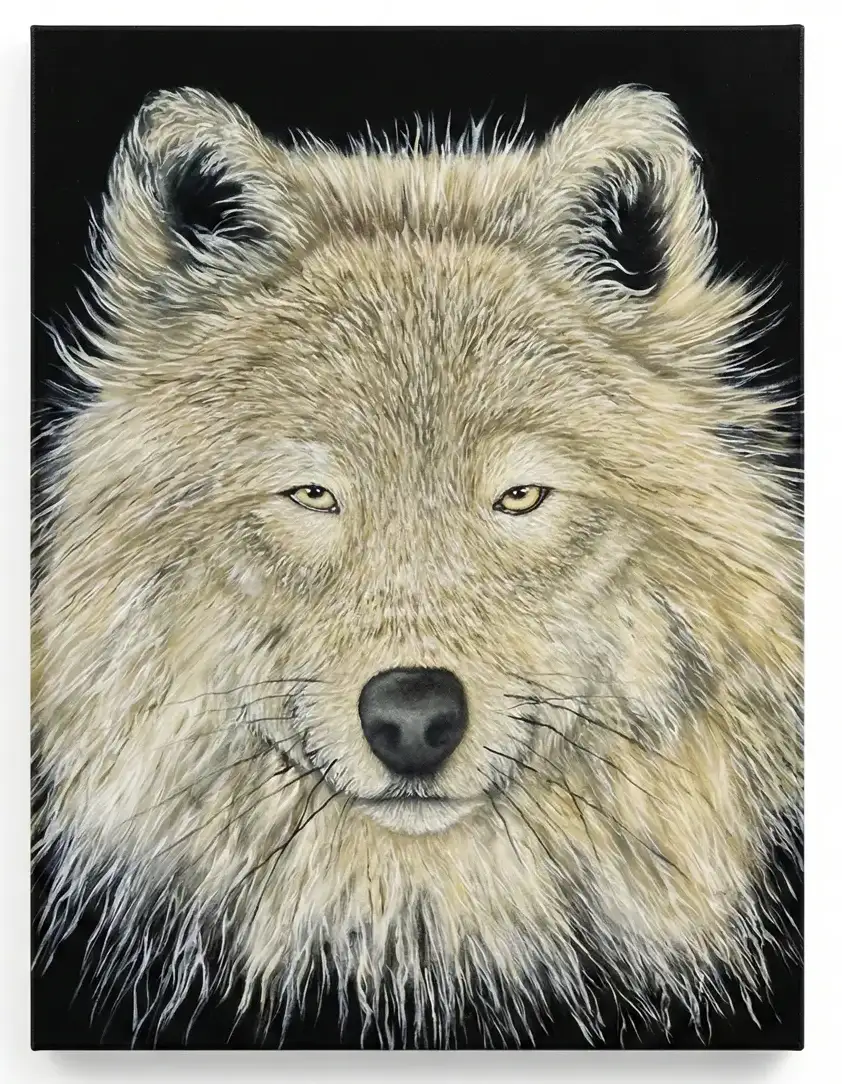
The White Wolf — Alzen
Alzen’s wolf is painted against a pure black ground — a choice that removes every element of context and places the entire visual weight of the painting on the animal’s face.
Its expression is neither threatening nor submissive — the expression wolves in the wild are observed to carry when they hold their ground. It is simply present, looking back at the viewer with directness.
As a study in white-on-black, the painting is also a technical exercise of considerable difficulty, requiring the painter to construct form entirely through tonal variation within a very narrow range.
Horse and Butterfly — Arts of Bali
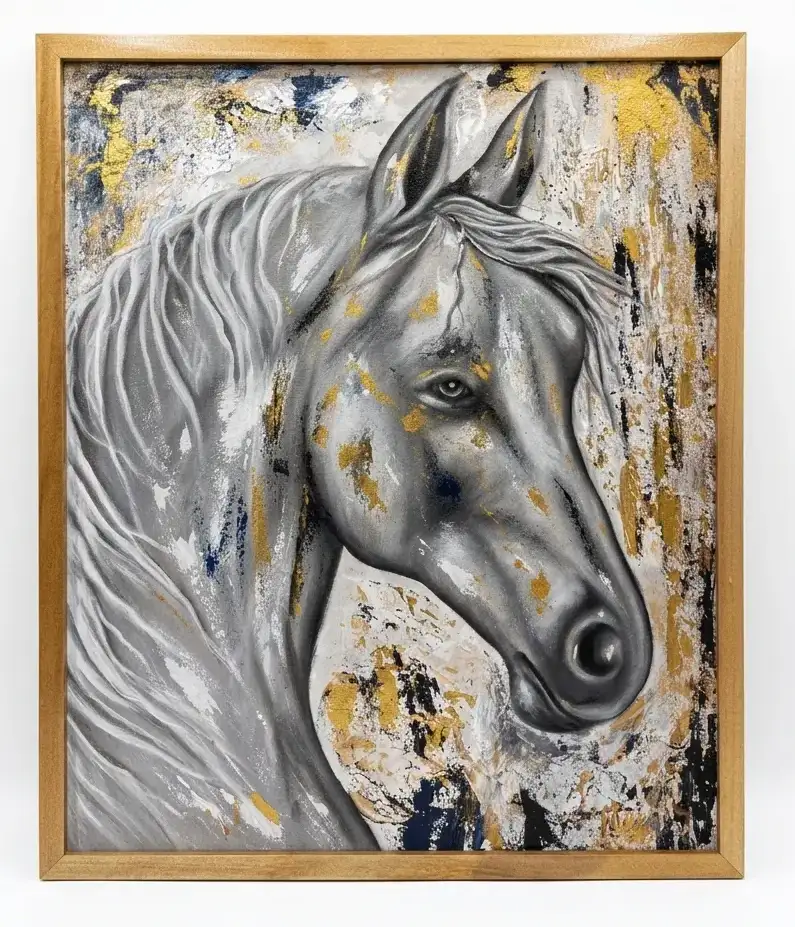
The horse painting — a grey Arabian profile set against an abstracted background of gold, black, and white — treats the horse as an emblem of elegance rather than power. The animal’s musculature is rendered with smooth, controlled brushwork.
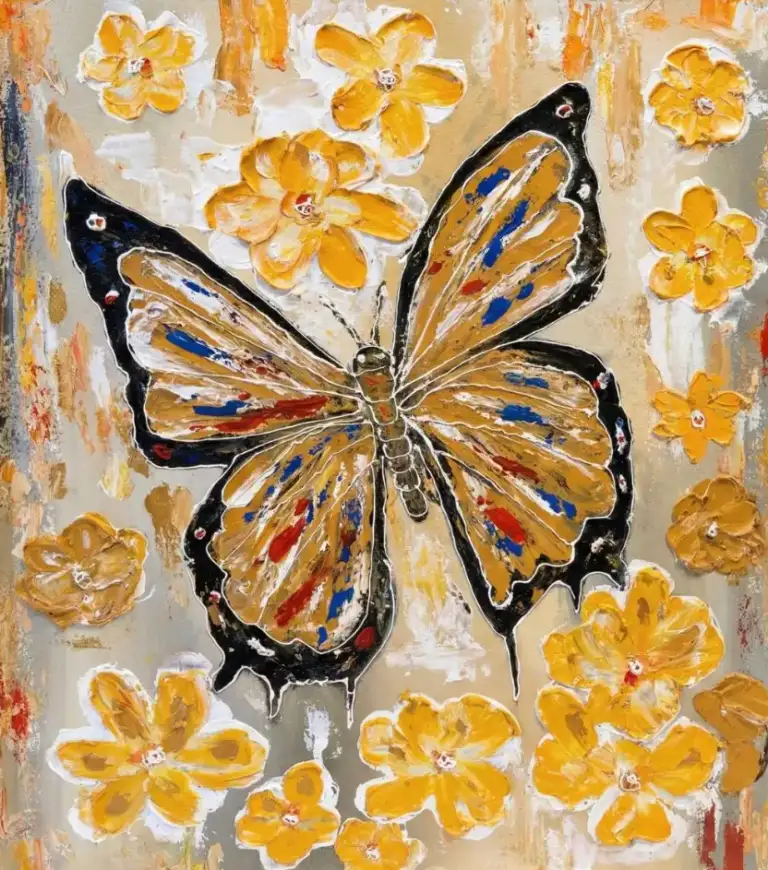
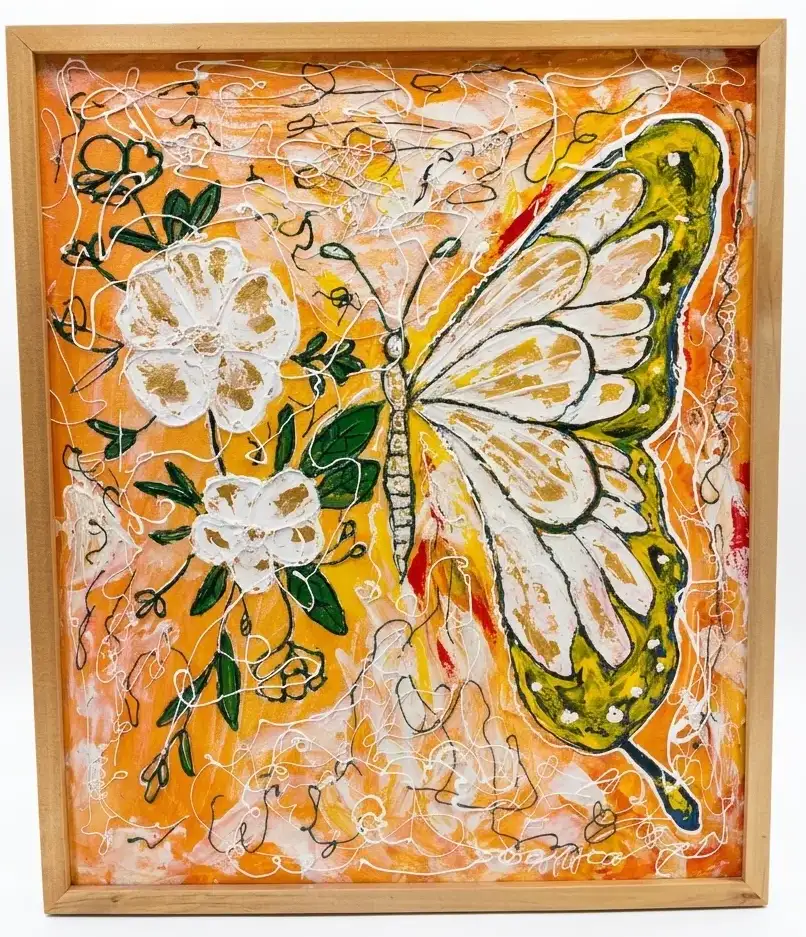
The butterfly work moves further toward the decorative — a mixed media piece in warm orange and gold, with white frangipani blooms. It is the most lyrical work in the wildlife collection: less about the animal and more about the world it moves through.
The Puppy Portrait — Alzen
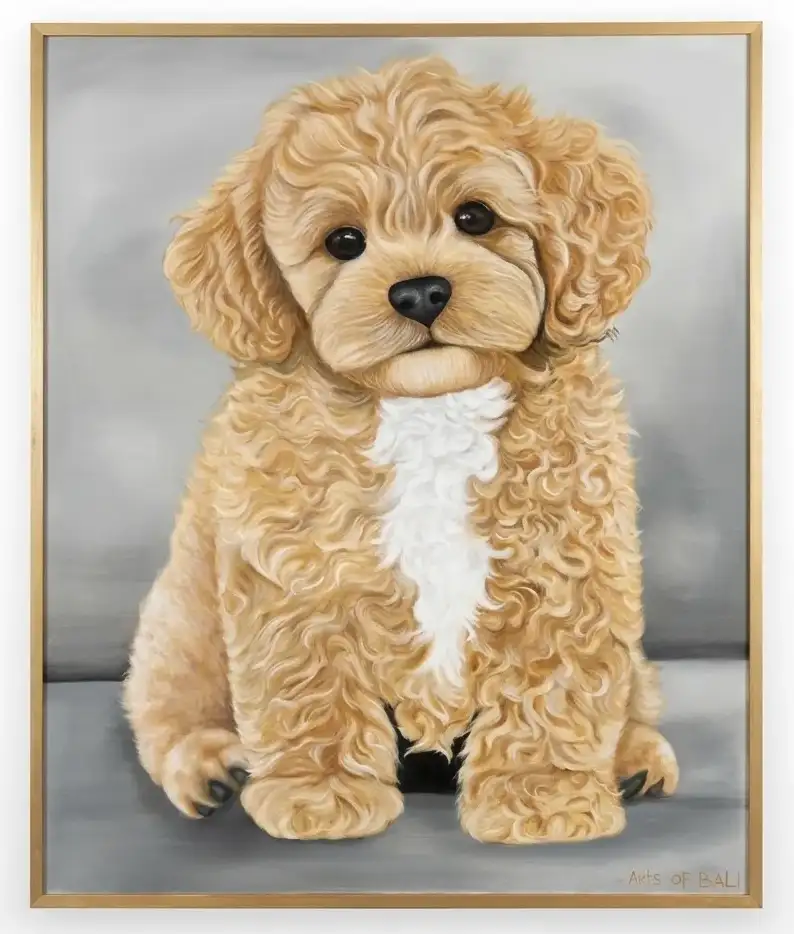
The Labradoodle puppy sits at the boundary between wildlife painting and pet portraiture. Where the lion communicates authority, the puppy communicates something closer to unconditional vulnerability.
Alzen renders the curling texture of the coat with the same individual-strand patience he applies to every other subject, but here the result is warmth rather than power.
It is also a direct example of what is possible through the gallery’s custom portrait commission process, which extends to pet portraits painted from photographs provided by the owner.
“Great paintings. The staff were very helpful. Highly recommend.”
Choosing a Wildlife Painting: What to Look for When the Subject Is an Animal
Wildlife paintings present a particular challenge to the buyer who has not bought original art before. How do you evaluate a painting of an animal you may not know well?
The answer is the same as for any other subject — you look for evidence of genuine observation, not generic representation. With wildlife specifically, a few additional signals are worth knowing.
Species Accuracy
A painter who has genuinely studied their subject gets the anatomy right. The proportions of a lion’s skull, the specific structure of a wolf’s muzzle, the way a horse’s eye sits in its socket. Accuracy in anatomy is a reliable indicator of a painter who has done the work of looking.
Surface Honesty
Fur, feathers, and scales each have their own visual logic. Look at how the fur lies — whether it follows the underlying muscle structure, whether the direction of growth changes correctly around the muzzle. Serious painters get this right.
The Eyes
In any animal portrait, the eyes carry the emotional weight of the entire painting. They should have depth. The most common failure in wildlife painting is eyes that are technically correct but lifeless. In a successful work, the eyes hold your attention.
All wildlife paintings in the Arts of Bali collection are original, hand-painted works on canvas. The gallery also accepts custom wildlife and pet portrait commissions from photographs.
Most commissions are completed within two to four weeks. International shipping is available for all works, and the gallery team manages packing and logistics. Read our guide on how to buy art in Bali for practical advice.
The Wildlife Painting Bali Collection — Arts of Bali, Seminyak
The full wildlife and animal painting collection is on display at Arts of Bali, Jl. Raya Seminyak No.42 — open daily, no appointment required. Works by Alzen and Farfan are available for immediate purchase, and custom wildlife commissions are accepted year-round. We are here to help you find exactly the right work — or to commission one that does not yet exist.
Find Your Wildlife Painting at Arts of Bali
Visit us at Jl. Raya Seminyak No.42, Seminyak, Bali — or reach out directly via WhatsApp to ask about available works, custom animal portrait commissions, sizing, and international shipping.
Browse the Collection WhatsApp Us