Color that holds its ground.
Paint built for Bali’s light.
“Oil gives you time to change your mind. Acrylic forces a decision. The paintings you see here are full of decisions that the artist stood behind.”
— 普图·苏西普塔,“巴厘岛艺术”店主
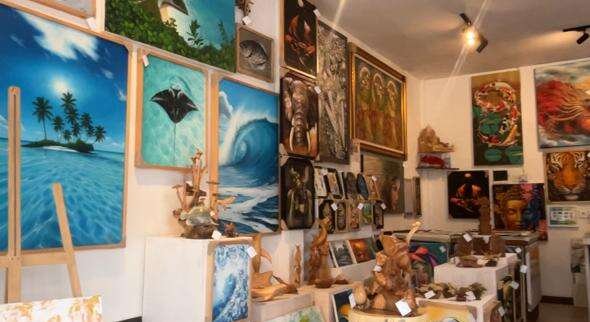
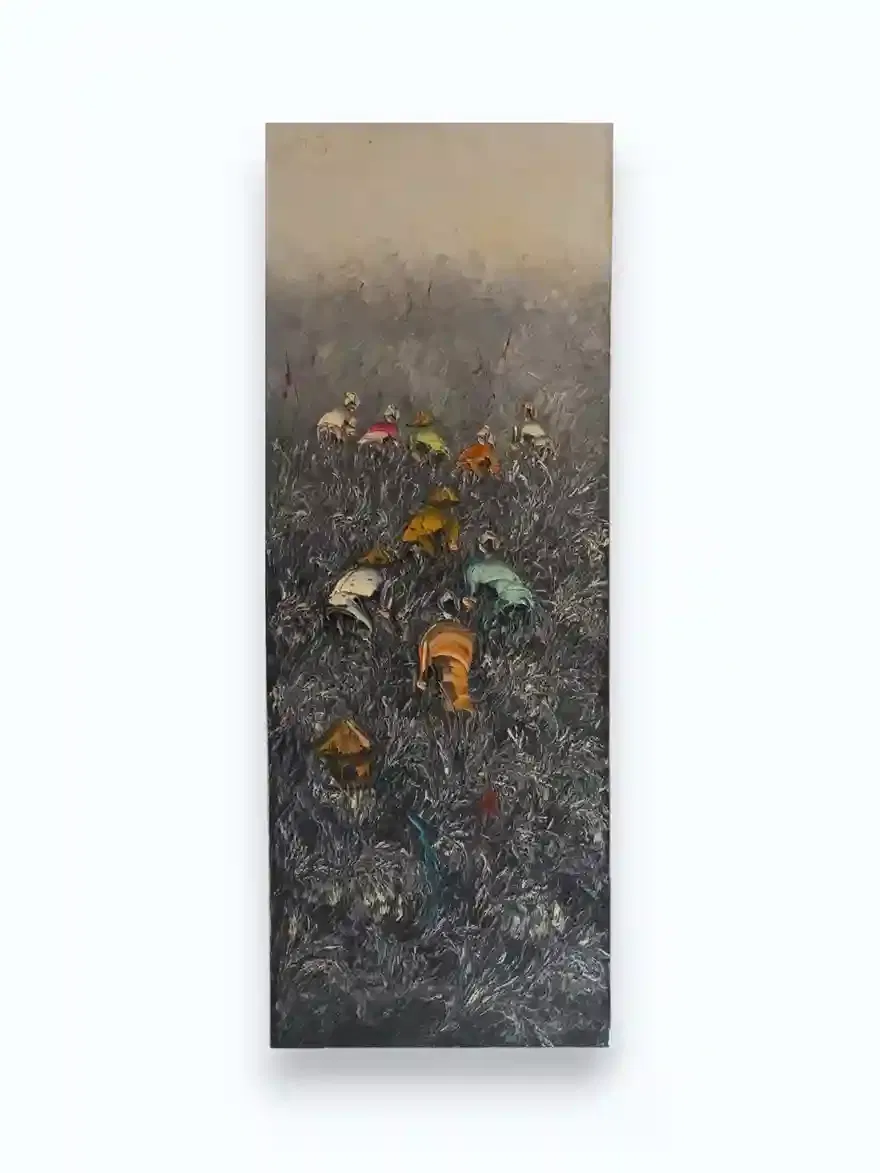
Acrylic painting Bali visitors find at Arts of Bali spans a range that oil on canvas rarely manages in a single collection. One wall holds a photorealistic banana tree with nesting doves and every banana individually counted. Another holds a gold-leafed lion in grey and amber that a collector in Melbourne put on a shortlist the day the photo was sent. Another shows Balinese farmers scattered across a dark field viewed from directly above, heads bent, their colored hat covers the only warm light in the composition. All three are acrylic. All three are originals. That range is the point of this post.
Acrylic painting uses water-based acrylic polymer as the binder for pigment, producing paint that dries quickly, holds color with exceptional long-term stability, and accepts a wide range of application techniques — from thin transparent glazes to thick impasto layers. In Bali, acrylic has been widely adopted by contemporary artists working across subjects that include figurative, landscape, wildlife, and mixed media, often combined with gold leaf, sand texture, or resin for dimensional surface effects.
Acrylic Painting in Bali: Why Serious Artists Choose the Medium
Acrylic paint was developed in the 1950s and adopted quickly by painters who wanted the visual density of oil without the slow drying time. Today it sits alongside oil as an equally serious medium in galleries worldwide. The Guggenheim’s collection of modern and contemporary paintings includes significant works in acrylic by major 20th and 21st century artists. In Bali, the medium is chosen for practical and technical reasons that are specific to the local climate and collecting context.
Bali’s humidity and heat require paints that cure fully and seal well. Acrylic dries within hours and cures to a hard, moisture-resistant film. For collectors shipping works internationally, this matters: a fully cured acrylic canvas is stable during transport in a way that a recently completed oil painting is not.
What Acrylic Allows That Oil Makes Harder
Acrylic can be applied in thin transparent washes (similar to watercolor) or built up in heavy, sculptural impasto layers that create physical texture on the canvas surface. A single painting can use both in the same composition. The elephant portrait visible in this collection uses thick, directional strokes that describe the animal’s skin texture while the gold decorative elements are applied with fine brushwork on top. This kind of technical shift within one painting requires a medium that dries between layers quickly enough to work across a session rather than waiting days between stages.
Color retention in acrylic is also exceptional. Unlike oil, which can shift in tone as it cures and ages, acrylic pigments stay close to the original mixed color once dry. For buyers keeping work in tropical environments or bright rooms, this stability matters.
"(《世界人权宣言》) abstract painting collection at Arts of Bali includes works that use similar mixed media approaches. The acrylic collection operates across a broader subject range, from wildlife to cultural figures to landscape.
“With acrylic, what you see when the paint is wet is nearly what you keep. With oil, you’re working with a promise. The painters here prefer the certainty.”
——普图·苏西普塔,《巴厘岛艺术》
Acrylic Painting Bali Collectors Find Here: Subjects and Styles
The acrylic collection at Arts of Bali does not cluster around a single subject or style. These works were chosen because they each demonstrate something the medium does well. Together they cover four distinct directions.
Cultural Figures: The Balinese Woman with Gebogan
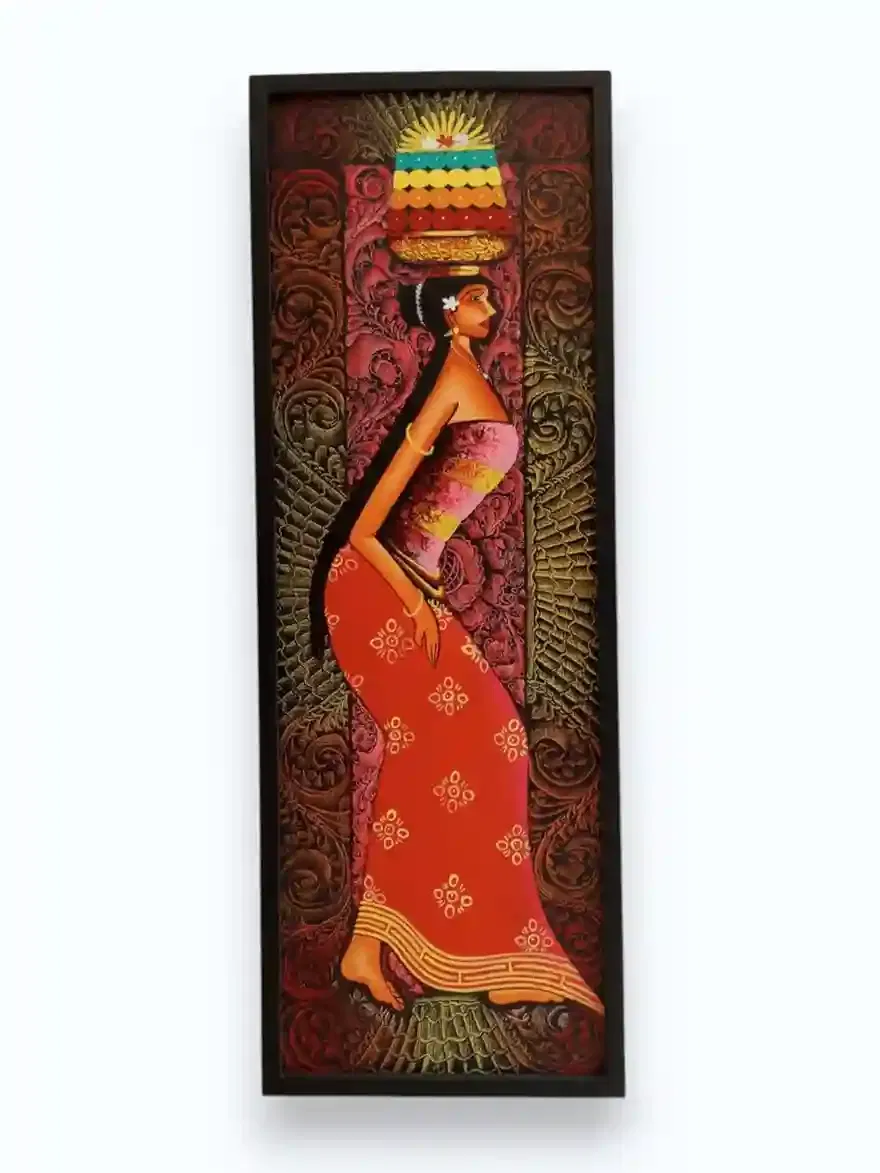
The suun painting — depicting a Balinese woman carrying a gebogan on her head — is one of the most culturally specific pieces in the collection. Suun is the Balinese term for carrying objects balanced on the head, a practice integral to temple ceremony and daily offering ritual. The gebogan is a towering fruit and flower offering constructed for temple presentation.
What makes this painting distinctive is the layered background. The deep red carved-motif pattern behind the figure reads like bas-relief: decorative Balinese floral scrollwork applied or painted with enough texture to cast shadows. The figure herself is painted in flat, strong tones: orange-brown skin, a red batik sarong with gold medallion patterns, the geometric bands of the gebogan above her head. The narrow tall format of the canvas and the dark wood frame hold the composition exactly. It works as a single vertical statement on any wall with enough height.
Wildlife and Nature: Hyperrealism and Gold
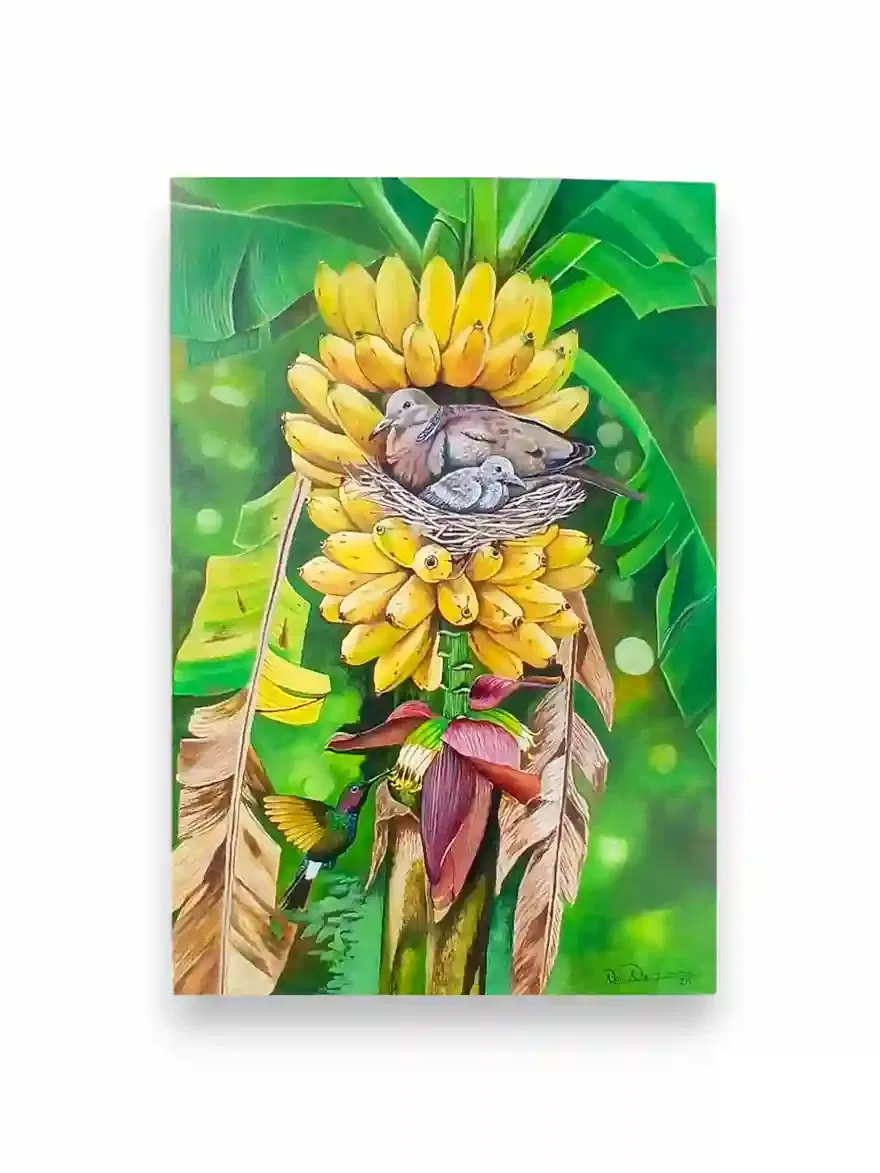
The banana tree painting is photorealistic in a way that stops people. Two bunches of ripe bananas, a nesting dove with one chick visible, a small green-and-gold hummingbird near the flowering bud at the base. Individual banana skins are rendered with slight blemishes and natural variation. The nest is painted straw by straw. The bokeh-lit green background places the whole composition in a tropical garden without rendering it literally. This is the kind of work that rewards standing close, then stepping back, and finding two different paintings at two different distances.
The elephant portrait (shown as the featured image for this post) operates differently. The blue-grey elephant skin is built up in layered, directional strokes that describe the texture from close up. The Balinese-style ceremonial headdress, with its gold scrollwork and embedded teal accent stones, references Ganesha, the Hindu elephant deity central to Balinese spiritual life. Dark background, gold details, textured surface: this piece belongs in a collection that takes bold work seriously.
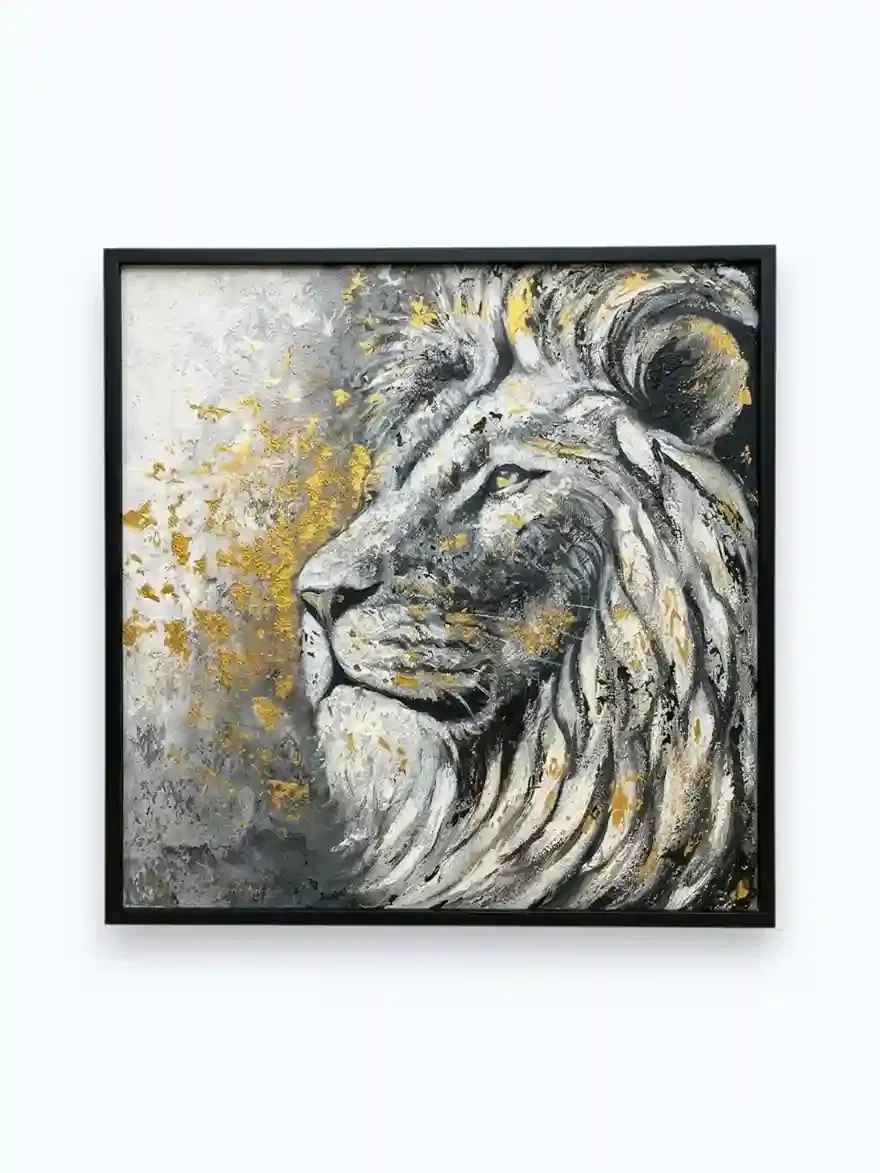
The lion portrait uses gold leaf alongside the acrylic. Grey and white paint builds the animal in monochrome. Then gold fragments — scattered across the background and worked into the mane — bring a warmth and prestige to the piece that paint alone would not produce. This is a consistently popular subject in the contemporary art market, and this execution is strong enough to compete with any version of it.
Our broader wildlife painting collection extends these subjects across other media and styles.
Acrylic Painting Bali Buyers Choose: Three Distinct Directions
Cultural and Figurative
Subjects drawn from Balinese daily ceremony and traditional life: the suun figure carrying offerings, the dressed figures of classical dance, the rituals that structure the island’s calendar. Acrylic handles these subjects with strong, clear color and the ability to work fine decorative detail into costume, jewelry, and background pattern. The cultural figure paintings at Arts of Bali sit at the intersection of art and direct documentation.
Wildlife and Nature
Tropical nature and animal subjects painted in acrylic, ranging from photorealistic botanical detail to bold painterly portraits using gold leaf and mixed media. The banana tree, the elephant with ceremonial headdress, the lion with scattered gold fragments: each shows a different technical approach the medium permits. These pieces work across contemporary interiors with equal ease as investment-grade wall objects.
Landscape and Field
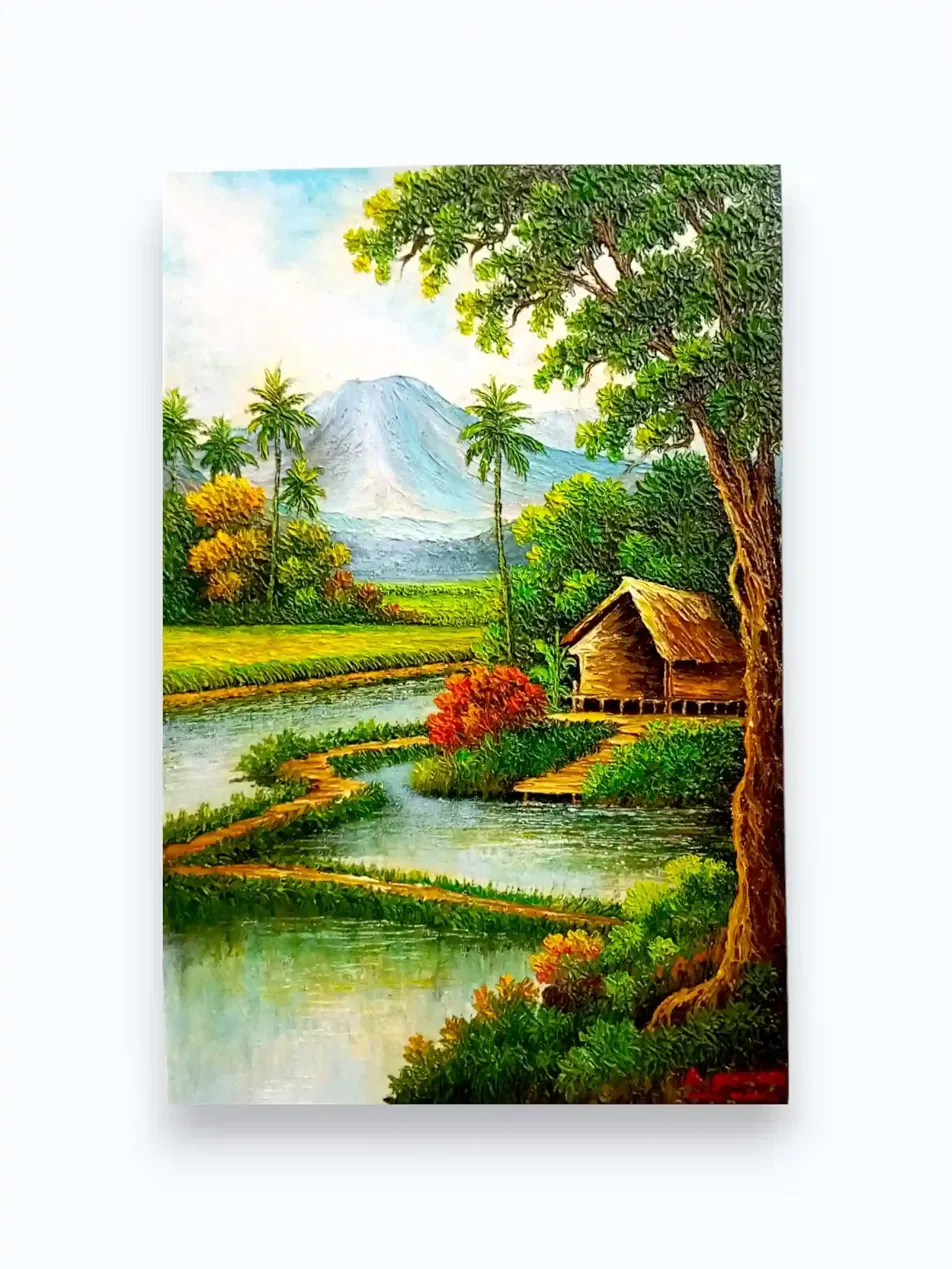
Balinese landscape in acrylic covers a wide tonal range. Panoramic rice field harvest scenes in warm amber and green. A village rice paddy with mountain, thatched hut, and water channel. A contemporary aerial view of farmers bent in a dark field, their colored head coverings the only warmth against a moody ground. These landscapes record specific places and light conditions that change rapidly as Bali develops, which is part of what makes them collectible.
The Landscapes: Rice Fields and Mountains in Acrylic
Three of the paintings in this collection are landscape, and each takes a different stance toward its subject.
The Panoramic Field at Harvest
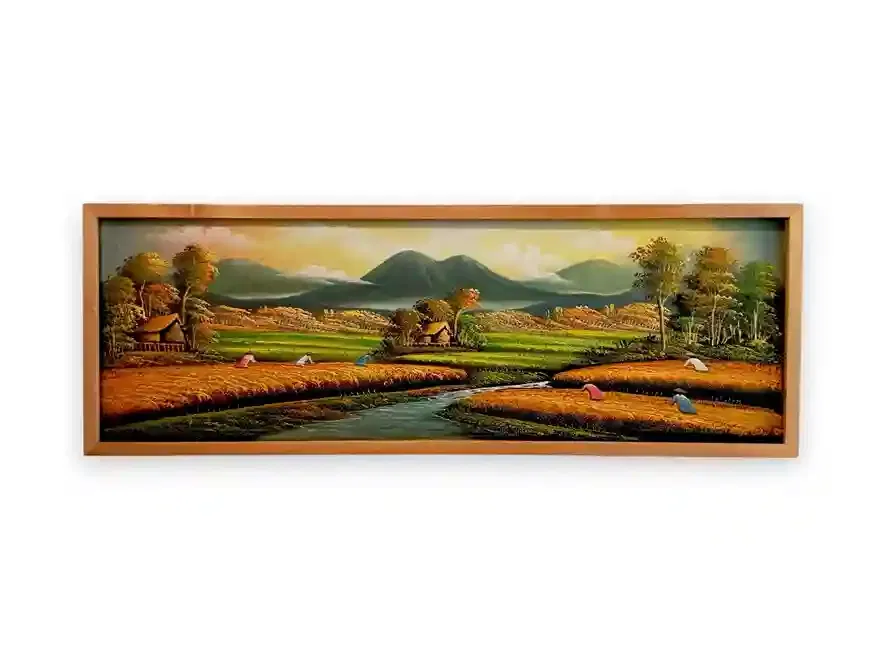
The wide horizontal canvas shows a rice field in harvest. The paddy is past green: it has turned amber and gold, the stalks heavy with grain. A river runs through the center of the composition. Small figures in colorful traditional clothing work along its banks and through the field. Mountains in the background hold cloud at their shoulders. Trees frame the left and right edges. The color temperature is warm throughout: gold, olive, burnt sienna, with the cool grey-blue of the mountains providing contrast.
This kind of panoramic landscape has a long tradition in Balinese painting, but the acrylic version holds its colors in tropical light in a way that some oil-based versions cannot sustain over years. The wooden frame suits the warm palette exactly.
The Contemporary Field: Farmers from Above
The mono painting is a different kind of landscape entirely. Viewed from directly above, or at a steep angle, rice field workers are visible only as their backs and the colored fabric of their head coverings: orange, teal, white, amber, brown. The field itself is painted in heavy dark strokes that read as either dense grass or the brushwork equivalent of depth. The sky appears at the top of the canvas as a hazy warm ground.
What makes this piece interesting to collectors is the refusal to explain itself. There is no horizon, no landmark, no context that would tell a viewer unfamiliar with Balinese life exactly what they are looking at. What remains is pure visual fact: small colored forms against a dark ground, and the weight of work implied in every bent figure. The composition has the quality of a photograph taken from a drone at golden hour, then translated into paint with considerable restraint. It does not look like anything else in the gallery.
Choosing an Acrylic Painting from Bali for Your Space
Acrylic paintings from the Arts of Bali collection work across a wider range of interior contexts than the oil paintings do. The color range is broader. The finishes vary from matte to semi-gloss depending on the varnish the artist used. The subjects cover enough ground that almost any interior style has a natural candidate in the collection.
Matching Subject to Room
The figurative paintings (the suun woman, the cultural subjects) work well in spaces that already engage with global or Asian-influenced design: rooms with natural materials, warm tones, objects that carry cultural reference. They add specificity rather than decoration. The wildlife pieces (lion, elephant) have different energy. The lion portrait with gold leaf looks at home in spaces with metallic accent and high contrast. The elephant is richer and darker: it belongs in a room that can hold it without being overwhelmed, which usually means a larger space or a wall without much else on it.
The landscapes are the most versatile. They cool a room dominated by warm materials, warm a room that runs cold, and carry enough subject interest that they work without supporting context. The panoramic harvest scene is a natural fit for a dining area, a corridor, or anywhere you want something long and horizontal. The portrait-format rice field village painting fills a vertical wall gap without competing with surrounding objects.
我们的 巴厘岛艺术品选购指南 covers scale, placement, and material compatibility in detail, with guidance applicable to both acrylic and oil works.
Caring for Acrylic on Canvas
Acrylic paintings are sealed with varnish before leaving the gallery: this protects the surface from dust, UV, and humidity. In normal living conditions, no additional care is required beyond dusting with a soft dry cloth. Avoid abrasive cleaning products on the surface. Keep out of prolonged direct sunlight, which will eventually shift any pigment regardless of medium.
Acrylic paintings ship well internationally. The paint film is flexible and does not crack under normal transport conditions. Rolled shipping (without stretcher) is possible for canvases up to approximately 150 cm. Larger pieces ship flat in crated packaging.
Lion portrait in acrylic and gold leaf — original canvas, black float frame. Available at Arts of Bali, Jl. Raya Seminyak No. 42.
Where to Buy Acrylic Painting Bali Originals
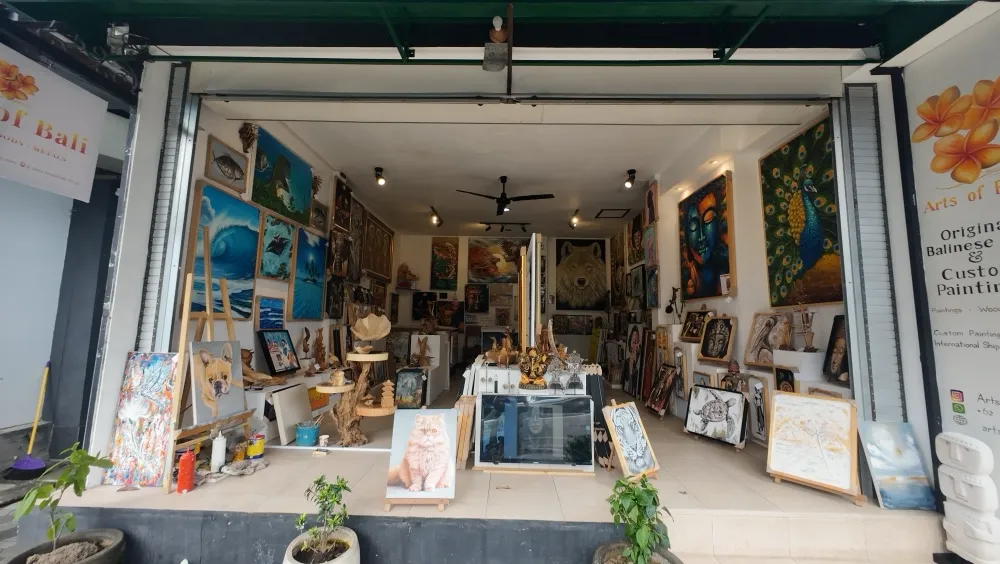
If you are looking to buy acrylic painting Bali originals, every artwork in this post is available directly at Arts of Bali gallery in Seminyak. Nothing is reproduced or printed. Contact us on WhatsApp to confirm current availability, ask about dimensions, or start a 定制委托. We can work from reference images, color preferences, or a full brief. Acrylic commissions typically complete in two to four weeks depending on size and complexity.
在 WhatsApp 上聊天 浏览图库