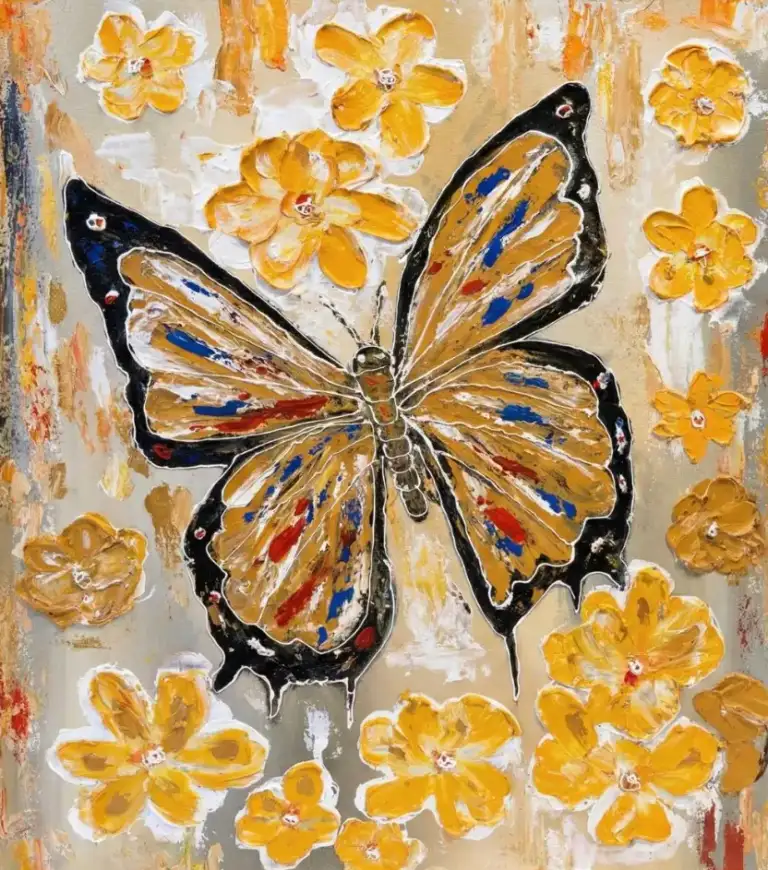
Canang Sari: Meaning, Parts and Etiquette in Bali

Canang sari is the small palm leaf offering that Balinese Hindus place every day at shrines, temples, doorways and on the ground, as an act of thanks to Sang Hyang Widhi Wasa. The word canang means a small woven tray and sari means essence, according to Wikipedia. This guide covers the parts of a canang […]
Pagerwesi Day in Bali: Date, Meaning and What Happens
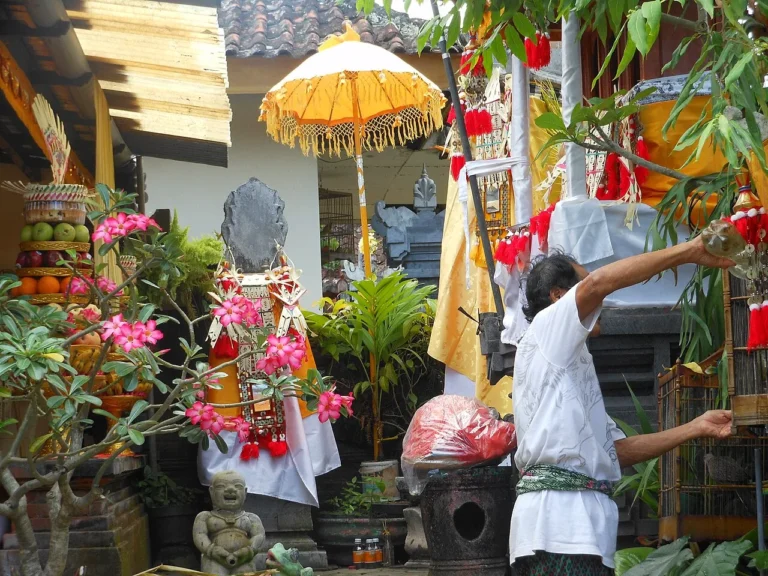
Pagerwesi day is a Balinese Hindu holy day held on Buda Kliwon wuku Sinta, a Wednesday in the 210 day Pawukon calendar, four days after Saraswati. In 2026 it falls on Wednesday 4 November. The name means “iron fence”, from pager (fence) and wesi (iron), and the day honors Sang Hyang Pramesti Guru, described by […]
Balinese Dance: Wali, Bebali and Balih-Balihan Explained

Balinese dance is the body of traditional dances performed across Bali in temples, villages and on stage, usually with gamelan, and sorted by Wikipedia and UNESCO into three genres: sacred wali, semi-sacred bebali and entertainment balih-balihan. UNESCO inscribed “Three genres of traditional dance in Bali” on its Representative List of the Intangible Cultural Heritage of […]
Contemporary Figurative Painting: Cubist and Impasto Works
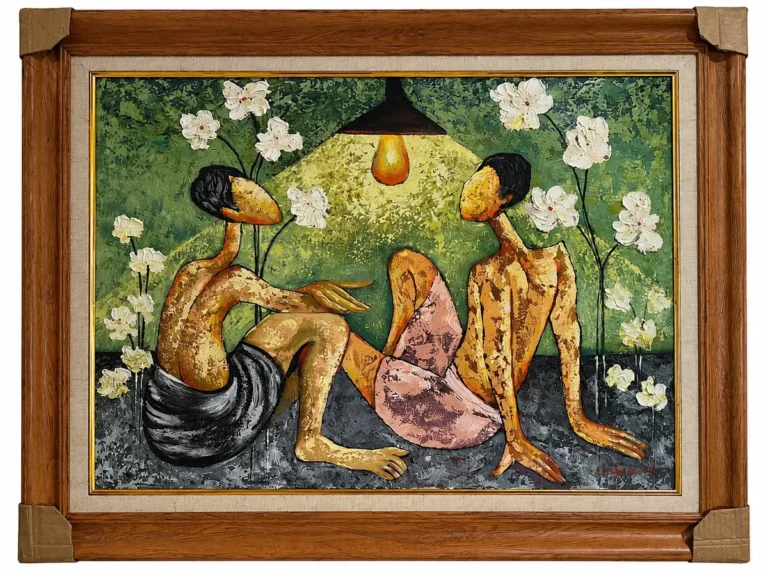
Contemporary figurative painting is art, generally from the 1970s onward, that stays tied to recognizable subjects such as the human figure, even when the figures are stylized, flattened or broken into shapes. This guide uses two paintings from our Seminyak gallery to show what that looks like: three figures in pink, blue and gold painted […]
Balinese Gamelan: Instruments, Ensembles and Sound Explained
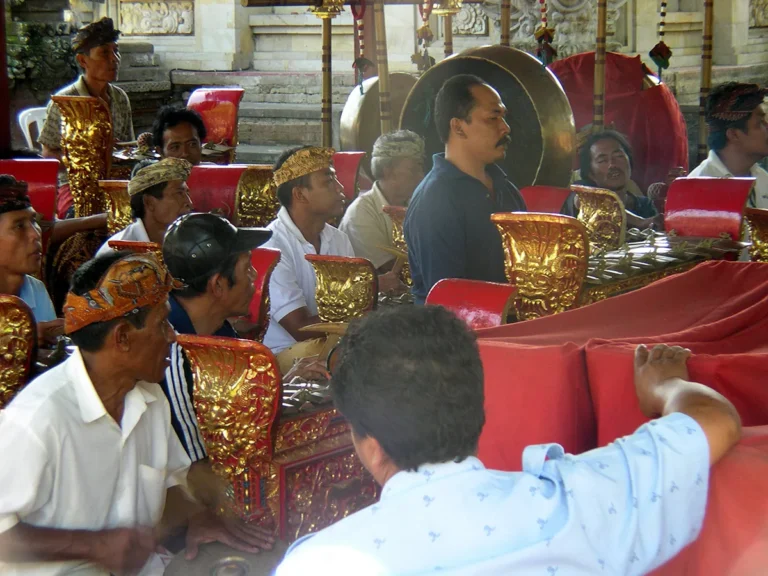
Balinese gamelan is the percussion orchestra of Bali, built mostly from tuned metal keys, gongs and drums and played in a style that Wikipedia calls strong and dynamic, with fast rhythms. UNESCO added gamelan to its Representative List of the Intangible Cultural Heritage of Humanity in 2021. This guide covers what a Balinese gamelan is, […]
Barong Dance: Bali’s Story of Barong, Rangda and the Kris
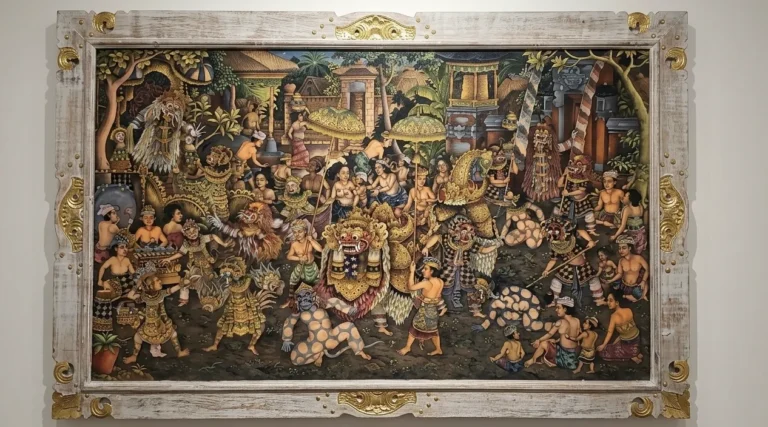
Barong dance is a Balinese dance-drama in which Barong, the lion-like king of the spirits, fights Rangda, the demon queen of the leyaks. Wikipedia describes it as the eternal battle between good and evil, and the best-known staging includes a kris scene where entranced dancers turn their blades on themselves. This guide covers the characters, […]
Legong Dance: Bali’s Classical Dance, Story and Costume

Legong dance is a refined Balinese dance form known for intricate finger movements, complicated footwork, and expressive gestures and faces, danced to gamelan by two young dancers and a third called the condong. Wikipedia says it probably began in the 19th century as royal entertainment, while another source pushes the date earlier. This guide covers […]
Kecak Dance: Bali’s Ramayana Chant, Origins and Fire Scene

Kecak dance is a Balinese Hindu dance-drama in which a circle of men chants “cak” in coordinated rhythm to act out scenes from the Ramayana, with a coconut oil lamp at the center and, in the best-known scene, fire. It was popularized in the 1930s and grew out of sanghyang, an older trance ritual. This […]
Ogoh-Ogoh: Bali’s Giant Demon Statues Before Nyepi
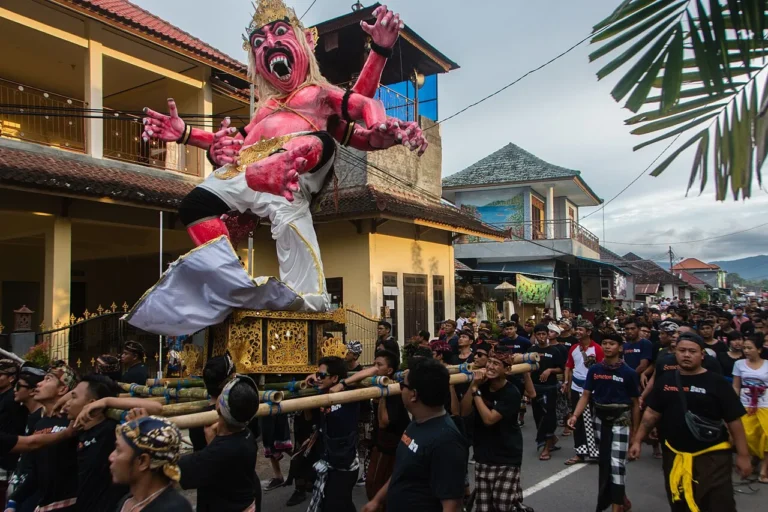
Ogoh-ogoh are the giant demon statues that Balinese neighborhoods build from bamboo, paper, and paint, carry through the streets on the evening before Nyepi, and usually burn at the end of the night. They stand for Bhuta Kala, the negative forces people want out of the village before the Day of Silence. This guide covers […]
Lion Symbolism in Art: Bali’s Winged Singa and the Barong
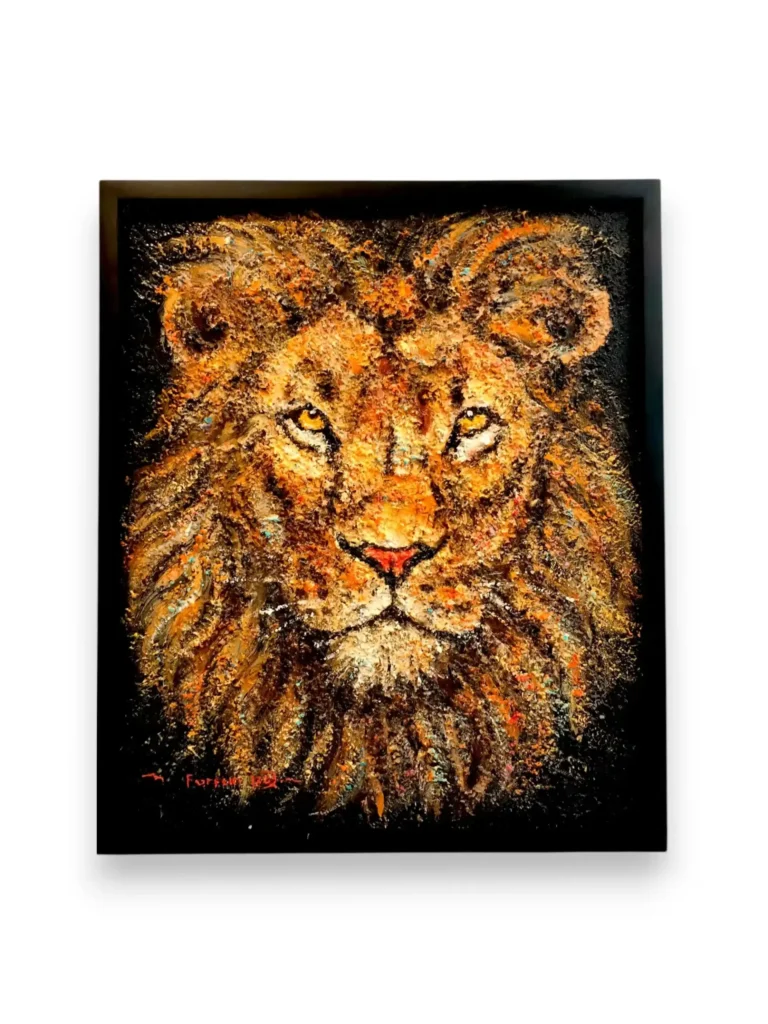
Lion symbolism in art points mostly to kingship, courage, and protection, though every culture adds its own twist. In Bali the lion appears as the winged singa that guards roof beams and as the lion Barong that fights the witch Rangda, even though lions were never native to Southeast Asia. This guide covers both, then […]