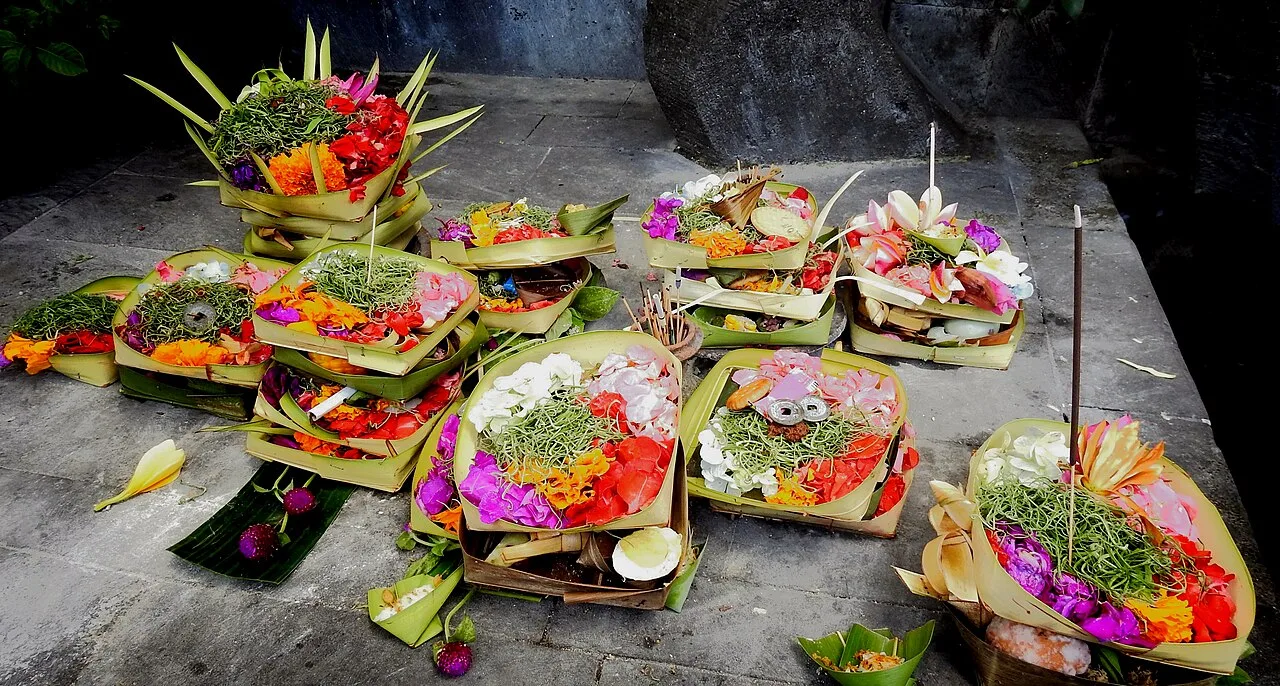
Canang sari is the small palm leaf offering that Balinese Hindus place every day at shrines, temples, doorways and on the ground, as an act of thanks to Sang Hyang Widhi Wasa. The word canang means a small woven tray and sari means essence, according to Wikipedia. This guide covers the parts of a canang sari and what sources say each one means, the flower colors and their directions, how the offering is made, where and when you will see it, and how to behave around one. Where sources disagree, we show both sides.
Key Takeaways
- Wikipedia describes canang sari as a daily offering of thanks. The Jakarta Post calls Balinese offerings an expression of daily gratitude, left at temples, shops, shrines, sidewalks and steps.
- The base is a small tray called a ceper, filled with betel leaf, lime and other porosan items, rice, flowers and often a coin or paper money, per Wikipedia and What’s New Indonesia.
- Flower colors follow directions: white in the east, red in the south, yellow in the west and blue, green or purple in the north, depending on the source.
- Sources disagree on which deity goes with which porosan item, so we show the differences instead of picking one.
- Do not step on or kick an offering. Both the Jakarta Post and What’s New Indonesia say so.
- We are a gallery, not a temple. No painting in our collection shows a canang sari up close, but several show women carrying offerings, such as Balinese Women Procession Palette Painting (60 × 80 cm, Rp2,500,000).
The Basics
What Is Canang Sari?
Walk down any street in Bali and you will see small trays of flowers on the pavement, on shop steps and in front of doors. Most of them are canang sari. NOW! Bali calls it the most pervasive offering on the island, found on street corners, in temples, on beaches and in offices and markets. We sell paintings and carvings of Balinese ceremonies, so visitors ask us about these trays often. This guide gathers what named sources say, and says where we cannot verify a detail.
Wikipedia’s Canang sari entry explains the name: canang is a small basket tray of palm leaf and sari is essence. It describes a daily offering of thanks that is placed at temples and household shrines and on the ground. Wikipedia adds that it is made daily and also on Kliwon, Purnama and Tilem days, and that it is not offered when a death has occurred in the family or community.
These trays are only the smallest of the Balinese offerings. Our gebogan guide shows the larger tiers, and our guide to Balinese mythology painting maps the stories and rituals behind them.
The Meaning
Canang Sari Meaning: The Parts of the Offering
A canang sari is built from a handful of parts, and each part carries a meaning in the accounts we read. The table brings them together. It is not a formula that every family follows. The Jakarta Post notes that tobacco and betel nut are now often left out because they are expensive.
| Part | What it is | Meaning according to sources |
|---|---|---|
| Ceper | The base tray, woven from palm leaf | Wikipedia says the tray symbolizes Ardha Candra, the crescent moon. What’s New Indonesia reads it as earth and moon. |
| Peporosan or porosan | Betel leaf, lime and gambier, with betel nut and tobacco in Wikipedia’s list | What’s New Indonesia ties betel leaf, lime and gambir to the Tri Premana and the Tri Murti. See the note below on which deity goes with which item. |
| Wija | Rice | What’s New Indonesia links the rice to Sang Hyang Atma. |
| Fragrant oil | Scented oil added to the tray | What’s New Indonesia reads it as peace of mind. |
| Sampian urasari | A woven decoration placed on top of the raka-raka, under the flowers, per Wikipedia | What’s New Indonesia reads it as the wheel of life. |
| Flowers | Petals arranged by color | Each color faces a direction. See the second table. |
| Sesari | A kepeng coin or paper money | Wikipedia describes the money as the “sari” of the offering. What’s New Indonesia says some areas add old Chinese coins or paper money. |
Sources: Wikipedia, Canang sari and What’s New Indonesia, canang sari feature by Billy Bagus, 27 October 2023.
Sources disagree on the porosan deities
Wikipedia says the lime stands for Shiva, the betel nut for Vishnu and the gambier for Brahma. NOW! Bali gives a different set, with white lime for Shiva, red areca for Brahma and green betel for Vishnu. We cannot tell you which is the local standard, and Balinese families may follow their own teaching. The safer reading is that the porosan stands for the three gods of the Tri Murti, with the exact pairing varying by source.
The flower colors and their directions
The flowers are the part most visitors notice. Wikipedia and What’s New Indonesia agree on three directions and differ slightly on the fourth, where Wikipedia says blue or green and What’s New Indonesia says blue or purple.
| Flower color | Direction | Deity |
|---|---|---|
| White | East | Iswara |
| Red | South | Brahma |
| Yellow | West | Mahadeva |
| Blue, green or purple | North | Vishnu |
Source: Wikipedia, Canang sari, and What’s New Indonesia as above. The color of the north flowers varies between the two.
Flowers also connect canang sari to Balinese art. Our guides to flower painting and to the lotus in Balinese art show how painters use the same blooms.
Making It
How a Canang Sari Is Made
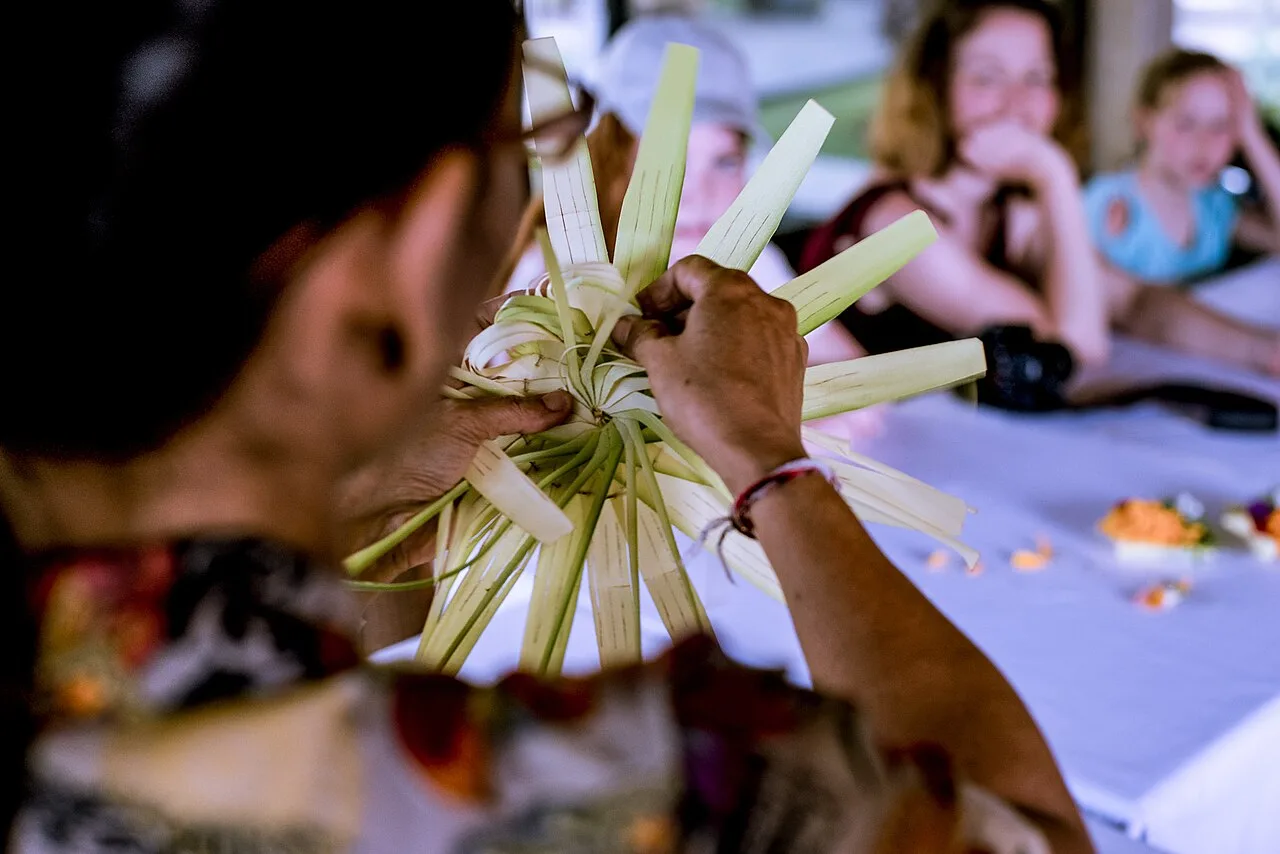
What’s New Indonesia calls the making of canang sari metanding. Its article says that in the past women made 50 to 70 at a time and used 15 to 17 each day. Today many are bought in markets, but the women of the household remain responsible for them. The Jakarta Post says village women learn as children from their parents and grandparents, and now also in school.
A 2025 paper in the journal Widya Pustaka Pendidikan by Nisa and colleagues, on preserving the local wisdom of canang sari, says all Balinese are taught to make it from childhood. It names the process matanding and majejahitan and notes that the materials are natural. The paper lists practicing Veda teachings, gratitude to Sang Hyang Widi, self improvement and drawing closer to God among the purposes. We have not tried to make one ourselves, so we cannot add a how to.
Where You See It
Where and When Canang Sari Are Placed
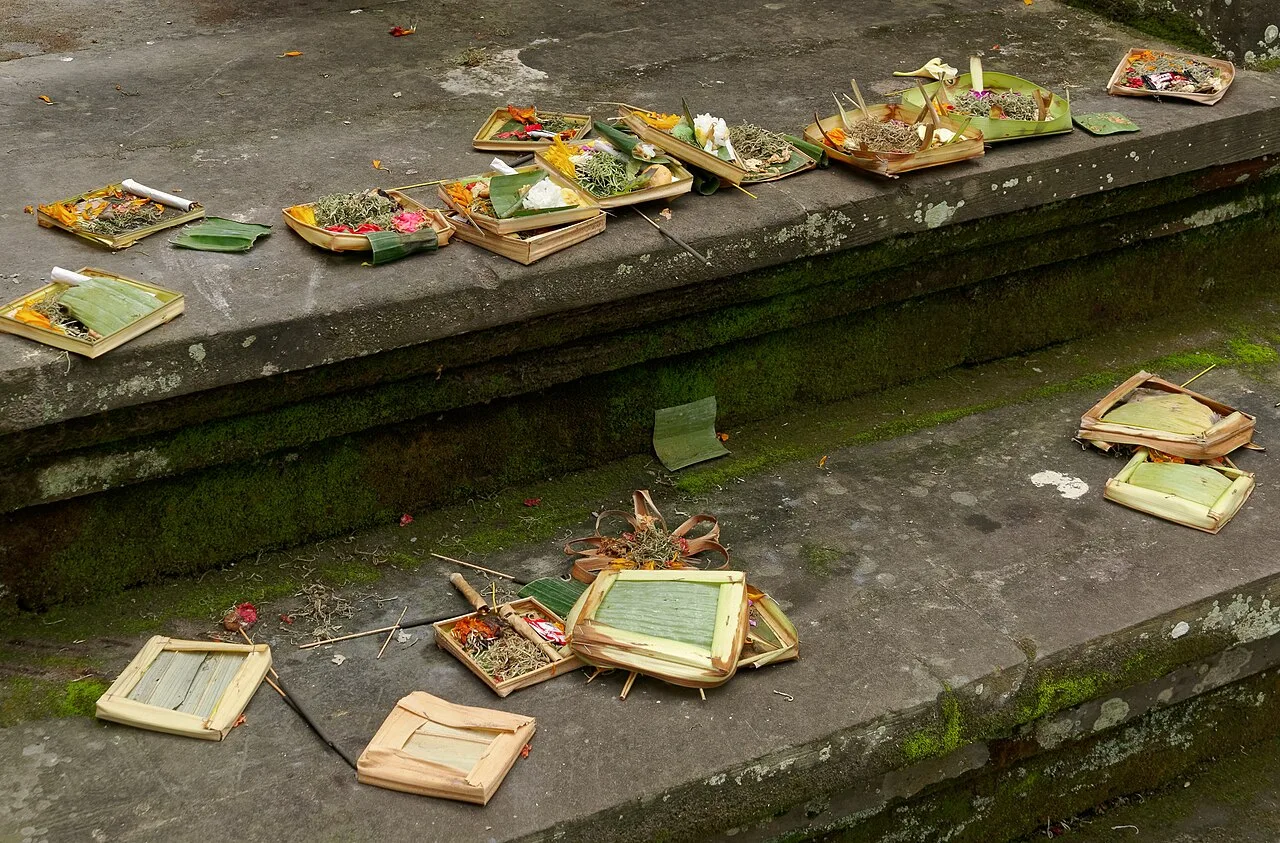
The Jakarta Post lists temples, shops, shrines, sidewalks and steps. NOW! Bali adds beaches, offices and markets.
After laying the tray, What’s New Indonesia says incense is lit and holy water, tirtha, is sprinkled over it. NOW! Bali says a lit incense stick is wafted so that the essence, the sari, reaches God.
The timing follows the calendar. Wikipedia says canang sari are offered daily and also on Kliwon, Purnama and Tilem days. On larger holy days, families add bigger offerings. Our guides to Saraswati Day, Pagerwesi day and Galungan cover three such days, and our Tumpek Landep guide shows families setting canang sari beside a keris to be blessed.
Variations
What Else Appears on a Canang Sari Offering
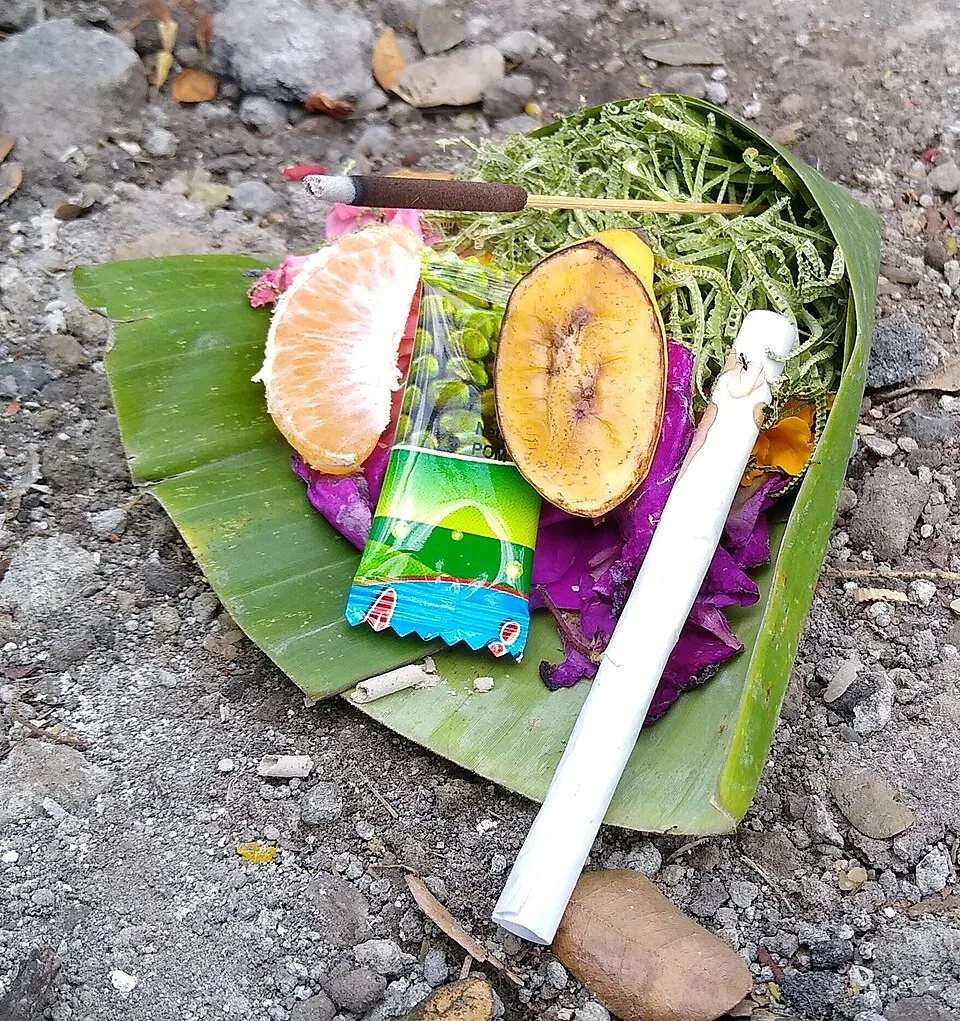
No two trays are the same. The Jakarta Post says tobacco and betel nut are now often omitted as expensive. What’s New Indonesia says some areas add cookies, crackers or candy so that stray animals can share in the offering. The tray in the photo is a modern example, with fruit and a snack packet beside the petals. We cannot say whether the family who laid it intended those items for animals.
The Jakarta Post also quotes Ibu Kadek, who works at Munduk Moding Plantation in Buleleng, saying a cone shaped version is used when a family member dies. We report that as her account. Wikipedia, as noted above, says the ordinary canang sari is not offered at such times.
Etiquette
Canang Sari Etiquette for Visitors
The advice in both the Jakarta Post and What’s New Indonesia is the same: do not kick or step on an offering. Because the trays sit on pavements, steps and doorways, that takes attention, especially in the morning when fresh ones go down. Walk around them, and if a tray is in your way, take another path.
We have found no written rule on photographing offerings. Ordinary courtesy applies: do not touch the contents, do not move a tray to get a better shot, and ask before you photograph people while they pray. For the offerings placed at temple gates and shrines, our temple ceremony painting guide shows what a larger ceremony looks like.
Other Offerings
Canang Sari and Other Balinese Offerings
Canang sari is the everyday unit. Bali offerings scale up from there, and the tiers have their own names. The gebogan, the offering tower carried on women’s heads, is the large end of the range, and our gebogan guide explains how it is built and where canang sit in the hierarchy. For a holy day that includes offerings at the family shrine, see our Pagerwesi guide.
In the Gallery
Canang Sari and Balinese Painting
We have no painting that shows a canang sari up close. What we do have are scenes of women carrying offerings, which show the context in which canang sari and larger offerings are used. Our guides to Balinese women painting and village life painting show more of them.
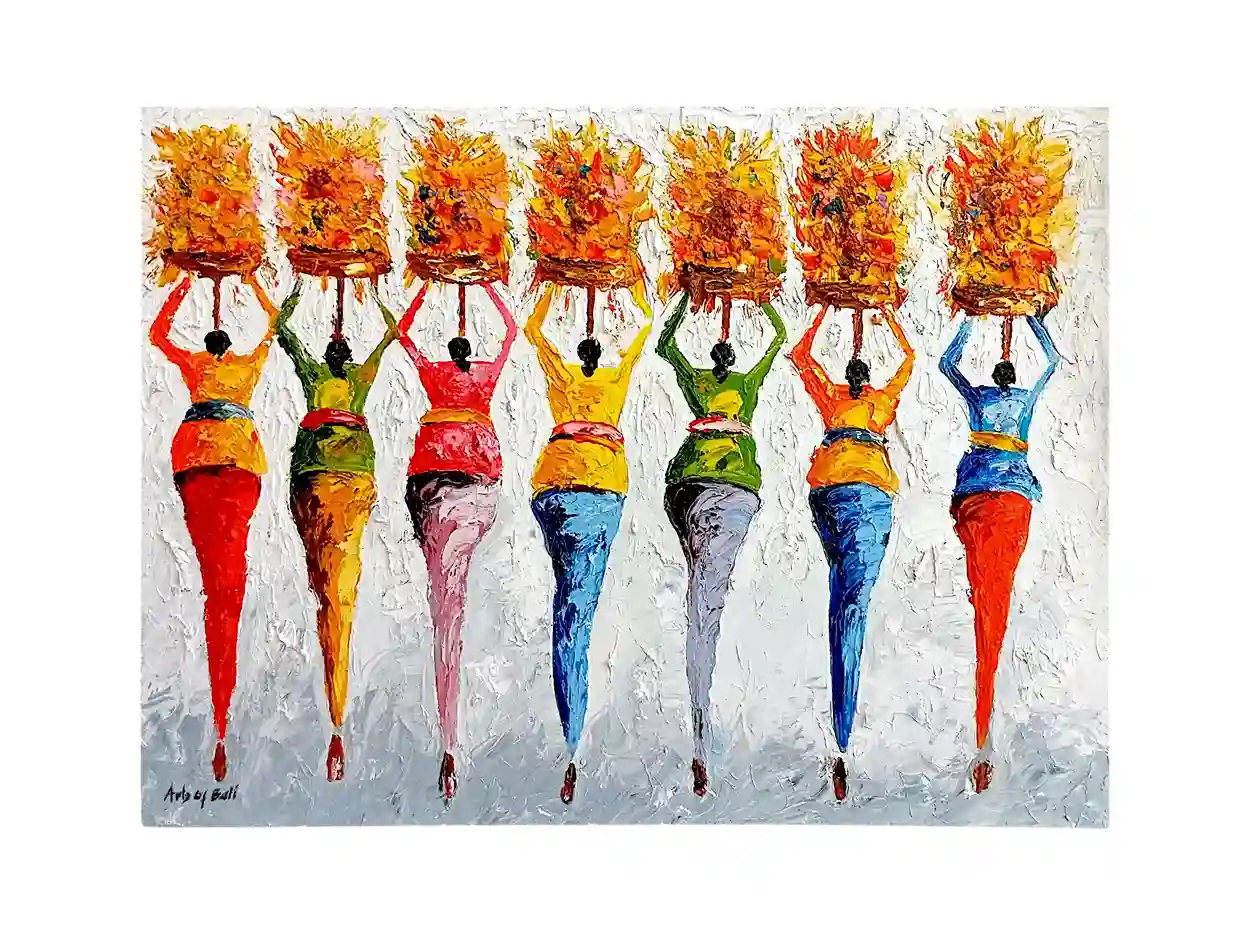
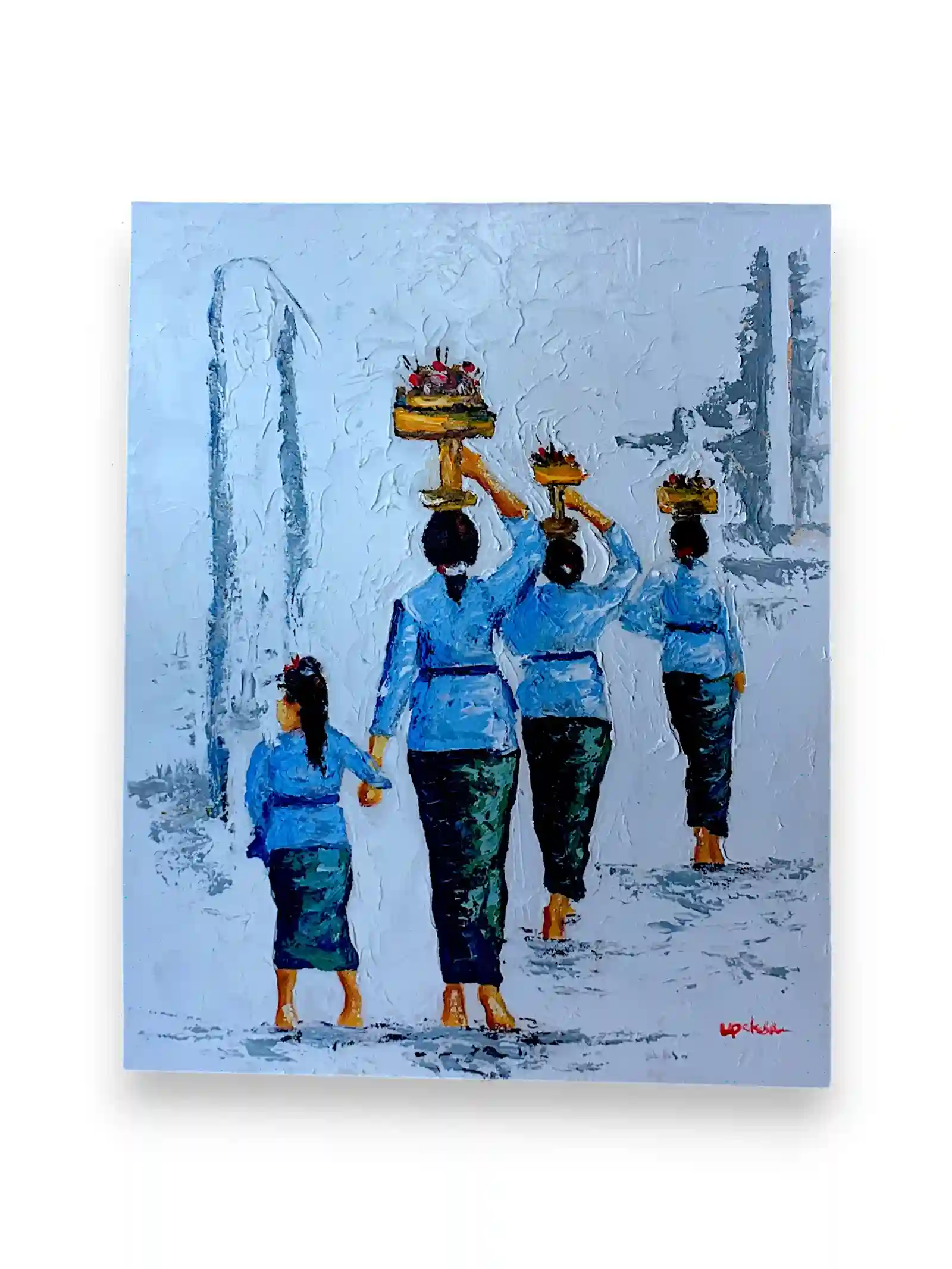
| Piece | Details |
|---|---|
| Balinese Women Procession Palette Painting | 60 × 80 cm, Rp2,500,000. Seven women carrying gebogan. |
| The Sacred Journey: Balinese Devotees Palette Painting | 40 × 50 cm, Rp950,000. A mother and village women carrying ceremonial offerings toward the temple gates. |
Details are from the product listings, checked on 28 October 2026. Each is a single original piece, so price and availability can change. More ceremony scenes are mapped in our Balinese mythology painting hub.
Ask About an Offering Painting
Tell us the size and mood you have in mind and we will send close up photos, the exact dimensions and shipping options. We ship worldwide.
Questions