Eighteen creatures, carved by hand.
Not one of them meant for a temple.
Quick Answer: Wooden animal sculptures from Bali are hand-carved decorative pieces, typically made from suar (rain tree) or albesia wood, depicting sea creatures, birds, and other animals rather than the island’s Hindu deities or mythological figures. Arts of Bali currently carries 18 original pieces, from small Rp 220,000 duck figurines to a Rp 2,400,000 seashell centerpiece, each sold as a one-off or small-batch carving rather than a mass-produced souvenir.
- 18 original pieces in stock now, spanning ducks, turtles, dolphins, a whale, manta ray, arowana fish, an elephant, and more.
- Prices run from Rp 220,000 for a small duck figurine to Rp 2,400,000 for a large seashell sculpture.
- Most are carved from suar wood, prized for its grain and durability; a few use lighter albesia wood.
- These are decorative, not religious, pieces — unlike Barong masks or Ganesha carvings elsewhere in the gallery.
- Custom sizes and finishes can be commissioned directly through the gallery.
A wooden animal sculpture from Bali is a hand-carved decorative figure, usually depicting a real-world animal such as a turtle, duck, dolphin, or elephant, made from local hardwood — most often suar wood — by carvers trained in Bali’s wood carving tradition, centered historically around Ubud and Gianyar. Unlike Barong masks or carved deities, these pieces carry no ritual function; they are made purely for display, gifting, or home decor.
Most people who search out Balinese wood carving are looking for something devotional — a Barong mask, a Ganesha, a dancer mid-pose. This collection is the other side of the gallery’s wood carving work: animals, mostly, carved for the pleasure of the form itself rather than for any ceremony. If you’ve read our broader wood carving guide or our piece on the gallery’s Balinese masks, this is the same craft turned toward ducks, turtles, and a fairly large wooden elephant instead.
Three Ways to Shop the Collection
The 18 pieces split into three loose groups. Each reads as its own coherent set, so browsing by group is usually faster than scrolling the full table below.
Birds
Four duck figurines and a pelican, mostly playful and gift-scaled. Best as a small shelf cluster or a lighthearted gift rather than a considered interior anchor.
Sea Life
The largest group: turtles, dolphins, a whale, a manta ray, and two arowana fish, in formats from tabletop bowls to standalone statement pieces. Reads well as a coastal set.
Land & Nature
An ornately carved elephant, an abstract seashell form, and a small wheat-and-bees piece — three pieces that don’t fit neatly elsewhere, each best displayed on its own.
The Full Collection at a Glance
The table below lists every piece currently available, grouped by type, with an approximate price and what it suits best.
| Piece | Category | Approx. Price | Лучшее для |
|---|---|---|---|
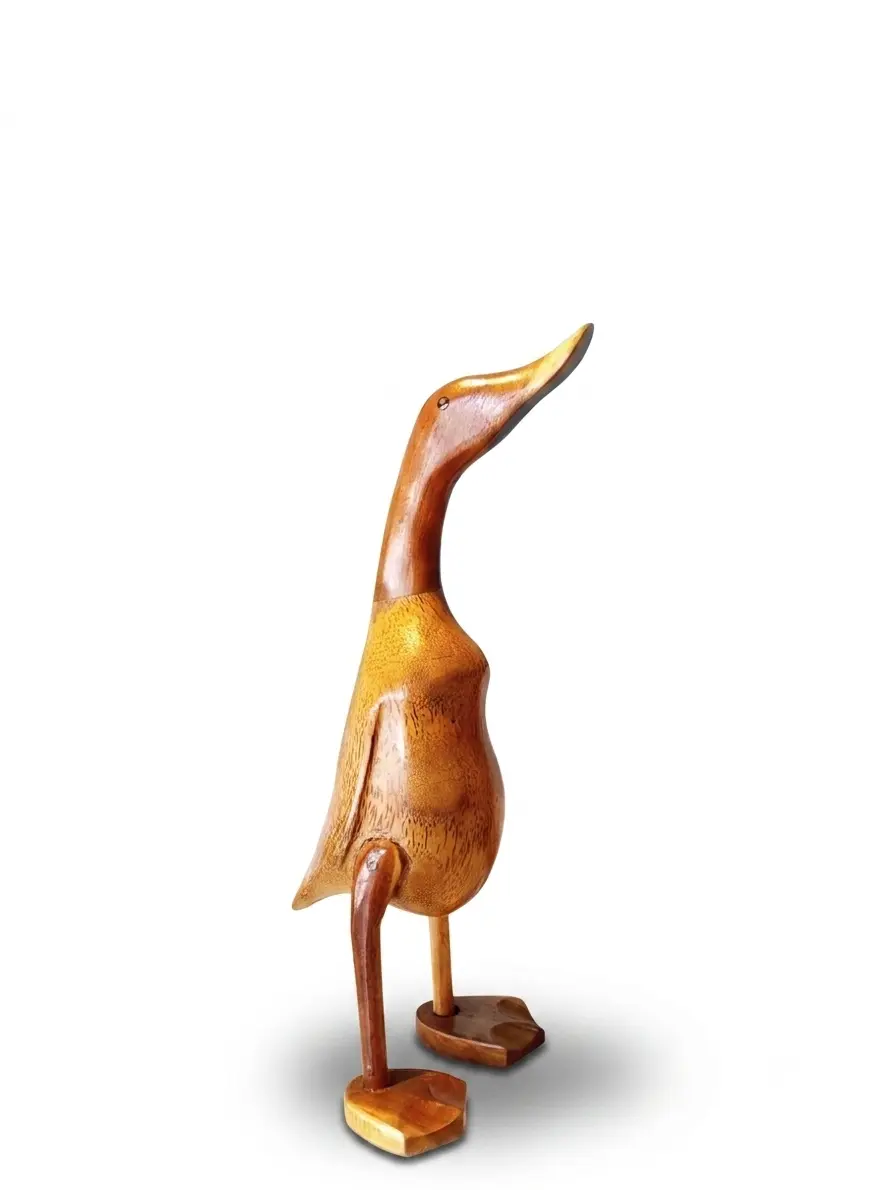
| Standing Wooden Duck Sculpture | Bird | Rp 220,000 | Small shelf accent |
| Wooden Duck with Boots Sculpture | Bird | Rp 250,000 | Playful accent, gift |
| Whimsical Wooden Duck Figurine | Bird | Rp 275,000 | Small shelf accent |
| Kissing Wooden Ducks with Boots | Bird | Rp 350,000 | Paired display, gift |
| Pelican Bird on Wood | Bird | Rp 450,000 | Coastal, driftwood-style decor |
| Balinese Sea Turtle Decorative Bowl | Sea Life | Rp 345,000 | Functional catch-all bowl |
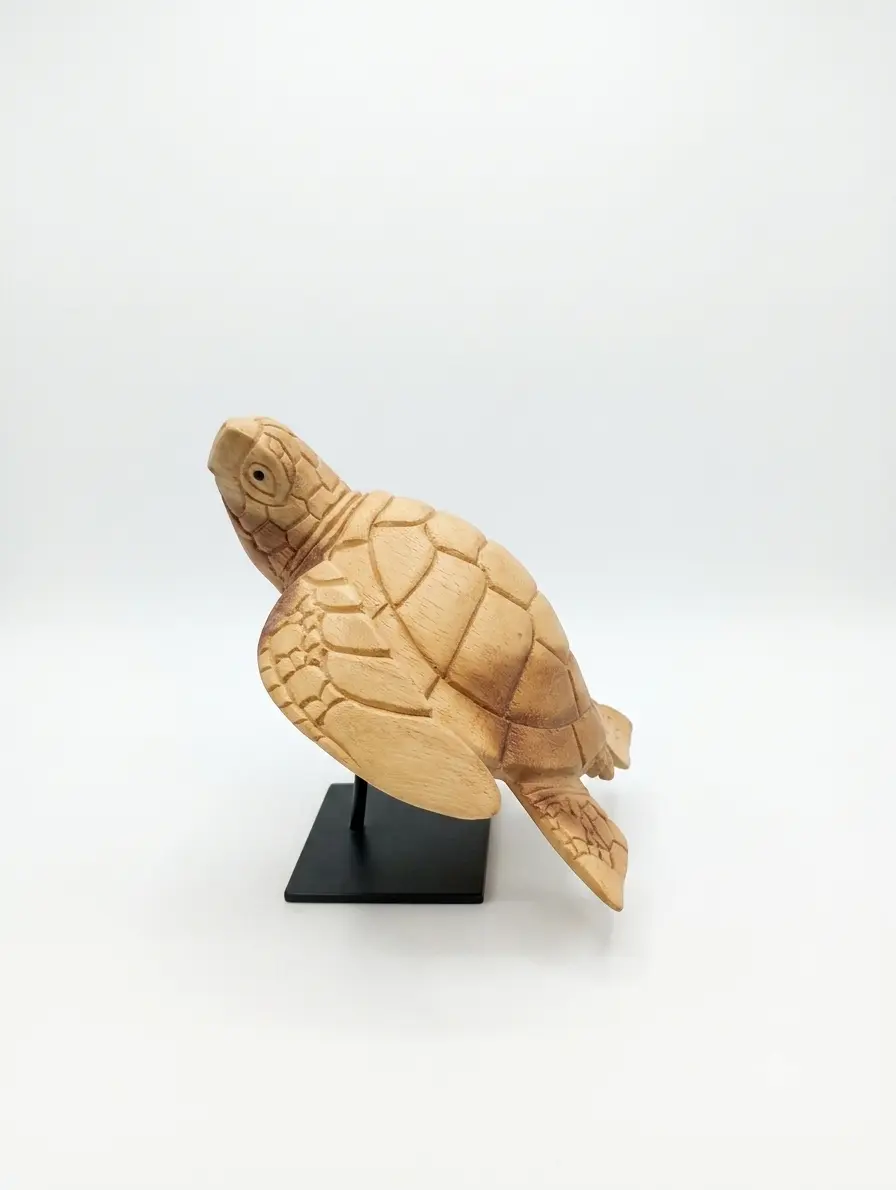
| Sea Turtle Wooden Sculpture (20 cm) | Sea Life | Rp 475,000 | Tabletop accent |
| Wooden Turtle on Stand | Sea Life | Rp 650,000 | Freestanding display |
| Turtle Bowl with Top (Suar Wood) | Sea Life | Rp 850,000 | Lidded trinket box |
| Handcrafted Double Dolphin Sculpture | Sea Life | Rp 375,000 | Paired display |
| Manta Ray Wooden Sculpture | Sea Life | Rp 925,000 | Statement shelf or wall piece |
| Wooden Whale on Stand | Sea Life | Rp 950,000 | Standalone display |
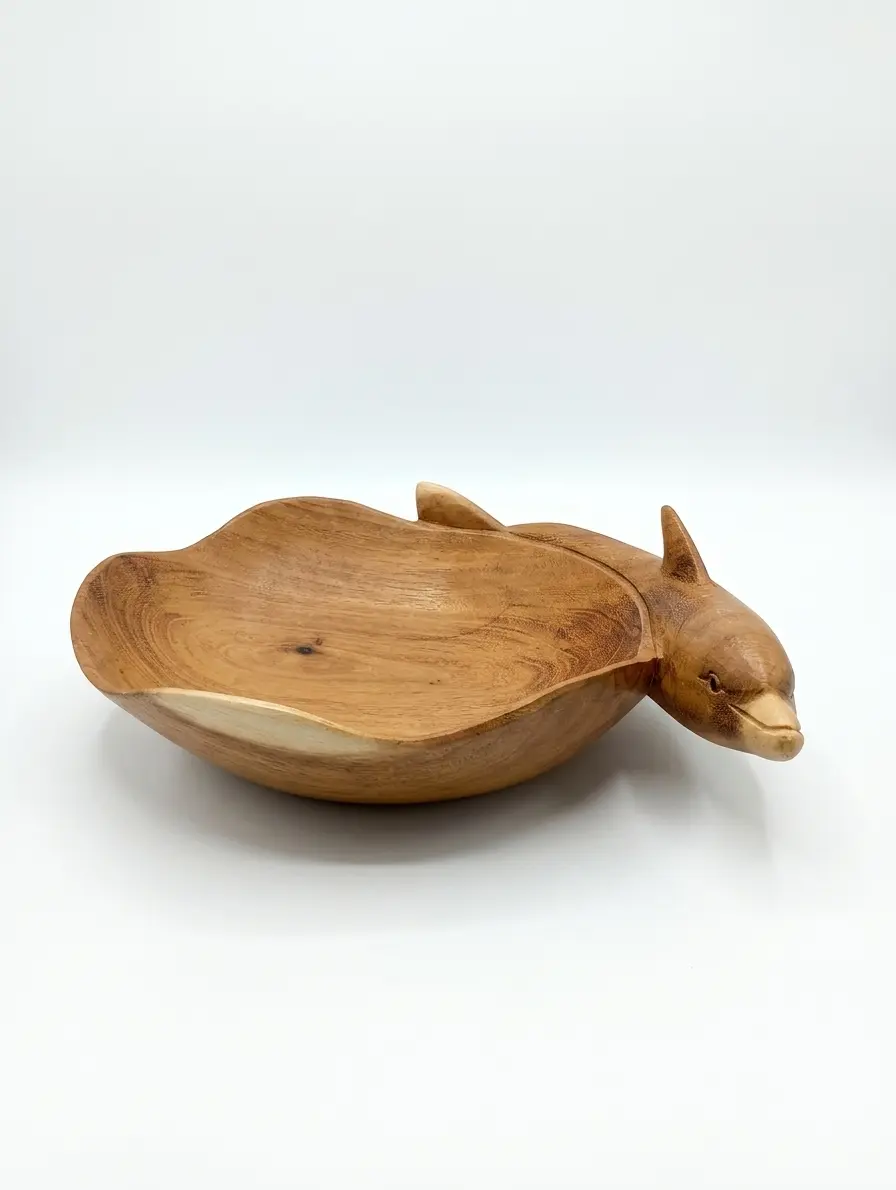
| Dolphin Wooden Bowl | Sea Life | Rp 1,450,000 | Functional centerpiece |
| Hand-Carved Arowana Fish | Sea Life | Rp 1,575,000 | Statement piece |
| Wooden Arwana Fish on Iron Stand | Sea Life | Rp 2,200,000 | Large statement piece |
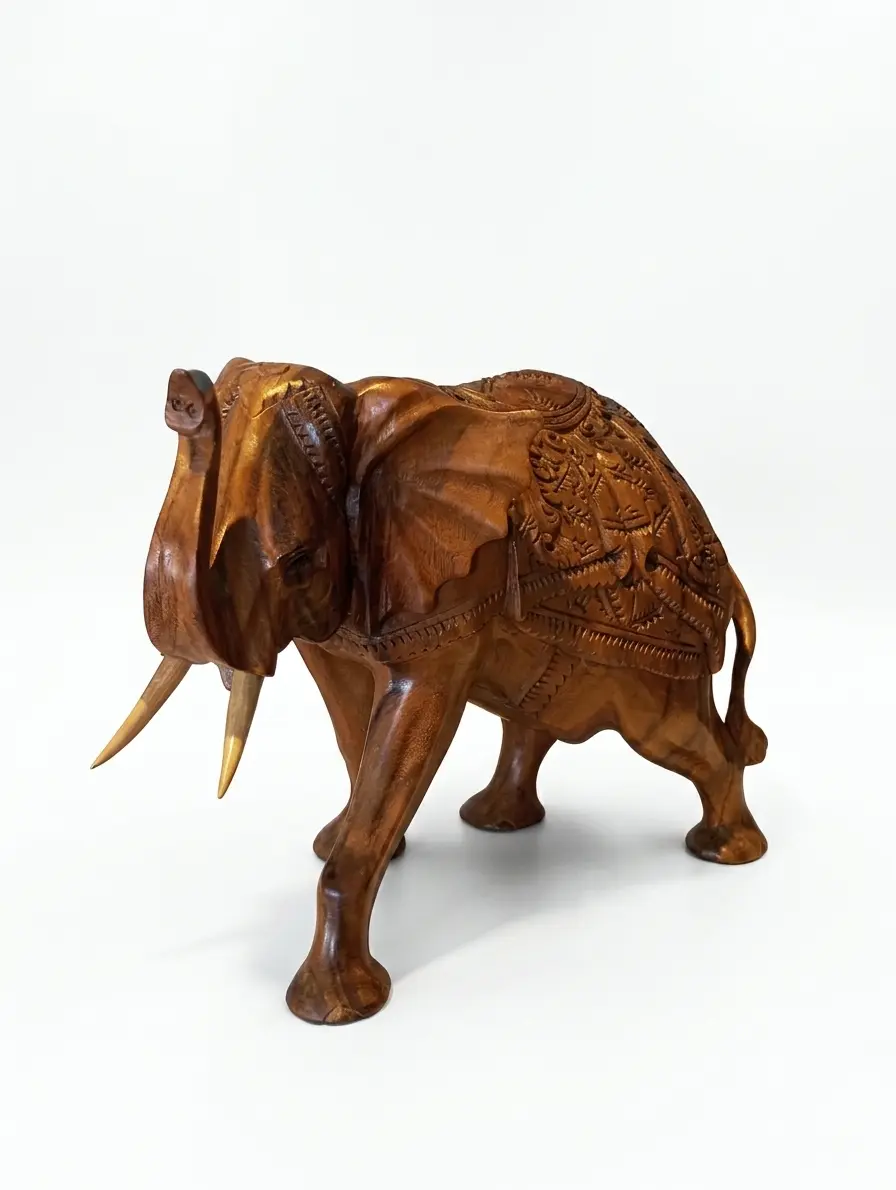
| Balinese Ornate Elephant Sculpture | Land Animal | Rp 1,800,000 | Large statement piece |
| Seashell Wooden Sculpture | Nature | Rp 2,400,000 | Abstract nature centerpiece |
| Wheat & Bees Wooden Sculpture | Nature | Rp 325,000 | Small nature-themed accent |
Prices as of early August 2026; individual pieces are one-off or small-batch carvings, so a specific piece can sell out. Check current stock via WhatsApp before visiting for a specific item.
Where Bali’s Animal Wood Carving Tradition Comes From
Bali’s reputation for wood carving is centered historically on Ubud and the surrounding villages of Gianyar regency, an area that has produced carvers for generations and still supplies much of the wood carving sold across the island today. Figural and devotional carving — masks, dancers, deities — gets most of the attention in guides like ours, but animal carving has always run alongside it, often as a training ground for younger carvers before they move on to more complex figural work, and often as its own specialty for carvers who prefer the looser, more playful forms an animal allows.
Two woods dominate this side of the craft. Suar wood, also called rain tree or monkeypod, is dense, takes a deep polish, and shows a pronounced grain that many carvers use deliberately, letting the wood’s natural pattern read as texture on a turtle’s shell or a whale’s back. Albesia is the lighter alternative: fast-growing, easy to carve, and better suited to larger or more delicate forms where weight matters, such as a wide-winged bird or a piece meant to sit on a narrow shelf. Both are common, sustainably grown plantation timbers in Bali rather than old-growth wood, which is part of why this category of carving has stayed affordable even as demand has grown.
Animal pieces are often where a carver’s training starts. A duck or a turtle forgives a slightly uneven line in a way a temple guardian face — where symmetry and expression carry real weight — does not.
Sea Creatures: Turtles, Dolphins, a Whale, and Two Kinds of Fish
Sea life makes up the largest share of this collection, which tracks with what sells in a coastal market like Seminyak: turtles, dolphins, a whale, a manta ray, and two arowana fish pieces, spanning a wide range of both size and price.
The turtle pieces alone span four different formats — a decorative bowl, a 20-centimeter tabletop sculpture, a freestanding piece on its own stand, and a lidded trinket box — which makes the turtle the most flexible animal in the collection for matching a specific spot in a room rather than the room being built around the piece. Turtles are also one of the more widely recognized “longevity” motifs across Asian decorative traditions generally, though that association isn’t unique to Bali and shouldn’t be read as a specifically Balinese religious meaning.
Price tells most of the story with the two dolphin pieces: the Handcrafted Double Dolphin Sculpture is a smaller, lighter carving built for a shelf, while the Dolphin Wooden Bowl is a larger functional piece, carved as a wide bowl with a dolphin worked into the form, meant to double as a centerpiece and a catch-all. Manta Ray and Wooden Whale, by contrast, are both single-animal statement carvings rather than functional objects, and both read best with some open space around them rather than crowded next to other pieces.
Arowana is a somewhat unusual subject for Balinese wood carving specifically, which is what makes the two fish pieces worth calling out on their own. It’s a freshwater fish more associated with ornamental aquariums across Southeast and East Asia, where it’s popularly linked to prosperity — a belief rooted in Chinese cultural tradition rather than Balinese Hindu practice. Arts of Bali’s two versions, a standalone hand-carved piece and a larger one mounted on an iron stand, apply the island’s carving technique to a subject really drawn from a wider regional design vocabulary rather than local mythology.
Birds: Four Ducks and a Pelican
The bird side of the collection is smaller and, on the whole, less serious than the sea creatures — three of the four duck pieces are built with an intentionally whimsical touch, including one pair carved wearing tiny boots. These sit at the lower end of the collection’s price range, which makes them a common choice for a gift rather than a considered interior piece, though they work equally well as a small cluster on a shelf or windowsill.
The Pelican Bird on Wood is the outlier here: a single bird carved in a more naturalistic style, mounted in a driftwood-adjacent presentation that leans into a coastal, beach-house aesthetic rather than the folk-art playfulness of the duck pieces. It’s a reasonable pairing with one or two of the sea-life pieces above rather than with the ducks.
Beyond Sea and Sky: Elephant, Seashell, and a Nature Piece
Three pieces don’t fit neatly into either the bird or sea-life groups. The Balinese Ornate Elephant Wooden Sculpture is the largest single-animal carving in the collection and the most heavily decorated, with ornamental detailing worked across its body rather than a plain naturalistic finish. Elephants carry a widely recognized auspicious association across South and Southeast Asian visual culture generally — connected in Hindu contexts to Ganesha, the elephant-headed deity discussed in our Kamasan Ganesha painting guide — though this particular sculpture is a decorative animal figure rather than a devotional Ganesha carving itself.
The Seashell Wooden Sculpture takes the opposite approach: an abstract, non-animal form carved to evoke a shell’s spiral rather than reproduce it literally, and priced as the collection’s most expensive single piece. The Wheat & Bees Wooden Sculpture rounds out the group, a smaller nature-themed carving that has more in common, aesthetically, with a harvest motif than with any of the animal pieces around it.
How to Choose the Right Piece for Your Space
Scale is the first practical filter. The duck figurines and smaller turtle pieces, all under roughly Rp 500,000, work as shelf or windowsill accents and are forgiving of a small space, since they don’t need to dominate a room to read well. The manta ray, whale, elephant, and larger arowana piece are a different category entirely — each is a standalone statement, and two of them competing for the same wall or console table will usually undercut each other rather than compound.
Pairing by theme is the second consideration. The sea-life pieces read coherently as a set — a turtle, a dolphin, and the manta ray, for instance, placed across a single shelf or console, hold together as a coastal grouping without needing to match in size or wood tone. The duck figurines pair well with each other for the same reason. The elephant and seashell, by contrast, work better as standalone pieces than folded into either grouping, since neither shares a visual register with the sea-life or bird pieces.
Caring for and Shipping a Wooden Animal Sculpture
Both suar and albesia pieces are unfinished or lightly finished hardwood, the same care category covered in our wood carving guide: keep them out of direct sun and away from constant air-conditioning airflow, and apply a light coat of natural oil once a year to maintain the tone. The bowl-format pieces (the turtle bowl, the lidded trinket box, the dolphin bowl) can be dusted or wiped with a barely damp cloth, but shouldn’t be soaked or run through a dishwasher.
Most pieces in this collection are small enough to ship in a padded box, keeping shipping costs modest compared with the gallery’s large relief panels. The elephant and the larger arowana-on-stand piece are the exceptions and may ship in a small custom crate depending on size at time of order. Our guide to shipping art from Bali covers courier options and the customs and biosecurity requirements that apply specifically to wood items entering Australia, New Zealand, and the United States.
Browse or Commission a Wooden Animal Sculpture
All 18 pieces in this collection are one-off or small-batch carvings, so current stock is the fastest-changing part of this guide. Check availability and current pricing over WhatsApp, or browse the full gallery online. Custom sizes, finishes, or a different animal entirely can be discussed as a commission.
Чат в WhatsApp Просмотреть галерею