A vintage Balinese painting can mean two very different things: a genuinely old painting, usually from the 1930s through the 1970s, sold through auction houses and specialist antique dealers, or a new painting made today using the same classical technique and antique-inspired look, most often the Kamasan wayang style or a deliberately aged, sepia-toned palette-knife finish. Both are collected for the same reason, a look and a lineage that feels older than the room it hangs in, but they differ enormously in price, where you find them, and what exactly you are bringing home.
Key Takeaways
- “Vintage” usually means one of two things: a genuinely old painting, or a new piece in a classical or aged style.
- Kamasan is Bali’s oldest documented painting tradition, practiced in Klungkung since at least the 16th century.
- Genuine antique Balinese paintings are typically found through auction houses and specialist dealers, not working galleries.
- New vintage-style paintings at Arts of Bali range from roughly Rp1,150,000 to Rp4,000,000, each an original, hand-painted piece.
- Ask for a certificate of authenticity and get clear on “vintage-style” versus genuinely old before you buy.
Definition: A vintage Balinese painting is a term applied both to genuinely old Balinese artworks and to newly made paintings executed in a traditional or deliberately aged style, most commonly the classical Kamasan wayang technique or a sepia-toned palette-knife finish.
Type “vintage Balinese painting” into a search bar and you’ll land somewhere between an auction house catalogue and a gallery on Jalan Raya Seminyak, and the two results are not selling the same thing. One is a genuinely old object, painted decades ago, changing hands the way antiques usually do: through provenance, estimate, and a bit of luck. The other is a new painting, made this year by a working artist, that borrows its look, its subject, sometimes its exact technique, from a tradition that is centuries old. Both get called “vintage.” Only one of them is actually old.
This guide draws the line between the two, walks through where each one comes from, Kamasan village in Klungkung for the classical technique, a gallery studio in Seminyak for the newly made version, and gives you a way to ask the right question before you buy either one: are you paying for age, or are you paying for a technique that has simply refused to go out of style?
What “Vintage Balinese Painting” Actually Means
In plain terms, there are two categories hiding under one search term.
The first is a genuine antique: a painting actually produced decades ago, most often somewhere between the 1930s and the 1970s, during Bali’s first wave of international art attention. These pieces move through the same channels as any antique: specialist Asian art dealers, auction houses, and estate sales, and their value depends on age, condition, and documented history as much as on subject matter.
The second is a new painting made in a vintage or classical style: an artist working today, using the same wayang-style figuration, natural-pigment palette, or a deliberately aged, sepia-toned finish that defines the look most people associate with “vintage.” Nothing about the canvas is old. What’s old is the visual language.
Neither category is more legitimate than the other, but they answer different questions. If what you want is a documented piece of art history, you’re shopping the first category, and price will reflect scarcity as much as beauty. If what you want is that same look, on your wall, without a five-figure price tag or an authentication process, you’re shopping the second, and that’s where most Bali gallery collections, including this one, actually live.
Where the Look Comes FromA Short History Behind the Look: Kamasan, Ubud, and Batuan
The look that makes a painting read as “vintage Balinese” didn’t appear all at once, and it isn’t one style. It’s the layering of at least three distinct traditions.
Kamasan painting, from a village of the same name in Klungkung, East Bali, is where it starts. The tradition is documented as far back as the 16th century, and for hundreds of years it was the island’s only real painting tradition, produced under a codified set of rules called uger-uger: flat profile figures, no shading, natural pigments made from mineral ochre, soot, and bone, gold-leaf finishing, and subject matter drawn almost entirely from the Ramayana and Mahabharata epics.
One of the most visible surviving examples of the tradition is the ceiling of Kertha Gosa, the historic hall of justice in Klungkung, still hung with wayang-style panels, though the panels visible today have been restored and repainted many times over the generations, following the same technique the original artists used rather than surviving untouched. Our full Kamasan painting guide covers the village, the technique, and Kertha Gosa in more depth, with photos of both.
Everything changed in the 1930s. Western artists, Walter Spies most prominently, settled in Ubud, and with the patronage of the Ubud royal family, a new idea entered Balinese painting: individual expression, shading, perspective, and everyday village life as a subject rather than only myth. In 1936, Spies, the Dutch painter Rudolf Bonnet, and the Ubud nobleman Tjokorda Gde Agung Sukawati formalized this shift by founding Pita Maha, an artists’ collective that pushed Balinese painters toward this newer visual language.
Ubud, and separately the village of Batuan, whose style fused Kamasan’s density with this new European-influenced technique, became the two schools most people now picture when they imagine “classic” or “vintage” Balinese art: busy, detailed, warm-toned scenes of market life, rice terraces, and ceremony, painted from roughly the 1950s through the 1970s. Our guide to Ubud-style painting covers this movement and its main figures in full.
It’s this second wave, Ubud and Batuan folk painting from the mid-20th century, that shows up most often in the vintage and antique listings on marketplaces like 1stDibs, Etsy, and specialist dealers such as WovenSouls. Kamasan is older; Ubud and Batuan are what most of the antique market actually means when it says “vintage.”
The Key DistinctionGenuine Antique vs. New Vintage-Style: How to Tell the Difference
This is the single most useful distinction in this entire guide, so it’s worth putting side by side before anything else.
| Genuine Antique Balinese Painting | New Vintage-Style Painting | |
|---|---|---|
| Age of the object | Actually old, typically decades | Made recently, new canvas and pigment |
| Typical era | 1930s–1970s originals | Same visual styles, painted today |
| Where it’s usually sold | Auction houses, specialist Asian art dealers, estate sales | Working galleries and artists in Bali |
| Price range | Roughly $650–$4,800 for documented antique Kamasan cloth paintings currently listed by specialist dealer WovenSouls (checked 31 Jul 2026; varies by piece and changes as stock sells) | Roughly Rp1,150,000–Rp4,000,000 at Arts of Bali |
| Documentation | Provenance, dealer condition report | Certificate of authenticity naming artist, medium, technique |
| Condition | Foxing, fading, cloth wear expected, part of the value | New canvas, stable pigment, no restoration needed |
| Best for | Collectors building a documented antique collection | Buyers who want the look and technique without the antiques market |
For how these figures compare to Balinese painting prices generally, across styles beyond just the vintage-leaning ones, see our Bali painting price guide.
If You Want the Real ThingWhere Genuine Antique Balinese Paintings Are Usually Found
If a documented antique is what you’re after, expect to shop outside of Bali’s working galleries. International listings sites such as 1stDibs and specialist Asian textile-art dealers like WovenSouls carry catalogued antique Kamasan cloth paintings, complete with estimated dates and condition notes; general marketplaces like Etsy and eBay carry a wider, less curated mix of Ubud and Batuan-style folk paintings, most dating from the 1950s and 60s. Buying antique this way means doing the same homework you’d do for any antique purchase: ask for provenance, examine high-resolution photos for cloth or paper condition, and be realistic that a genuinely old, well-documented piece will cost meaningfully more than a new painting of the same subject.
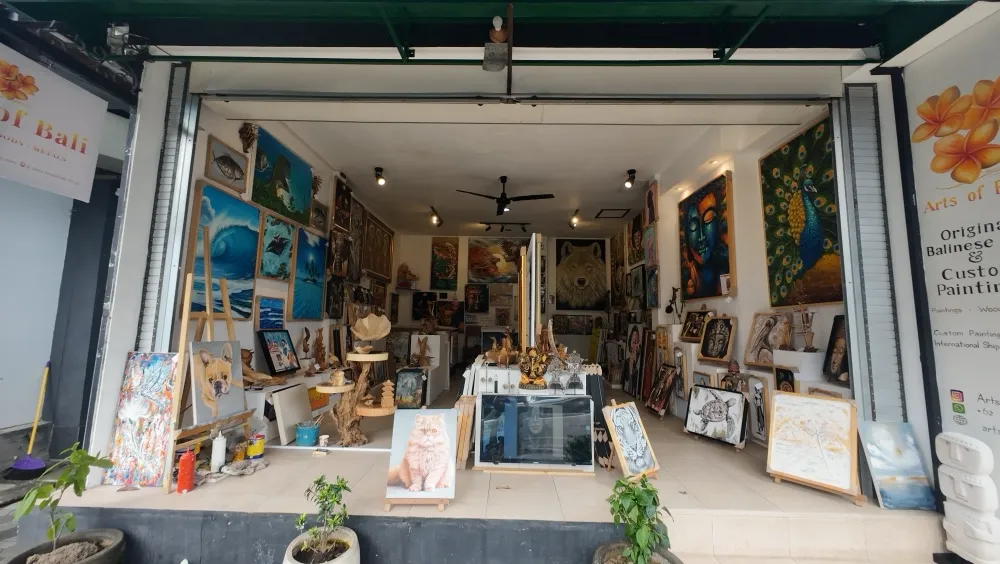
Working galleries in Bali, including ours, generally don’t carry antique inventory. What we carry is new work made in these traditions by living artists, and we think that’s worth being upfront about rather than letting the word “vintage” do more work than it should.
The New Vintage-Style CollectionNew Paintings Made in Vintage & Classical Style at Arts of Bali
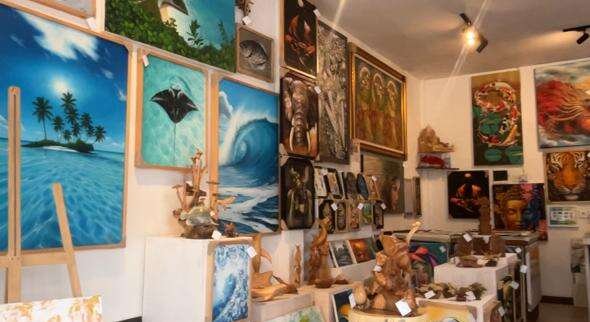
If what draws you to “vintage Balinese painting” is the look, flat wayang figures and gold leaf, or a warm, sepia-toned, deliberately aged palette-knife finish, that look is very much alive in the gallery today, made by artists working in Seminyak using techniques that in some cases haven’t changed in centuries.
Classical Kamasan Technique
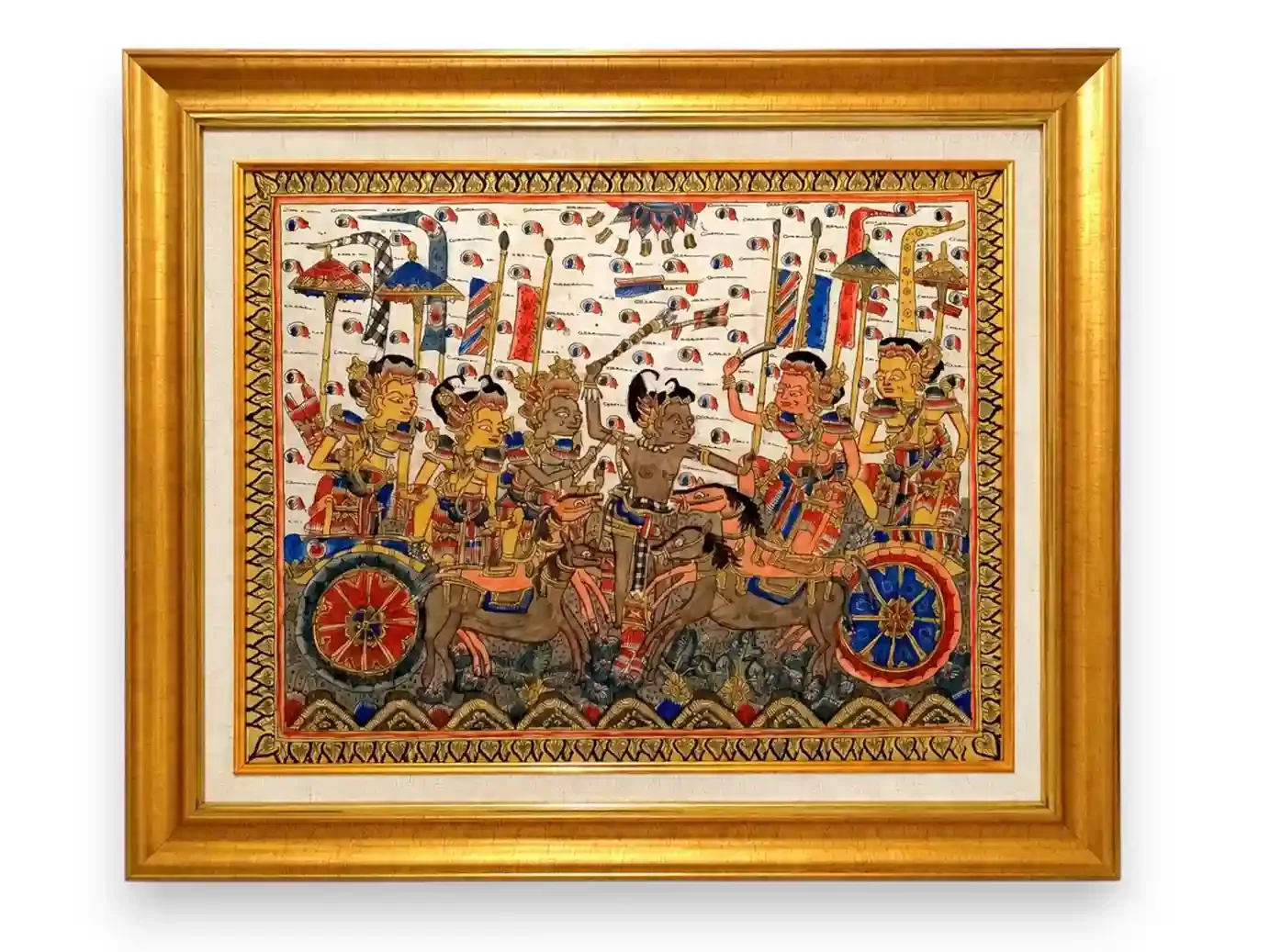
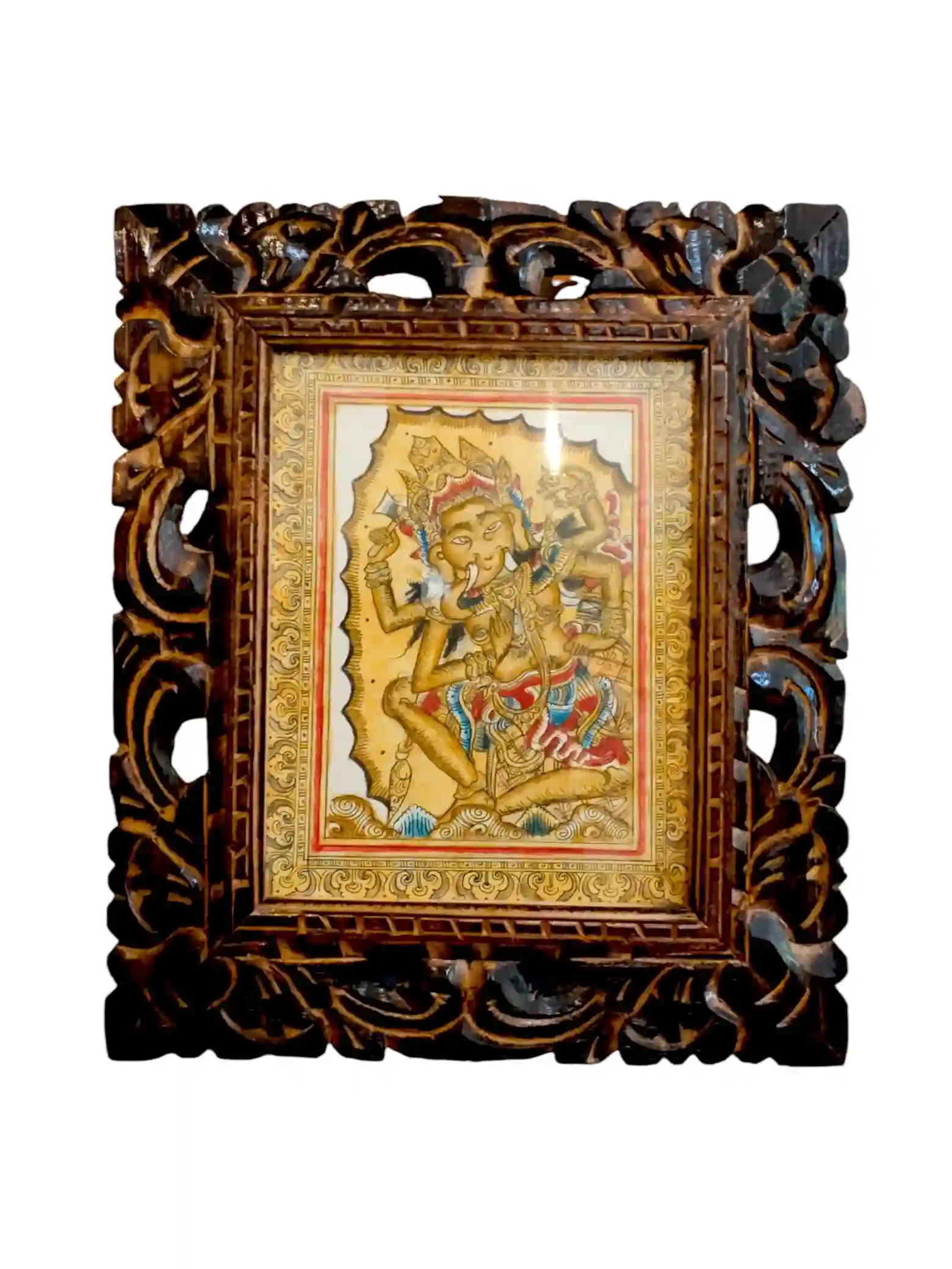
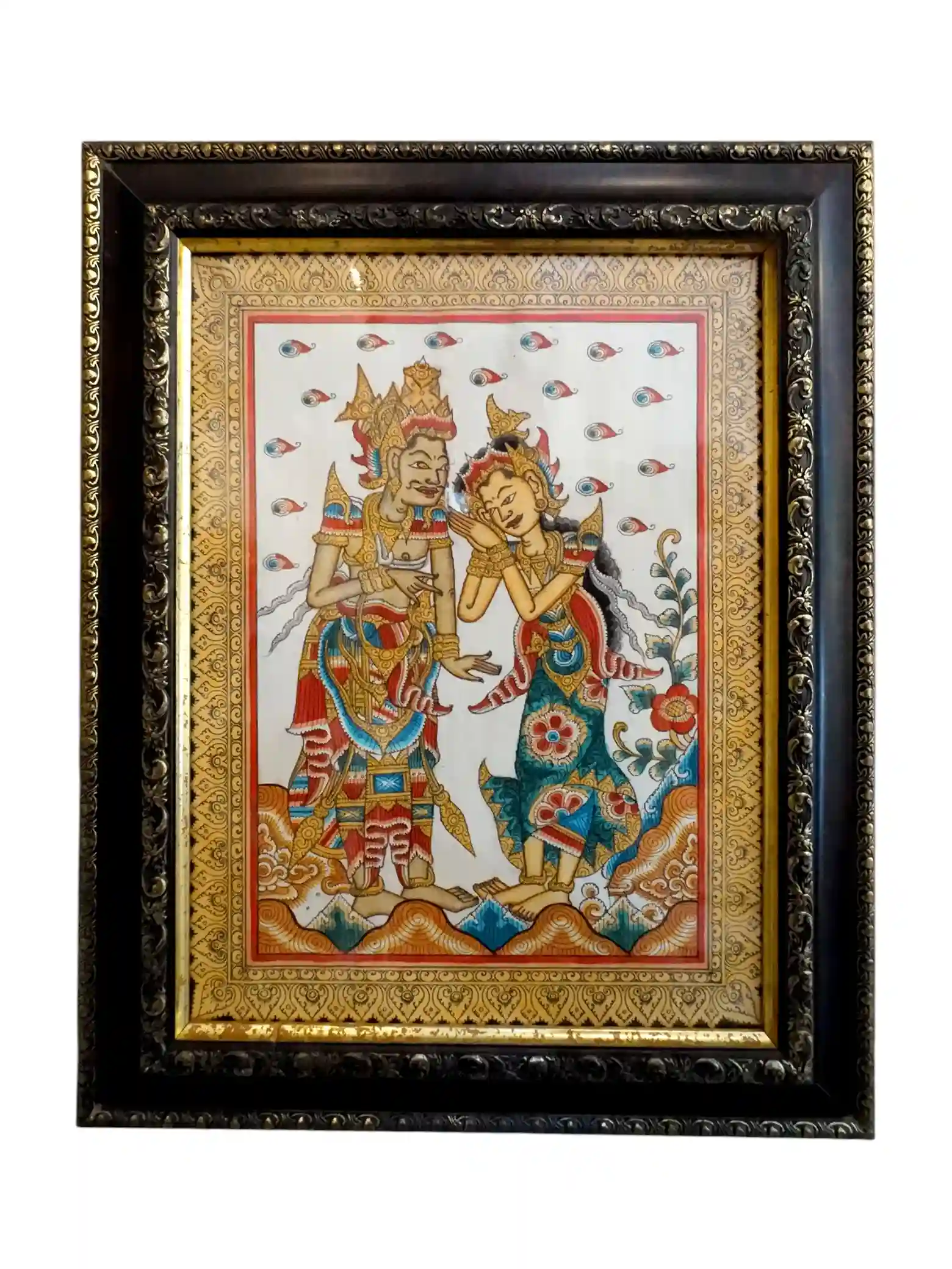
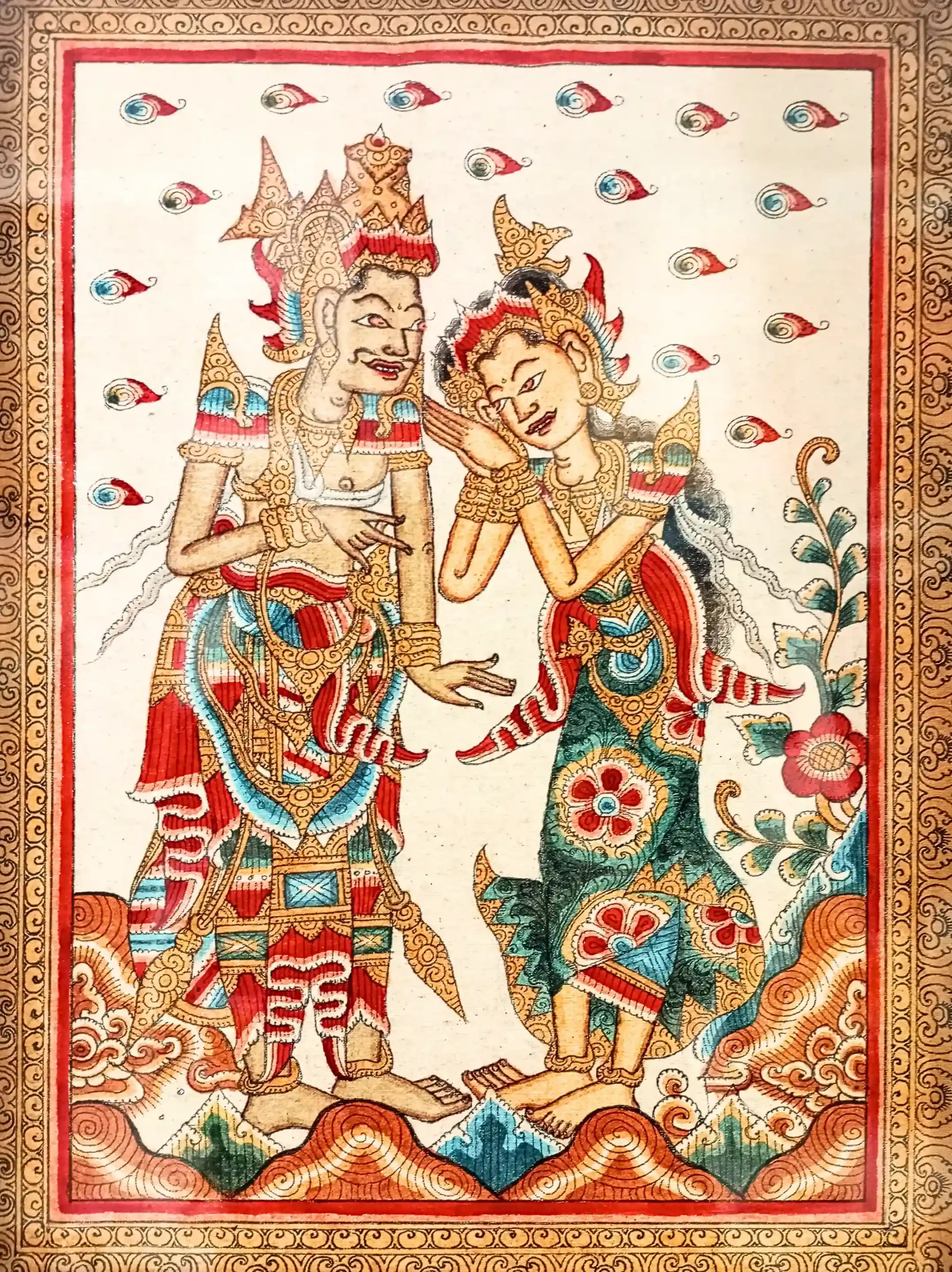
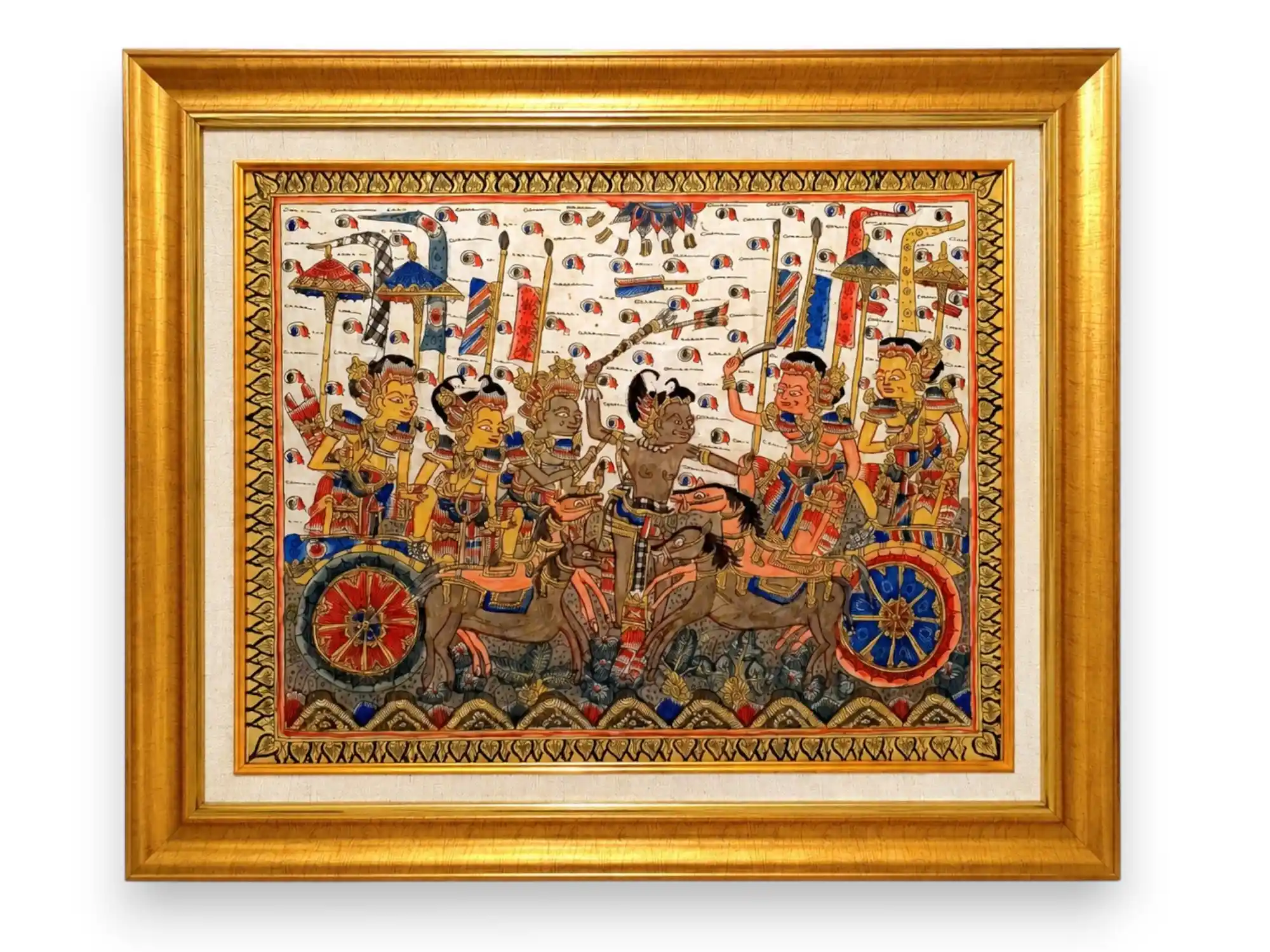
Three current pieces follow the wayang-style visual grammar described above: flat profile figuration, natural ochre and gold tones, and subject matter drawn from the Ramayana and Mahabharata. These come from the same working relationship with families in Kamasan village described in our Kamasan painting guide, and the largest compositions take several weeks of hand work from sketch to finished gold leaf, the same pace the tradition has always kept.
Deliberately Aged, Contemporary Technique
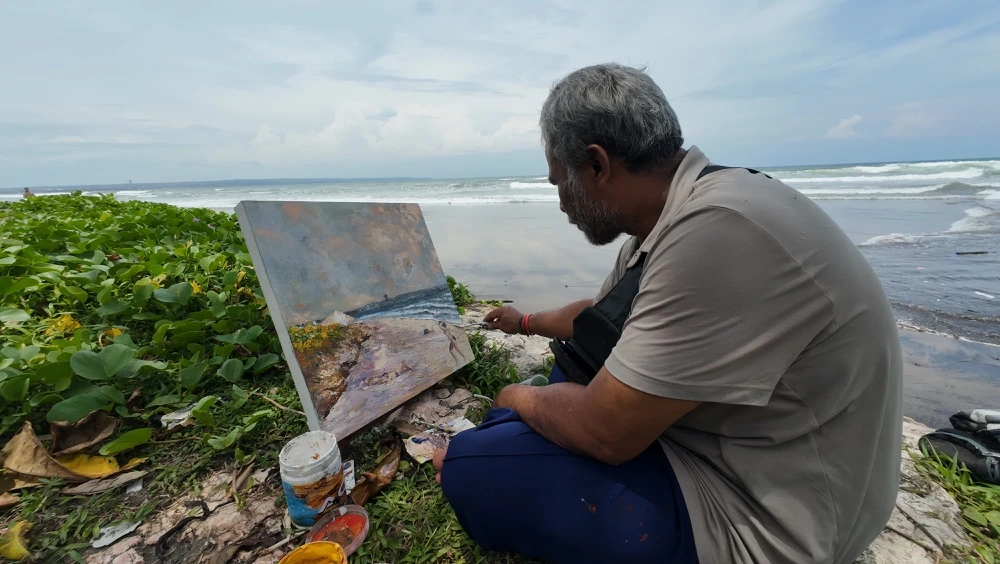
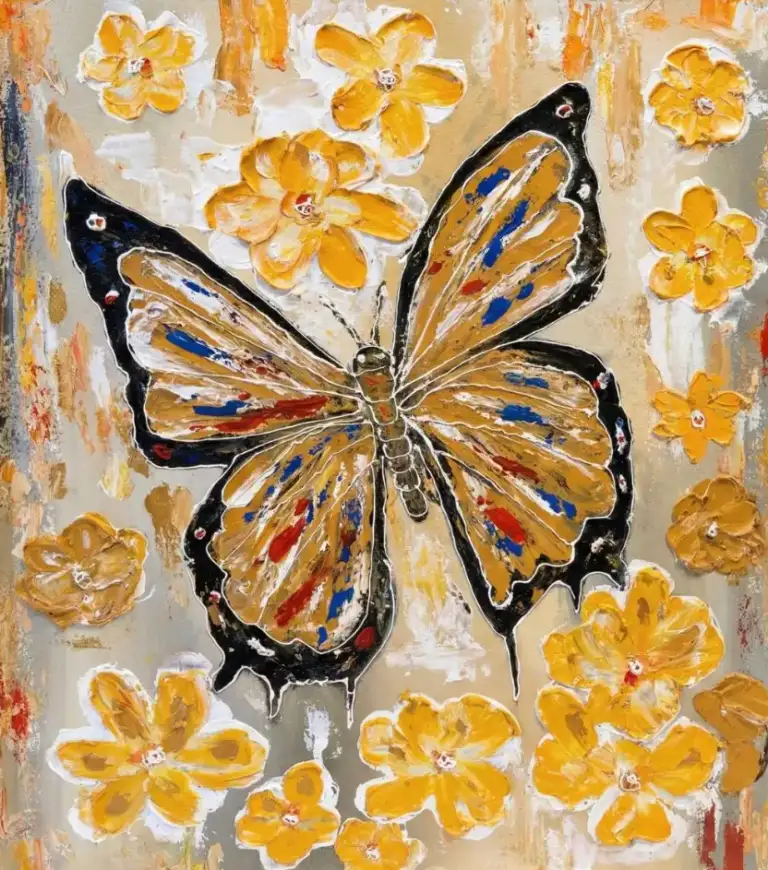
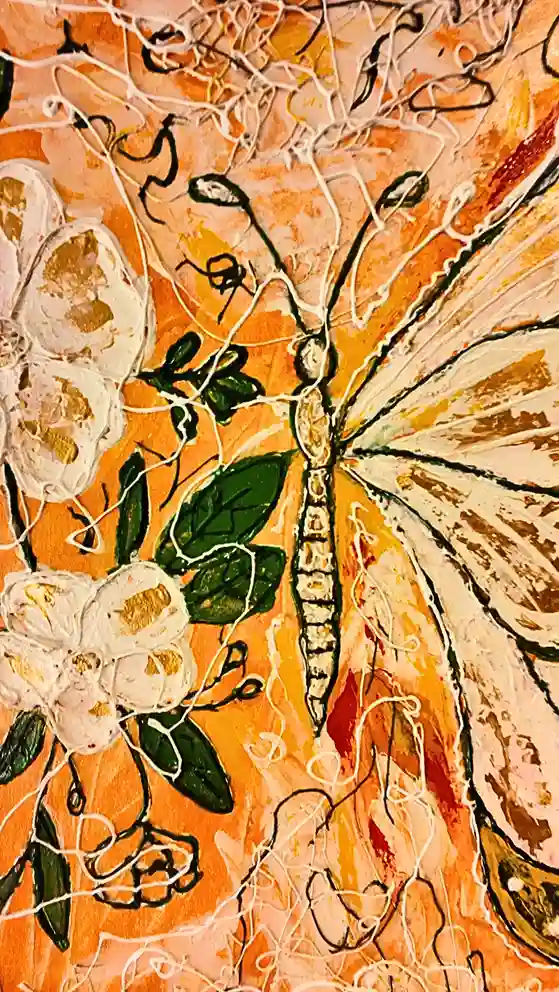
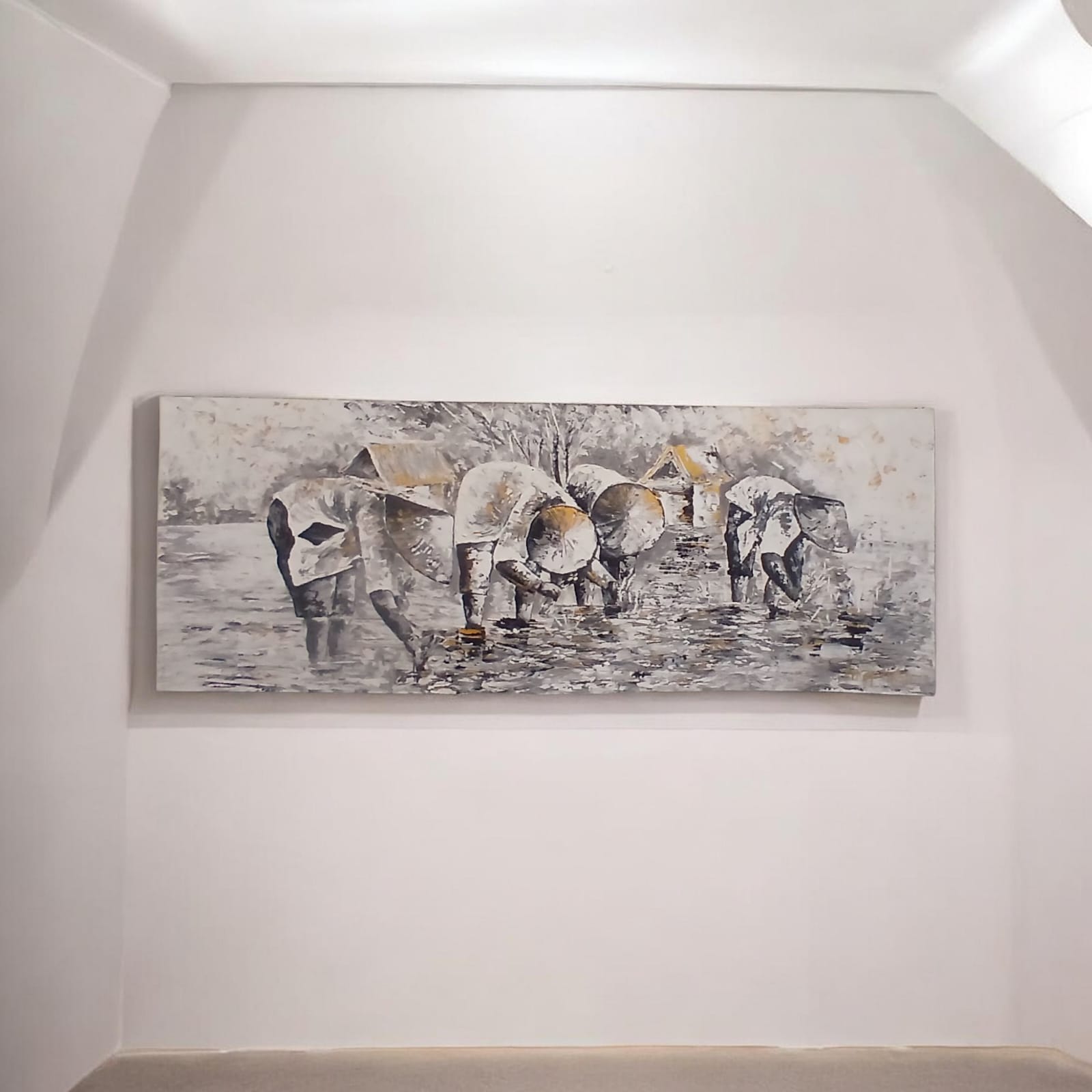
Two further pieces reach for the “vintage” look through a completely different, newer technique: heavy palette-knife texture and a muted, sepia or monochrome palette that reads as aged without following the Kamasan visual rules at all. For more on this technique generally, including the artist behind much of the gallery’s palette-knife work, see our guide to palette knife painting in Bali.
| Piece | Technique | Size | Price |
|---|---|---|---|
| The Sacred Kamasan Ganesha Painting | Classical Kamasan wayang | 25×30cm | Rp1.150.000 |
| The Eternal Love of Rama and Shinta Kamasan Painting | Classical Kamasan wayang | 30×40cm | Rp1.750.000 |
| Butterfly Antique Painting | Palette-knife, aged finish | 50×60cm | Rp1.600.000 |
| Monochrome Harvest on Pallet Painting | Palette-knife, sepia-toned | 45×120cm | Rp1.500.000 |
| The Epic Mahabharata Battle Kamasan Painting | Classical Kamasan wayang | 60×80cm | Rp4.000.000 |
See the Vintage & Classical Collection in Person
All five pieces above are currently in stock. Message us on WhatsApp with questions about technique, size, or a custom commission in either style.
Ask on WhatsAppHow to Authenticate and Spot Quality in a Vintage-Style Painting
- Ask what “vintage” means for this specific piece. Is it a new painting in a classical style, or an actual old object? A reputable seller will answer this plainly, not deflect it.
- Check the medium. Natural pigment and gold leaf on cloth points to genuine Kamasan technique; acrylic and palette-knife texture points to a contemporary aged-look piece. Neither is fake, but they’re priced and cared for differently.
- Look for a certificate of authenticity naming the artist, medium, and date, not just a generic “handmade” label. This is a separate question from whether a painting is hand-painted versus printed; our guide to spotting an original versus a print covers that check in full, with the specific texture, signature, and canvas-back tests to use.
- For antiques specifically, ask for provenance and a condition report before paying an antique-level price.
- Compare the frame. Hand-carved dark wood with openwork detailing is typical of Kamasan pieces; lighter or plainer wood frames typically belong to contemporary palette-knife work.
Caring for a Vintage-Style Balinese Painting
Keep any of these pieces out of direct sunlight, which fades both natural pigment and acrylic over time, and away from high humidity. Classical Kamasan pieces use natural pigments and gold leaf on prepared cloth: dust gently with a soft dry brush only, never water or cleaning products. Palette-knife pieces like the Butterfly Antique Painting or Monochrome Harvest are more fade-resistant, but their raised texture collects dust in its ridges, so a soft brush or low-suction vacuum attachment works better than a cloth.
For collectors ordering from overseas, our guide to choosing art in Bali covers what to check before committing to a piece, sight unseen or in person.
Choosing Between ThemWhich One Should You Actually Buy?
Illustrative Example: a buyer furnishing a reading nook wants something that reads as inherited rather than bought. A genuinely antique Ubud-style painting from the 1950s, sourced through a specialist dealer, would answer that brief most literally, at a price closer to a small piece of furniture than a decoration. A newly painted Kamasan piece in a hand-carved frame, a fraction of that price, answers a slightly different brief: not an inherited object, but a living technique that has looked this way for centuries and will keep looking this way for centuries more. Neither choice is a compromise; they’re answering different versions of the same instinct.
If budget and provenance research don’t matter to you as much as the look itself, a new vintage-style piece gets you there for a fraction of the cost, with a certificate instead of a condition report. If owning a documented piece of art history is the actual goal, no new painting will substitute for that, and it’s worth shopping accordingly.
Common QuestionsFrequently Asked Questions About Vintage Balinese Painting
What does “vintage Balinese painting” mean?
It’s used for two different things: a genuinely old Balinese painting, usually from the 1930s–1970s, or a new painting made today in a traditional or deliberately aged style, most often the classical Kamasan technique. The two are priced and sourced very differently, so it’s worth asking a seller which one they mean before you buy.
What’s the difference between an antique Balinese painting and a vintage-style one?
An antique painting is an object actually made decades ago, sold with provenance through auction houses or specialist dealers. A vintage-style painting is made today, borrowing the same classical technique, subject, or aged aesthetic. Both are legitimate art; only one of them is actually old.
Does Arts of Bali sell genuine antique paintings?
No. Our collection is new, original work made by artists working in Bali today, including pieces in the classical Kamasan technique and a deliberately aged, palette-knife finish. We’re upfront about this distinction because “vintage” gets used loosely, and we’d rather you know exactly what you’re buying.
How much does a vintage-style Balinese painting cost?
At Arts of Bali, new paintings in classical or vintage-inspired styles range from roughly Rp1,150,000 to Rp4,000,000, depending on size and technique. Genuinely antique Balinese paintings sold through specialist dealers typically start several times higher, reflecting age, scarcity, and documentation rather than the image alone.
Where can I find genuinely antique Balinese paintings?
Documented antique Balinese paintings, mostly Kamasan, Ubud, or Batuan style from the mid-20th century, are typically sold through specialist Asian art dealers, auction houses, and curated marketplaces rather than working galleries. Always ask for provenance and a condition report before paying an antique-level price.
How do I care for a vintage-style Balinese painting?
Keep it out of direct sunlight and high humidity. Natural-pigment pieces, like classical Kamasan paintings, should only be dusted with a soft dry brush; palette-knife pieces are more fade-resistant but still need gentle dusting rather than liquid cleaners. Both age better in stable, moderate indoor conditions.
Will I get a certificate of authenticity?
Yes. Every original painting from Arts of Bali comes with documentation naming the artist, medium, and technique, distinct from a print or reproduction. For antique pieces bought elsewhere, ask the dealer for provenance and a condition report instead, since gallery certificates don’t apply to antique sales.
Can I commission a custom painting in a vintage or classical style?
Yes. Arts of Bali accepts commissions in the classical Kamasan technique or the aged, palette-knife aesthetic seen in pieces like the Butterfly Antique Painting, in a range of sizes. Message us on WhatsApp to discuss subject, technique, and timeline before placing a request.
Vintage Style at Arts of Bali
This guide sits alongside our full guide to Balinese art styles, which covers Kamasan, Ubud, Batuan, and every other tradition on this site in more depth, and our dedicated Kamasan painting pillar, which goes deeper into the technique behind the classical pieces shown above. For the newer wave this guide mentions, see our Ubud-style painting guide, and for the palette-knife pieces, our palette knife painting guide.
If Ganesha specifically drew you here, our Kamasan Ganesha painting guide covers that subject across two techniques. And if the question on your mind is less “is it vintage” and more “is it real,” our guide to spotting an original versus a print answers that directly, and our painting price guide covers cost across every style the gallery carries.
See the Vintage & Classical Collection at Arts of Bali, Seminyak
Visit the gallery to see the natural-pigment Kamasan pieces and the aged palette-knife paintings side by side, or message us on WhatsApp to check current availability before you visit.
Visit the Gallery Ask on WhatsApp