“Balinese art is not one thing — it is five centuries of different villages, different traditions, and different temperaments speaking at once. Knowing the difference between them changes everything about how you see a painting.”
The range of 巴厘岛艺术风格 is far wider than most visitors expect. From the ancient flat-figure mythology of the Kamasan school to the densely detailed Batuan tradition, these are not variations of the same thing.
From the sun-drenched palette knife impasto of contemporary Seminyak galleries to the photorealistic precision of Bali’s hyper-realist painters, they are distinct visual languages. Each has its own history, its own village, and its own place in the extraordinary five-century arc of 巴厘岛绘画.
This complete guide covers every major style — classical, modern, and contemporary — with links to our in-depth articles on each one. You can find the tradition that speaks to you before you ever set foot in a gallery.
The main 巴厘岛艺术风格 are: 卡马桑 (classical, pre-1920s, Klungkung); Ubud School (modernised 1930s, daily life and landscape); Batuan School (dense dark mythology, Batuan village); Sanur School (coastal, seascape); 青年艺术家学校 (bright colour, naive, 1960s Penestanan); and contemporary technique styles including palette knife, textured mixed media, and 超写实主义. Subject traditions including landscape, rice field, dancer, ocean, and wildlife painting also form distinct categories within Balinese art.
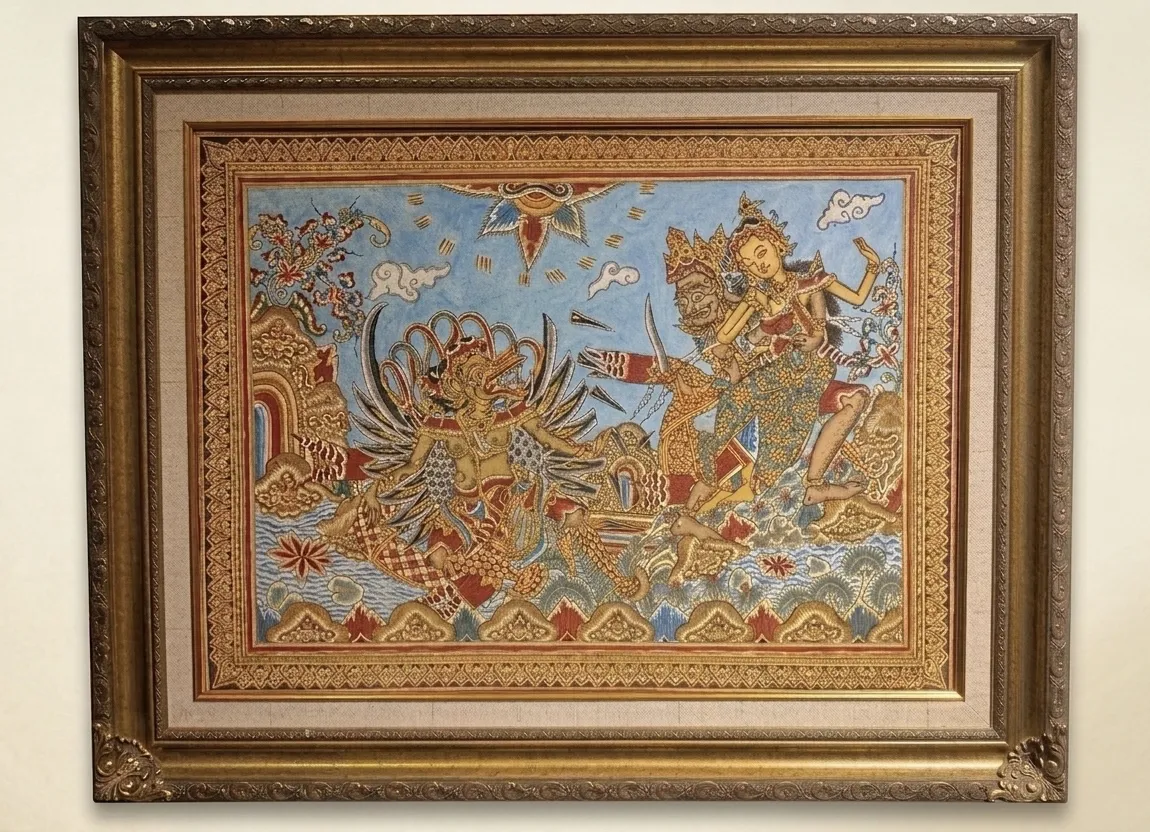
Balinese Art Styles — The Six Classical Schools
巴厘岛艺术 developed distinct school traditions in different villages, each shaped by local patronage, the temperament of the artists, and the degree of influence from outside the island. Understanding these six schools is the foundation for reading any Balinese painting accurately.
卡马山学校 - Klungkung
Bali’s oldest painting tradition. Flat wayang-puppet figures in profile, natural earth pigments, strict iconographic rules, and exclusively Hindu epic subjects — Ramayana, Mahabharata, Sutasoma. Produced by hereditary painter-priests (sangging) as sacred temple objects, not decorative art. Still practised today in Kamasan village, Klungkung.
Read our full Kamasan guide →
乌布学校 - 乌布地区
The most internationally recognised Balinese art style. Developed through the Pita Maha movement (1936) with Walter Spies and Rudolf Bonnet. Introduced perspective, anatomy, and secular subjects — daily life, ceremony, landscape, and nature. Open composition with human figures as narrative focus. Ubud became the island’s artistic capital through this tradition.
Read our full Ubud style guide →
巴端学校 - 巴端村
Dense, dark, and richly detailed. From Batuan village, 11 km south of Ubud. Ink drawing on a dark-washed ground, layered with thin washes of colour. Subject matter: ceremony, mythology, demons, spectres — and today, satirical commentary on tourism and modernity. Distinctive for its crowded, complex compositions that leave no surface empty.
Read our full Batuan guide →
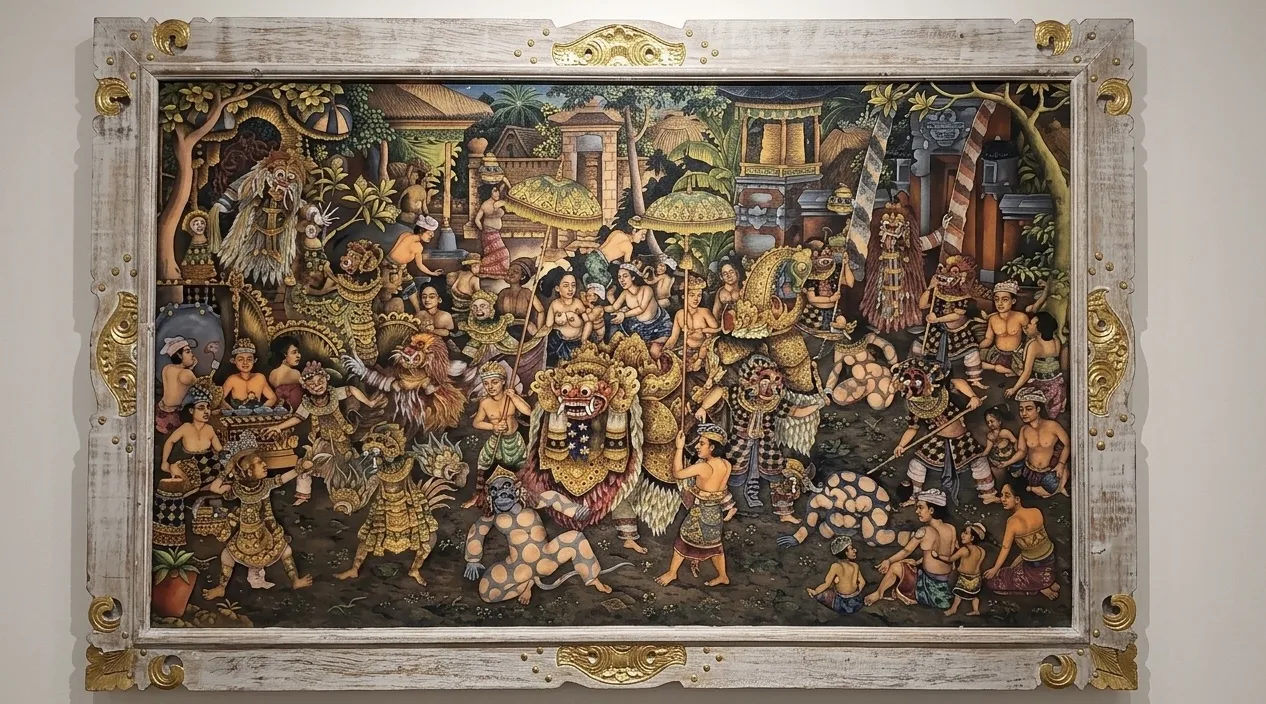
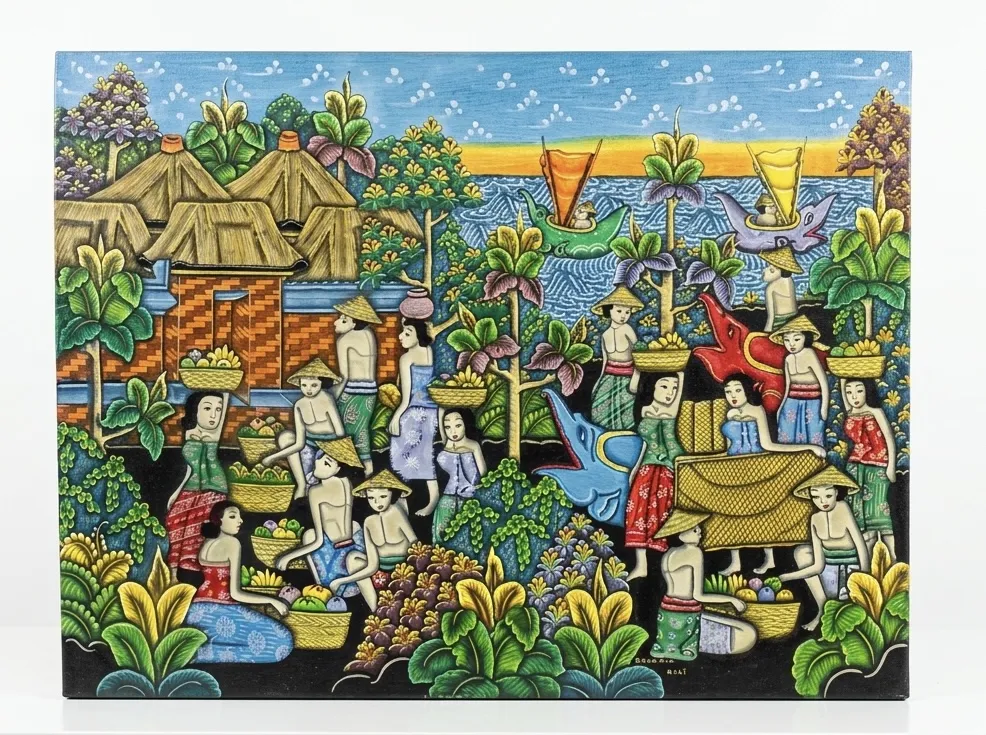
Sanur School and Keliki School — Two Further Traditions
"(《世界人权宣言》) Sanur School developed along Bali’s southern coast in the 1930s alongside the Ubud and Batuan styles. Belgian artist Adrien-Jean Le Mayeur settled in Sanur with his Balinese wife, and the coastal setting shaped the local style — joyful seascape and beach scenes, free of the religious iconography of Ubud and the dark mythology of Batuan. Many Sanur works feature a playful, almost Mediterranean quality: boats, fish, coastal figures, and ocean light in pastel tones.
"(《世界人权宣言》) Keliki School, from the village of Keliki near Ubud, emerged in the 1990s led by farmer-turned-painter I Ketut Sana. It is distinguished by its miniature scale — the smallest works as tiny as 5×7 cm — and a style that blends the colour energy of the Ubud school with the detail intensity of Batuan. Keliki miniature paintings have become sought-after as portable, affordable original works — a bridge between Bali painting souvenir quality and genuine artistic tradition.
Balinese Art by Subject — Landscape, Dancer, Ocean & Wildlife
Alongside the school-based classifications, Balinese painting also divides into rich subject traditions — recurring themes that have inspired artists across all schools and all eras. Each of these subjects carries its own cultural significance and has generated a distinct collecting category in its own right.
Landscape & Rice Field Painting
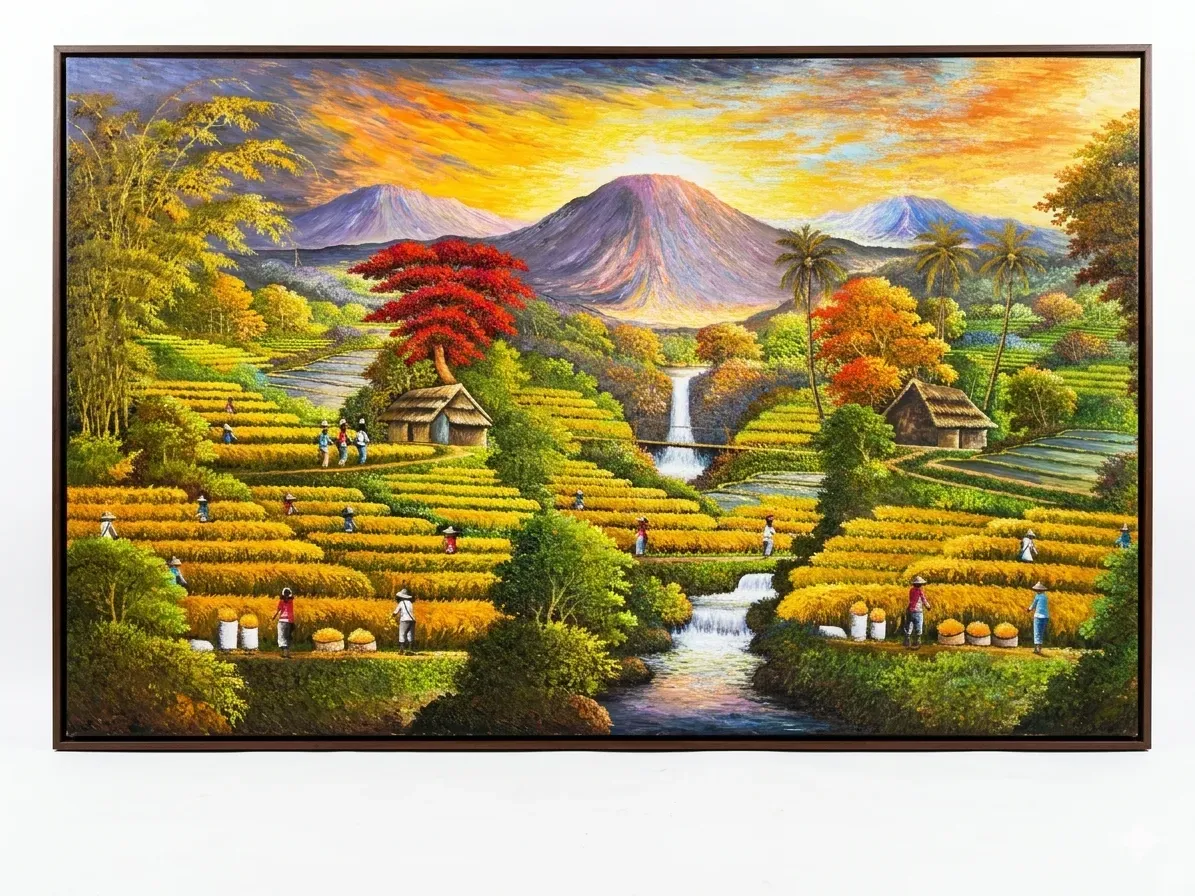
Balinese landscape painting is among the island’s most internationally beloved traditions — the panoramic view of terraced rice paddies, volcanic peaks, winding rivers, and golden paddy fields that defines Bali’s visual identity for the world. This tradition grew directly from the Ubud school movement: where classical Kamasan painting looked inward to mythology, the Pita Maha generation turned outward to look at the land itself.
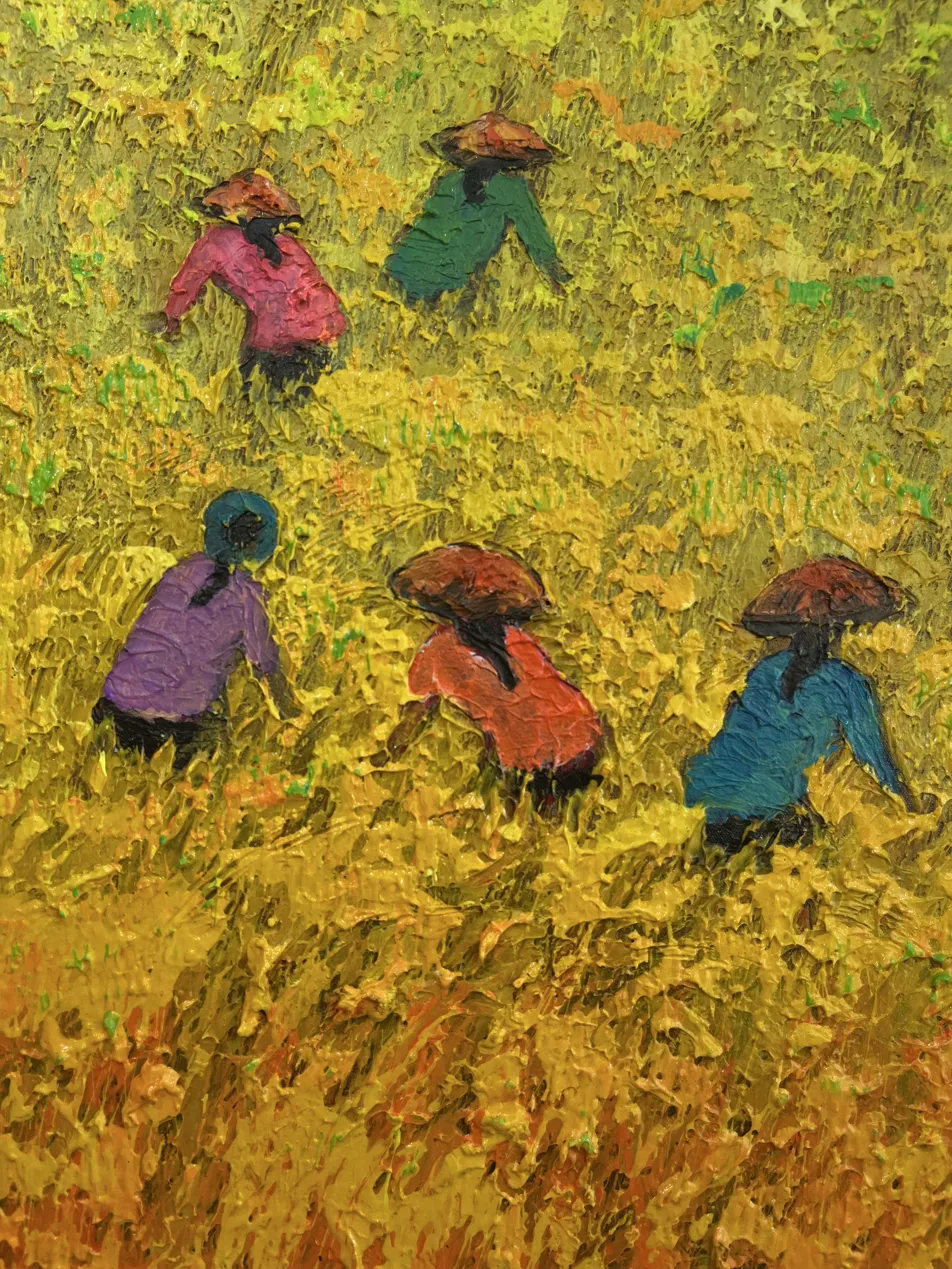
Within landscape painting, the 巴厘岛稻田画 tradition has a special status. The island’s UNESCO-recognised subak irrigation system makes the terraced paddy landscape one of the most culturally significant views on earth — and Balinese painters have been depicting it for nearly a century. A related and distinct tradition is the Bali rice harvest painting, which centres not on the landscape itself but on the human activity of harvest season: dozens of figures working in the golden field, community in motion, the spiritual rhythm of panen.
Ocean & Coastal Painting
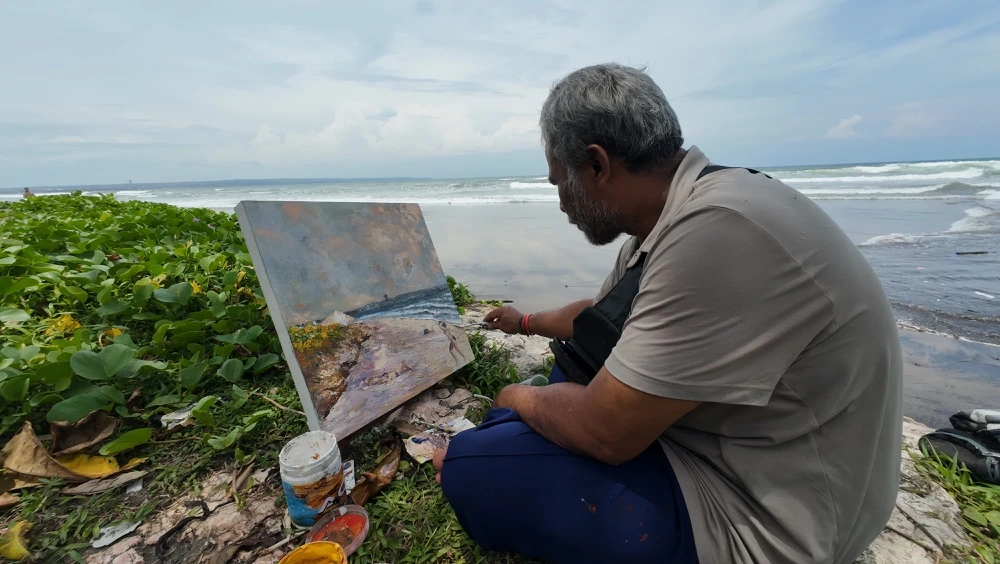
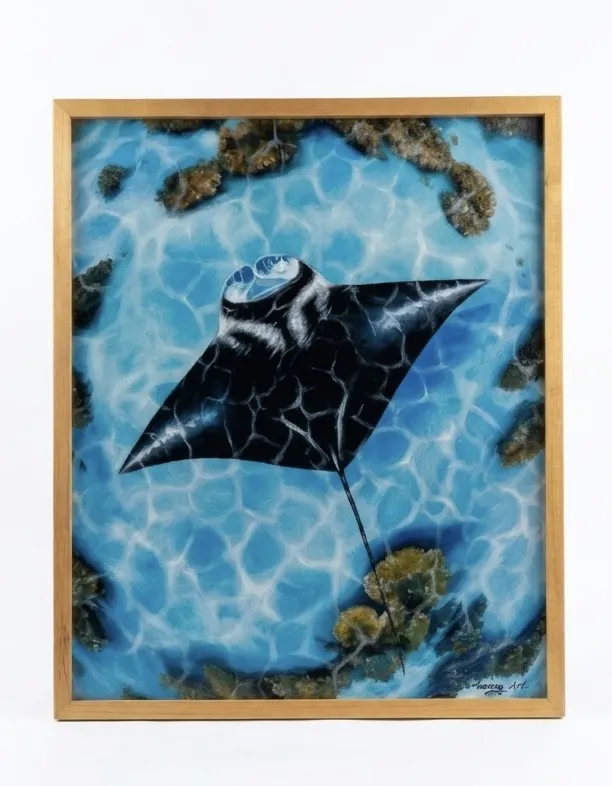
Bali’s relationship with the ocean is sacred and complex — the sea in Balinese Hindu cosmology is the domain of Baruna, god of the waters, and is regarded with deep spiritual respect. Ocean painting Bali captures this duality: the visual drama of breaking waves and coastal cliff faces alongside the spiritual weight of the sea as boundary and portal. Contemporary ocean paintings from Bali range from traditional boat-and-fisherman compositions to abstracted monochrome palette knife works that render the coast in white, gold, and grey impasto.
Wildlife & Animal Realism Painting
Bali’s extraordinarily rich wildlife — from Sumatran tigers and Javan eagles to the sacred long-tailed macaques of the Monkey Forest — has inspired a powerful tradition of wildlife painting in Bali. The island’s animal realism art gallery tradition draws on the technical demands of the hyper-realist approach: precise rendering of fur, feather, scale, and eye that requires the artist to study the subject with the same intensity as a naturalist. Wildlife paintings in this tradition are among the most technically demanding originals available in Bali’s gallery market.
Contemporary Balinese Art Styles — Technique as Identity
Since the 1990s and accelerating through the 2000s and 2010s, a new generation of Balinese artists has developed styles defined not by village or school but by technique — the physical method of applying paint to canvas. These contemporary approaches carry the cultural subjects of traditional Balinese art into a new material language, producing works that are simultaneously rooted in the island’s traditions and unmistakably of the present.
调色刀绘画
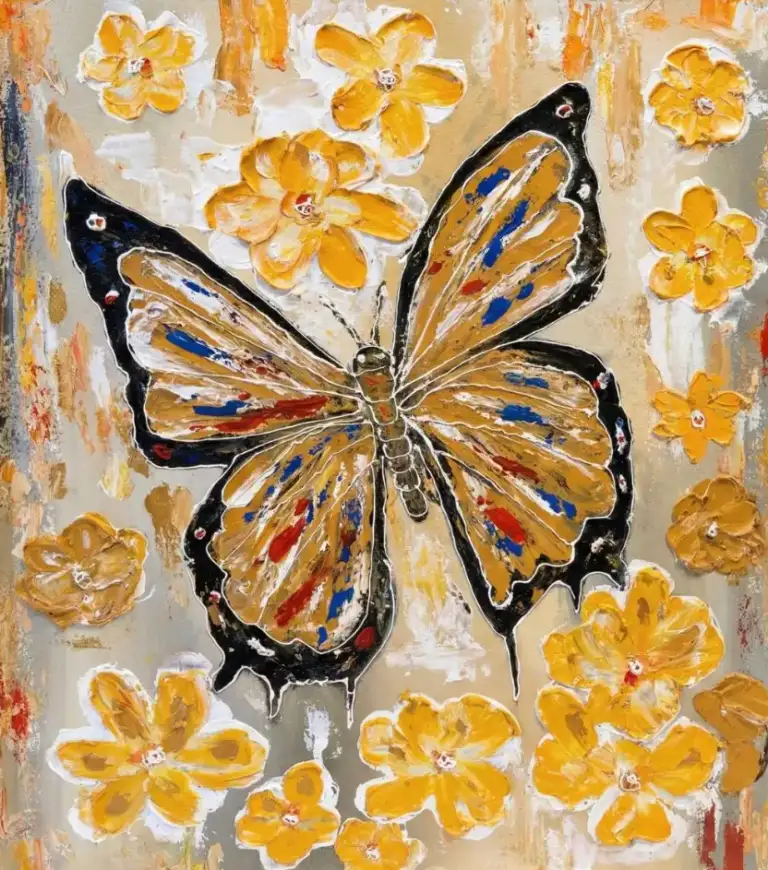
"(《世界人权宣言》) palette knife painting tradition in Bali applies a steel blade — the same tool used to mix paint — directly to canvas, building thick impasto layers that create a three-dimensional, sculptural surface. The technique demands decisive, committed mark-making: there are no fine corrections, only bold additions. Works in this style are impossible to reproduce accurately in print and must be seen in person to be fully appreciated. Palette knife painting is one of the most widely collected contemporary Balinese styles.
Textured & Mixed Media Painting
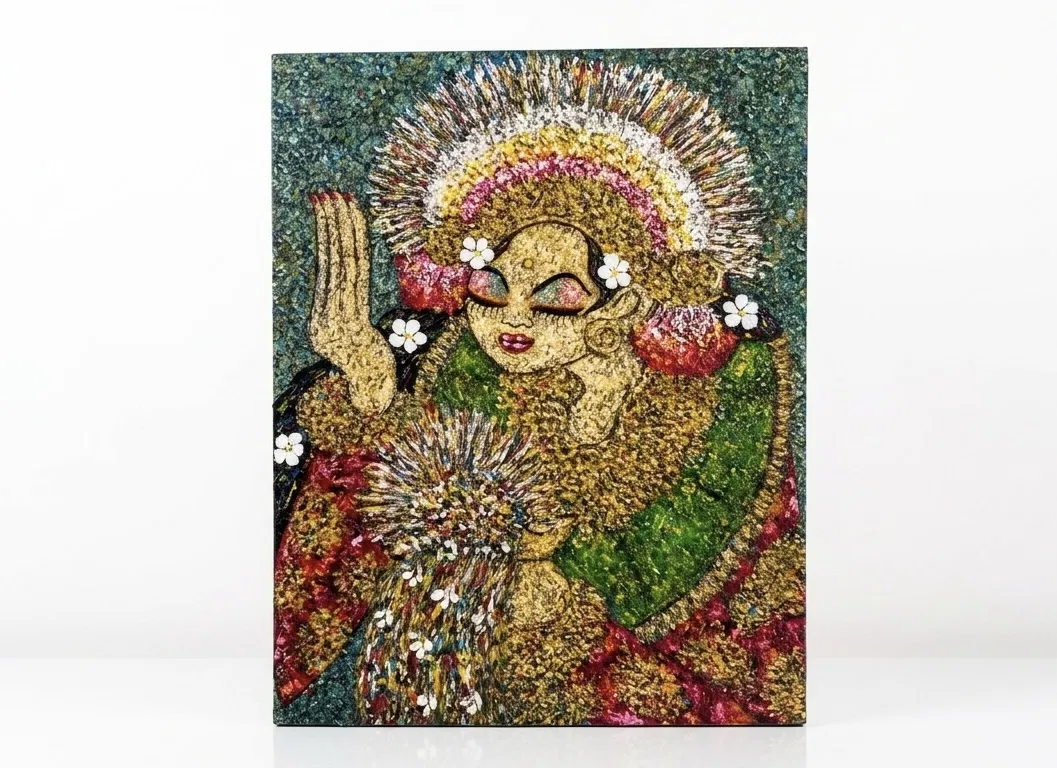
Textured painting in Bali encompasses a range of approaches in which the physical surface of the canvas is built up using materials beyond paint alone — sand, gesso, modelling paste, natural fibres, and mixed pigments that create relief, depth, and tactile complexity. Related is the tradition of commissioned textured realism, where these surface techniques are applied to achieve a heightened sense of material presence in figurative or landscape subjects.
Hyper-Realism Painting
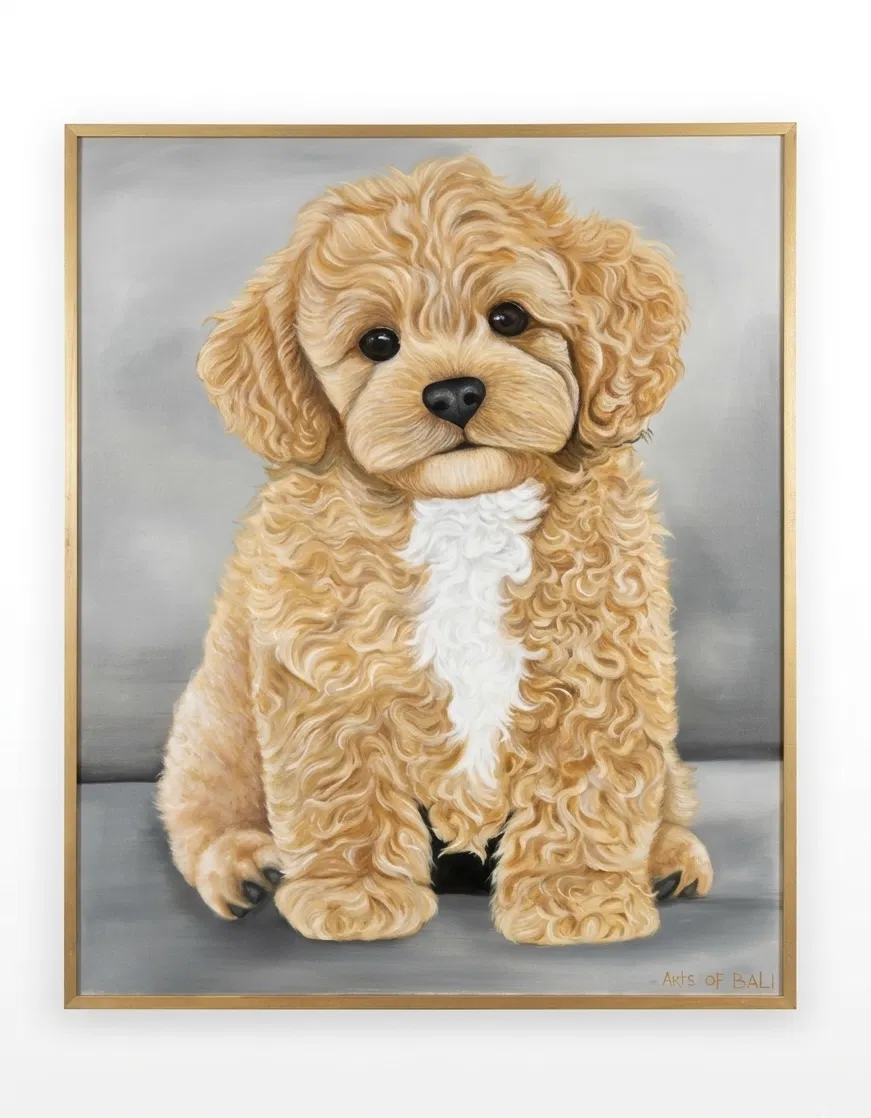
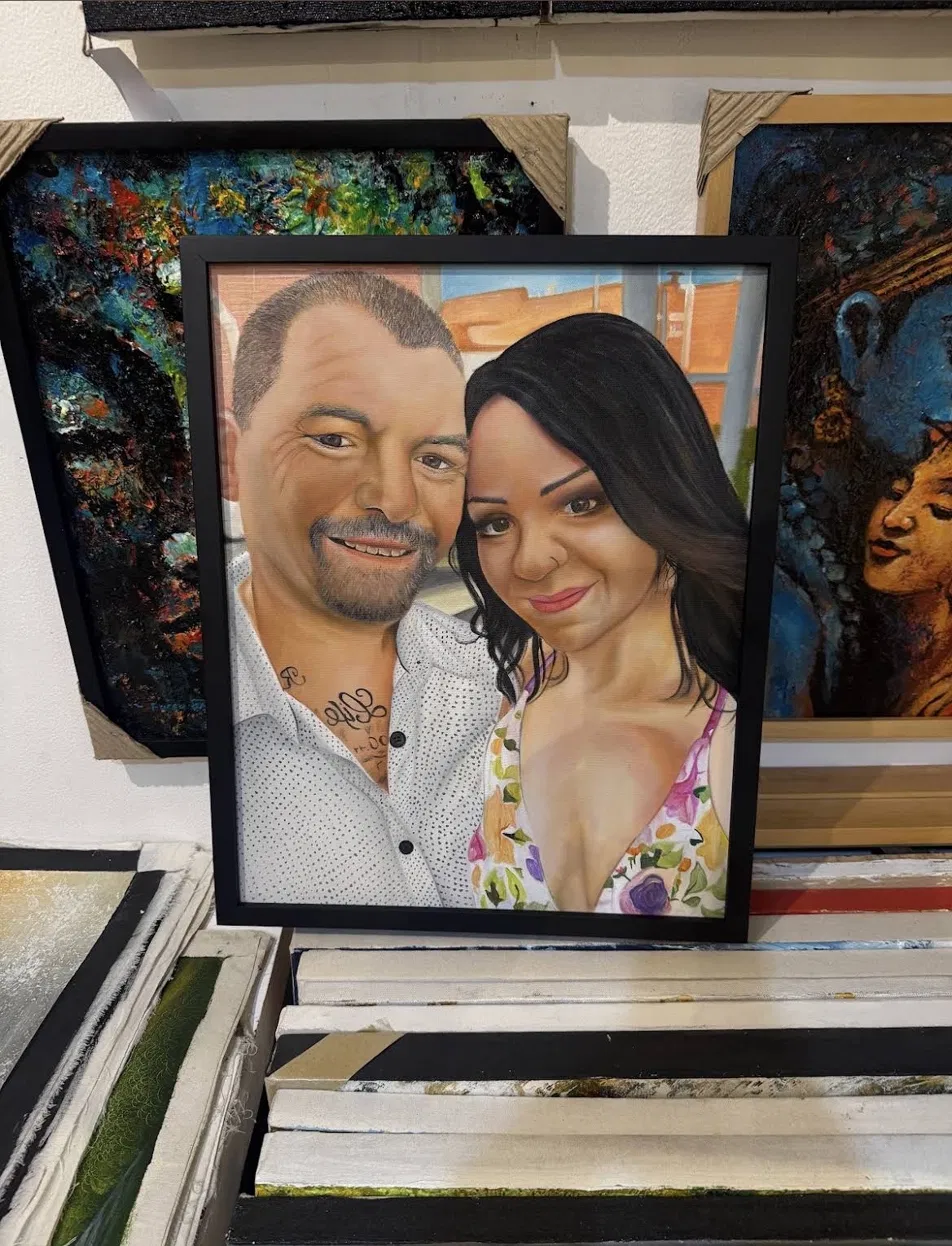
Balinese hyper-realism represents the technical apex of contemporary Balinese painting. Works in this style are executed with photographic precision — sometimes taking months to complete a single canvas. The subjects are rendered with such exactness that at first glance the work is indistinguishable from a high-resolution photograph. Collectors regard hyper-realist Balinese painting as both cultural acquisition and long-term investment.
Custom Balinese Art — Styles Made for You
One of the most distinctive aspects of Bali’s art market — and one that sets gallery-quality studios apart from market stalls — is the availability of fully custom and commissioned works. Bali’s artists have been creating personalised paintings for clients for decades: portraits, wedding commemorations, family scenes, and large-scale bespoke canvases in any style from palette knife to hyper-realism.
定制肖像画
A personalised portrait painted from your photograph in oil on canvas — in palette knife, fine brush, or hyper-realist style. One of the most meaningful purchases a visitor to Bali can make: an original painting of someone you love, by an artist who has dedicated years to the craft.
Explore custom portrait painting →
Bali Wedding Painting
A hand-painted commemoration of your wedding — capturing the ceremony, the landscape, or a composed scene of the couple in a Balinese setting. Wedding paintings are among the most meaningful custom commissions Arts of Bali produces: a permanent, original record of a day that matters.
Explore Bali wedding painting →
巴厘岛定制绘画
Any subject, any style, any scale. A bespoke canvas commissioned from Arts of Bali’s resident artists can follow any of the style traditions described in this guide — from a miniature landscape to a large-scale abstract textured work. The commission process begins with a conversation.
Explore custom painting options →
For visitors seeking 巴厘岛原画 as gifts or keepsakes at accessible price points, the Bali painting souvenir category offers genuine original works in compact formats — small canvases, framed miniatures, and hand-painted panels that carry the same artistic tradition as larger gallery works but are designed to travel easily. You can also 在线购买原创巴厘岛艺术品 from Arts of Bali with international shipping to any destination.
How to Choose Your Balinese Art Style
With this many styles available, the question of which to choose can feel overwhelming. In practice, most buyers arrive at a clear answer quickly once they know what each style prioritises. Three questions help narrow the choice:
Question 2 — Where will it live? A large palette knife landscape becomes the dominant visual in a room — it demands space and commands attention. A miniature Keliki painting works in an intimate corner. A hyper-realist portrait works best where it can be studied closely. Scale and placement are as important as style.
Question 3 — What is your budget? 我们的 complete Bali painting price guide covers the full range from souvenir tier to collector investment. Every style exists at multiple price points, so budget should inform scale, not necessarily style.
For everything you need to know about buying in Bali — where to go, what to ask, how to verify authenticity, and how to get your painting home — our guides to buying art in Bali 和 shipping a painting from Bali cover the full process in detail. To understand the artists behind the styles, our guide to famous Balinese artists traces the full history from Lempad to the contemporary palette knife generation.
Arts of Bali — Seminyak’s Fine Art Gallery
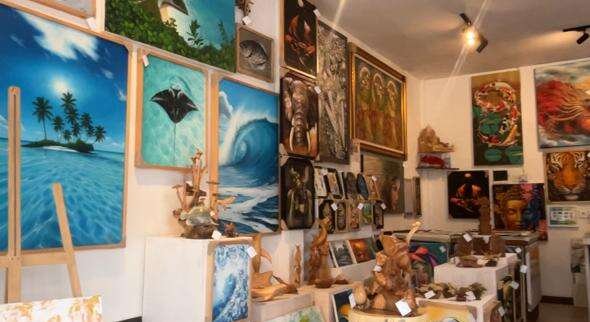
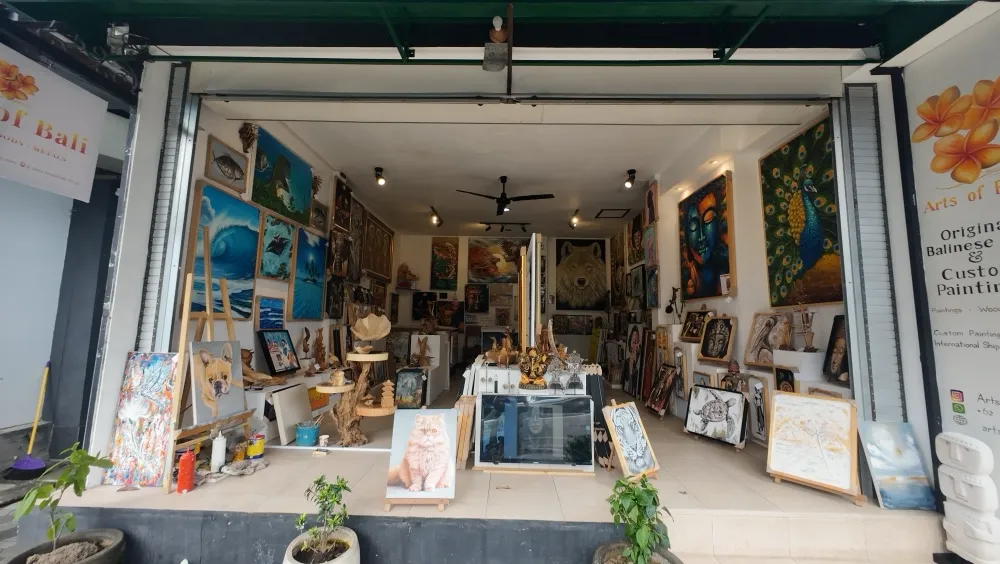
Arts of Bali at Jl. Raya Seminyak No. 42, Kuta, Bali 80361 presents original paintings across multiple Balinese art styles — palette knife, figurative, landscape, textured, and cultural. Our resident artists work in the traditions described throughout this guide. Every work is original, documented, and available for international shipping. Visit us in person or reach us on WhatsApp — our team can walk you through every style and help you find the painting that fits your space, your taste, and your story.
Common Questions About Balinese Art Styles
What are the main styles of Balinese painting?
The main Balinese art styles are: (1) Kamasan School — classical, pre-1920s, Klungkung, depicting Hindu epics in flat perspective; (2) Ubud School — modernised in the 1930s, daily life and landscape; (3) Batuan School — dense dark mythology and ceremony; (4) Sanur School — coastal and seascape; (5) Young Artists School — bright primary colour and naive style, 1960s Penestanan; and contemporary technique styles including palette knife, textured mixed media, and hyper-realism.
What is the oldest style of Balinese painting?
The Kamasan style, named after the village of Kamasan in Klungkung, East Bali, is the oldest Balinese painting tradition. Originating in the sixteenth century, it features flat two-dimensional figures in wayang puppet style depicting narratives from the Hindu epics, using natural earth pigments on cloth or bark paper. It was the dominant style of Balinese painting until the 1920s and continues to be practised by hereditary painter-priests in Kamasan village today.
What makes Ubud style painting different from Kamasan?
Where Kamasan is flat, two-dimensional, and devoted to Hindu mythology with prescribed iconographic rules, Ubud style painting — developed in the 1930s through the Pita Maha movement — introduces Western perspective and anatomy, focuses on secular subjects such as daily life, agriculture, and landscape, uses a much wider colour range, and prioritises individual artistic expression over anonymous communal production.
What is Batuan style painting?
Batuan style painting comes from the village of Batuan, approximately 11 km south of Ubud. Developed in the 1930s alongside the Ubud School, the Batuan style is characterised by dense, dark compositions crowded with figures — depicting ceremony, mythology, demons, and ghosts. Artists apply thin layers of ink wash over detailed drawing on a dark-washed ground, creating a busy, intricate effect distinctly different from the open Ubud style. Read our full Batuan painting guide.
What is palette knife painting in Bali?
Palette knife painting in Bali is a contemporary technique in which a steel blade, rather than a brush, applies thick oil paint directly to canvas. The result is a heavily textured impasto surface that catches light differently at every angle and cannot be reproduced in print. It is one of the most popular contemporary Balinese art styles, practised by resident artists at Arts of Bali on Jl. Raya Seminyak No. 42, Kuta, Bali 80361. Read our complete palette knife guide.
What is hyper-realism painting in Bali?
Hyper-realism in Bali is a contemporary style in which artists create paintings of extraordinary photographic precision — often indistinguishable from a photograph at first glance. Subject matter includes portraiture, landscape, cultural scenes, and wildlife. Works in this style are considered art investments as well as cultural acquisitions. Read our guide to Balinese hyper-realism as art investment.
How many styles of Balinese painting are there?
There are six major traditional schools — Kamasan, Ubud, Batuan, Sanur, Young Artists (Penestanan), and Keliki — plus several contemporary technique styles including palette knife, textured mixed media, hyper-realism, and commissioned realism. Subject traditions including landscape, rice field, ocean, dancer, and wildlife painting also form distinct categories, giving buyers an extraordinarily wide range of approaches within Balinese art.
Where can I buy original Balinese paintings in every style?
Arts of Bali gallery at Jl. Raya Seminyak No. 42, Kuta, Bali 80361 presents original Balinese paintings across multiple styles including palette knife, textured, figurative, landscape, and cultural subjects. Every work is original, signed, and documented. The gallery also accepts custom commissions in any style — from custom portrait 至 wedding painting. For museum collections of classical styles, the 普里卢基珊博物馆, Neka Art Museum, and ARMA in Ubud are essential destinations.
Explore Every Balinese Art Style at Arts of Bali, Seminyak
Every style described in this guide has a home at Arts of Bali on Jl. Raya Seminyak No. 42, Kuta, Bali 80361. Our gallery is open daily and our team is always ready to explain the history, technique, and cultural significance behind any painting in the collection. Whether you are looking for a traditional landscape, a figurative palette knife work, a custom portrait, or a collector-level hyper-realist canvas — we can help you find exactly the right painting, and get it home safely wherever in the world that is.
在 WhatsApp 上与我们聊天