Bali wood carving villages are the communities in Gianyar Regency where carving is a family trade handed down from parent to child. The four best known are Mas, a carving village about 6 km south of Ubud; Pakudui, the Garuda statue village; Singapadu, known for ceremonial masks; and Sebatu, where carvings decorate even the village shrines. Gianyar itself carries the nickname “Gumi Seni,” the Land of Arts. This guide covers what each village is known for, which woods the carvers use, and how to see the craft in person.
Key Takeaways
- Gianyar Regency has 70 villages across seven districts and is nicknamed “Gumi Seni,” according to Wikipedia’s regency entry.
- Mas lies about 6 km south of Ubud and is known for its woodcarvings. Pakudui, in the Tegallalang district, is recognized for Garuda statues.
- In Pakudui, almost 90 percent of residents are artisans who specialize in Garuda statues, based on a Budaya Bali profile of the village.
- Singapadu is the setting of a 2011 Jakarta Post profile of mask carvers Tangguh and I Ketut Muja, who make Barong, Rangda and Topeng masks for ceremonies.
- Woods named in the sources below include suar, jackfruit, teak, hibiscus, crocodile wood, frangipani and gaharu.
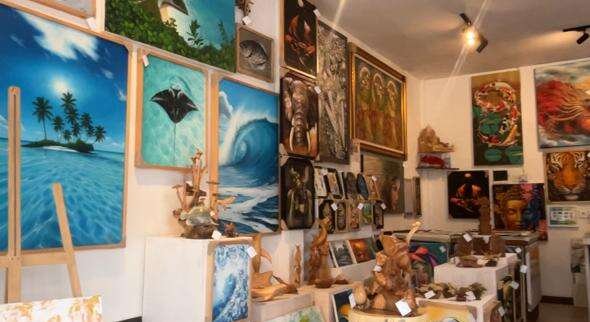
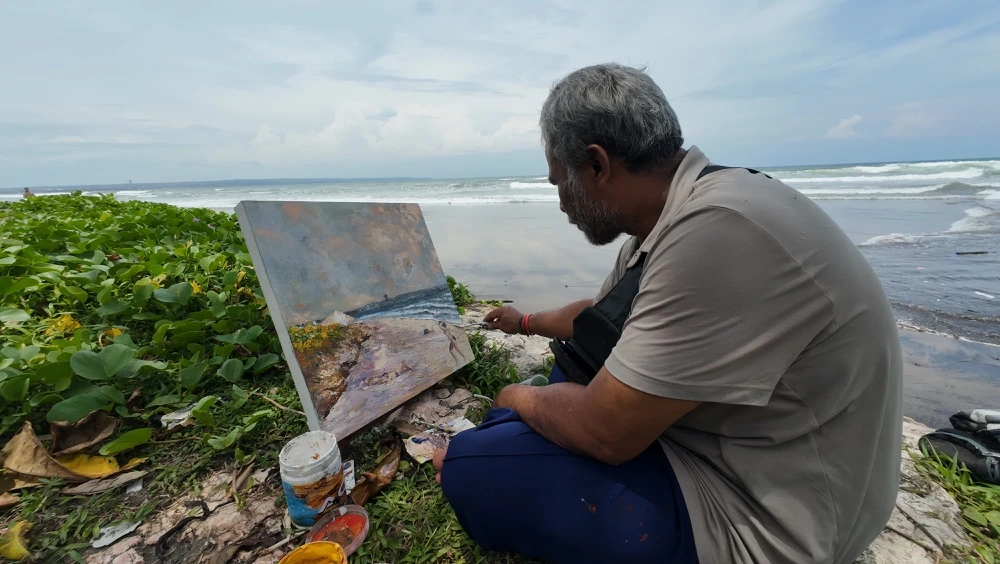
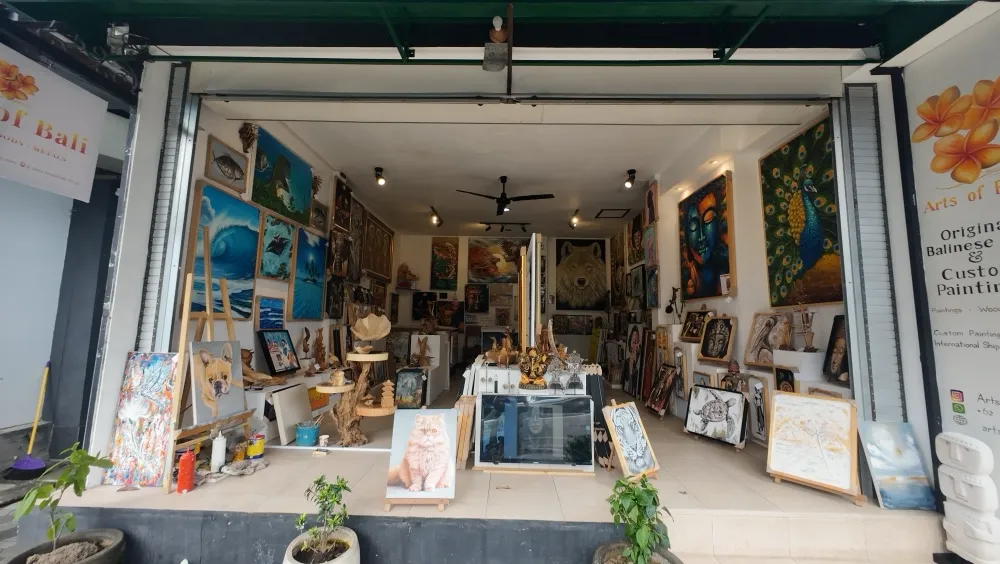
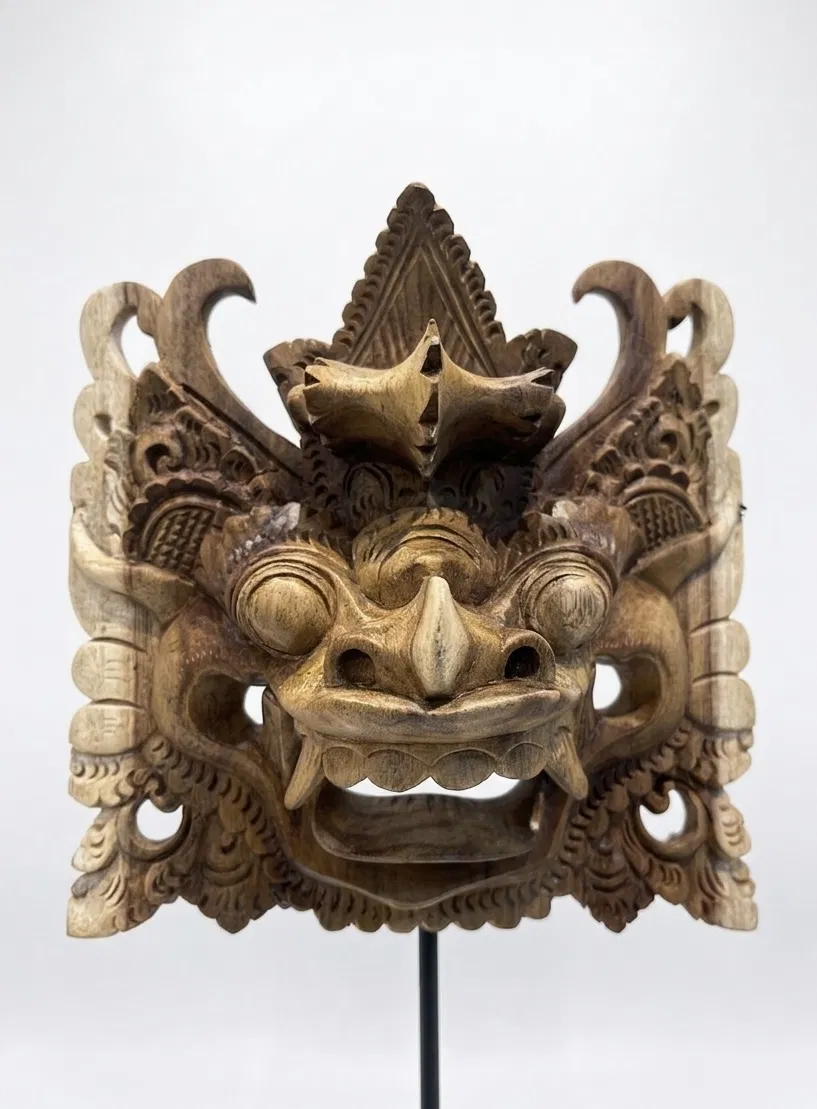
- The photos in this article are pieces from the Arts of Bali gallery in Seminyak. They are not claimed to come from any village named here.
Bali wood carving villages are easy to mix up on a map, because the island’s carving belt is spread across several communities in Gianyar, each with its own habit of subject and style. A visitor who drives from Ubud to Mas in the morning and to Pakudui in the afternoon will see two different carving cultures within the same regency. This guide separates them: where each village sits, what its carvers are known for, which woods come up in published accounts, and what to ask when you walk into a workshop.
A note on sourcing before we start. Arts of Bali is a gallery in Seminyak, not a village workshop, so the facts about each village below come from the linked sources, quoted and dated where a person is speaking. Where a source does not say something, such as the exact district of Sebatu, this article leaves it out instead of guessing.
Bali Wood Carving Villages: Why Gianyar Is Called Gumi Seni
Gianyar Regency sits in central Bali and, per Wikipedia’s regency entry, is divided into seven districts holding 70 villages, 64 rural desa and 6 urban kelurahan. Its nickname, Gumi Seni, translates as the Land of Arts. The same entry lists Mas, Celuk and Batuan among the village attractions and notes the Sukawati traditional art market, which shows how many crafts share one small stretch of the island.
Carving is only one of those crafts. Batuan, for example, is better known for painting, and our guide to Batuan painting covers that side of Gianyar. For the wider picture of carving as a Balinese art form, the Bali wood carving guide is the place to start, and this article zooms in on the places where the work is actually done.
Village OneMas: The Carving Village South of Ubud
Wikipedia describes Mas as a village about six kilometers south of Ubud, known for its woodcarvings. Its entry also names the Nyana & Tilem Gallery and the I.B. Sutarja mask carver gallery, where the late Ida Bagus Sutarja’s wife and descendants continue to make work. Sutarja was born on 25 November 1934 and died on 2 January 2002.
A travel writer at Ramblyn Jazz says Mas is believed to have been founded during the Majapahit Empire in the 14th century, and that the master sculptor Ida Putu Taman popularized the craft among villagers in the 1920s. The same writer notes that carvers learn from parents or other family members. Treat the founding date as tradition rather than a documented fact, since the source frames it as a belief.
For the Nyana & Tilem name that Wikipedia lists in Mas, we wrote a dedicated profile: Nyana and Tilem, the Mas wood carving masters. If you are comparing what a Mas-style piece costs against other carving, our Bali wood carving price guide breaks down gallery prices by tier.
Village TwoPakudui: The Garuda Village in Tegallalang
Pakudui is a traditional village in the Tegallalang district of Gianyar, in the northern part of the regency, according to Budaya Bali. The same source puts it about an hour’s drive from central Denpasar and near Ubud, and calls it one of Bali’s traditional woodcarving centers, particularly for Garuda statues. Wikipedia places the Tegallalang district roughly 10 km north of Ubud, a useful anchor if you are planning a day around the rice terraces there.
A second Budaya Bali profile gives the numbers that make Pakudui unusual: 122 households divided into two banjars, with almost 90 percent of residents working as Garuda artisans. It says the village’s recognition as a Garuda center began around 50 years ago, that the artist I Made Ada introduced the craft to the outside world, and that residents established the “Garuda Village Pakudui Tourist Village” in 2016. The profile pages show no publication date, so read “50 years ago” relative to when they were written.
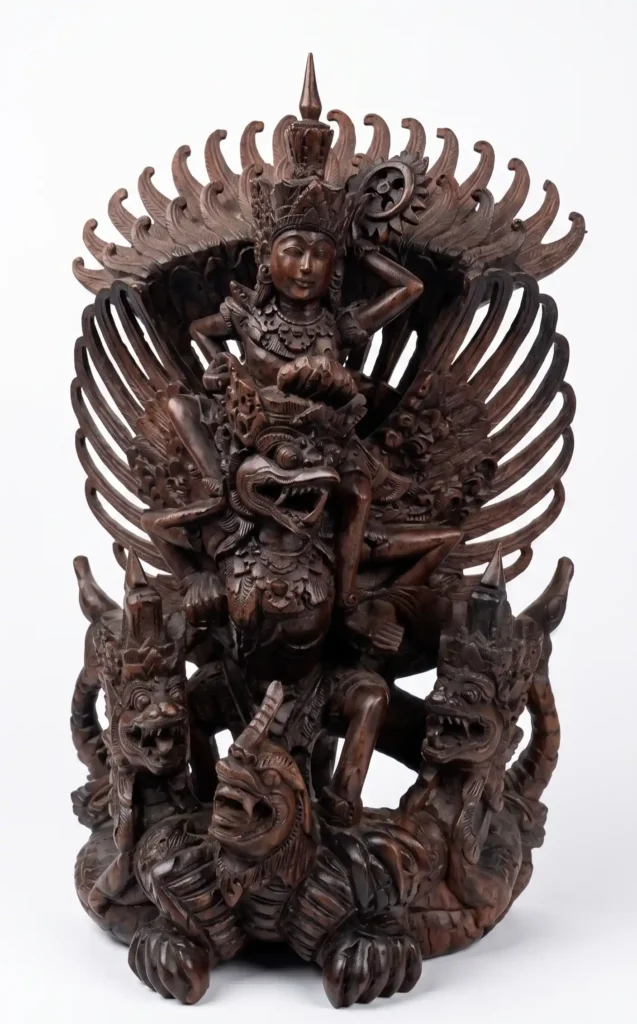
On materials, Budaya Bali says Pakudui’s artisans work with hardwoods such as suar or jackfruit, chosen for strength and grain, and that a single statue can take months or even years depending on size and complexity. If the Garuda myth itself interests you, our Garuda Wisnu Kencana carving guide explains the story behind the statues.
Village ThreeSingapadu: Masks Made for Ceremonies
The clearest published portrait of Singapadu’s carvers is a 2011 Jakarta Post feature by Trisha Sertori, “The Men Behind Masks”. It describes Singapadu, north of Denpasar, as the “Lion Twins” village and follows two carvers. Tangguh, then 77, began carving in 1946 and learned at a temple from Cokorda Oka Tublen. I Ketut Muja, then 67, started studying under Tangguh in 1958. Both ages are as of the 2011 article.
The masks they make include Barong, the Rangda with its fanged mouth, and Topeng. The article names teak, frangipani and gaharu roots and trunks as woods in the workshop, and says the masks are made for Hindu ceremonies and are understood to protect communities and ward off evil. Tangguh told the paper he still makes masks for ceremonies and some to sell, adding “I make them more because of my emotions.”
“Each piece of wood speaks for itself, until the wood speaks I can’t begin.”
— I Ketut Muja, mask carver, Singapadu, quoted in The Jakarta Post, 3 November 2011The ritual side matters for anyone buying a mask. Tangguh said in the same article, “Before I start work I have a ceremony, but I have never been scared of the masks because I have prayers.” Our guide to Balinese wood carving masks explains how Barong, Rangda and Topeng differ, and our Barong painting article covers the same figure in paint.
Village FourSebatu: Carvings on Every Shrine
Sebatu has the thinnest paper trail of the four, so this section stays short. Budaya Bali’s profile of Sebatu Traditional Village says every building and shrine in the village is decorated with carvings, that the towering old trees around the village supply the main raw material, and that the carved motifs symbolize mystical stories and Balinese values passed down through generations. The profile does not give a district, a distance from Ubud or a count of artisans, and neither will we.
That detail is worth knowing. When a village’s own architecture is the showroom, a carving is closer to a temple fitting than a souvenir, a theme we explore in the Balinese temple gate wood carving guide.
At a GlanceBali Wood Carving Villages Compared
| Village | Known For | Woods Named in Sources | Location Per Sources |
|---|---|---|---|
| Mas | General woodcarving, mask carvers, family workshops | Crocodile wood, hibiscus, teak | About 6 km south of Ubud |
| Pakudui | Garuda statues | Suar, jackfruit | Tegallalang district, northern Gianyar |
| Singapadu | Barong, Rangda and Topeng masks for ceremonies | Teak, frangipani, gaharu | North of Denpasar, Gianyar Regency |
| Sebatu | Carved shrines and buildings, mythological figures | Local old trees (species not named) | Not stated in the source |
Sources: Wikipedia (Mas, Tegallalang, Gianyar Regency), Ramblyn Jazz, Budaya Bali and The Jakarta Post, linked above. Woods are the ones each source names, not a complete list.
MaterialsWhich Woods Do Bali Carving Villages Use?
The sources above name seven woods, and they split into two groups. Per Ramblyn Jazz, crocodile wood is a softwood that is lightweight and easy to carve, hibiscus is a hardwood used for more substantial carvings, and teak is valued for durability, resistance to water and insects, and a golden-brown color. Budaya Bali names suar and jackfruit as strong, fine-grained hardwoods in Pakudui, and the Jakarta Post adds frangipani and gaharu to teak in the Singapadu mask workshop.
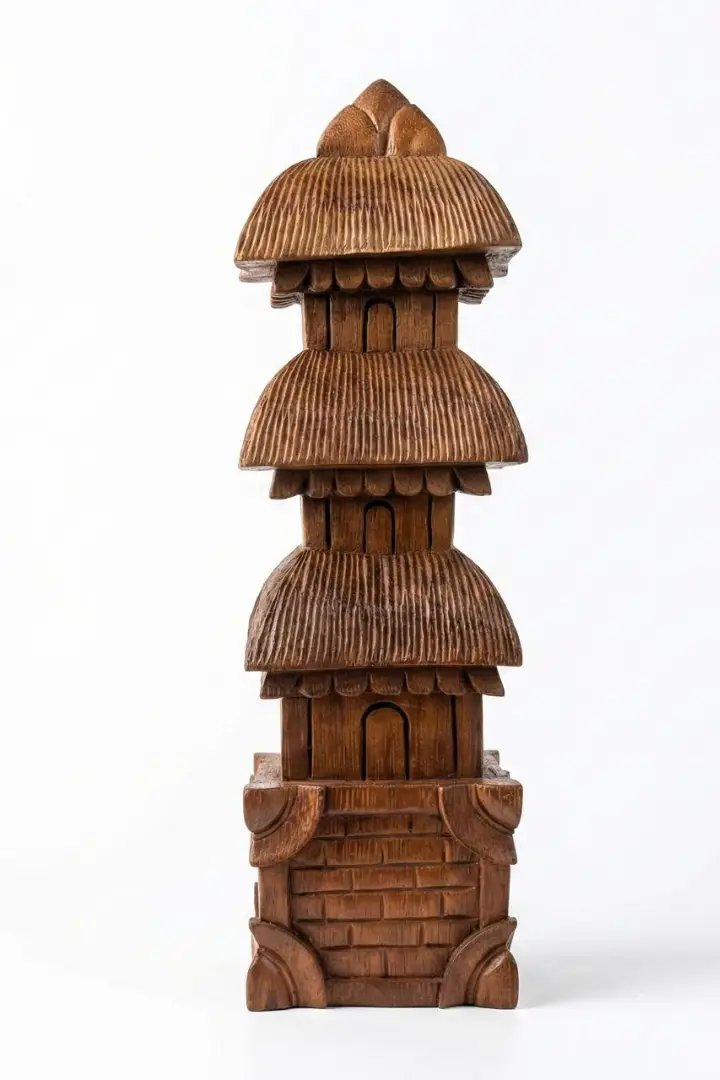
For a buyer, the practical point is that “wood carving” is not one product. A soft, light piece and a dense hardwood statue behave differently over years, and the carver can usually tell you which species you are holding. Our wooden animal sculpture guide shows how subject and wood choice shape the finished piece.
VisitingHow to Visit a Carving Village Well
Plan the villages as separate stops rather than one loop. Mas sits south of Ubud and Pakudui lies in the north, so combining them means crossing the Ubud area twice. Check a map, but a sensible split is Mas and Singapadu on one day, and Pakudui with the Tegallalang rice terraces on another. Check current road conditions and opening hours locally, since none of the sources above publish them.
When you step into a workshop, four questions get you most of the useful information: which wood this is, who carved it, how long it took, and whether the piece was made for ceremony or for sale. Given that a large Garuda can take months or years, a custom order is a long conversation, not a same-day purchase. Ask permission before photographing a carver at work, and do not touch masks that are set aside for ceremonies.
Gumi Seni
Gianyar’s nickname means “Land of Arts.” The regency has seven districts and 70 villages, and Mas, Celuk, Batuan and Singapadu all appear in its listings.
Ceremony Before Carving
Singapadu carver Tangguh told the Jakarta Post in 2011 that he holds a ceremony before he starts work, and that prayers keep him unafraid of the masks.
Garuda Village
Pakudui residents set up the “Garuda Village Pakudui Tourist Village” in 2016. Almost 90 percent of residents are Garuda artisans, per Budaya Bali.
See Balinese Wood Carving in Seminyak
Can’t make the drive to Gianyar? Arts of Bali shows carved masks, Garuda statues and temple pieces in person. Message us on WhatsApp and we will tell you what is in the gallery now.
Chat on WhatsApp View the Garuda Statue