“When hundreds of worshippers in white fill your street, you stop understanding ceremony as an event. You begin to understand it as the architecture of daily life. That is precisely what the Ubud masters have been painting since 1930.”
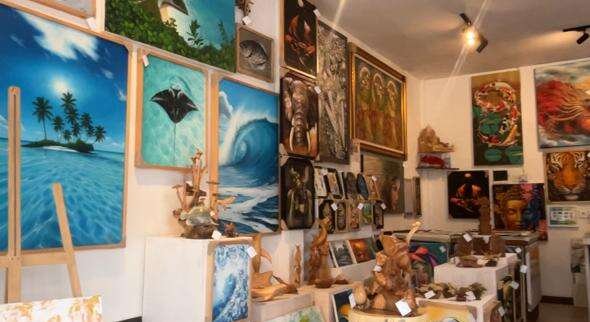
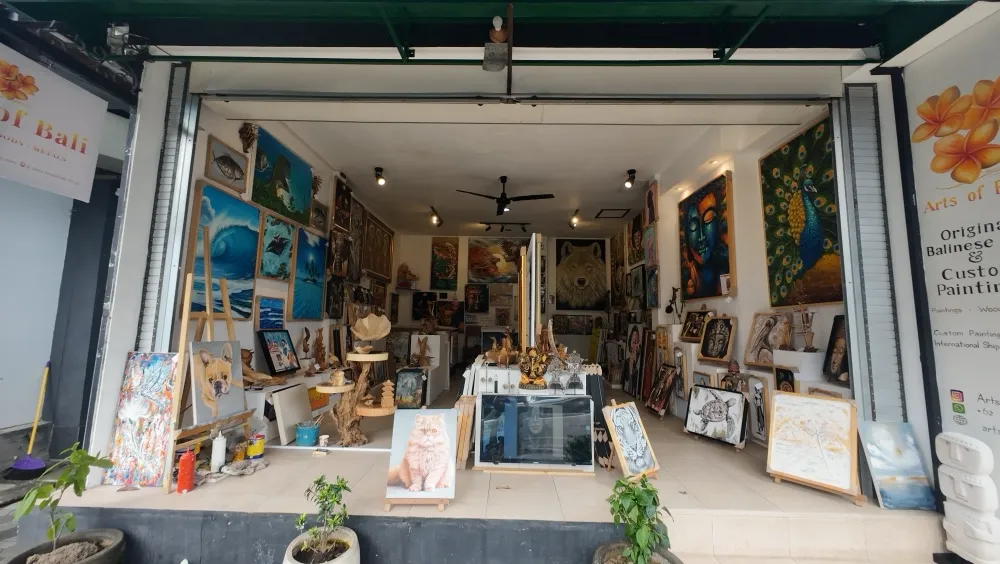
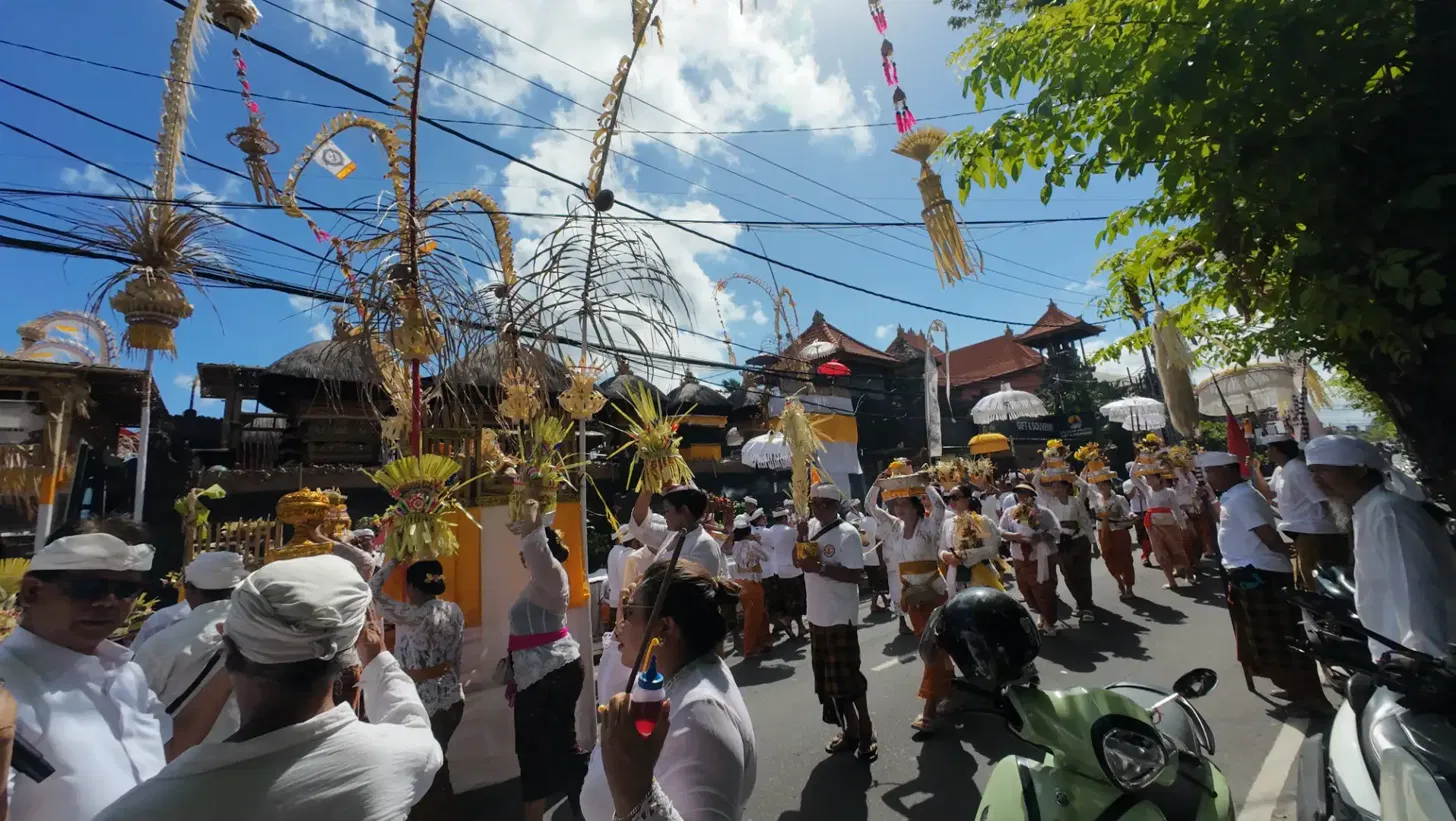
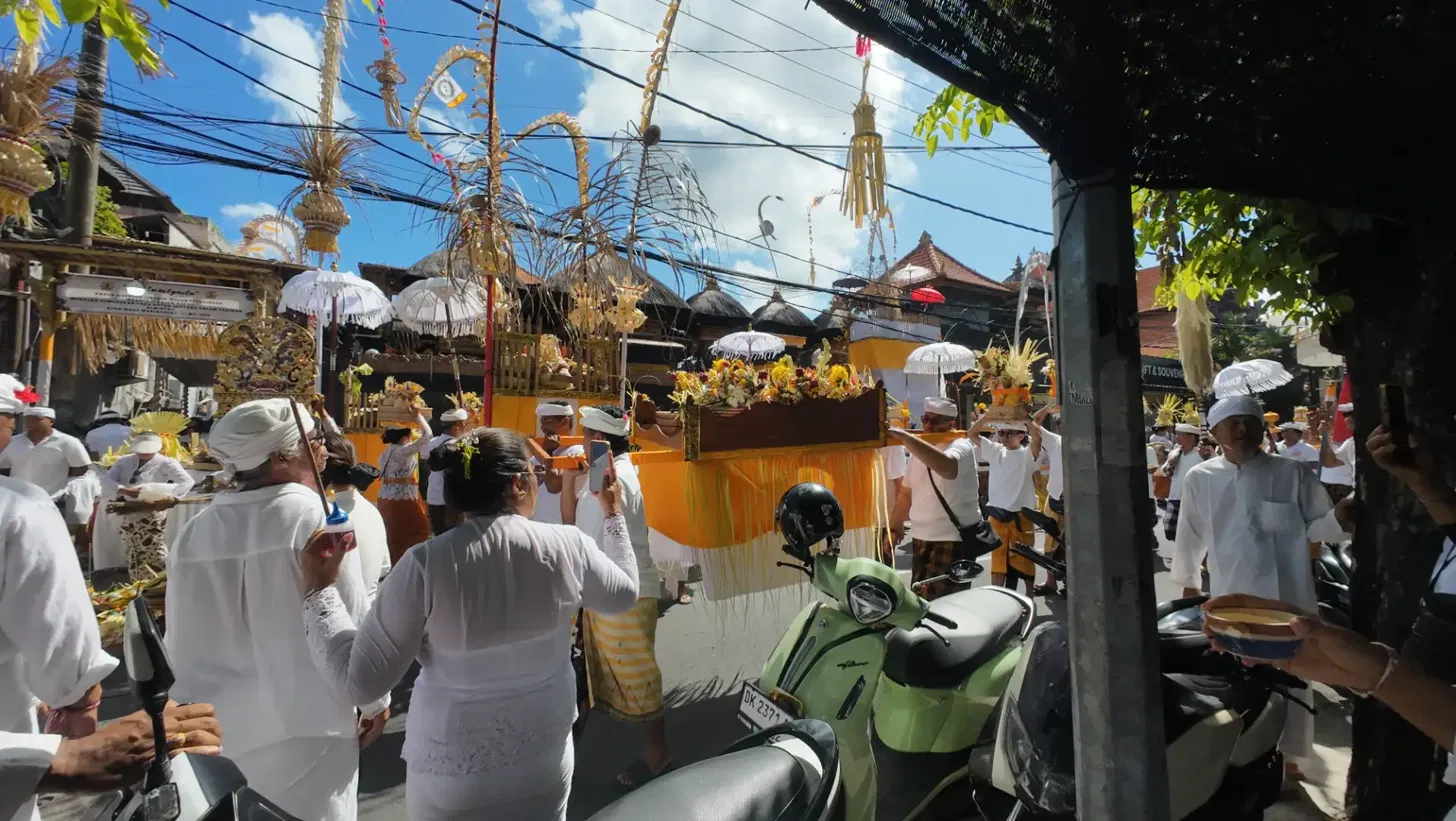
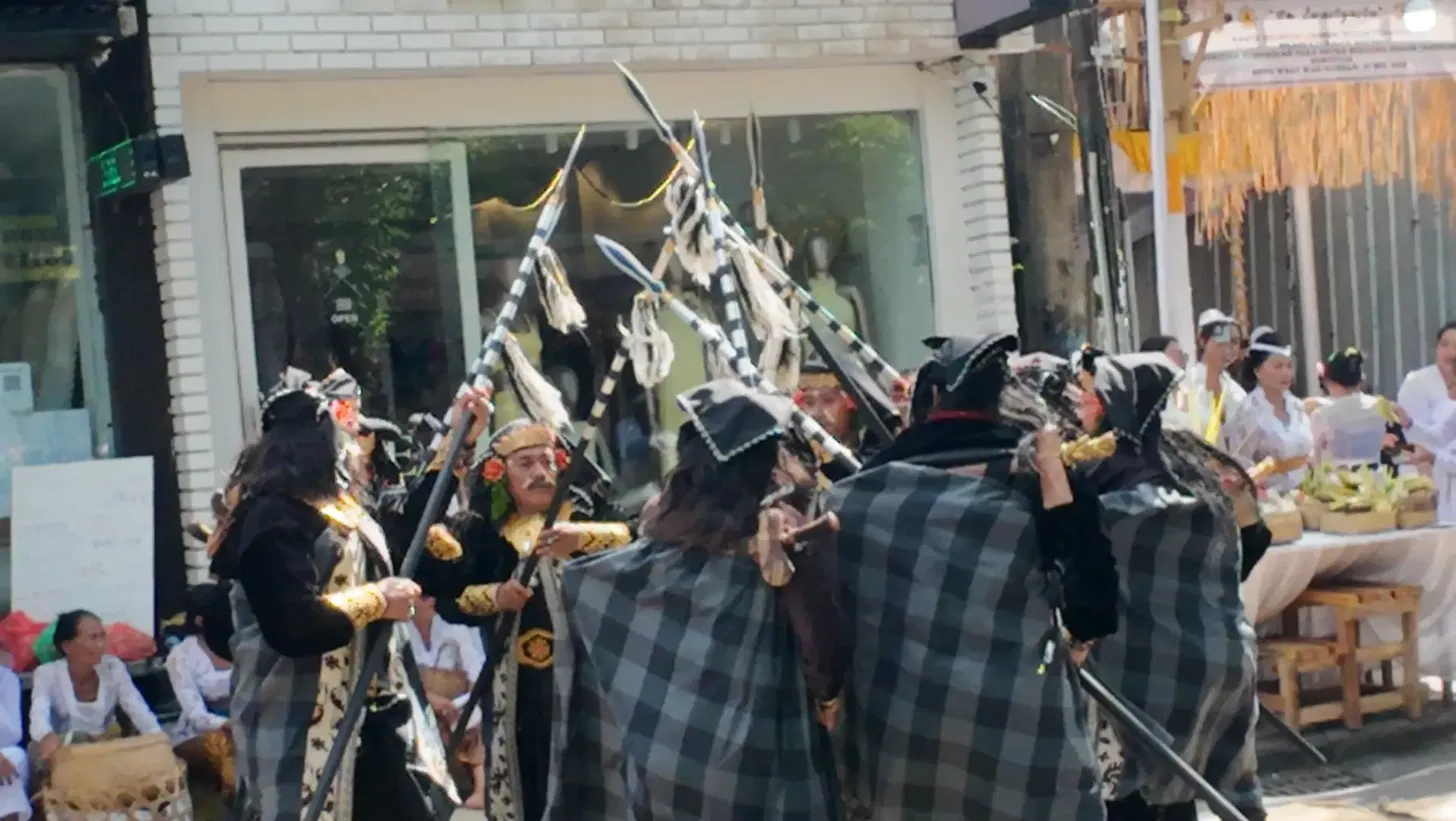
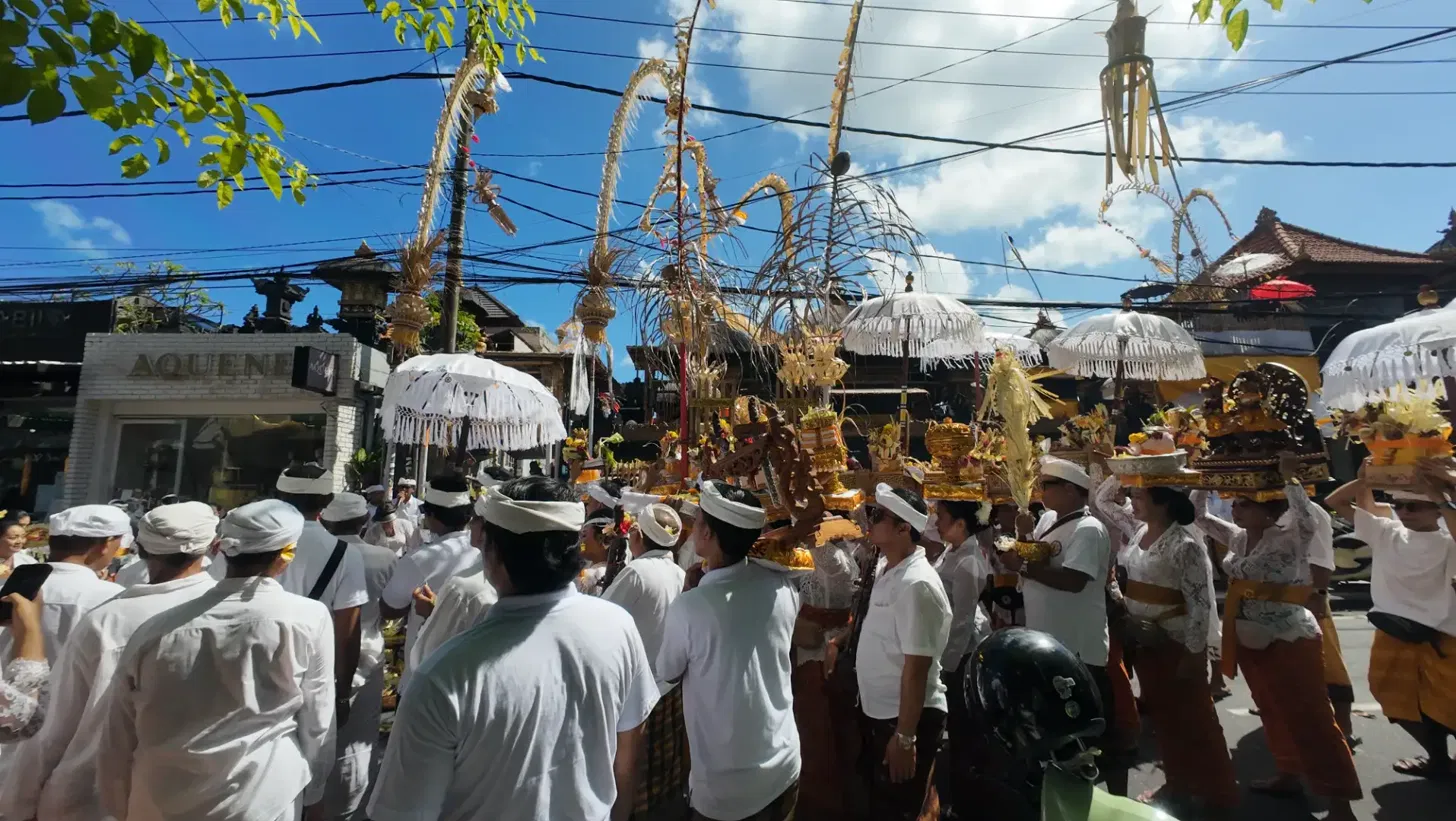
On Monday, 26 May 2026, the Arts of Bali gallery at Jl. Raya Seminyak No. 42 opened at nine in the morning. By eleven, traffic had completely stopped outside our window. No accident. No roadworks. A procession of several hundred Balinese Hindus in white ceremonial dress, carrying elaborately decorated golden jempana on their shoulders and flanked by Baris Gede warrior performers, was moving directly past our gallery door. I put down what I was doing and watched for two hours. That afternoon, back inside, I stood in front of the large classic Ubud painting on our main wall and understood it completely differently. This post is about that connection, and about why Balinese village life painting has documented the same living tradition for nearly a century without growing stale. Browse our current originals in the Arts of Bali gallery collection.
What is a Balinese Village Life Painting?
A Balinese village life painting is a narrative canvas that documents the ceremonies, rituals, and collective devotions that organise community existence in Bali. The tradition was established in the 1930s through the Pita Maha artist collective in Ubud, when painters began recording the Odalan temple festivals, Manusa Yadnya life ceremonies, sacred dances, and everyday spiritual rhythms of their own villages. Unlike decorative art, each figure in a classic village life composition holds a specific function within the story being told. These paintings are visual records of a tradition that continues to play out on Balinese streets every few weeks. The classic Ubud painting style remains the most complete vehicle for this subject to this day.
The Odalan at Our Door: Sequence, Ceremony, and Two Hours of Standing Still
The ceremony was an Odalan, the anniversary festival of a Balinese Hindu family temple observed according to the 210-day Pawukon sacred calendar. These festivals don’t appear on any tourist schedule. The sacred calendar dictates the date, and everyone else adjusts around it.
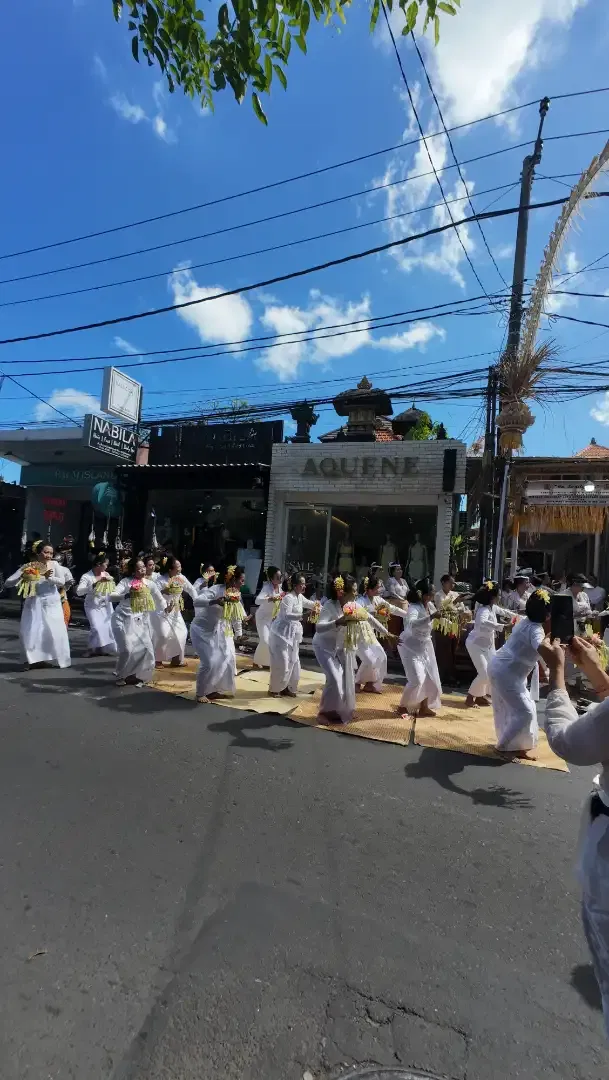
The procession moved in a clear sequence. Men in white shirts and batik saput carried the jempana, ornate wooden shrines layered in gold cloth and fresh flower arrangements, across their shoulders. Women walking beside them balanced towering gebogan fruit offerings on their heads without holding them. Behind the jempana came the Rejang dancers: a long line of young women in matching white kebaya and yellow sashes, performing the sacred offering dance in perfect formation on the open asphalt road. Watching this unfold directly in front of commercial shopfronts on one of Seminyak’s busiest streets was genuinely startling. The ceremony didn’t seem out of place. The street did. For more on what these ceremony scenes look like rendered in paint, see our detailed post on Balinese temple and ceremony paintings.
The Penjor: A Vertical Prayer, Not a Decoration
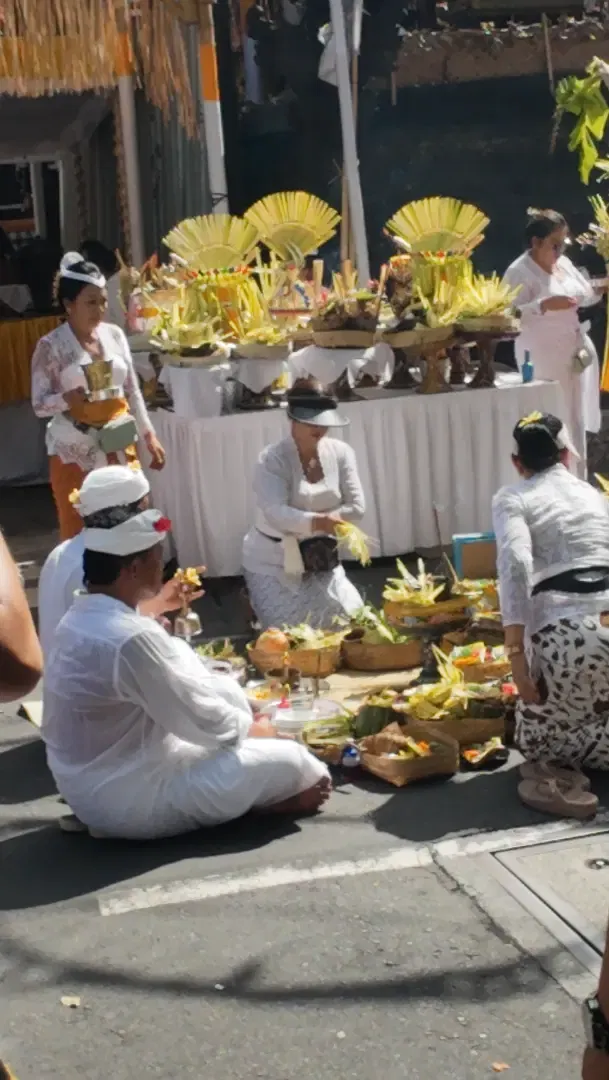
The tall curved bamboo poles lining the street are called Penjor. They are erected outside family compounds during significant ceremonies to signal to the community, and to the divine, that a sacred event is taking place. The decorations attached to each one, young coconut fronds, small offerings of rice and woven palm baskets, and lanterns made from dried lontar leaf, follow a strict symbolic code that varies by ceremony type and family tradition. A penjor is not festival decoration. It is a standing prayer erected in honour of Sang Hyang Naga Taksaka, the sacred serpent of prosperity in Balinese Hindu cosmology. If you see penjor lining a Bali street, something spiritually significant is happening at that compound.
Balinese Village Life Painting: What the Ubud Masters Were Actually Watching
The genre emerged in Ubud in the early 1930s when artists working under the Pita Maha collective began turning away from purely mythological scenes toward the ceremonies they were living through personally. They started painting what they saw every few months on their own village streets: the Odalan, the offering preparations, the Rejang dancers, the Baris Gede warriors. The classic Ubud style flattens perspective, crowds the canvas with equal-weighted figures, and uses a dark ground that forces every detail into sharp contrast. The resulting composition looks nothing like a photograph. But the subject matter is identical to what I watched on Jl. Raya Seminyak on 26 May 2026. Same offerings. Same sequence. Same sacred choreography.
This continuity is what makes an authentic Balinese village life painting genuinely significant to own. It isn’t recording something historical. It is recording something that still happens, in its original form, across hundreds of villages on a rotating sacred calendar. Nothing in the painting has been culturally altered or simplified for tourism. For a broader understanding of how this genre sits within Balinese art history, our guide to Стили балийского искусства places it in full context alongside the Kamasan, Batuan, and Young Artists movements.
The Painting: 85 x 135 Centimetres of Panca Yadnya
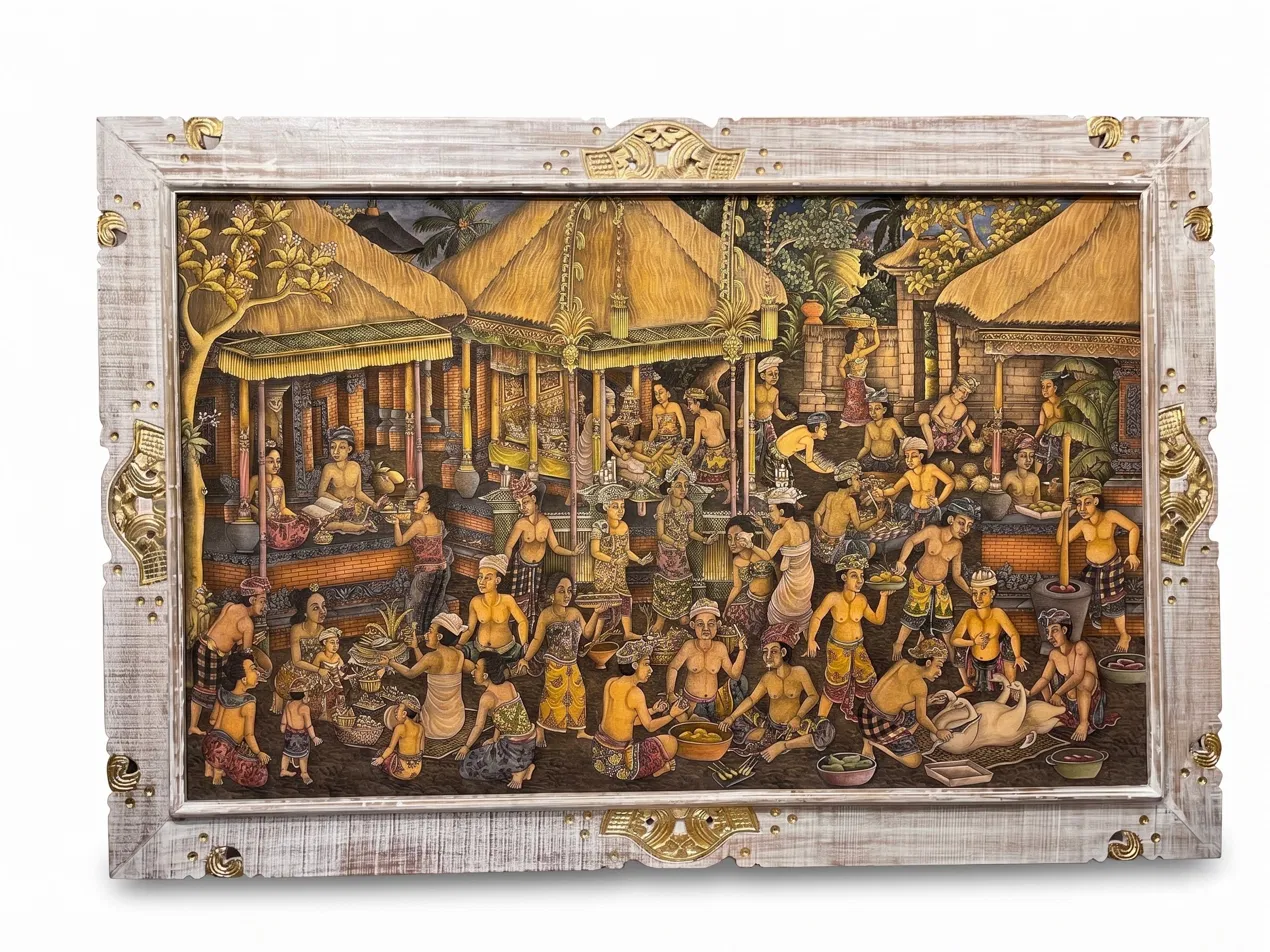
On the main wall of Arts of Bali, we currently hold a large classic Ubud style painting. The canvas measures 85 centimetres high by 135 centimetres wide. The subject is what Balinese Hinduism calls the Panca Yadnya, the five great sacrifices that define the purpose of human life on earth. In Balinese belief, a person is born carrying three inherited debts: to God, to their ancestors, and to the spiritual teachers and community that sustain them. The five types of sacred ceremony, which include everything we witnessed in the street, are the physical acts through which those debts are acknowledged and repaid across a lifetime. This is what “kelahiran manusia” means in the Balinese Hindu sense. Not merely the biological fact of birth. But the entire system of obligation and devotion that birth sets into motion.
The painting documents this system without explaining it. Across the full width of the canvas, dozens of figures are simultaneously constructing offerings, carrying sacred objects, preparing ceremonial spaces, and performing ritual acts. Children watch the adults. Elders supervise from seated positions. Every corner of the composition holds an active figure. This is a Balinese village life painting in its fullest form: a single canvas containing an entire community’s spiritual life, compressed into one frozen moment.
Two Details That Took Days to Paint
A painting this size rewards close looking. Seen from across a room, it reads as a community in motion. Move within a metre of the canvas and a different level of work becomes visible. These two close-up details show what is happening in specific corners of the composition.
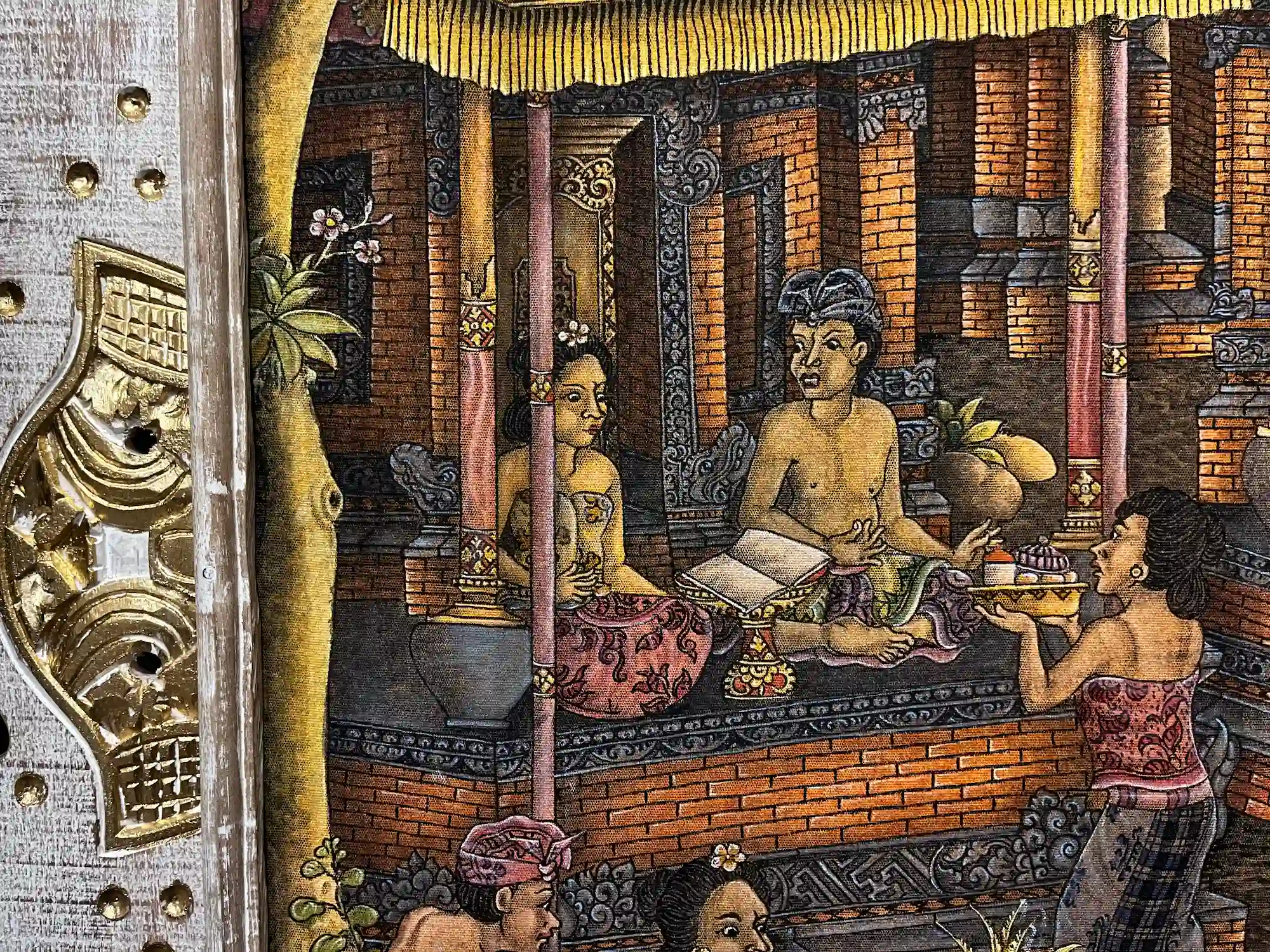
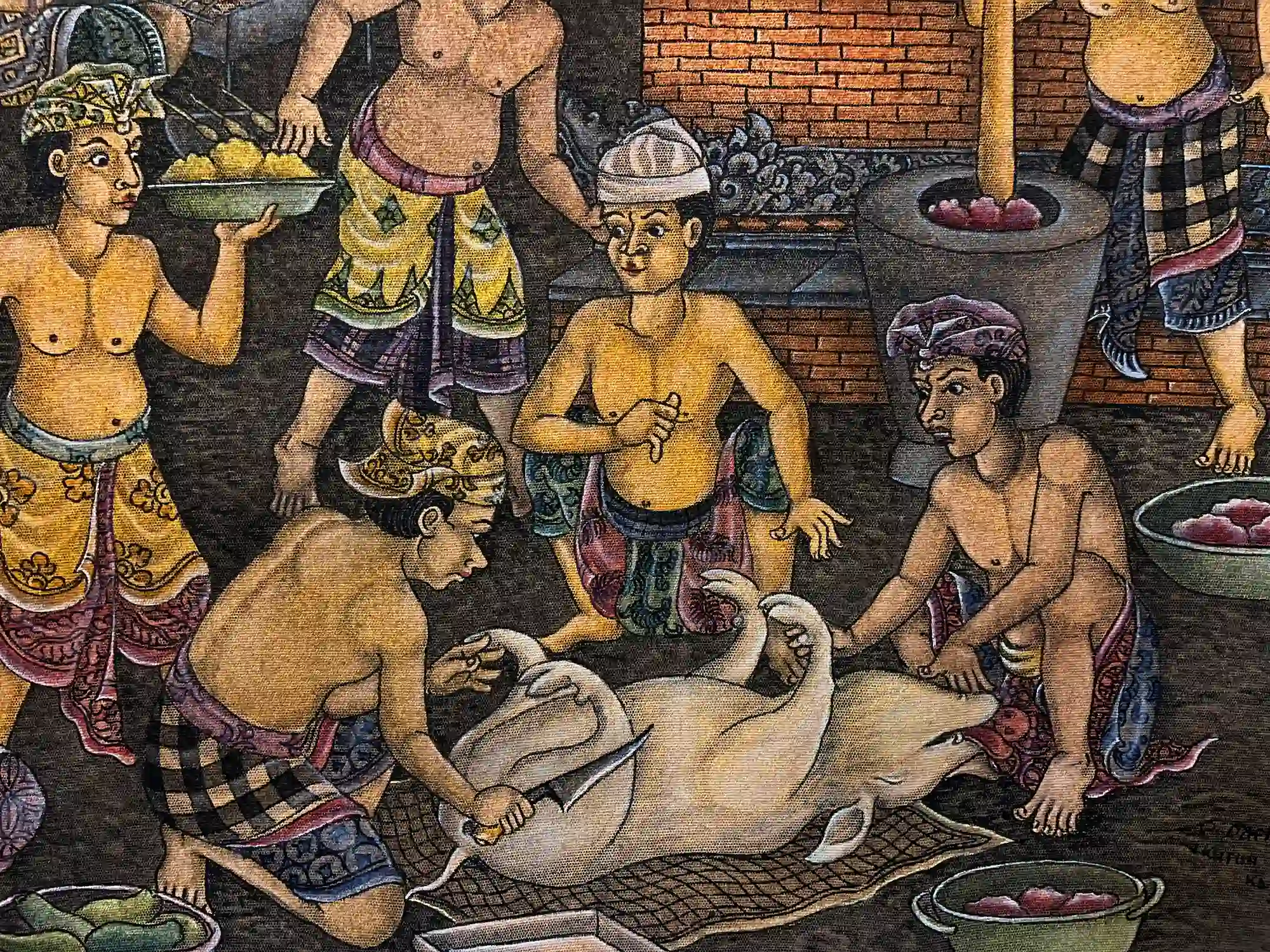
“When the ceremony walks past the gallery door, every painting on the wall stops being art. It becomes a reference photograph of something still happening outside.”
Questions About Odalan Ceremonies and Classic Balinese Village Life Paintings
What exactly is an Odalan ceremony in Bali? ▼
What is the Panca Yadnya and why does it appear in classic Balinese paintings? ▼
What makes a classic Ubud village life painting different from other Balinese art styles? ▼
Is the 85 x 135 cm painting mentioned in this post available for purchase? ▼
Can I commission a custom version of a Balinese village life painting? ▼
The Painting Is on the Wall. The Door Is Open.
The 85 x 135 centimetre Ubud classic painting described in this post is currently displayed at Arts of Bali, Jl. Raya Seminyak No. 42. If you are in Bali, come in and see the composition in person. The reproduction does not capture how it reads from a standing distance, or how the dark ground pulls the gold tones forward. If you are travelling soon or browsing from overseas, send a WhatsApp with your wall dimensions. We can discuss the existing piece, pricing, and shipping, or talk through a custom commission in the same classic style. See our Справочник по ценам на картины с Бали for a general overview of sizing and costs.
Ask About This Painting on WhatsApp