Balinese art is the broad term for painting, carving, and craft produced on the island of Bali, and it is best understood through three separate lenses: which classical school a piece follows (Kamasan, Ubud, or Batuan are the three with the deepest documented histories), what genre or subject it shows (village life, dance and ceremony, or wildlife and floral), and what technique the artist used to make it (traditional flat pigment, or contemporary sand texture and palette knife work). A single painting usually sits in more than one category at once.
Key Takeaways
- Balinese art breaks down into three lenses: classical school, genre, and technique, not one single style.
- Kamasan, Ubud, and Batuan are the three classical schools with the longest documented histories on Bali.
- Contemporary technique, especially sand texture and palette knife work, exists alongside these classical schools rather than replacing them.
- Original paintings at Arts of Bali span a wide price range, from around Rp750,000 to several million rupiah, depending on size and technique.
- This guide links out to a full deep-dive article for each school, genre, and technique it introduces.
Definition: Balinese art is painting, carving, and craft made on the island of Bali, spanning centuries-old village schools and contemporary studio technique alike.
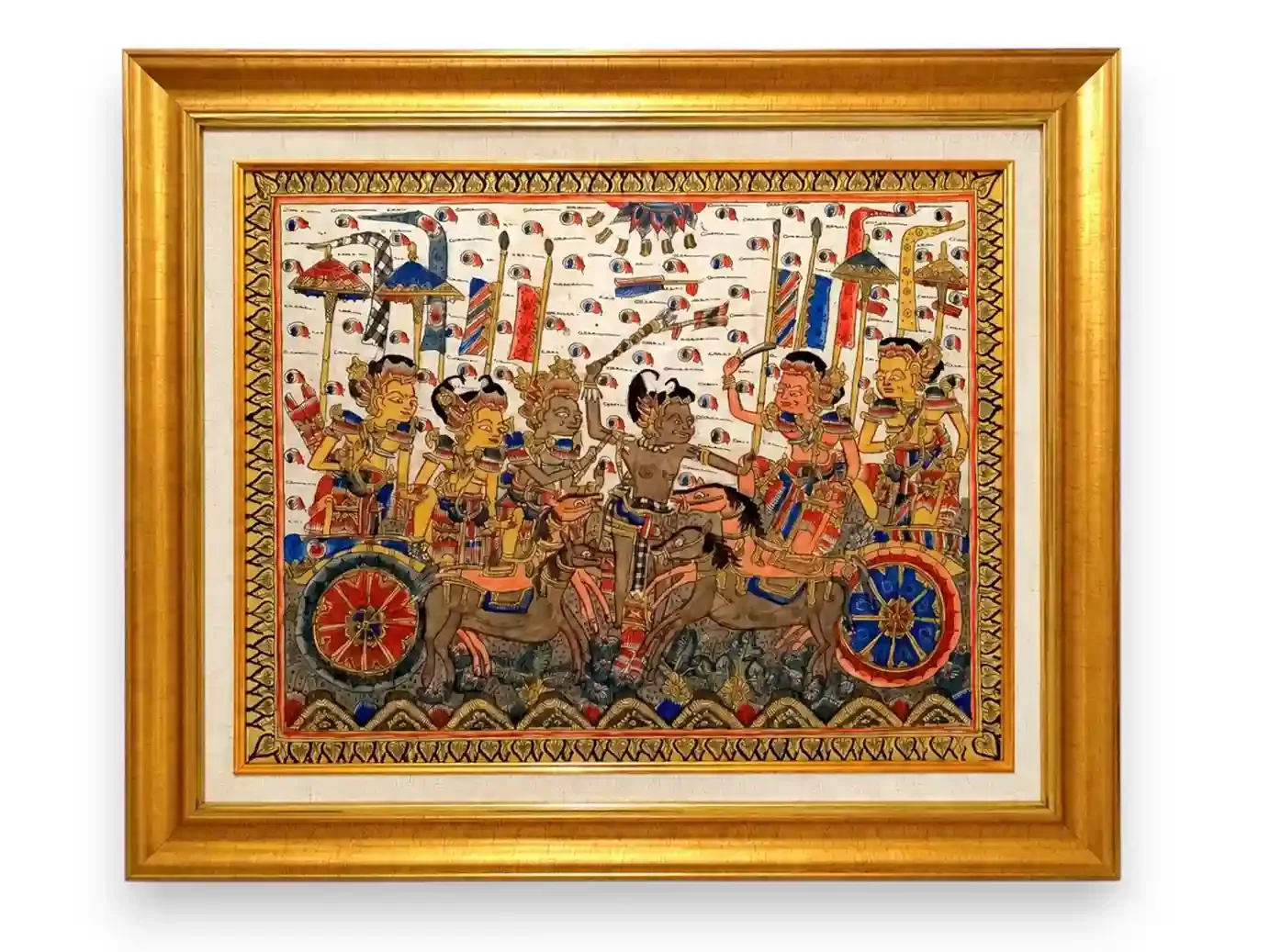
Stand in front of the main wall at Arts of Bali long enough and a visitor usually asks the same question, in one form or another: what actually makes this Balinese art, as opposed to just art made in Bali. It is a fair question, and it does not have a one-sentence answer. A gold-framed Kamasan scene of a chariot battle, painted in flat, narrative color on cloth, and a palette knife portrait built up in thick ridges of paint are both Balinese art. They share almost nothing in surface appearance.
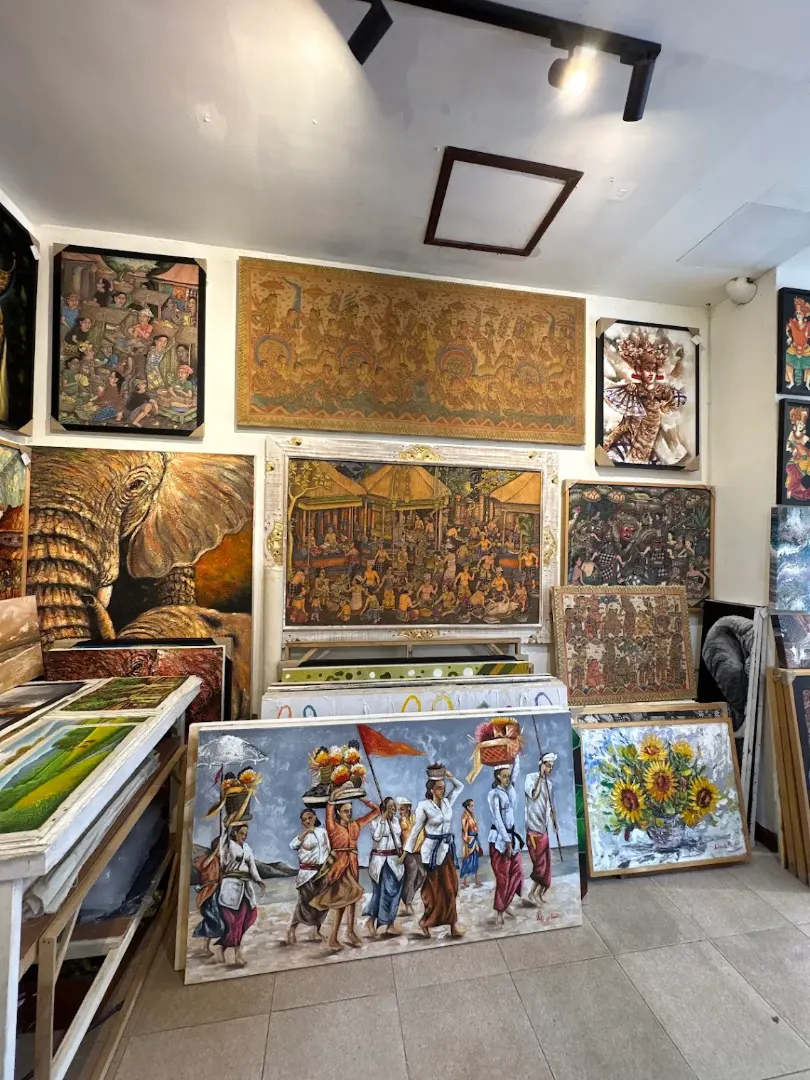
What connects them is not a single look but a shared set of categories collectors and gallery staff actually use to talk about the work: which village school a piece descends from, what it depicts, and how the paint was physically applied. Most sites that explain “Balinese art” pick one of these and stop. This guide covers all three, with real photography from inside the gallery rather than stock images, because that is genuinely how the collection here gets sorted in practice.
Everything below links out to a fuller article on the specific school, genre, or technique it introduces, so treat this page as the map rather than the last word on any one piece.
What Makes a Painting “Balinese Art”?
A painting counts as Balinese art if it was made on the island by an artist working within, or deliberately against, one of its local painting traditions, regardless of medium. That is a wider definition than most buyers expect. It includes centuries-old temple-cloth painting from Kamasan, the detailed narrative scenes associated with Ubud, the dense folk compositions from Batuan, and contemporary studio work that uses none of those visual languages but is still made on Bali, by Bali-based artists, often in dialogue with them.
The three lenses in this guide, classical school, genre, and technique, are how that wide category actually gets organized in a working gallery. A single painting can be, for example, a Batuan-school piece, in the genre of village market life, using traditional flat pigment. Or it can be a contemporary piece with no school affiliation at all, in the genre of wildlife, using sand texture. Both are Balinese art. Neither is more authentic than the other by default. For a broader academic overview of the tradition this guide draws on, see the 巴厘岛艺术 entry on Wikipedia.
The FrameworkThree Ways to Read Balinese Art
The diagram below is the framework this entire guide, and this gallery’s own way of organizing its collection, is built on. Every section that follows expands one branch of it.
Classical school answers where a painting’s visual language comes from. Genre and subject answers what it actually shows. Technique answers how the artist physically built the surface. A piece can be placed on all three branches at once, and most pieces in this gallery are. Knowing all three before you buy, rather than just one, is what separates a confident first-time collector from someone repeating whatever label a seller happens to use.
Classical SchoolsClassical Schools: Kamasan, Ubud, and Batuan
Bali has several named village painting traditions, but three have the deepest documented histories and the clearest visual signatures: Kamasan, Ubud, and Batuan. Each has its own full guide on this site; what follows is the short version of each.
Kamasan: Klungkung’s Classical Wayang Style
Kamasan painting comes from the village of Kamasan in Klungkung regency, historically tied to the Klungkung royal court, and it is the oldest of the three classical schools represented here. It is immediately recognizable: flat, narrative color, wayang-influenced figures, and scenes drawn from epic literature like the Ramayana and Mahabharata, traditionally painted on cloth rather than canvas.
Ubud: Fine Detail and Village Ceremony
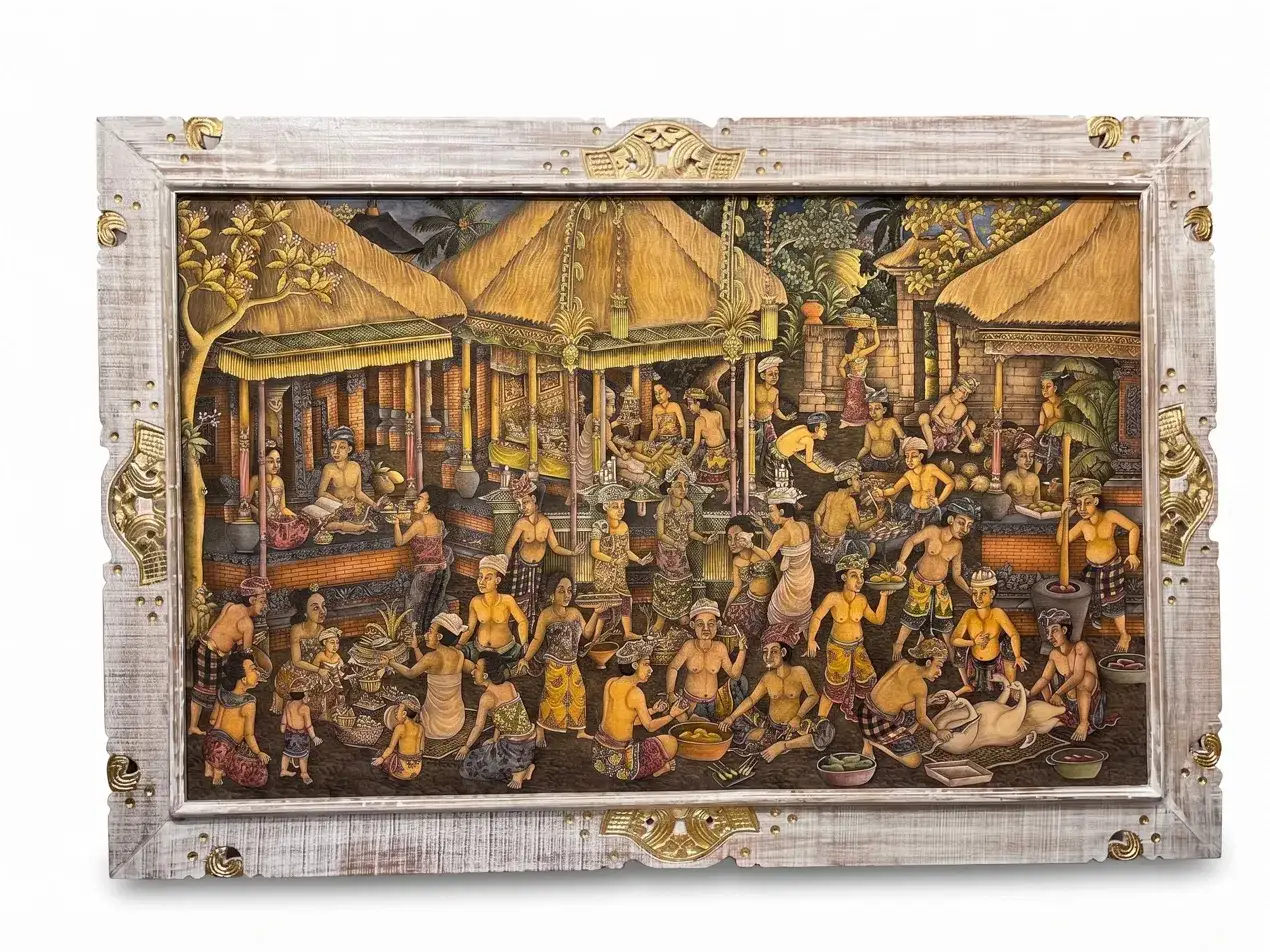
Ubud-style painting is denser and more finely detailed than Kamasan work, often depicting village ceremonial life, temple processions, and daily activity within a single busy composition. It developed in and around the Ubud region and is generally the style most visitors associate with “traditional Balinese painting” when they picture one without prompting.
Batuan: Dense Composition on a Dark Ground
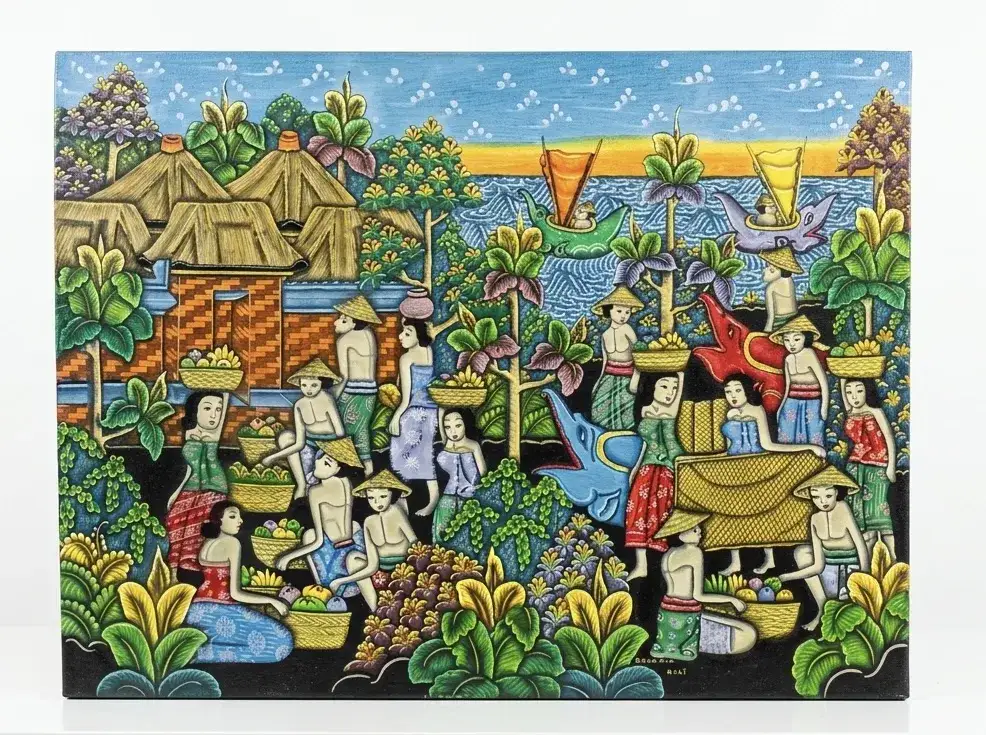
Batuan painting, from the village of Batuan, tends toward crowded, layered compositions on a dark or black background, often mixing everyday village scenes with supernatural or folkloric figures in the same frame. It reads as busier and more shadowed than either Kamasan or Ubud work, which is usually the fastest way to identify it at a glance.
For a side-by-side breakdown that goes deeper into technique differences between these and other named styles, see our companion article, 巴厘岛艺术风格:每种绘画风格完全指南.
Genre & SubjectGenre and Subject: What Balinese Paintings Actually Show
Separate from school, a painting can be sorted by what it depicts. At Arts of Bali, the collection groups loosely into three recurring genres, and a single piece can belong to more than one school’s technique while sitting in any of these subject categories.
- Landscape and village life: rice fields, market scenes, and daily activity, often the entry point for classical school pieces. See our Balinese Mythology Painting guide for the folkloric end of this genre.
- Dance and ceremony: Legong dancers, Barong performances, and temple processions, a genre with deep roots in both Kamasan and Ubud technique. Our Kamasan Ganesha Painting guide covers one specific deity subject within this space.
- Wildlife and floral: a genre that leans more contemporary in technique, covered in full in our Tiger Painting Bali guide and the broader wildlife collection.
Spiritual subjects, particularly Buddha imagery, cut across all three genres above and deserve their own note. Bali is overwhelmingly Hindu, not Buddhist, practicing a distinct local form generally known as Balinese Hinduism, but its religious history includes a documented Hindu-Buddhist syncretic thread, and Buddha remains a common, non-doctrinal subject in Balinese painting for exactly that reason. Our Buddha Painting Bali guide covers this collection and its history in depth.
Contemporary TechniqueContemporary Technique: Sand Texture and Palette Knife
Technique is the third lens, and the one most visibly different from the classical schools above. Where Kamasan, Ubud, and Batuan work in flat or lightly shaded pigment, a large share of the newer work at Arts of Bali is built up physically, using sand texture or thick palette knife strokes that stand off the canvas.
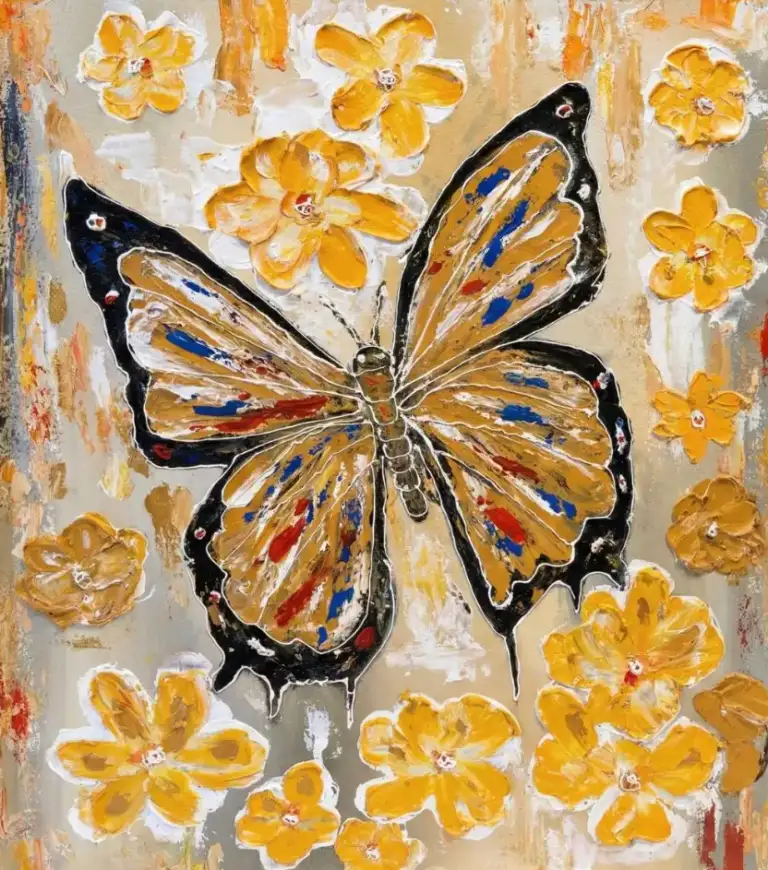
Sand texture mixes fine sand or a similar granular medium into the paint, creating a raised, tactile surface, most often seen on spiritual subjects in this gallery’s collection. Palette knife work skips the sand entirely and instead applies thick ridges of acrylic paint directly with a blade rather than a brush, which is the technique visible below.
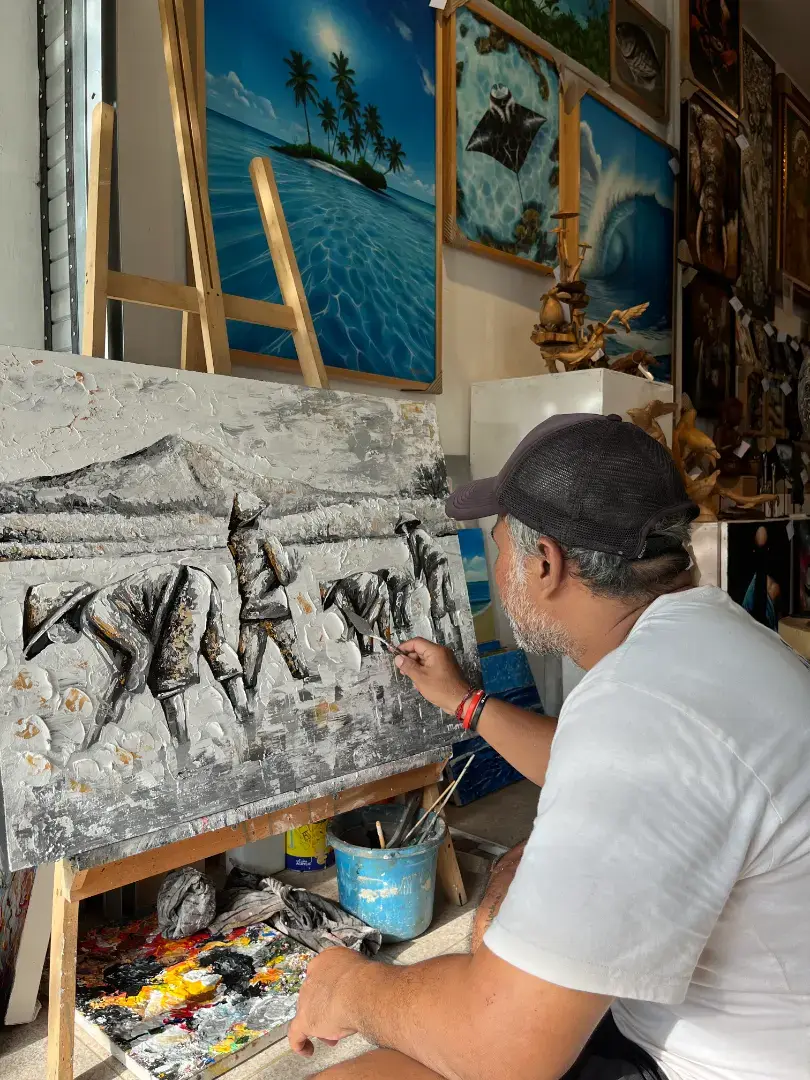
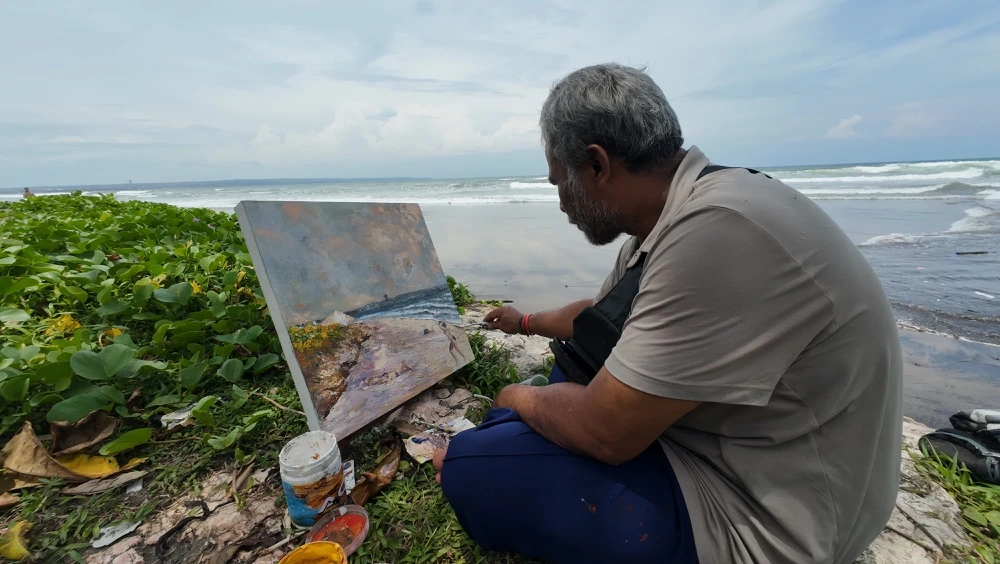
The piece below is the work of Upeksa, one of the gallery’s named palette knife artists, mid-stroke on a figure study.
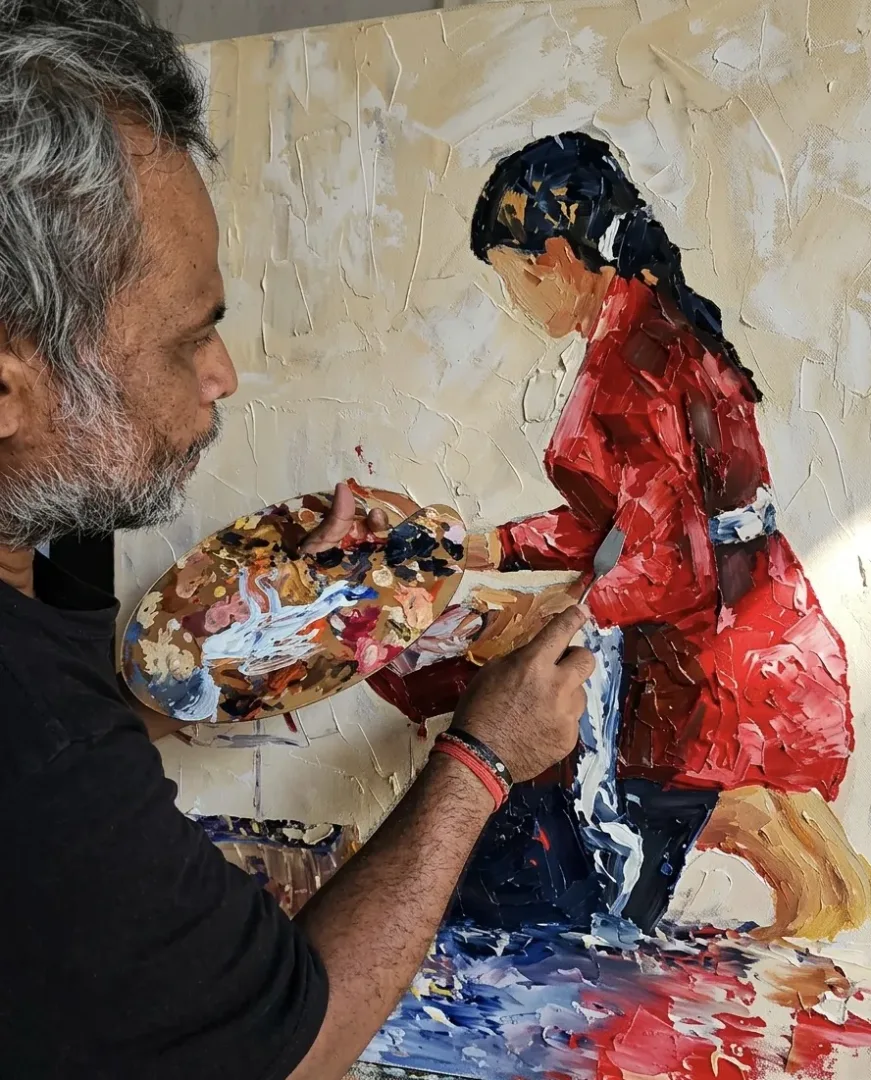
For the full breakdown of sand texture versus palette knife, including how each ages and how to care for a textured piece, see our Textured Painting Bali guide.
Quick ComparisonBalinese Art at a Glance: School, Genre, and Technique
Use this table as a quick reference before jumping into any single deep-dive article.
| Category | Examples | 需要注意的事项 | Full Guide |
|---|---|---|---|
| Classical School | Kamasan, Ubud, Batuan | Flat narrative color, fine detail, or dark dense composition | Style-specific guides above |
| Genre & Subject | Village life, dance and ceremony, wildlife and floral | What the painting actually depicts | Wildlife, mythology, and Buddha guides |
| Technique | Sand texture, palette knife, traditional pigment | Surface texture, raised or flat | Textured Painting Bali guide |
Most collectors end up choosing on genre first, technique second, and school third, roughly the reverse of how this guide introduced them, because subject matter is usually what catches a buyer’s eye before the underlying school or technique does.
Reading the DetailsBalinese Art Symbols You’ll See Again and Again
A handful of recurring figures show up across almost every school and genre described above, and recognizing them makes any Balinese painting easier to read, regardless of which style produced it.
- Barong. A lion-like protective spirit, usually shown mid-dance with a fierce mask and a shaggy mane. Despite the dramatic face, Barong represents a protective force in Balinese mythology, not a villain. Our Barong Painting Bali guide covers the full story.
- Naga. A serpent deity tied to water and the underworld, appearing in both centuries-old Kamasan narrative scenes and brand-new contemporary work with equal legitimacy.
- Garuda. A mythical bird figure, traditionally the mount of the Hindu deity Vishnu, appearing across temple carving and painting as a symbol of strength and devotion.
- Lotus. A recurring motif on spiritual subjects, including much of the collection in our Buddha Painting Bali guide, generally read as a symbol of purity and spiritual awakening.
None of these figures belong exclusively to one school or genre. A Naga painted in flat Kamasan color and a Naga worked in raised sand texture are both correct, equally legitimate readings of the same symbol.
Buying ConfidenceOriginal vs Print: How to Know What You’re Buying
Every piece discussed in this guide is an original, hand-painted work, not a print, and that distinction matters more in Balinese art than in most categories because the classical schools in particular have been reproduced as prints for decades. A genuine sand-texture or palette-knife piece has real physical relief you can see and feel; a print pretending to be textured will not. A genuine Kamasan or Ubud piece will show visible brush variation up close; a print will look uniformly flat under magnification.
Beyond texture and brushwork, two further checks are worth doing before you buy any piece, from this gallery or elsewhere.
- Check the canvas or cloth weight. Genuine cloth-based Kamasan work uses a specific weight and weave that feels noticeably different from a printed poster glued to canvas board.
- Ask about the frame’s construction. Hand-carved or hand-gilded frames, common on classical school pieces, show small tool marks and slight asymmetry up close. Mass-produced frames are perfectly uniform, which is itself a clue.
Our full Original Bali Painting vs Print guide goes through these and several other checks in detail, including how to verify authenticity before you buy from any gallery, not only this one.
PricingWhat Does Balinese Art Cost?
Price scales mainly with size and technique rather than school. As one real, verifiable example, our own Buddha painting collection alone spans Rp750,000 for a smaller 30 x 40 cm semi-texture piece to Rp3,500,000 for larger sand-texture canvases up to 70 x 90 cm. That range is illustrative of one collection, not a promise for every piece on the site, but it reflects the kind of spread a first-time buyer should expect: smaller, lighter-technique pieces sit at the lower end, and larger sand-texture or palette-knife canvases sit higher.
For a fuller pricing breakdown across categories, see our Bali Painting Price guide.
Want to See These Styles Side by Side?
Every school, genre, and technique in this guide is represented in the gallery right now. Message us before you visit and we can have specific pieces ready to compare in person.
WhatsApp the GalleryWhere to See and Buy Balinese Art in Seminyak
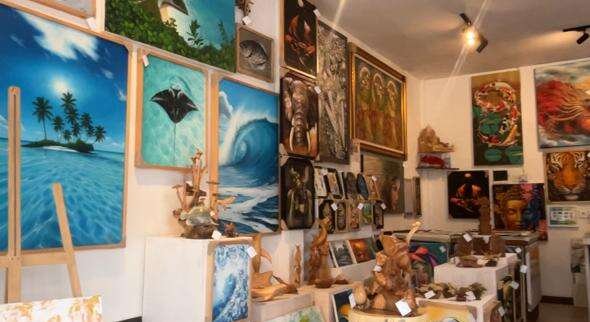
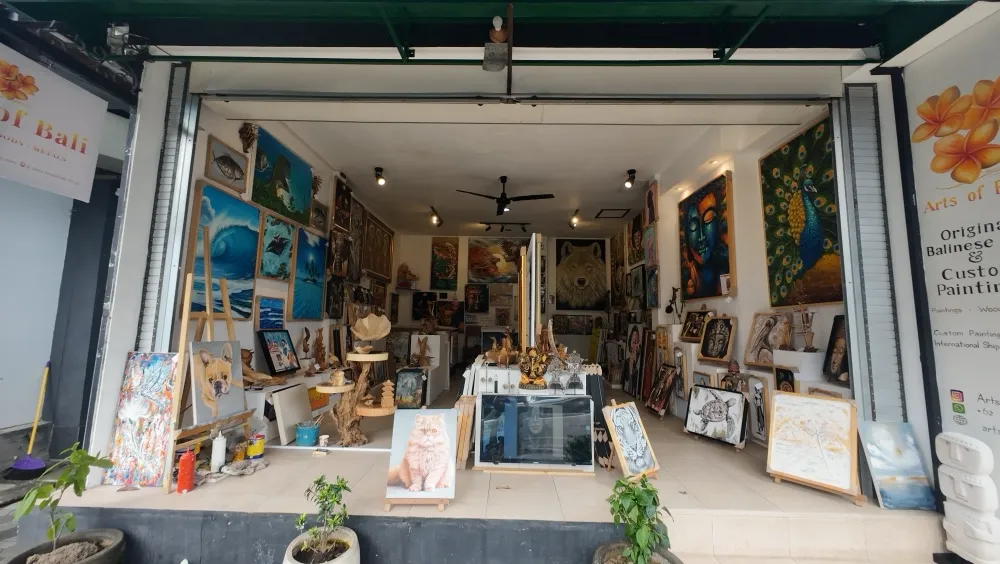
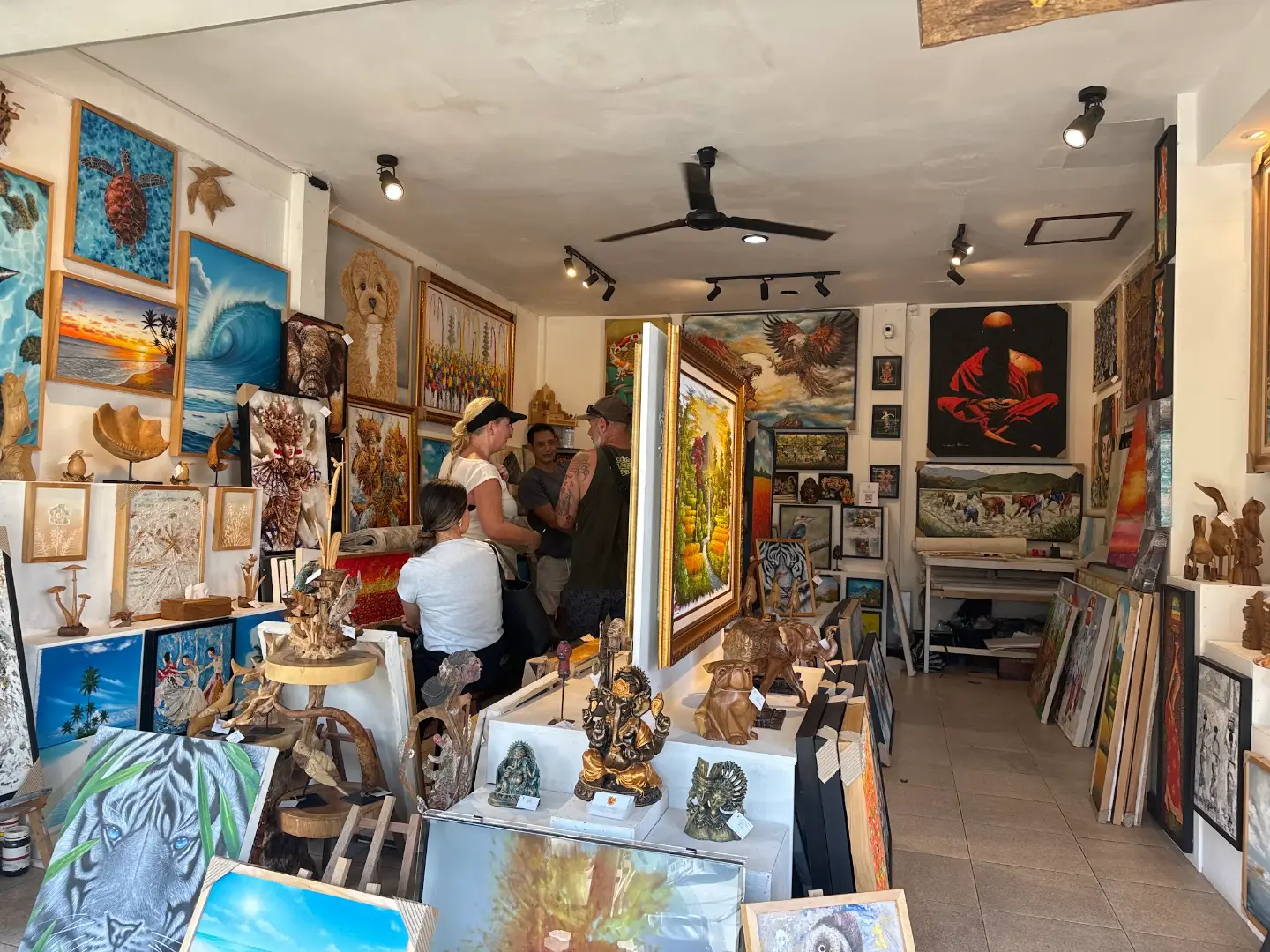
Arts of Bali is a working gallery in Seminyak, not a warehouse or an online-only listing, which means every piece in this guide can be seen, and usually watched being made, in person. The photographs below are from inside the gallery itself, not stock imagery.
Ubud’s Art Market vs a Seminyak Gallery
Ubud’s art market and streets remain the historical center of village-school painting, and visiting the source villages themselves, Kamasan, Batuan, and greater Ubud, is a genuinely useful way to see where a style comes from. A Seminyak gallery like this one sits at a different point in the same supply chain, closer to the coast, with pieces already selected across multiple schools rather than requiring a village-by-village search. Pricing and bargaining culture differ between the two in ways worth knowing before you go. Our full comparison of Ubud’s market and a Seminyak gallery breaks down pricing, authenticity risk, and shipping side by side.
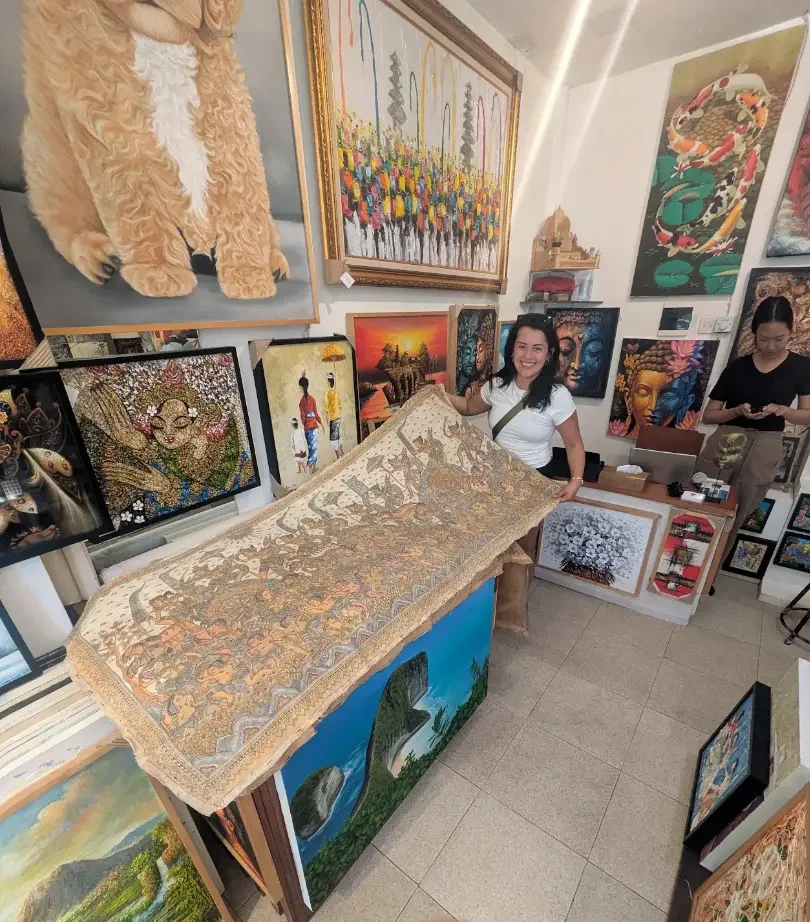
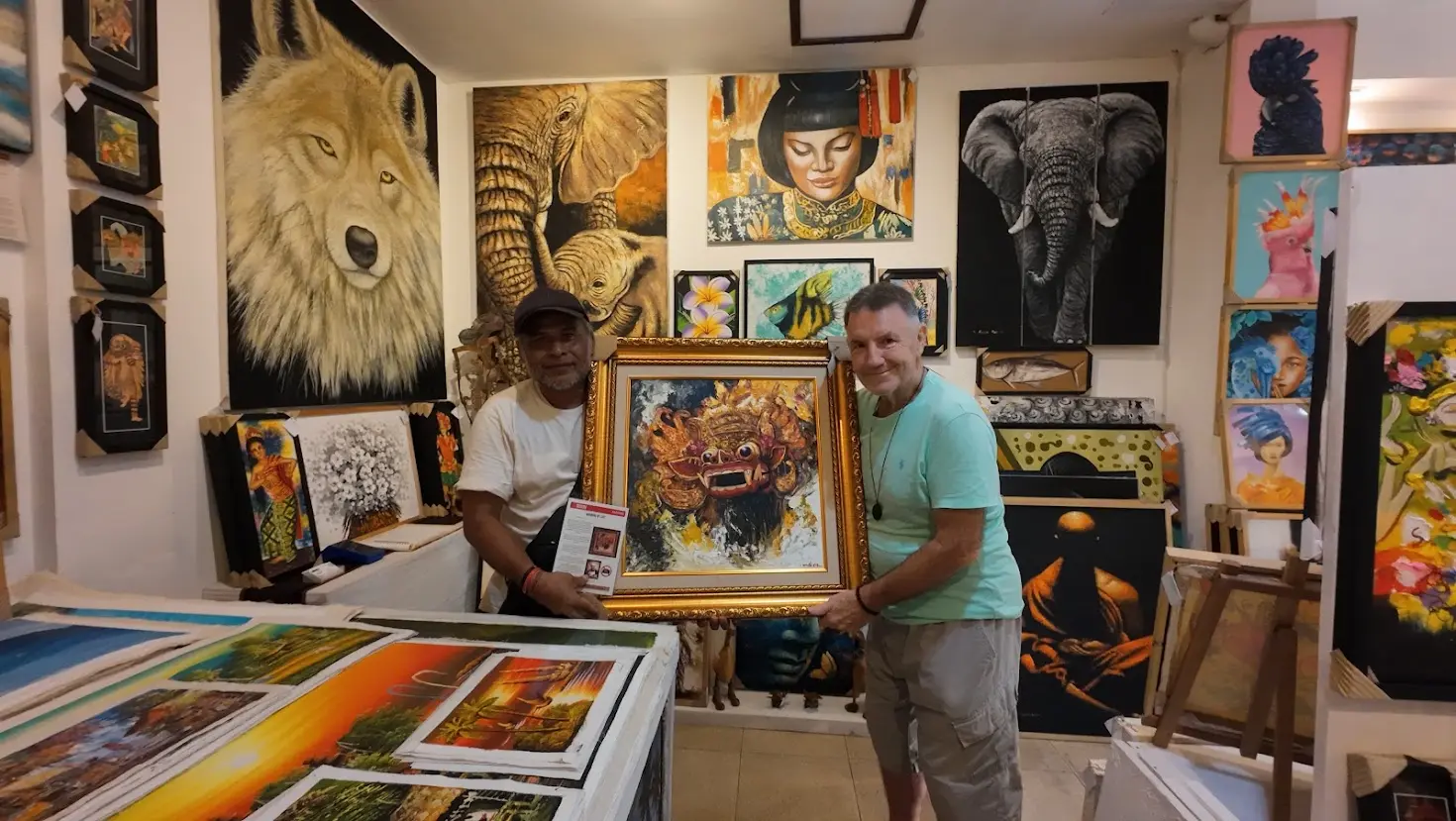
For a broader comparison of where to shop across the island, not only this gallery, see our Best Art Galleries in Bali guide. If you are buying to take home internationally, our How to Ship Art from Bali guide covers packing and crating for both flat canvas and framed cloth pieces like the Kamasan scroll above.
Common QuestionsFrequently Asked Questions About Balinese Art
What is Balinese art?
Balinese art is painting, carving, and craft made on the island of Bali, spanning centuries-old village schools like Kamasan, Ubud, and Batuan, and contemporary studio technique like sand texture and palette knife work. A single piece is usually classified by school, genre, and technique at once, not by one label alone.
What are the main styles of Balinese painting?
Kamasan, Ubud, and Batuan are the three classical schools on Bali with the deepest documented histories. Kamasan uses flat narrative color and wayang figures, Ubud favors fine detailed ceremonial scenes, and Batuan uses dense, layered compositions on a dark ground, usually the fastest way to tell them apart at a glance.
What is sand texture painting?
Sand texture painting mixes fine sand or a similar granular medium into acrylic paint, creating a raised, physically tactile surface rather than a flat one. It is a contemporary technique used across genres at Arts of Bali, most often on spiritual subjects, and is distinct from the flat pigment used in classical schools.
How can I tell an original Balinese painting from a print?
Check for real physical texture on any piece that claims it, a print will look uniformly flat, while a genuine sand-texture or palette-knife piece has visible relief. On classical school pieces, look for visible brush variation up close. Our full authenticity guide covers additional checks in detail.
How much does Balinese art cost?
Price scales mainly with size and technique rather than school. As one real example, pieces in our Buddha painting collection range from Rp750,000 for a smaller semi-texture canvas to Rp3,500,000 for larger sand-texture work, which reflects the kind of spread a first-time buyer should generally expect.
Is Balinese art connected to Hinduism or Buddhism?
Bali is overwhelmingly Hindu, and classical schools like Kamasan draw heavily on Hindu epic literature. Buddha also appears as a common subject, reflecting a documented Hindu-Buddhist syncretic thread in the island’s religious history, not a claim that Bali itself is a Buddhist island.
Where can I buy original Balinese art in Seminyak?
Arts of Bali is a working gallery in Seminyak where every piece can be seen and often watched being made in person. Our broader gallery guide compares this location against other options across the island for readers who want to shop around before deciding.
Can Balinese art be shipped internationally?
Yes. Both flat canvas and framed cloth pieces, like a Kamasan scroll, can be packed and shipped internationally from Seminyak. Our dedicated shipping guide covers packing, crating, and what to realistically expect for cost and timeline on an international order.
Explore the Full Balinese Art Collection at Arts of Bali, Seminyak
Every school, genre, and technique in this guide is in the gallery now. Browse the collection online or visit in person to see the texture and detail up close.
浏览系列 Start with Kamasan Painting