Balinese dance is the body of traditional dances performed across Bali in temples, villages and on stage, usually with gamelan, and sorted by Wikipedia and UNESCO into three genres: sacred wali, semi-sacred bebali and entertainment balih-balihan. UNESCO inscribed “Three genres of traditional dance in Bali” on its Representative List of the Intangible Cultural Heritage of Humanity in 2015, and Wikipedia names nine dances in that listing. This guide explains the three genres, places each of the nine, covers how the dances are learned and what to notice when you watch, and points to our deeper guides and to the paintings and carvings in our gallery.
Основные выводы
- Wikipedia’s Balinese dance entry divides the tradition into wali (sacred), bebali (semi-sacred) and balih-balihan (entertainment). UNESCO describes the same three as sacred, semi-sacred and dances for community enjoyment.
- The proposal dates to 2011 and recognition came in 2015, per Wikipedia, at the committee meeting in Windhoek, Namibia. UNESCO’s page records the inscription at the Committee’s 10th session.
- Wikipedia lists nine dances, three per genre, from eight regencies and cities across Bali, among them Rejang, Gambuh and Joged Bumbung. UNESCO’s own page describes the genres but does not name the nine.
- The categories are not airtight. Wikipedia’s Pendet entry files Pendet under bebalihan, while its Balinese dance entry lists Pendet among welcoming dances, so we show Pendet outside the nine.
- UNESCO says the dances are passed on mainly through informal learning in groups, starting in early childhood.
- We are a gallery, not a dance school. Our collection includes paintings and carvings of dances, such as The Elegant Legong Dancer Painting (watercolor on cotton canvas, 60 × 80 cm, Rp1,500,000).
What Is Balinese Dance? Sacred, Social and Staged Traditions
Search for Balinese dance and the results split into show listings, hotel pages and single-dance explainers. We carry paintings and carvings of Legong, Baris, Kecak and Barong, and over the past weeks we wrote a guide to each. This page is the map that sits above them, so that you can see where each dance belongs and which guide to open next. Every claim is tied to a named source.
The stories these dances act out are the ones painters work from, and our guide to Balinese mythology painting maps them.
Статья о балийском танце в Википедии says dancers use gestures of the fingers, hands, head and eyes to tell the stories of dance-drama, and that the articulations of the face, eyes, hands, arms, hips and feet are coordinated with the layered percussive sound of the gamelan. UNESCO’s inscription adds that the basic stance has bent knees and a held-in stomach, that travelling steps vary in tempo, and that dancers use facial expressions for emotions such as happiness, sadness, anger, fear and love. It names technical skill, charisma, humility, discipline and spiritual energy as the qualities a performer needs.
Dance is also woven into the ceremonial year. Our village life painting guide records a real procession that passed the gallery door, and our Baris guide notes that Baris Gede was part of it.
The GenresThe Three Genres of Balinese Dance: Wali, Bebali and Balih-Balihan
Wikipedia describes wali as sacred dances, bebali as semi-sacred dances and balih-balihan as dances for entertainment. UNESCO words it as sacred, semi-sacred and dances meant for wider community enjoyment. Wikipedia adds that sacred dances were traditionally performed only in temples. The table shows the nine dances Wikipedia lists under the heritage entry, with the regency or city it gives for each.
| Genre | Meaning | Listed dances and region | Where to read more |
|---|---|---|---|
| Wali | Sacred | Rejang (Klungkung), Sanghyang Dedari (Karangasem), Baris Upacara (Bangli) | Наш сайт Baris dance guide; sanghyang roots in our kecak guide |
| Bebali | Semi-sacred | Topeng Sidhakarya or Topeng Pajegan (Tabanan), Gambuh (Gianyar), Wayang Wong (Buleleng) | Masks in our Balinese mask carving guide |
| Balih-balihan | Entertainment | Legong Kraton (Denpasar), Joged Bumbung (Buleleng), Barong Ket “Kuntisraya” (Badung) | Наш сайт Legong guide и Barong guide |
Источник: Википедия Balinese dance entry for the nine dances and regions, and UNESCO for the three genres. UNESCO’s page does not name the nine dances.
Wikipedia dates the proposal to 2011 and says recognition came in 2015 at the Intergovernmental Committee meeting held from 29 November to 4 December in Windhoek, Namibia. UNESCO records the inscription at the Committee’s 10th session. UNESCO also links the element to Bali’s Subak system, which our Subak guide explains.
WaliWali Dances: The Sacred Genre and Its Three Listed Dances
Rejang
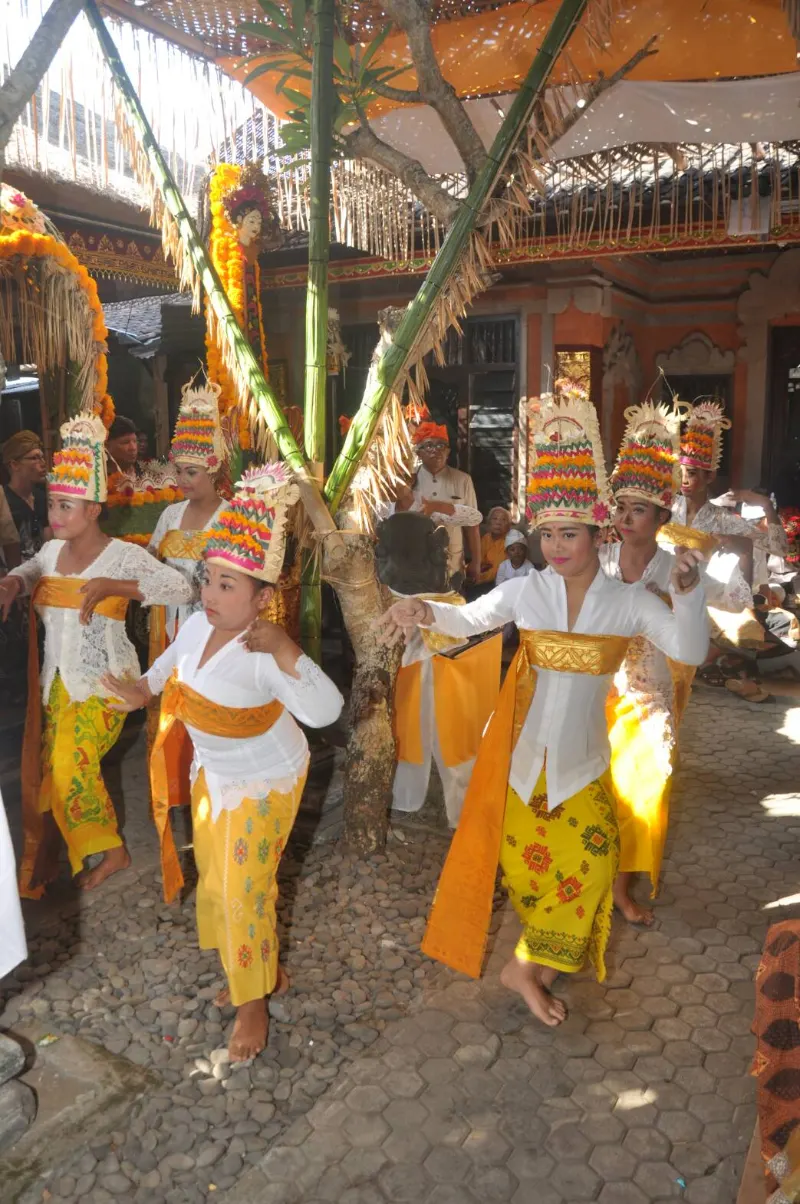
Wikipedia places Rejang in Klungkung. The Wikimedia Commons description of the photograph above, written in Indonesian, calls Rejang Dewa a sacred dance performed at Hindu religious events, meant to welcome and entertain gods who come from the heavens. We could not find a longer English source we trust, so we say no more about its choreography.
Sanghyang Dedari
The Balinese dance entry describes Sanghyang Dedari as a sacred trance dance performed by two young girls in Karangasem, meant to invoke benevolent spirits. It also lists it among the sources Legong developed from. The older trance ritual with a male chorus is where kecak grew, which our kecak dance guide traces in detail.
Baris Upacara
Baris Upacara is the ceremonial group form of the warrior dance, listed for Bangli. Our Baris dance guide explains that Baris is a family of more than thirty ritual variants plus the well-known solo Baris Tunggal, and what the gaze and headdress are doing on stage.
BebaliBebali Dances: The Semi-Sacred Genre and Its Three Listed Dances
Topeng. Wikipedia lists Topeng Sidhakarya, also called Topeng Pajegan, for Tabanan. Topeng means a masked dance, and the carved masks used in Balinese craft are covered in our guide to carved Balinese masks. We have not verified further details of the Sidhakarya mask, so we leave them to specialist sources.
Gambuh
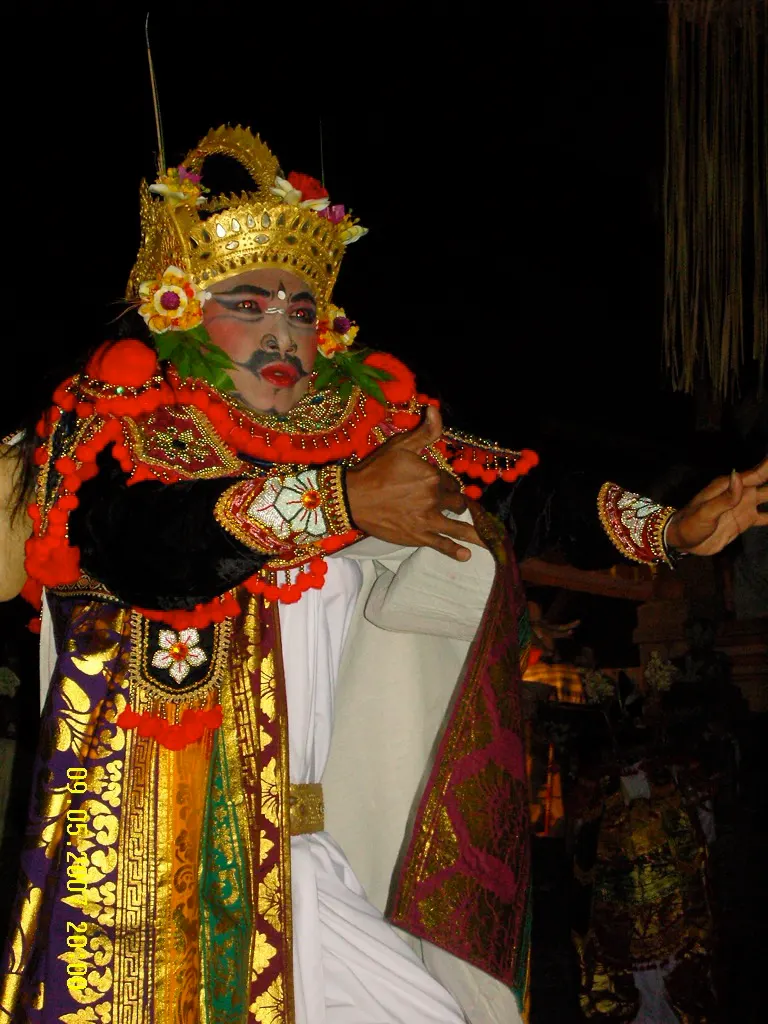
Wikipedia’s Gambuh entry calls it an ancient dance-drama performed with its own gamelan gambuh, with stories from the Malat, a long poem about the Javanese prince Raden Panji. It dates the form to the late Majapahit era, around the 15th century, and says it has changed little since. Refined characters speak Kawi, an old literary language, while lower-status characters translate for the audience into contemporary Balinese. The entry says Gambuh is mainly preserved in the village of Batuan and cites a 1997 estimate that perhaps only four groups still performed in the Gambuh style. Treat that as a dated figure. Our Путеводитель по Батуану covers the same village from the painting side.
The Balinese dance entry connects Gambuh to Legong, saying Legong developed from Sanghyang Dedari and Gambuh. The Gambuh entry adds that Gambuh introduced a narrative element that shaped later dance-drama such as topeng and arja.
Wayang Wong
Wikipedia lists Wayang Wong Dance Drama for Buleleng. We did not verify its repertoire or staging, so we only note it here. For the puppet theatre that shares the wayang name, see our Tumpek Wayang guide.
Balih-BalihanBalih-Balihan Dances: The Entertainment Genre and Its Three Listed Dances
Legong Kraton. Wikipedia lists it for Denpasar. Our Legong dance guide covers the two dancers and the condong, the two origin stories and the Lasem plot, and notes that the sources disagree on the date.
Joged Bumbung
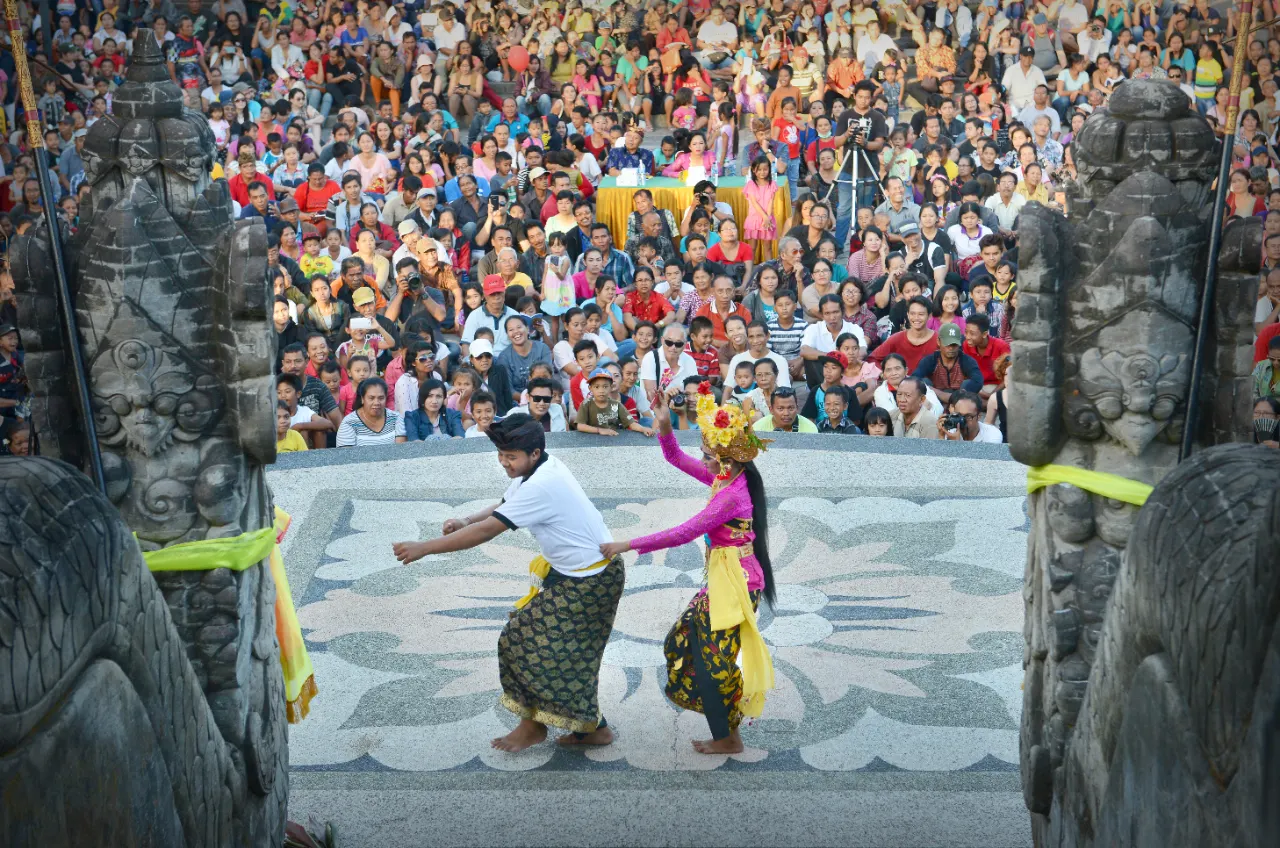
Wikipedia describes Joged as a secular social dance for entertainment. One or more female dancers perform, often inviting a spectator to dance with a fan and sash, and the dance is largely improvised. It is typically accompanied by a gamelan of bamboo instruments, the gamelan joged bumbung. The Balinese dance entry calls Joged Bumbung a popular social dance performed by couples during harvest season or on important days. The Joged entry also records criticism from officials and activists of its provocative movements, a 2016 attempt by the governor to ban it, and a provincial joged bumbung festival in August 2017 meant to improve the dance.
Barong Ket “Kuntisraya”. Wikipedia lists this Barong dance for Badung. Our Barong dance guide covers the cast, the four beats of the story and the kris scene, and says Barong Ket from the Gianyar region is the most common type. We have not compared the Badung version with that one.
Beyond the NineBeyond the Nine: Welcome Dances, Chants and Newer Choreographies
The nine are a heritage listing, not a complete catalogue. Several dances visitors ask about by name sit outside it.
Pendet. Wikipedia’s Pendet entry describes a dance of greeting in which dancers carry floral offerings to purify a temple or stage before a ceremony or another dance. It says Pendet began as an accompaniment to temple ceremonies. In the 1950s, I Wayan Rindi and Ni Ketut Reneng of Sumertha village in Denpasar codified a four-dancer version as a welcome for hotel tourism shows. In 1961 I Wayan Beratha expanded it to five dancers, and in 1962 a mass version with at least 800 dancers opened the Asian Games in Jakarta. That entry files Pendet under bebalihan, which is why sources can disagree on where it belongs.
Kecak. Wikipedia describes kecak as a Balinese Hindu dance popularized in the 1930s and based on the Ramayana, with a chorus of men chanting in place of instruments. Our kecak guide covers who is credited and why that is disputed.
Calon Arang. The witch of Girah legend behind Rangda is staged as a dance-drama, which our Путеводитель по Калон-Аранг follows from the legend to the trance ritual.
Janger. Wikipedia calls it a sitting dance with swaying movements. It also appears in carved form in our guide to dancer wood carvings, alongside Oleg and Kebyar Duduk.
Newer choreographies. Wikipedia says new choreographies were created to meet tourist demand. Choreographers have more freedom in these works and use moves considered improper for sacred dances, and Tari Sekar Jagat is the example it gives. Pendet’s four-dancer welcome version is a similar story from the 1950s, according to the Pendet entry.
LearningHow Balinese Dance Is Learned and Passed On
UNESCO says the dances are mainly passed on informally within groups, starting in early childhood. Training begins with basic movements and positions and moves on to more complex dances, and students keep practicing until they have memorized the sequences. UNESCO adds that participants gain a strong cultural identity from the understanding that they are preserving their ancestors’ heritage.
The sources give different starting ages. Wikipedia’s Balinese dance entry says official training can begin as young as 7. Our Legong guide reports, from Wikipedia’s Legong entry, that traditional Legong dancers trained from about age five. The two statements are about different things, and we report both without choosing.
WatchingWatching Balinese Dance: What to Notice
We are not performers, so this is a short list built only from UNESCO and Wikipedia. If you are in front of a stage or a screen, these are four things the sources let you notice.
The stance
UNESCO describes a basic posture with bent knees and a held-in stomach, with travelling steps at different tempos.
Hands and eyes
Wikipedia says fingers, hands, head and eyes carry the story in dance-drama.
The face
UNESCO lists happiness, sadness, anger, fear and love as emotions shown through facial expression.
The music
Wikipedia says body movements are coordinated with layers of percussive sound. Our Balinese gamelan guide explains the instruments.
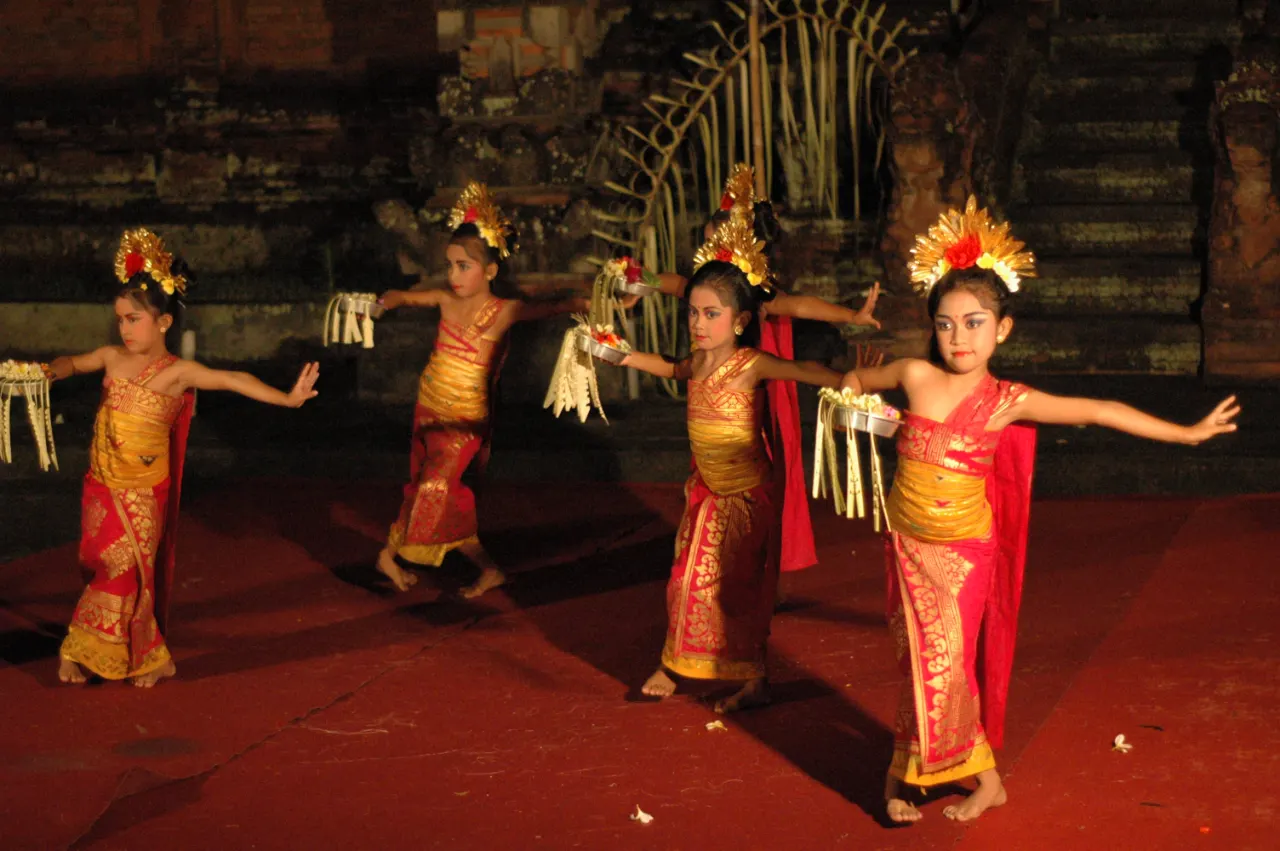
Costume is part of the picture too. UNESCO describes brightly coloured cloth with gold floral and animal motifs, plus gold-leafed and jeweled accessories. Our guide to Bali temple ceremony painting shows how painters render the same ceremonial dress.
From Our SideWhat We Know and What We Defer On
We are an art gallery in Seminyak, not a dance school, a temple office or a ticket desk. What we write here comes from the sources named in this post and from our own guides and paintings. We do not list venues, show times, ticket prices or rules for attending temple ceremonies, because we could not verify them and they change. On choreography, symbolism and ritual practice we defer to the dancers, teachers and communities who carry the tradition. If you spot something we should correct, tell us and we will fix it.
In the GalleryDances in the Gallery: Paintings and Carvings From Our Collection
Several pieces in our collection are made after the dances in this guide. Our guide to dancer paintings explains how painters handle costume and pose.
| Piece | Details from the listing |
|---|---|
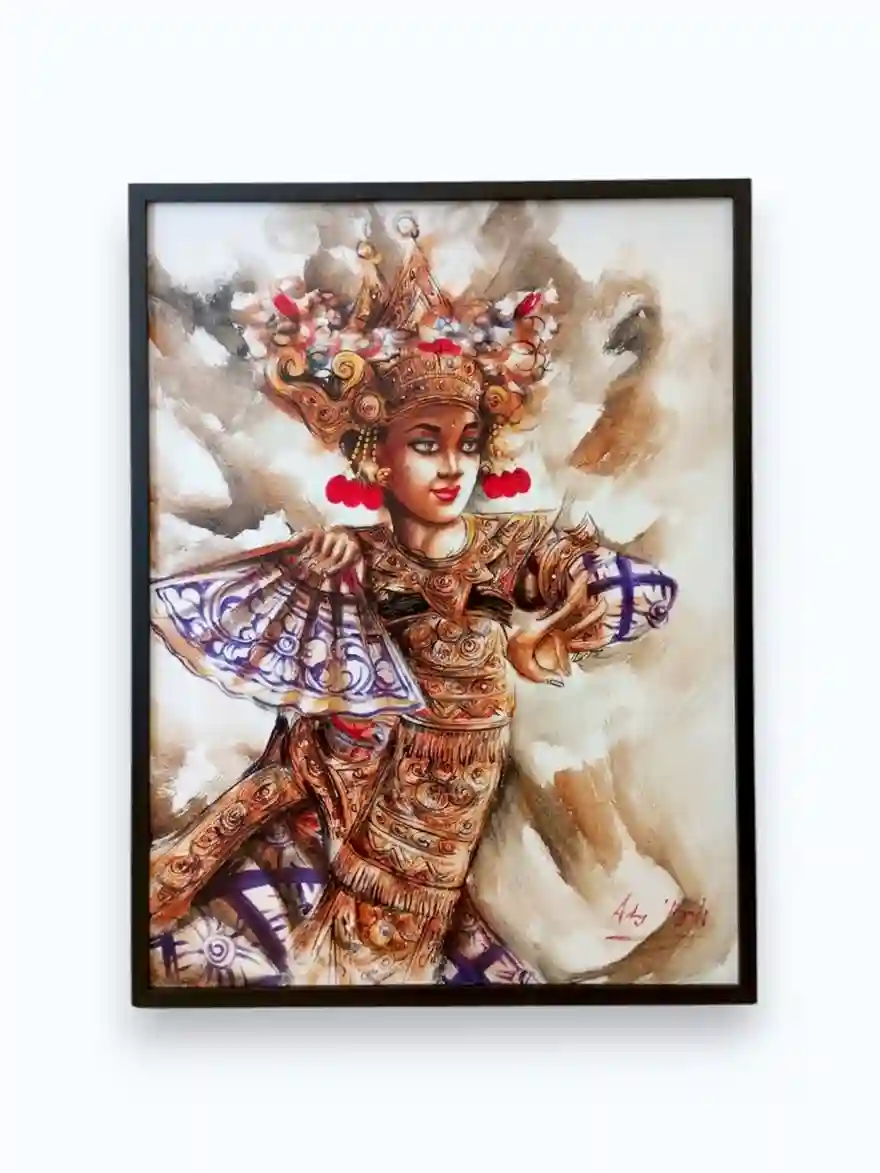
| Картина «Элегантная танцовщица Легонг» | Impressionistic watercolor on cotton canvas, 60 × 80 cm, Rp1,500,000. |
| «Ритм благодати»: картина с изображением балийской танцовщицы барис | Palette knife on cotton canvas, 70 × 90 cm, Rp8,000,000. A dancer in ornate costume with a golden crown. |
| The Sacred Kecak Fire Dance Painting | Traditional Ubud style, acrylic on cotton canvas, 85 × 135 cm, Rp12,500,000. |
| Original Golden Crown: Legong Dancer Head Sculpture | Hand-carved blonde wood on a metal stand, 16 cm high, Rp1,250,000. |
| Резьба по дереву в стиле «Кебьяр Дудук» премиум-класса с Бали | Hand-carved seated dancer, 30 cm, Rp2,250,000. |
Details are from the product listings, checked on 21 October 2026. Each is a single original piece, so price and availability can change. The wider tradition behind these scenes is in our Картина из балийской мифологии hub.
Ask About a Dance Piece
Tell us which dance you want on your wall or shelf and we will send close-up photos, the exact size and shipping options. We ship worldwide.
Чат в WhatsAppView the Legong Painting